
Unveiling the Anarchy: A Deep Dive into Chaos Factions in Warhammer 40,000 10th Edition Retrospective
As the Warhammer 40,000 universe gears up for its next evolutionary leap into 11th Edition, the esteemed analysts at Tabletop Battles have embarked on an exhaustive retrospective of the recently concluded 10th Edition. Following detailed examinations of Space Marines and other factions, the spotlight now turns to the myriad forces of Chaos – a diverse and often volatile collection of armies that left an indelible mark on the competitive landscape. Led by resident Chaos Lord, TheChirurgeon, and supported by insights from the full panel, this report meticulously scrutinizes the performance, design triumphs, and missteps of Chaos Daemons, Chaos Knights, Chaos Space Marines, Death Guard, Emperor’s Children, Thousand Sons, and World Eaters.
Main Facts: The Chaotic Tapestry of 10th Edition
The 10th Edition of Warhammer 40,000 presented a dynamic and often turbulent period for the factions aligned with the Ruinous Powers. From the initial index releases to the eventual codex drops and subsequent balance adjustments, each Chaos army carved out its own unique trajectory, experiencing periods of dominance, prolonged struggle, and unexpected resurgence. This retrospective aims to distill the core experiences of these factions, highlighting the key mechanics that defined their play, the units that became cornerstones (or dead weight), and the crucial lessons learned by both players and designers.
The overarching narrative for Chaos in 10th Edition is one of extreme highs and lows. Some factions, like the Thousand Sons, began as titans only to face repeated adjustments, while others, such as the Death Guard, clawed their way back from the bottom tier to become formidable contenders. The edition also saw the introduction of a truly new faction, the Emperor’s Children, adding fresh dynamics to the game. Throughout this journey, the inherent design principles of 10th Edition – simplified army rules, varied detachments, and a focus on core stratagems – tested the adaptability and thematic integrity of these chaotic legions.
Chronology: A Faction-by-Faction Analysis of Unholy Warfare
Chaos Daemons: The Uncodified Threat
Overview: Chaos Daemons endured a peculiar 10th Edition journey, notably being the only faction to not receive a dedicated Codex. This absence initially fueled speculation about their potential "sunsetting" by Games Workshop, a concern only allayed by their eventual resurfacing in 11th Edition previews. Despite this unique disadvantage, Daemons proved to be a consistently competitive force throughout much of the edition, demonstrating that raw power could often overcome the lack of a bespoke rulebook.
What Worked: The faction’s resilience stemmed largely from its innovative mechanics and powerful detachments. The "Shadow of Chaos" army rule, requiring objective control across the battlefield (deployment, no man’s land, opponent’s deployment), offered a surprisingly effective and strategically deep gameplay loop. This objective-based pressure was so successful that elements of it have been replicated in other factions. However, the true linchpin of their success was the "Daemonic Incursion" detachment. Its ability to "drop back into the warp" and deep strike onto the table later provided unparalleled mobility and a unique play experience that truly embodied the ephemeral and unpredictable nature of daemonic incursions. This detachment remained competitively relevant for the entire edition, offering a versatile toolbox of abilities that aligned perfectly with the faction’s thematic core.
What Didn’t: Several design choices, however, proved problematic. The egregious "4+ Feel No Pain" save, particularly on units like the Great Unclean One, created an excessively durable stat-line that distorted damage expectations and lingered for far too long. Similarly, the "Legion of Excess" detachment was recognized as a significant misstep from its inception, granting full hit and wound re-rolls – an exceptionally potent ability – with a "trade-off" (losing Fights First on the charge) that was often optional or easily mitigated. Beyond these rule imbalances, the faction suffered from a pronounced lack of internal unit variety. Lists became homogenous, heavily reliant on Greater Daemons (often 5-6, consuming 1500+ points) supported by a sparse selection of screening units like Plaguebearers, Nurglings, Beasts of Nurgle, or Flesh Hounds. This "off-brand Knights" playstyle, as described by analysts, severely limited tactical flexibility and made many units in the roster functionally irrelevant.
What We Learned: The Daemons’ experience underscored critical lessons for game balance: avoid "4+ Feel No Pain" saves and full hit/wound re-rolls, as they consistently prove too powerful and difficult to counter. The success of the Daemonic Incursion also highlighted the potential for unique, thematic mobility rules to create distinct and engaging playstyles.
What We Want to See: Future iterations of Chaos Daemons desperately need better viable unit variety. The faction boasts a wealth of cool, esoteric units that rarely saw the tabletop. Addressing this would involve creating more compelling reasons to include lesser daemons, perhaps through enhanced leader models or "Upgrades" that bolster their utility, thereby elevating the entire army’s tactical depth.
Scores: Best Detachment: Daemonic Incursion (by tie-break with Legion of Excess). Worst Detachment: Blood Legion.
Chaos Knights: From Underdog to Dominator
Overview: Chaos Knights experienced a dramatic turnaround in 10th Edition. Their initial Index rules were notably weaker than their Imperial counterparts, forcing players into a limited "War Dog spam" strategy with an almost irrelevant army rule. This changed entirely with the release of their Codex, which, despite seemingly minor stat adjustments (most Knights losing toughness but gaining wounds), catapulted them into meta dominance. This new book, particularly when combined with big Knights and the devastating double gatling Despoilers, saw them dominate an entire summer’s worth of events, showcasing a surprising variety of powerful builds.
What Worked: Unlike Imperial Knights, the Chaos Knights Codex offered genuine strategic diversity. The "Infernal Lance," "Lords of Dread," and "Houndpack Lance" detachments each provided distinct and interesting build paths, effectively mixing big Knights and War Dogs. The sheer destructive power of big Knights, especially the double gatling Despoilers with access to Lethal Hits via the Infernal Lance, proved to be an overwhelming force, outclassing most other options. For an army with a relatively small unit roster, achieving three solid competitive ways to play was a significant accomplishment.
What Didn’t: Games Workshop struggled consistently with the Chaos Knights’ army rule. It remained largely irrelevant from the Index to the Codex, primarily because the Battle-shock mechanic itself failed to significantly impact the 10th Edition meta. As analyst Wings noted, the internal balance was also severely skewed, with the double gatling Despoiler combination proving overwhelmingly superior. Furthermore, the interaction between certain "Lords of Dread" enhancements and the Knight Lancer, particularly its "Vect aura" combined with a flat 4++ invulnerable save (even in melee), created a problematic level of resilience and value that proved difficult to counter.
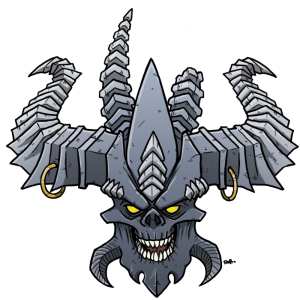
What We Learned: The Chaos Knights’ journey revealed a crucial design lesson: adding Wounds to a profile often proves far more impactful than anticipated, consistently outperforming expectations for durability. This observation would later be echoed with units like C’tan. The effectiveness of big Knights after significant point cuts also suggested that their initial durability tweaks might have been overcompensated. The Knight Lancer, with its potent 4+ invulnerable save in melee, emerged as a particularly "warping" unit, neutralizing what was intended to be a faction weakness for both Knight armies.
What We Want to See: A functional and impactful army rule for Chaos Knights is paramount. While designers have done well in distinguishing them thematically and aesthetically from Imperial Knights, their consistent struggle with an unreliable army rule hinders their identity and strategic depth.
Scores: Best Detachment: Infernal Lance. Worst Detachment: Helhunt Lance (by tie-break with Traitoris Lance).
Chaos Space Marines: The Shifting Sands of Power
Overview: Chaos Space Marines (CSM) began 10th Edition with a strong Index detachment, which was later toned down with their Codex release. For much of the edition, they occupied a balanced middle ground in the power rankings, often feeling like a benchmark for the game’s overall balance, especially in contrast to the dominant Space Marines post-December 2024 "Oaths of Moment" update. However, a late-edition surge, primarily driven by the "Red Corsairs" detachment and the immense power of newly integrated Defilers, propelled them into the upper echelons of competitive play.
What Worked: As a faction, CSM possessed a solid army rule that granted commendable flexibility against diverse target types. The army featured a mix of decent, though not overtly dominant, units, supported by limited access to high-damage attacks and valuable Command Point generation. Critically, the faction boasted several very good detachments, each with clear strengths and weaknesses. Despite a large roster, a surprising number of their melee units found viability in different lists, offering redundancy without sacrificing utility. At its best, CSM presented a high-skill army that rewarded varied unit selection, often operating as a "glass cannon" requiring synergistic unit engagement to neutralize threats and avoid easy losses.
What Didn’t: The carefully balanced ecosystem of CSM was disrupted by the late-edition release of the Defiler. This unit provided an insane shooting platform combined with high durability and potent melee capabilities, allowing it to effectively brawl with elite targets, overshadowing much of the army’s internal balance. The "Dark Pacts" army rule also suffered from a critical timing issue: the drawback (losing models) would often occur before the benefit of the attack, creating frustrating scenarios where models were lost without gaining their advantage. This highlighted a broader issue where CSM’s army rule, with its inherent drawback, struggled to compete with other factions’ "pure upside" rules. While "Chaos Cult" was an interesting competitive detachment, Accursed Cultists proved disproportionately strong. The ability to ally in Chaos Daemons, while thematic, usually boiled down to simply adding a unit or two of Nurglings for cheap objective control.

What We Learned: The CSM experience demonstrated that it is possible to design an army with a large number of viable melee units that see play in diverse lists and detachments. Furthermore, a Codex can feature a significant number of detachments (CSM had six out of eight achieve competitive success) without most of them ending up as "duds," a testament to effective sub-faction design.
What We Want to See: A re-evaluation of the Defiler’s power level is necessary. More generally, CSM needs to continue developing a distinct faction identity, moving further away from loyalist counterparts. While detachments like "Renegade Warband" offer fun lore nods, the core army needs unique tools and quirks. This includes distinct units that don’t overlap with the cult armies, a design goal they’ve been progressing towards. Finally, expanding on legion-specific characters and lore integration, similar to the Iron Warriors character, would greatly enrich the faction’s flavor and appeal.
Scores: Best Detachment: Renegade Raiders. Worst Detachment: Cabal of Chaos.
Death Guard: The Resilient Plague
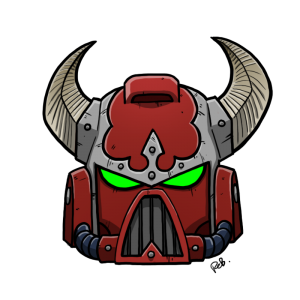
Overview: The Death Guard endured a truly arduous start to 10th Edition, widely considered one of the game’s weakest armies. They languished for nearly a year until an updated army rule provided a much-needed boost, allowing them to tack additional effects onto their "Contagions of Nurgle," most notably a crucial -1 to enemy saves. This temporary fix was followed by their Codex release, which, despite initial appearances, proved to be "insanely pushed" due to a number of units being significantly undercosted. These egregious units were largely curbed by summer’s end, confirming that their issues were primarily a matter of points balance.
What Worked: The revised version of "Contagions of Nurgle," which allowed players to choose an additional effect at the start of the game, was a resounding success. While the three modes weren’t perfectly balanced, the +1 AP on all attacks was generally sufficient, with the -1 to hit option covering other scenarios. Beyond this, the Death Guard, in many respects, became an "ideal army" for 40k. As analyst Wings highlighted, their datasheets were exceptionally well-thought-through, ensuring every unit had a viable role. They didn’t excel at everything, but possessed clear upsides and downsides, a robust yet limited unit pool, and offered diverse builds. This created an army with a distinct identity and strategic depth.
What Didn’t: The most significant flaw was the initial point costs within the Codex, which were, as described, "pretty crazy." The fact that heavy blight launcher Bloat-drones were once 100 points was particularly absurd. Deathshrouds Deep Striking at 6" also proved more potent than likely intended. However, subsequent point adjustments largely brought these outliers back into line, underscoring that their problems were almost entirely economic rather than fundamental design flaws.
What We Learned: The Death Guard’s journey demonstrated that an army of relatively slow units (with 5" movement) can be made competitively viable without resorting to obnoxious durability. This was achieved through a clever combination of deep strike tricks, Infiltrate abilities, and fast vehicles (10" movement), providing the necessary tactical mobility to compensate for their inherent slowness.
What We Want to See: Future iterations should focus on balancing the "Contagion" options more effectively. Currently, the -1 movement/Leadership/OC choice is rarely taken, and achieving a real decision point between the three modes would enhance strategic depth.
Scores: Best Detachment: Virulent Vectorium. Worst Detachment: Tallyband Summoners (3-way tie-break with Shamblerot Vectorium and Death Lord’s Chosen).
Emperor’s Children: The Flawed Symphony of Excess
Overview: The Emperor’s Children entered 10th Edition as the one truly new faction, bursting onto the scene with a Codex packed with high-powered datasheets. Their unique blend of speed and melee prowess made them an immediate threat, particularly in team environments, but their journey was also marked by significant design challenges and a threadbare unit roster.
What Worked: The core concept of an entire army capable of falling back, advancing, and charging (albeit with some restrictions) was undeniably cool and thematic, providing a distinct playstyle. The Emperor’s Children also boasted several very strong datasheets that synergized well with the "Coterie of the Conceited" detachment. Later in the edition, the inclusion of Defilers finally provided them with a capable ranged anti-vehicle unit, addressing a critical weakness.
What Didn’t: A major disappointment was the complete underwhelming performance of Fulgrim, their Primarch and faction leader, who offered little tangible benefit to his legion. More critically, Games Workshop appeared to drastically cut units from the Emperor’s Children Codex, leaving them without essential options like Helbrutes, tanks, or cultists. This resulted in a "threadbare book" with very few choices, making balancing incredibly difficult and leading to a one-dimensional playstyle. The absence of reliable anti-transport options proved to be a "deal-breaker," rendering them incapable of winning certain matchups. As analyst Isaac elaborated, the edition-wide problem of mono-melee armies struggling without good, preferably long-range, shooting was particularly acute for the Emperor’s Children. He noted that shooting’s inherent advantage (no direct engagement required) and higher damage output (Damage 3 for shooting vs. often max Damage 2 for melee) made it consistently superior, a problem that 11th Edition’s "hidden rule" might only partially address.

What We Learned: The Emperor’s Children’s experience starkly highlighted the critical importance of providing an army with diverse ranged anti-vehicle options. Removing these entirely proved to be a significant design flaw that crippled their strategic flexibility.
What We Want to See: A return of the missing units is essential. It never made thematic or tactical sense for the Emperor’s Children to lack tanks or Helbrutes, and their absence creates insurmountable matchup problems and balance headaches. Making their Terminators competitively viable would also be a welcome change. Isaac further suggested empowering other detachments beyond the dominant "Coterie" and "Carnival" to foster more diverse playstyles and move beyond a reliance on Daemon Princes and Noise Marines.
Scores: Best Detachment: Coterie of the Conceited. Worst Detachment: Slaanesh’s Chosen.
Thousand Sons: The Enduring Sorcerers
Overview: The Thousand Sons were a force to be reckoned with from the very launch of 10th Edition, initially overshadowed only by the colossal power of Eldar and Wraithknights. They quickly rose to prominence after Eldar nerfs, only to be substantially tuned down. Their Codex, released in early 2025 alongside other Cult Legions, once again made them an incredibly powerful faction, briefly overshadowed by Death Guard and Chaos Knights before facing further nerfs. Despite these repeated adjustments, they remained consistently strong throughout the edition.
What Worked: The Codex successfully provided multiple, legitimate ways to play the faction, whether focusing on Scarab Occult Terminators, Magnus the Red, or a vehicle-heavy approach. The army’s core mechanics were robust, and their "Rituals of the Warp" ability offered a solid punch against big units and singular threats, making them highly effective against "monster mash" metas like C’tan. Their abundance of flamers also made them equally potent against horde armies. As Isaac noted, Thousand Sons players often "cried out in pain" after nerfs, yet the faction consistently continued to win, a testament to their ultra-powerful Codex and diverse viable builds. Detachments like "Grand Coven" worked all edition, with "Rubricae Phalanx" and "Warpforge Cabal" also seeing competitive success. Analyst Wings humorously recalled getting 5-0 finishes even after a sustained campaign of nerfs.
What Didn’t: The "Rituals of the Warp" were needlessly complex and, on launch, proved excessively powerful, requiring errata even before the official release. They also suffered from being "parasitic," heavily pushing players towards specific units. Isaac highlighted the brief but utterly broken period of "Warpmeld Pact," a Codex detachment that, due to a timing loophole, effectively made units immortal by allowing models to be pulled after targets were declared but before damage was allocated, preventing re-targeting. This led to "twenty-man bricks of Tzaangors, Chaos Spawn, and Mutalith Vortex Beasts" becoming one of the most broken combos in testing, hopefully teaching Games Workshop a valuable lesson about rules timing. Wings also pointed out Tzaangor Enlightened as a serious contender for the most undercosted unit on launch.
What We Learned: The Thousand Sons’ experience showed that even in a reduced form, "Rituals of the Warp" were overtuned, often providing benefits akin to "Oath of Moment" alongside other potent effects. The initial ability to repeatedly attempt each Ritual until success was a significant flaw that was later removed. Isaac emphasized the immense power of core stratagems when a faction has broad access to relevant keywords. Thousand Sons’ ability to effectively use Overwatch (flamers), Rapid Ingress (deep strike), Grenades (many characters), and even Heroic interventions highlighted how full access to these fundamental rules significantly contributed to their strength, in contrast to many factions that couldn’t leverage them.
What We Want to See: More support for strategies that don’t solely rely on Magnus the Red would be welcome, though overall, the Thousand Sons remain a very solid army. Isaac advocated for a broader return of "Psychic" elements across the game. While not necessarily a full psychic phase or multiple tables, he suggested that the Thousand Sons’ "Cabal of Sorcerers" rule provides an excellent blueprint. Giving factions like Tyranids or Grey Knights (and Wings added Aeldari) detachments that grant them "spells" could be an awesome way to reintroduce this iconic aspect of Warhammer 40,000 lore and gameplay.
World Eaters: The Fury Unleashed
Overview: The World Eaters, having been the last Codex of 9th Edition, saw very little time before being reindexed for 10th. Their original book’s design principles, however, hinted at many of 10th Edition’s coming features. They spent most of 10th Edition using their Index, gaining an interesting boost with their Codex release that unexpectedly provided a solid shooting element through an influx of BS4+ shots. They also featured one of the edition’s only truly viable Daemon detachments, "Khorne Daemonkin," which allowed for deep striking Bloodletters whenever a unit died.
What Worked: The World Eaters Codex excelled at making almost every unit feel valuable. Their Helbrutes were lauded as "among the most fun units you can play," and fan favorites like Berzerkers and Eightbound all found their place. The "Berzerker Warband" detachment stood out as an exceptionally powerful melee option. Wings noted the understated success of this book, suggesting that while some changes were overreactions to Index criticisms, the book was "correctly re-balanced around its new capabilities," resulting in strong staying power. While "Warband" was the default, "Daemonkin" and "Goretrack" detachments also saw competitive success.
What Didn’t: Angron’s resurrection ability, which consumed the entire "Blessings of Khorne" roll, felt punishing and made him a unit to avoid for much of the edition, only becoming viable when extreme heavy hitters were desperately needed. The trade-off of one point of Ballistic Skill for extra shots with Rapid Fire weapons felt lopsided, proving immensely powerful on units like the Forgefiend (making them a must-take) but potentially too harsh on others, a concern that might resurface in 11th Edition with changes to cover. Wings also highlighted a major stumble in the Codex: moving the base Strength of chainaxes to 4. While intended to mirror "Liberator" buffs, S4 meant Berzerkers didn’t consistently hit hard enough outside of the "Warband" detachment’s +2S bonus, contributing to its dominance.
What We Learned: A critical lesson from the World Eaters was simple but profound: "Do not, under any circumstances, make Deep Strike abilities that have no distance limitation." The "Khorne Daemonkin" ability, while thematic, proved to be a nightmare for opponents when units could appear anywhere on the board.

What We Want to See: Future updates should aim to make World Eaters Terminators more competitively viable and provide them with a dedicated character who can lead them. The roster, while generally strong, still has gaps, particularly for a




Leave a Comment