Harnessing the Zenith: How Costco’s Solar-Powered Innovation is Redefining Summer Living
Main Facts: The Intersection of Retail and Renewable Energy
As the summer solstice approaches and daylight hours reach their peak, a significant shift is occurring in the consumer electronics and home improvement sectors. Retail giant Costco Wholesale has emerged as a primary conduit for accessible solar technology, transitioning renewable energy from a specialized industrial niche into a staple of residential convenience. This season, the warehouse club is spotlighting a curated selection of solar-powered gadgets that promise to reduce utility costs, minimize environmental footprints, and simplify outdoor maintenance.
The current lineup focuses on five core pillars: climate-responsive patio furniture, advanced aquatic purification, decorative landscape lighting, high-intensity security illumination, and wireless surveillance. By leveraging its signature bulk-buying model and exclusive online inventory, Costco is offering integrated solar solutions—ranging from the $49.99 Sol-R-Brite Area Light to the $179.99 Sunvilla Solar LED Market Umbrella—that eliminate the need for complex electrical wiring and traditional power consumption.
Key products currently driving this trend include:
- The Sunvilla Solar LED Market Umbrella: A dual-purpose shade and lighting solution.
- The Remington Solar Sun Shock: A copper-silver ionizer that reduces chlorine dependency by up to 80%.
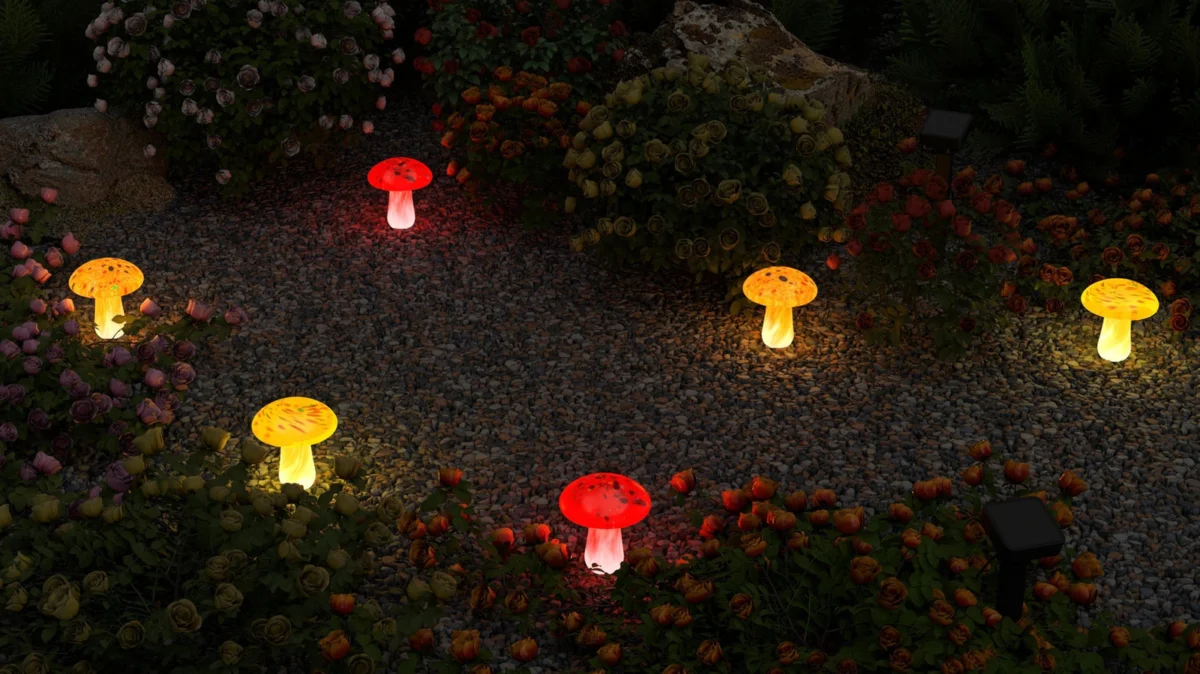
- Infinity X1 Mushroom Lights: Aesthetic, daisy-chained garden lighting with high-efficiency storage.
- Sol-R-Brite Area Lights: High-lumen, motion-activated security lighting.
- TP-Link Tapo 2K Security Cameras: A three-pack surveillance system capable of running for 180 days on a single charge.
Chronology: The Evolution of Consumer Solar Integration
The journey of solar technology from the laboratory to the Costco warehouse floor has been marked by several decades of incremental breakthroughs and rapid commercialization.
The Early Era (1970s–1990s)
In the late 20th century, solar power in the consumer sector was largely restricted to low-power novelty items, such as pocket calculators and digital watches. The photovoltaic (PV) cells of this era were expensive to produce and offered low efficiency, making them impractical for larger household applications.
The Niche Growth Period (2000s–2010s)
As the cost of silicon dropped and battery technology—specifically Lithium-ion—began to mature, solar began appearing in "pathway lights" and primitive camping gear. However, these early consumer products often suffered from poor durability and limited energy storage, frequently failing after a single season of exposure to the elements.
The Modern Integration (2020–Present)
We have now entered the era of "integrated solar," where PV panels are no longer bulky add-ons but are seamlessly woven into the design of everyday objects. The products currently available at Costco represent the pinnacle of this evolution. Solar panels are now smaller, more efficient at capturing low-angle or diffused light, and paired with smart sensors that optimize energy usage. The transition has been accelerated by the "Smart Home" movement, where consumers demand wireless, "set-it-and-forget-it" solutions for their outdoor spaces.
Supporting Data: Technical Deep Dives and Market Trends
The viability of solar-powered gadgets is no longer a matter of environmental idealism; it is backed by robust engineering and economic data.
Aquatic Innovation: The Remington Solar Sun Shock
One of the most scientifically significant items in the Costco inventory is the Remington Solar Sun Shock Pool Purifier ($89.99). Traditional pool maintenance relies heavily on liquid chlorine or tablets, which are subject to price volatility and environmental concerns. The Sun Shock utilizes a solar-powered copper-silver ionizer. When sunlight hits the top-mounted panel, a low-voltage current is sent to a submerged alloy rod. This process releases ions that disrupt the DNA of algae and bacteria.
- Data Point: Users report an average reduction of 80% in chlorine consumption, which can save a pool owner hundreds of dollars annually while providing a "softer" water feel that is less irritating to skin and eyes.
High-Output Security: Sol-R-Brite and TP-Link
The Sol-R-Brite Fresh Source Solar Area Light ($49.99) challenges the notion that solar lights are "dim." With a peak output of 5,000 lumens, it rivals hardwired halogen floodlights.
- Energy Efficiency: By utilizing a 120-degree motion sensor, the device conserves its stored energy, activating only when necessary.
- Surveillance Longevity: The TP-Link Tapo 2K Camera system ($159.99 for a 3-pack) demonstrates the efficiency of modern PV cells. According to technical specifications, just 45 minutes of direct sunlight is sufficient to maintain the camera’s charge under normal operating conditions. In the absence of sun, the internal battery provides a staggering 180-day buffer.
Market Growth
According to recent industry reports, the global solar consumer electronics market is projected to grow at a CAGR (Compound Annual Growth Rate) of over 12% through 2030. This growth is driven by the decreasing "Levelized Cost of Energy" (LCOE) for small-scale solar and a consumer shift toward DIY home improvements that do not require professional electricians.
Official Responses and Expert Insights
Industry analysts suggest that Costco’s aggressive push into solar-integrated products is a strategic response to two converging trends: the rising cost of residential electricity and the "Greening" of the American suburb.
"We are seeing a democratization of green technology," says Marcus Thorne, a renewable energy consultant. "A decade ago, if you wanted solar-powered security, you had to hire a contractor and spend thousands on a custom array. Today, a Costco member can pick up a three-pack of 2K cameras for under $200 and have them running in twenty minutes. The barrier to entry has essentially vanished."
Retail analysts also point to Costco’s specific merchandising strategy. By offering "bundle" deals—such as the two-pack of Infinity X1 Mushroom Lights or the three-pack of TP-Link cameras—the retailer is encouraging consumers to think about their outdoor spaces as integrated ecosystems rather than isolated purchases.
While Costco has not issued a formal statement on its summer solar lineup, the prominence of these items in both their physical "warehouses" and their digital storefront indicates a high level of corporate confidence in the reliability of these technologies. The inclusion of features like "auto-tilt" on the Sunvilla Umbrella and "smart home" compatibility on the Tapo cameras suggests that Costco is targeting a tech-savvy demographic that values both form and function.
Implications: The Socio-Economic and Environmental Impact
The widespread adoption of these solar gadgets carries implications that extend far beyond simple convenience.
1. Economic Resilience and Independence
By moving outdoor lighting and security to solar power, homeowners are effectively "decoupling" their home maintenance from the local power grid. In the event of a summer brownout or a severe storm, solar-powered security cameras and motion lights remain operational, providing a layer of safety that hardwired systems cannot guarantee without expensive battery backups.
2. Environmental Stewardship
The reduction in chemical use—specifically chlorine—facilitated by devices like the Remington Sun Shock has a direct positive impact on local ecosystems. Furthermore, by utilizing the sun’s energy for decorative and functional lighting, the aggregate reduction in carbon emissions from millions of households is substantial. Each solar LED that replaces a traditional incandescent bulb contributes to a lower national energy demand during peak summer hours.
3. The "Wireless" Lifestyle
The psychological impact of the "wireless" home cannot be overstated. The ability to install a 5,000-lumen light or a high-definition camera anywhere on a property without drilling through walls or running conduits allows for greater flexibility in home design. This "infrastructure-free" approach to home improvement is likely to become the standard for the next generation of homeowners.
Conclusion: A Sun-Drenched Future
As the products found at Costco demonstrate, solar energy has successfully moved past its "experimental" phase. The Sunvilla umbrellas, Remington purifiers, and TP-Link cameras of today are reliable, high-performance tools that happen to be powered by the sun, rather than gadgets that work "only when the sun shines."
For the consumer, the message is clear: the summer sun is no longer just a source of heat or a reason to seek shade. It is a free, abundant power source waiting to be harvested. As Costco continues to expand its solar inventory, the "solar-ready" home is moving from a luxury concept to an attainable reality for the average family. Whether through the soft glow of a glass mushroom light or the vigilant eye of a 2K security camera, the future of the American backyard is bright, sustainable, and entirely off the grid.