
The Transmedia Frontier: Assessing the Potential for an Overwatch Animated Series
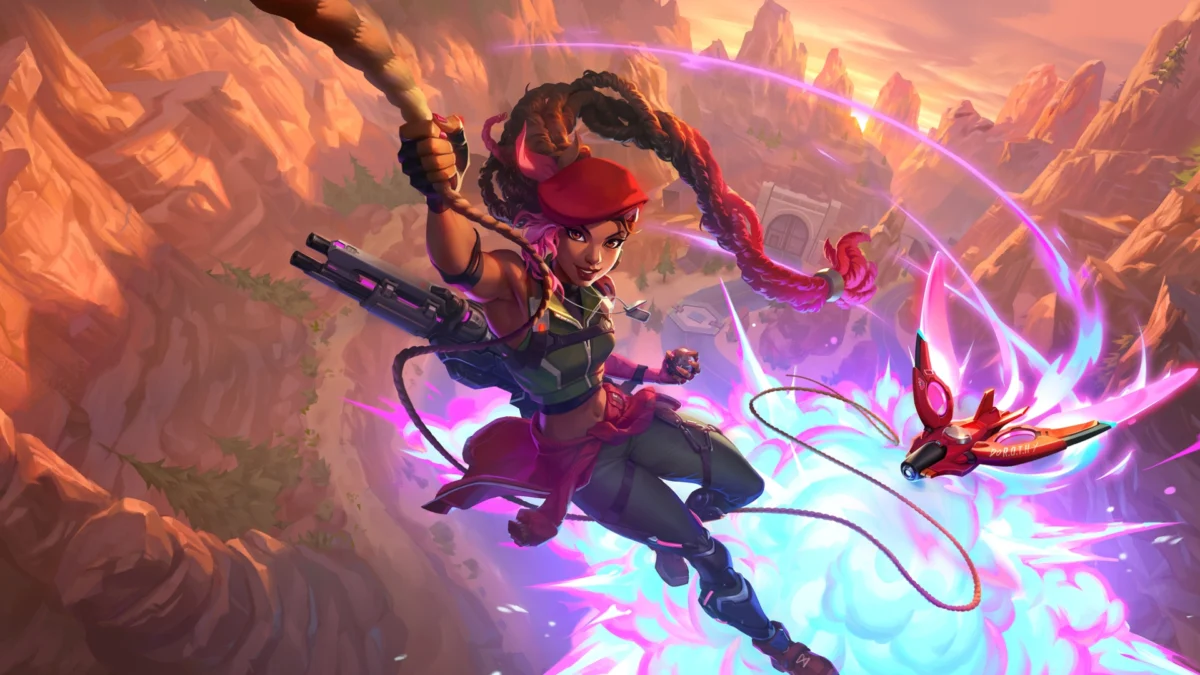
The landscape of modern entertainment is currently undergoing a tectonic shift. For decades, the "video game movie curse" was a persistent shadow over Hollywood, characterized by a string of critical and commercial failures that failed to capture the essence of their source material. However, the tide has turned. Following the monumental success of projects like The Last of Us, Arcane, Fallout, and The Super Mario Bros. Movie, the industry is in the midst of a "Gold Rush" for gaming intellectual property.
Amidst this fervor, one of the most visually striking and character-rich franchises in gaming—Blizzard Entertainment’s Overwatch—remains conspicuously absent from the silver and small screens. Recently, however, Overwatch General Manager Walter Kong broke the silence, providing a glimmer of hope for a fanbase that has been clamoring for a cinematic expansion for nearly a decade. While no project is officially in production, Kong’s recent admissions suggest that Blizzard is no longer merely watching from the sidelines.
Main Facts: The Current State of Overwatch in Hollywood
The core of the recent buzz stems from an interview with Walter Kong, Blizzard’s General Manager for Overwatch, who oversees live games and mobile development. Kong’s statements to the press have signaled a shift in tone regarding the franchise’s transmedia future. While he stopped short of a formal announcement, his refusal to "rule out" an animated series is the most significant acknowledgment of the project’s potential in years.
Kong specifically highlighted the overwhelming fan feedback that accompanies every piece of media Blizzard releases. Whether it is a two-minute hero origin story or a seasonal cinematic trailer, the comment sections are invariably flooded with demands for a full-length series. "We certainly hear that," Kong noted, acknowledging that the demand is not a "huge stretch" given the richness of the Overwatch universe.
Currently, Overwatch exists primarily as a 5v5 hero shooter, but its lore is distributed across comics, short stories, and high-budget CGI shorts. The consensus among industry analysts is that the brand is "ripe" for adaptation, possessing a diverse roster of 40+ heroes, a distinct "hope-punk" aesthetic, and a global setting that appeals to international audiences.
Chronology: A History of Missed Connections and Legal Hurdles
To understand why an Overwatch series does not already exist, one must look back at the tumultuous relationship between Blizzard and the streaming industry over the last decade.
2014–2016: The Cinematic Foundation
When Overwatch was first revealed at BlizzCon 2014, it was accompanied by a cinematic trailer of Pixar-level quality. Between 2016 and 2018, Blizzard released a series of "Animated Shorts" (such as Recall, Alive, and The Last Bastion) that garnered hundreds of millions of views. These shorts served as a proof of concept, convincing fans and critics alike that Blizzard had the narrative and technical chops to produce a full-length series.
2019: The Netflix Fallout
According to investigative reporting by Jason Schreier in his book Play Nice: The Rise, Fall, and Future of Blizzard Entertainment, Blizzard was actually very close to a transmedia breakthrough in 2019. Reports suggest that deals were in development with Netflix for animated adaptations of Overwatch, Diablo, and StarCraft.
However, this partnership disintegrated due to a corporate legal battle. Blizzard sued Netflix for "poaching" its Chief Financial Officer, Spencer Neumann, while he was still under contract. This legal acrimony effectively poisoned the well, leading to the cancellation of the rumored projects and leaving the Overwatch TV show in a state of developmental limbo for years.
2022–2023: The Transition to Overwatch 2
With the launch of Overwatch 2, Blizzard focused heavily on "Story Missions" and in-game narrative content. While the planned PvE (Player vs. Environment) mode was eventually scaled back, the company continued to invest in high-quality 2D animated shorts, such as the Genesis mini-series, which explored the origins of the Omnic Crisis. This kept the narrative flame alive while the company navigated internal restructuring and the massive Microsoft acquisition.
Supporting Data: The Case for a Transmedia Expansion
The financial and cultural logic for an Overwatch series is supported by the massive success of Blizzard’s competitors. The "Arcane Effect" is perhaps the most compelling data point.

- The Arcane Benchmark: When Riot Games released Arcane (based on League of Legends) on Netflix, it didn’t just win Emmy Awards; it revitalized the player base. Following the show’s release, League of Legends saw a significant spike in active players and a renewed interest in the characters featured in the show (Jinx, Vi, Caitlyn).
- The Edgerunners Phenomenon: CD Projekt Red’s Cyberpunk 2077 experienced a literal resurrection following the release of the anime Cyberpunk: Edgerunners. The show was credited with shifting the public perception of the game from a "buggy failure" to a "narrative masterpiece," resulting in millions of new sales years after the game’s initial launch.
- Engagement Metrics: Blizzard’s own YouTube channel serves as a massive focus group. The Overwatch cinematic shorts consistently outperform gameplay trailers in terms of views and social media engagement. For instance, the "Dragons" short featuring Hanzo and Genji has over 50 million views, indicating a level of character investment that transcends the game’s mechanics.
Official Responses: Walter Kong’s Strategic Ambiguity
Walter Kong’s recent comments to IGN were carefully measured, reflecting the cautious optimism of a post-acquisition Blizzard.
"I think that it is not a huge stretch to believe that there would be a lot of demand for that type of content," Kong stated. This phrasing is critical; it moves the conversation from "if" to "when" and "how." By acknowledging the "Hey, Blizzard, what the hell?" sentiment of the fans, Kong is signaling that the executive suite is no longer deaf to the community’s primary request.
Furthermore, Kong emphasized that Blizzard is constantly looking for "other storytelling experiences in the Overwatch universe." This suggests that while a traditional 22-minute episodic series is the most likely candidate, the company might also be considering feature films, anthology series, or even interactive streaming experiences.
The silence from Microsoft, Blizzard’s parent company, is also telling. Microsoft has been aggressive in expanding its IP, as seen with the Halo series on Paramount+ and the Fallout series on Amazon Prime. The precedent set by these projects suggests that Microsoft views its gaming franchises as "lifestyle brands" that must exist across multiple mediums to maximize value.
Implications: The Road Ahead and Potential Partnerships
The potential for an Overwatch series carries heavy implications for the franchise’s longevity and the broader animation industry.
The Production Dilemma: In-House vs. Outsourced
One of the biggest questions is who would actually animate the series. Blizzard’s internal cinematics team is world-class, but their workflow is optimized for five-minute shorts that take months to produce. Scaling that level of fidelity to a multi-episode season would be a gargantuan task. Blizzard might follow Riot Games’ lead—Riot partnered with the French studio Fortiche for Arcane—to find a balance between high-end aesthetic and sustainable production schedules.
The Platform Question
Given the 2019 lawsuit with Netflix, the distribution partner remains a mystery. While time heals all wounds in corporate Hollywood, Blizzard may look toward Amazon Prime Video or HBO Max (Warner Bros. Discovery). Amazon, in particular, has shown a willingness to invest heavily in adult-oriented animation (Invincible, The Legend of Vox Machina) and big-budget game adaptations (Fallout).
Narrative Strategy: Prequel or Sequel?
Narratively, an Overwatch series faces a unique challenge. Should it focus on the "Golden Age" of the original Overwatch strike team (the prequel route), or should it follow the "Recall" and the new generation of heroes (the sequel route)? The franchise’s strength lies in its ensemble cast; a show would likely need to adopt an anthology or multi-perspective structure to satisfy fans of the diverse 40-character roster.
Financial and Cultural Impact
For Blizzard, a successful show would be a hedge against the volatility of the live-service gaming market. It would allow them to monetize the Overwatch IP through licensing fees, increased merchandise sales, and a "halo effect" that brings lapsed players back to the game. Culturally, it would cement Overwatch as a pillar of modern pop culture, moving it beyond the "gaming" silo and into the mainstream consciousness alongside the likes of Marvel or Star Wars.
Conclusion
While Walter Kong’s comments are not a green light, they represent a significant "thaw" in Blizzard’s public stance. The infrastructure for an Overwatch cinematic universe has been in place for a decade—the characters are beloved, the world-building is extensive, and the demand is undeniable. In the current Hollywood climate, where proven IP is the most valuable currency, it seems less a matter of if Tracer and Winston will grace our television screens, and more a matter of which streaming giant will eventually sign the check. For now, the "door is not closed," and for the Overwatch community, that is the most encouraging news in years.


Leave a Comment