
Beyond the Final Frontier: Analyzing Margaret Atwood’s Bold Declassification of Star Trek as Science Fiction
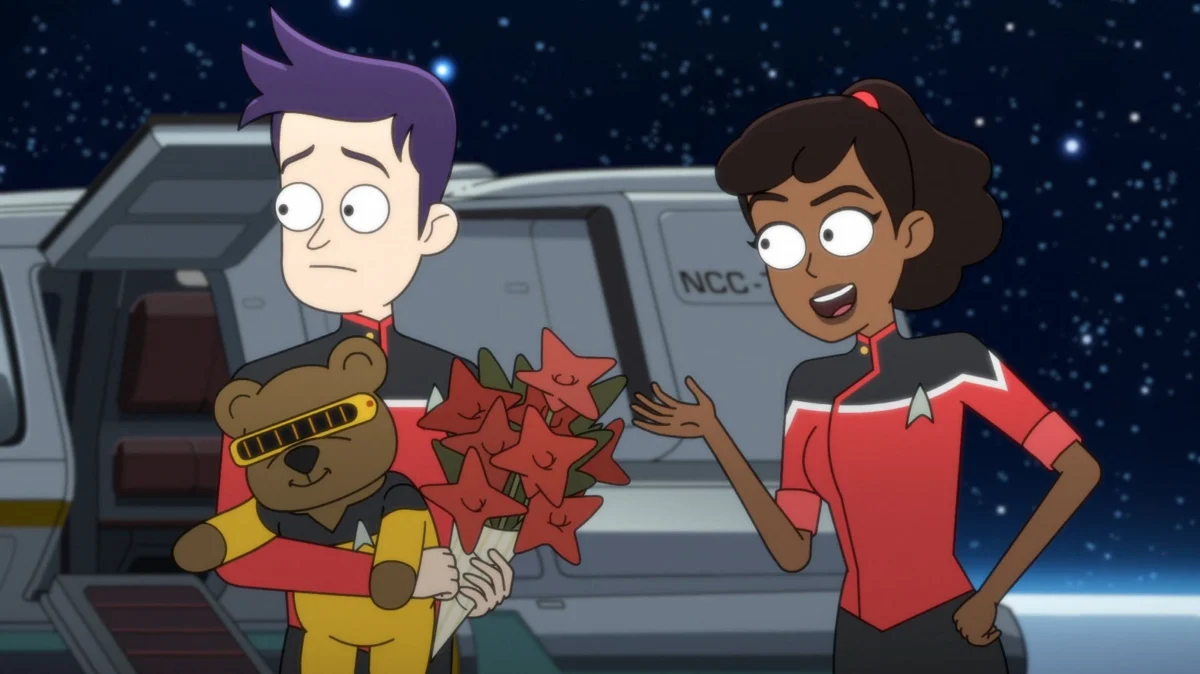
In the pantheon of modern literature, few figures command as much respect in the realm of "speculative" storytelling as Margaret Atwood. The Booker Prize-winning author of The Handmaid’s Tale has long maintained a complex, often contentious relationship with the labels of "Science Fiction" and "Fantasy." However, her most provocative contribution to the genre debate remains her assertion that Star Trek—perhaps the most iconic science fiction franchise in history—actually belongs in the category of fantasy.
This claim, detailed in her 2011 essay collection In Other Worlds: SF and the Human Imagination, sparked a profound discourse among literary critics, scientists, and "Trekkies" alike. By stripping the USS Enterprise of its sci-fi credentials, Atwood challenged the fundamental definitions of how we categorize our visions of the future.
Main Facts: The Core of the Atwood Contention
The crux of Margaret Atwood’s argument lies in a distinction between what she terms "Speculative Fiction" and "Science Fiction." For Atwood, these are not interchangeable synonyms but represent a vital divide in plausibility.
- The Plausibility Threshold: Atwood defines "Speculative Fiction" (her preferred label for her own work) as stories about things that could actually happen given the current trajectory of human technology and social behavior. Conversely, she defines "Science Fiction" as stories involving "things that have not happened yet and are not likely to happen," which she often groups with fantasy.
- The Star Trek Declassification: In a 2010 dialogue with the late legendary author Ursula K. Le Guin, Atwood argued that because Star Trek relies on technologies that violate the known laws of physics—such as faster-than-light (FTL) travel and instantaneous teleportation—it functions as a "romance" or "fantasy" rather than a scientific projection.
- The "Humanoid" Alien Problem: A significant portion of Atwood’s skepticism stems from the biological improbability of the Star Trek universe. The franchise features a galaxy populated almost entirely by "aliens" who are essentially humans with prosthetic forehead ridges, sharing human emotions, social structures, and even reproductive compatibility.
- Utopian Roots: Atwood suggests that Star Trek is less an exploration of physics and more a continuation of the "Utopian Literature" tradition, a subgenre of fantasy that envisions idealized societies that do not—and perhaps cannot—exist.
Chronology: The Evolution of a Literary Debate
To understand why Atwood made this claim, one must look at the timeline of her interactions with the genre and her peers.
1985–2005: The Rise of Speculative Identity
During the height of her success with The Handmaid’s Tale and later Oryx and Crake, Atwood consistently pushed back against being labeled a science fiction writer. She feared the "sci-fi" label would relegate her work to the "back of the bookstore," away from serious literary consideration. During this period, she refined her definition: if it could happen on Earth tomorrow, it’s speculative; if it involves martians and warp drives, it’s sci-fi/fantasy.
2010: The Portland Conversation
The defining moment for this debate occurred in the fall of 2010 during a public discussion in Portland, Oregon, between Atwood and Ursula K. Le Guin. Le Guin, a giant of both fantasy (Earthsea) and science fiction (The Left Hand of Darkness), took a broader view. She argued that science fiction was a modern way of telling myths. It was during this exchange that Atwood realized their definitions were inverted. Atwood recalled, "What [Le Guin] means by ‘science fiction’ is what I mean by ‘speculative fiction,’ and what she means by ‘fantasy’ would include some of what I mean by ‘science fiction.’"
2011: The Publication of In Other Worlds
Atwood codified these thoughts in her book In Other Worlds. She specifically cited Star Trek and Star Wars as properties that, while dressed in the trappings of technology, operated on the logic of magic. This publication served as a "bold claim" heard ’round the quadrant, forcing fans to defend the scientific rigor of the Federation.
Supporting Data: Science vs. "Technobabble"
The debate over Star Trek’s status is often fought on the battlefield of hard science. To understand Atwood’s point, one must look at the specific elements of the franchise that lean toward fantasy.
The Physics of the Impossible
- Warp Drive: Einstein’s theory of relativity posits that nothing can travel faster than light. While "Alcubierre drives" are a theoretical mathematical loophole, the energy required to warp space-time remains in the realm of the impossible for the foreseeable future.
- The Transporter: The "Heisenberg Compensator" is a famous piece of Star Trek lore created by writers to explain away the Heisenberg Uncertainty Principle, which makes scanning the exact state of every atom in a human body physically impossible. When asked how the compensator works, Star Trek technical consultant Michael Okuda famously replied, "It works very well, thank you." To Atwood, this "it just works" logic is indistinguishable from a magic wand.
The Biological Mirage
A 2011 analysis of xenobiology in fiction highlights that Star Trek ignores the "Convergent Evolution" problem. The likelihood of an alien from the Gamma Quadrant having two eyes, a nose, and a bipedal stance—and being able to converse in English via a "Universal Translator"—is statistically near zero. This "human-centric" universe is a hallmark of fantasy, where the world is built to reflect the protagonist’s moral journey rather than biological reality.
The Comparison with Star Wars
While Star Trek fans often look down on Star Wars as "Space Fantasy" because of The Force and Jedi "wizards," Atwood argues they are two sides of the same coin. While Star Trek uses "dilithium crystals" and Star Wars uses "Kyber crystals," both function as MacGuffins to power a narrative that is essentially a morality play in space.
Official Responses and Counter-Perspectives
The literary and scientific communities have not let Atwood’s claims go unchallenged.
The Le Guin Perspective
Before her passing in 2018, Ursula K. Le Guin maintained that Atwood’s distinctions were somewhat elitist. Le Guin argued that by trying to distance "Speculative Fiction" from "Science Fiction," Atwood was attempting to protect her literary status from a genre often dismissed as "pulp." Le Guin believed that Star Trek, despite its scientific inaccuracies, dealt with "Social Science Fiction"—exploring sociology, anthropology, and politics—which is a valid scientific pursuit.
The "Hard" Sci-Fi Defense
Proponents of "Hard Science Fiction" (authors like Isaac Asimov or Arthur C. Clarke) argue that Star Trek serves as an "entry drug" to real science. NASA has frequently cited Star Trek as an inspiration for real-world inventions, from mobile phones (communicators) to tablet computers (PADDs). For these supporters, if a show inspires real science, it deserves the "Science Fiction" title, regardless of how much "technobabble" it uses to bridge the gaps.
The Roddenberry Vision
The estate of Gene Roddenberry has historically defended the franchise as "Utopian Fiction." While they might concede the "fantasy" element of the technology, they argue the "science" of the show is the exploration of the human condition under new variables.
Implications: Why the Label Matters
Margaret Atwood’s insistence on labeling Star Trek as fantasy is more than just a semantic quibble; it has deep implications for how we consume and create futuristic narratives.
The "Dystopia" vs. "Utopia" Divide
By categorizing Star Trek as fantasy, Atwood highlights a grim reality: she believes a positive, high-tech future is a fairy tale. Her own work, categorized as "Speculative Fiction," is almost universally dystopian (The Handmaid’s Tale, MaddAddam). This suggests that in Atwood’s worldview, "real" science leads to ruin, while "fantasy" science leads to the stars.
The Responsibility of Realism
If we accept Star Trek as fantasy, the pressure for writers to be scientifically accurate vanishes. However, if we maintain it is science fiction, it holds the genre to a higher standard of accountability. It forces creators to ask: "Is this actually possible?" This tension is what drives the "Hard Sci-Fi" movement, which seeks to ground space travel in the grueling realities of radiation, bone density loss, and the vastness of time.
The Cultural Legacy
Ultimately, Atwood’s critique serves as a reminder of the "Sense of Wonder" that defines both genres. Whether we call it a "Warp Drive" or "Magic," the function of Star Trek is to project human values into the unknown. While Atwood may be correct that the Enterprise is powered by imagination rather than physics, the franchise’s ability to shape real-world scientific ambition suggests that today’s fantasy often becomes tomorrow’s speculation.
In the end, perhaps the most accurate label for Star Trek is one that bridges the two: a "Scientific Myth." It uses the language of the laboratory to tell the stories of the campfire, a synthesis that Margaret Atwood—despite her bold claims—has spent her entire career perfecting in her own way.



Leave a Comment