
PixiEditor Unleashes Version 2.1: A Paradigm Shift in Free and Open-Source 2D Graphics Creation
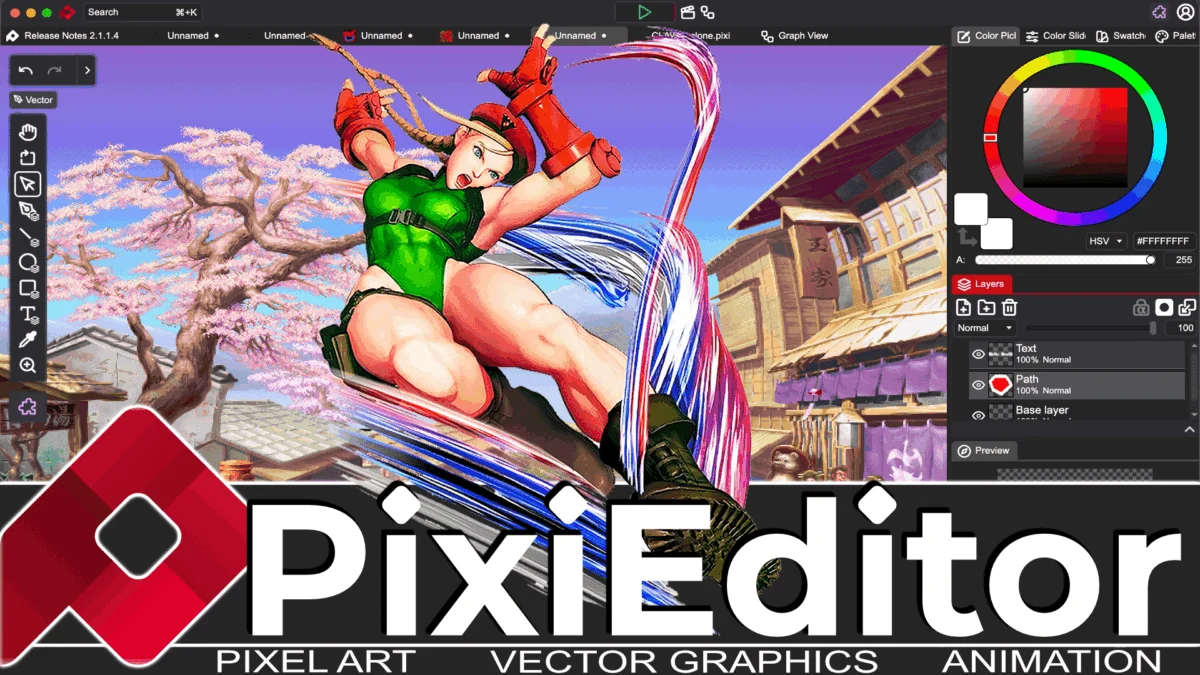
April 30, 2026 – The landscape of digital art creation for 2D graphics has been significantly reshaped with the release of PixiEditor 2.1. This latest iteration of the powerful, free, and open-source application, renowned for its cross-platform compatibility across Windows, macOS, and Linux, introduces a suite of groundbreaking features that promise to empower artists, designers, and developers alike. Building upon its established foundation of integrating traditional 2D painting, pixel art, animation, and vector graphics workflows, PixiEditor 2.1 elevates its capabilities through a sophisticated graph-based procedural system, offering unparalleled flexibility and creative potential.
Since its initial introduction in 2025, which garnered considerable attention for its ambitious all-in-one approach, PixiEditor has consistently evolved. Version 2.1 represents a substantial leap forward, with particular emphasis on a revolutionary new node-based brush engine, enhanced painting systems, deeply customizable toolsets, and a robust adjustment toolset. These advancements, coupled with new optional paid extensions and even a whimsical AI assistant, position PixiEditor 2.1 as a formidable contender in the professional 2D graphics software market, challenging the dominance of proprietary solutions.
The Genesis of Innovation: A Brief Chronology
The journey of PixiEditor began with a clear vision: to democratize access to professional-grade 2D graphics tools. The initial release, met with significant acclaim, laid the groundwork by demonstrating the potential of a unified application capable of handling diverse creative workflows. The subsequent development cycle has been characterized by a rapid iteration process, driven by community feedback and a commitment to pushing the boundaries of what is possible with open-source software.
- 2025: Initial release of PixiEditor, impressing the creative community with its ambitious scope and integrated workflow capabilities. Early adopters lauded its potential for bridging the gap between different 2D art forms.
- Early 2026: Development intensifies, focusing on core engine improvements and the exploration of advanced procedural techniques. The groundwork for the node-based brush engine and enhanced painting systems is laid.
- April 30, 2026: PixiEditor 2.1 is officially launched, introducing a transformative set of features that significantly enhance its power, flexibility, and user-friendliness. This release marks a pivotal moment in the application’s development.
This chronological progression underscores a deliberate and strategic approach to software development, prioritizing core functionality and user experience while continuously innovating.
A Deep Dive into PixiEditor 2.1’s Transformative Features
The heart of PixiEditor 2.1’s power lies in its meticulously crafted new features, each designed to address specific artistic needs and unlock new creative avenues.
The Node-Based Brush Engine: Sculpting with Logic
Perhaps the most significant advancement in PixiEditor 2.1 is the introduction of a completely new procedural node-based brush engine. This system moves beyond traditional static brush definitions, allowing users to construct brushes from a network of interconnected nodes. This paradigm shift offers an unprecedented level of control and customization.
- Infinite Brush Possibilities: Artists can now design brushes that are not only visually complex but also dynamically responsive. The engine allows for brushes that react to a multitude of inputs, including:
- Layer Interactions: Brushes can be programmed to interact with other layers in sophisticated ways, enabling effects like masking, blending, or even procedural texture generation based on underlying image data.
- Pen Data: Leveraging the nuances of pen pressure, tilt, and rotation, artists can create brushes that mimic the natural behavior of traditional media or generate entirely novel expressive strokes.
- Time: The temporal dimension is now a controllable parameter, allowing for brushes that evolve over time, creating animated textures or dynamic visual effects.
- Full Pen Tool UI Integration: Crucially, the settings and parameters of these procedurally generated brushes can be seamlessly exposed and controlled within the Pen Tool UI. This ensures an intuitive workflow, allowing artists to tweak brush behavior on the fly without navigating complex menus.
- Shader Support: The inclusion of shader support further expands the creative palette. Artists can integrate custom shaders to achieve advanced rendering effects, such as physically-based rendering (PBR) for realistic textures or unique stylistic shaders that define the visual appearance of the brush strokes. This capability positions PixiEditor 2.1 as a powerful tool for creating visually stunning assets.
Revolutionized Painting Systems: Precision and Control
The core painting engine has also undergone a significant upgrade, focusing on enhanced precision and providing artists with more sophisticated tools for refining their strokes.
- Precision Paint Engine: The underlying painting algorithms have been refined to deliver a more accurate and consistent rendering of strokes. This is particularly vital for detailed illustration, pixel art, and precise vector work.
- Advanced Stroke Stabilization: To combat jitter and ensure smooth, confident lines, PixiEditor 2.1 introduces robust stroke stabilization options. Users can choose between:
- Time-Based Stabilization: This method analyzes the speed of the stroke, providing more stabilization for slower movements and less for faster ones, offering a natural feel.
- Distance-Based Stabilization: This approach focuses on the distance traveled by the cursor, ensuring consistent stroke smoothness regardless of drawing speed.
These features are invaluable for achieving professional-quality linework and intricate details, reducing the frustration often associated with digital drawing.
Customizable Toolsets and Brush Organization: Tailoring the Workspace
Recognizing that every artist has a unique workflow, PixiEditor 2.1 introduces powerful customization options for toolsets and brush management.
- Personalized Tool Palettes: Users can now create their own custom toolsets, grouping frequently used tools and brushes for quick access. This eliminates the need to constantly navigate through extensive menus, streamlining the creative process.
- Brush Management and Organization: The ability to create and organize custom brushes is a significant boon for artists working with extensive brush libraries. Users can categorize brushes by style, function, or project, ensuring that the right tool is always at their fingertips. This level of personalization fosters efficiency and allows artists to focus on their creative vision rather than managing their tools.
The Adjustment Toolset: Mastering Raster Graphics
A new mode, aptly named "Adjustment Toolset," has been introduced, offering a dedicated space for powerful raster graphics manipulation. This addition significantly expands PixiEditor’s capabilities for post-processing and image enhancement.
- Comprehensive Raster Tools: This toolset provides a suite of essential raster graphics tools, including:
- Blur: For softening details, creating depth of field, or achieving atmospheric effects.
- Sharpen: For enhancing details and bringing out textures.
- Smudge: For blending colors and creating painterly effects.
- Brightness/Contrast: For fundamental adjustments to image luminosity and tonal range.
This integrated approach means artists no longer need to switch to separate applications for common image editing tasks, fostering a more cohesive workflow.
New Optional Paid Extensions: Expanding Horizons
While PixiEditor remains committed to its free and open-source ethos, the release of version 2.1 also sees the introduction of optional, paid extensions. These extensions are designed to cater to specialized professional needs and further enhance the application’s capabilities without compromising its core accessibility.
- Skybox Designer: This extension is tailored for game developers and 3D artists, providing tools to create immersive skyboxes for virtual environments.
- Normal Map Generator: A crucial tool for 3D asset creation, this extension allows for the generation of normal maps, which simulate surface detail and add realism to 3D models.
- Advanced Pixel Art Toolset: For dedicated pixel artists, this extension offers specialized tools and features designed to streamline the creation of high-quality pixel art, potentially including advanced dithering techniques, palette management, and animation tools.
The availability of these extensions provides a pathway for professional users to further invest in PixiEditor while still benefiting from the core free application.
"Mushy Advisor": A Whimsical Companion
In a nod to the often-loved (and sometimes debated) interactive assistants of the past, PixiEditor 2.1 introduces the "Mushy Advisor." This friendly mushroom character serves as an interactive helper, offering guidance and tips within the application. While perhaps not a feature for the purist, it adds a touch of personality and can be a valuable resource for newcomers to the software or for discovering less-obvious functionalities. The developers have playfully noted the absence of an option to ban it to the netherworld, suggesting it’s a feature here to stay.
"Much, Much More": A Comprehensive Update
Beyond these headline features, PixiEditor 2.1 is packed with a multitude of other improvements that contribute to a more robust and user-friendly experience.
- Improved SVG Support: Enhanced compatibility and fidelity with Scalable Vector Graphics (SVG) files ensure smoother import and export of vector artwork.
- Blackboard Functionality: A new "Blackboard" feature likely offers a collaborative or scratchpad-like space for brainstorming and initial ideation.
- Smart Layers: This promising feature suggests layers with intelligent properties that can adapt and respond to changes in the artwork, potentially automating repetitive tasks or maintaining design integrity.
- Animation Timeline Enhancements: Further refinements to the animation timeline promise a more intuitive and powerful experience for creating animated sequences.
Supporting Data and Community Impact
The rapid development and feature-rich nature of PixiEditor 2.1 are a testament to the strength of its open-source community. The project’s active GitHub repository, with its numerous contributions and ongoing discussions, highlights a vibrant ecosystem of developers and artists collaborating to push the boundaries of the application.
The availability of comprehensive documentation, including a detailed release blog post and a GitHub repository, empowers users to not only learn but also contribute to the project’s growth. The inclusion of video tutorials, both in-depth and short-form, further lowers the barrier to entry for new users, allowing them to quickly grasp the application’s capabilities and begin their creative journey.
Official Responses and Developer Vision
The developers behind PixiEditor have consistently articulated a vision of democratizing professional creative tools. The release of version 2.1 reinforces this commitment by offering a feature set that rivals, and in some areas surpasses, that of established proprietary software, all while remaining free and open-source. The introduction of optional paid extensions indicates a sustainable development model that allows for continued investment in core features and community support.
The emphasis on a node-based procedural system reflects a forward-thinking approach to digital art creation, embracing flexibility and infinite customizability. This aligns with industry trends towards more dynamic and responsive creative workflows.
Implications for the Creative Industry
The release of PixiEditor 2.1 carries significant implications for the broader creative industry:
- Democratization of Professional Tools: PixiEditor 2.1 continues to lower the barrier to entry for aspiring artists and small studios. Access to powerful, free, and open-source software can level the playing field, enabling creators to produce professional-quality work without the prohibitive costs of commercial licenses.
- Innovation Catalyst: The advanced features, particularly the node-based brush engine and enhanced painting systems, are likely to inspire new artistic techniques and workflows. This can lead to a surge of innovation across various 2D art disciplines.
- Challenge to Proprietary Software: As PixiEditor matures and its feature set expands, it poses an increasingly credible challenge to established commercial software. This competition can drive further innovation and potentially lead to more competitive pricing models in the proprietary market.
- Empowerment for Game Developers and Indie Creators: The inclusion of features like the Normal Map Generator and the general flexibility of the application make it an attractive option for independent game developers and creators working with limited budgets.
- Educational Opportunities: The free and open-source nature of PixiEditor makes it an ideal tool for educational institutions and self-taught artists looking to acquire professional-grade skills without financial constraints.
In conclusion, PixiEditor 2.1 represents a monumental step forward for free and open-source 2D graphics software. Its innovative features, coupled with a commitment to accessibility and community-driven development, position it as a powerful and indispensable tool for a new generation of digital artists and designers. The application’s ongoing evolution promises to further reshape the creative landscape, empowering individuals and teams to realize their artistic visions without compromise.
Key Links:
- PixiEditor Homepage: https://pixieditor.net/
- PixiEditor 2.1 Release Details: https://pixieditor.net/blog/2026/04/30/21-release
- PixiEditor on GitHub: https://github.com/PixiEditor/PixiEditor
- Discord Server: https://discord.gg/tzkQFDkqQS
- Video Demonstration: https://youtu.be/brJHWbeMl74
- Short Video: https://youtube.com/shorts/31G5U_Q9Btw


Leave a Comment