
The Future of Spatial Computing: A Comprehensive Preview of AWE USA 2026
As the spatial computing industry prepares for its premier annual gathering, AWE (Augmented World Expo) USA 2026, the landscape of Extended Reality (XR) is shifting from experimental hardware to mature, enterprise-grade ecosystems. Set to take place in Long Beach, California, from June 15th to 18th, the event promises to be a watershed moment for the integration of artificial intelligence, advanced optics, and high-fidelity volumetric capture.
Ahead of the official opening, an exclusive preview reveals five pioneering companies—Oxford Optical Labs, SpatialGen, 4D Views, MetaNeural, and Prehension—that are poised to redefine how we interact with both virtual and physical environments. These organizations represent the "picks and shovels" of the XR revolution, solving fundamental friction points in hardware, distribution, and simulation.
Main Facts: The Five Pillars of Innovation at AWE 2026
The upcoming exhibition highlights a distinct trend toward solving the "hard problems" of XR. While previous years focused on headset form factors, 2026 is defined by:
- Adaptive Optics: Oxford Optical Labs is introducing fluid-based, non-glass lenses that dynamically adjust to a user’s vision prescription and focus distance in real-time.
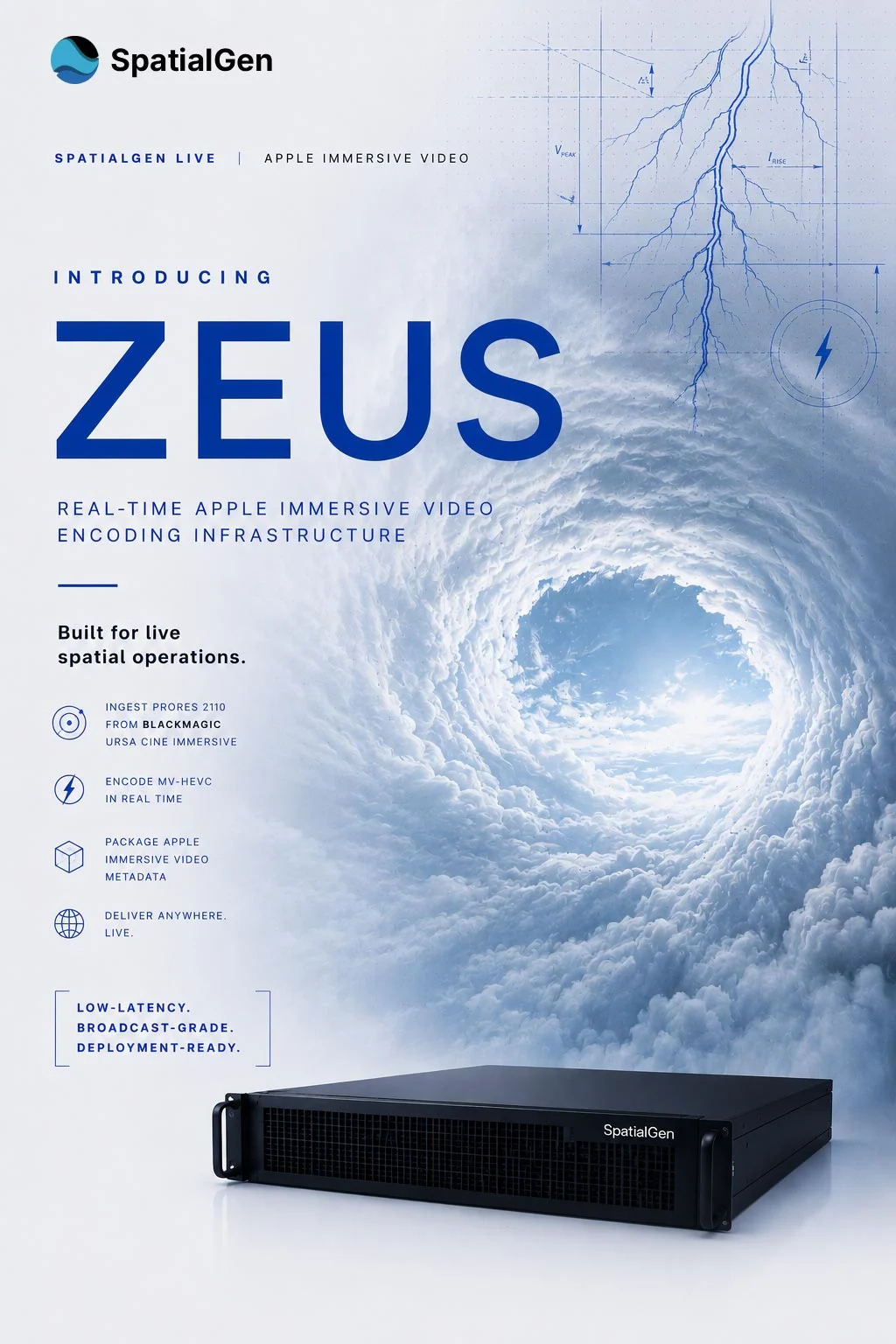
- Spatial Streaming Infrastructure: SpatialGen is launching "ZEUS," a $65,000 professional-grade server and software suite designed to live-stream Apple Immersive Video at ultra-low latency.
- Volumetric Evolution: 4D Views, a veteran in the field, is transitioning from traditional mesh-based volumetric video to Gaussian Splatting, offering unprecedented visual fidelity for entertainment and enterprise.
- Generative Simulation: MetaNeural is debuting a no-code, AI-driven platform for military and critical infrastructure simulation, allowing users to build complex scenarios through natural language.
- Standardized Interaction: Prehension is filling a critical gap in Unity development by providing a local-processing, cloud-trained gesture recognition engine that works across all major hardware platforms.
Chronology: From Experimental Concepts to Commercial Readiness
The journey to AWE 2026 has been marked by years of R&D, often outside the traditional VR/AR spotlight.

- 2007–2020: 4D Views begins its work in volumetric video, long before the term "Metaverse" entered the zeitgeist. Simultaneously, the technology behind Oxford Optical Labs’ fluid lenses is perfected in non-VR industrial and medical applications over a 15-year period.
- 2023–2024: The launch of the Apple Vision Pro reinvigorates interest in 180-degree immersive video. SpatialGen emerges as a dominant force, powering 90% of third-party immersive content on the Apple ecosystem.
- 2025: MetaNeural shifts its focus toward "Critical Infrastructure" and military applications, responding to the global demand for more sophisticated drone warfare and crisis management simulations.
- June 2026: AWE USA 2026 serves as the commercial launchpad for these technologies, moving them from closed betas and military contracts into the broader enterprise and consumer markets.
Supporting Data: Technical Specifications and Market Positioning
Oxford Optical Labs: Solving the Vergence-Accommodation Conflict
The "fixed-focus" problem has long been the Achilles’ heel of XR, causing eye strain and breaking immersion. Oxford Optical Labs’ solution utilizes a plastic membrane filled with a specialized fluid.
- Performance: The lens can shift focus in under 70ms. This is critical because it is faster than the human eye’s saccadic suppression, meaning the user perceives the focus change as natural and instantaneous.
- Durability: Despite being fluid-filled, the lenses have passed 15 years of stress testing, including scratch resistance tests comparable to standard polycarbonate glasses.
SpatialGen ZEUS: The High-End of Immersive Media
SpatialGen’s ZEUS platform is not for the hobbyist. It is a targeted enterprise solution.
- Pricing: Starting at $65,000, the package includes a server rack and proprietary encoding software.
- Ecosystem: It is optimized for Apple Immersive Video, providing the necessary "plumbing" to take raw immersive camera feeds and package them for Content Delivery Networks (CDNs).
- Collaboration: The company has recently entered a strategic partnership with the US Air Force (USAF) to deploy visualization tools faster than traditional defense procurement cycles allow.
4D Views: The Shift to Gaussian Splatting
With 20 partner studios worldwide, 4D Views is moving beyond the "uncanny valley" of mesh-based avatars.
- Technique: By utilizing Gaussian Splatting, they can capture fine details—like hair, transparent fabrics, and complex lighting—that traditional volumetric meshes often lose.
- Integration: A new Unity plugin being announced at AWE will allow developers to drag-and-drop these high-fidelity splat videos directly into game engines.
Prehension: Low-Latency Interaction
Prehension addresses the inconsistency of hand-tracking interactions.

- Architecture: While the machine learning models are trained on the cloud for maximum complexity, the inference (recognition) engine runs 100% locally. This ensures that gesture detection does not suffer from network lag, a prerequisite for fast-paced applications like gaming or medical training.
Official Responses and Industry Perspective
The companies involved emphasize that their technologies are responses to specific market voids.
A spokesperson for Oxford Optical Labs noted that the ability to "copy a prescription" from a user’s glasses directly to the headset at a VR arcade or museum would save "thousands of dollars in custom lens inserts and hours of setup time." They confirmed that the technology is ready for mass-market integration, having been battle-tested for over a decade in other industries.
SpatialGen has positioned ZEUS as the bridge between high-end hardware like the Vision Pro and live events. "We handle the complexity of the stream so the customer can focus on the cinematography," the company stated. Their move into the military sector with the USAF suggests a dual-use strategy that balances Hollywood entertainment with national security.
MetaNeural addressed concerns regarding AI in high-stakes environments. When asked about "AI hallucinations" in their drone swarm simulations, a representative stated that they have implemented "rigorous guardrails" to ensure that the simulations remain grounded in physics-based reality rather than generative guesswork. Their "no-code" approach is specifically designed for secretive organizations that cannot afford to outsource development to third-party agencies.

Implications: A New Era for XR
The innovations showcased at AWE 2026 signal a shift toward frictionless XR.
1. The End of Hardware Personalization Friction
Oxford Optical Labs’ fluid lenses could effectively end the era of prescription inserts. If a single headset can adjust to any user’s eyes in milliseconds, the hardware becomes truly "shareable," a massive boon for location-based entertainment (LBE) and corporate training departments.
2. The Democratization of Professional Live-Streaming
While the $65,000 price point for SpatialGen ZEUS is high, it establishes a professional standard for "spatial live" content. As telcos and studios adopt this, we can expect live sports and concerts to become the primary "killer app" for high-end headsets, moving beyond the static, pre-recorded content currently available.
3. The "No-Code" Military Revolution
MetaNeural’s platform highlights a broader trend: the intersection of AI and XR. By allowing commanders and infrastructure managers to "talk" a simulation into existence, the barrier to entry for high-stakes training vanishes. This has profound implications for how cities prepare for crises and how modern militaries train for drone-centric warfare.

4. Visual Fidelity and Interaction Standards
The move toward Gaussian Splatting (4D Views) and standardized gesture recognition (Prehension) suggests that the industry is finally agreeing on what "good" looks and feels like. We are moving away from "cartoonish" avatars and clunky controller menus toward a world where virtual humans look real and our hands behave exactly as they do in the physical world.
Conclusion
AWE USA 2026 is set to demonstrate that the spatial computing industry has matured. The focus has moved from "What can this headset do?" to "How do we make this headset work for everyone, everywhere, instantly?" Through the lens of these five companies, the future of XR appears more visual, more responsive, and more integrated into the fabric of professional and public life than ever before. For those attending the event in Long Beach, the message is clear: the foundational technology is here; now, it is time to build.



Leave a Comment