
The Great Deconstruction: When Beloved Narratives Face the Creator’s Will
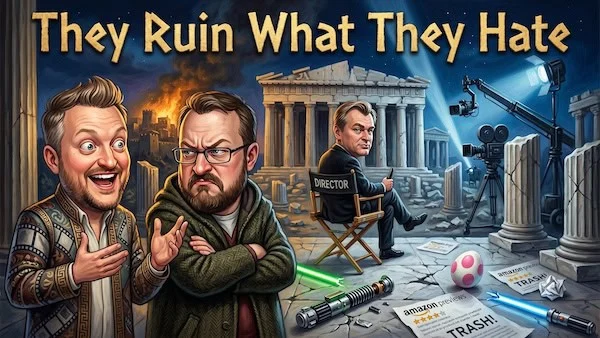
A growing trend of reimagining and reinterpreting classic stories is sparking debate among audiences and creators alike, with some celebrating innovative approaches while others lament a perceived erosion of original intent.
In the ever-evolving landscape of popular culture, a curious phenomenon is unfolding. Beloved narratives, once etched into the collective consciousness, are being subjected to radical reinterpretations, sparking both fervent praise and sharp criticism. From the silver screen to streaming platforms and video game universes, creators are increasingly taking established stories and characters and molding them to fit contemporary sensibilities and personal visions. This has led to a palpable divide: on one side, audiences eager for fresh perspectives and bold artistic statements; on the other, devoted fans who feel their cherished works are being diluted or even disrespected.
This article delves into this cultural zeitgeist, examining the differing approaches to adapting beloved stories and the resulting impact on fan bases and the industry as a whole. We will explore instances where creative liberties have been met with acclaim, and where they have led to backlash, ultimately questioning what truly resonates with audiences and what constitutes a successful adaptation.
The Shifting Sands of Adaptation: A Chronology of Recent Trends
The current discourse around adaptation has been amplified by a series of high-profile announcements and releases that highlight this creative divergence.
The Blockbuster Blitz: Ambitious Reboots and Divergent Visions
The year 2026 is poised to be a significant one for cinematic reinterpretations. Christopher Nolan, a director known for his ambitious and often mind-bending approach to filmmaking, is slated to release his take on Homer’s epic poem, Odyssey. While the mere announcement of a Nolan adaptation typically ignites excitement, the initial reception to Odyssey has been notably divided. Whispers suggest that the project, while a grand undertaking, is already polarizing, with a segment of the public finding themselves ironically delighted by the prospect of its perceived failure. This sentiment is amplified by early visual cues that some argue deviate significantly from the source material, such as armor designs that draw comparisons to Batman’s iconic cowl, and casting choices that eschew traditional Greek actors.
This follows the recent release of James Gunn’s Superman. While the film achieved profitability, it has been met with disappointment by many long-time fans of the Man of Steel. Gunn himself has publicly characterized Batman as "boring," signaling a potential shift in how these iconic characters will be portrayed within his nascent DC Universe. This statement, coming from a figure now at the helm of a major superhero franchise, underscores a perceived willingness to deconstruct established character archetypes.
The trend extends beyond the realm of superheroes. The upcoming Helldivers movie, based on the popular video game, has drawn scrutiny due to the director’s admitted lack of familiarity with the source material, stating he has neither played the game nor intends to. This raises questions about authenticity and the director’s ability to capture the spirit of the game for its existing fanbase. Similarly, Netflix’s new Narnia series has been described as an "entirely new reimagining," suggesting a significant departure from C.S. Lewis’s beloved books, potentially incorporating modern musical elements and narrative departures that have already sparked concern.
In the superhero space, the upcoming Avengers Doomsday is generating buzz with the potential return of Chris Evans as Captain America. This has led to speculation that he might replace Anthony Mackie, whose tenure as the new Captain America has reportedly received a lukewarm reception from audiences. The very idea of recasting a central figure like Captain America, even for a new iteration, speaks to the ongoing negotiation of character legacy within these expansive universes.
The Two Paths: Deconstruction vs. Devotion
The current cultural landscape appears to be navigating two distinct approaches to adapting beloved stories:
The Defilement of the Temple: Deconstruction and Modernization
One prominent approach involves what can be described as the "defilement of the temple"—a process where creators take established and cherished stories or characters and deconstruct them to align with their own worldviews, often forgoing the original intent or spirit of the work. This methodology has been cited as a contributing factor to several perceived missteps in recent years:
- The Decline of Star Wars: The franchise, once a beacon of science fiction, has faced significant criticism for its sequel trilogy, with many fans feeling it failed to capture the magic of the original films.
- Marvel’s Phase Four Woes: The post-endgame era of the Marvel Cinematic Universe has been characterized by a perceived dip in quality and narrative cohesion, leading to fan dissatisfaction.
- The Dune: Part Two Outcry: The rewriting of Chani’s character in Denis Villeneuve’s Dune: Part Two generated considerable debate, with some viewers feeling her portrayal deviated too drastically from Frank Herbert’s original vision.
- Cancellation of Rings of Power and Wheel of Time: While The Rings of Power continued for a second season, its reception was mixed, and The Wheel of Time faced similar challenges in satisfying its fanbase, leading to concerns about the creative direction of these fantasy adaptations.
- Henry Cavill’s Departure from The Witcher: The highly publicized exit of Henry Cavill from The Witcher series was reportedly due to his disagreement with the writers’ attempts to "deconstruct" the character of Geralt of Rivia, whom Cavill championed as a loyal protector of the source material.
- Dungeons and Dragons’ Recent Struggles: The latest edition of Dungeons and Dragons has reportedly experienced significant sales drops, attributed by some to the inclusion of divisive social agendas within its rulebooks and perceived attacks on original creators on social media.
These examples suggest a pattern where creators, in their pursuit of contemporary relevance or personal artistic expression, may inadvertently alienate the very audience that holds the source material dear. The underlying sentiment is that these beloved narratives are being reshaped to fit a modern agenda rather than being honored for their intrinsic value.
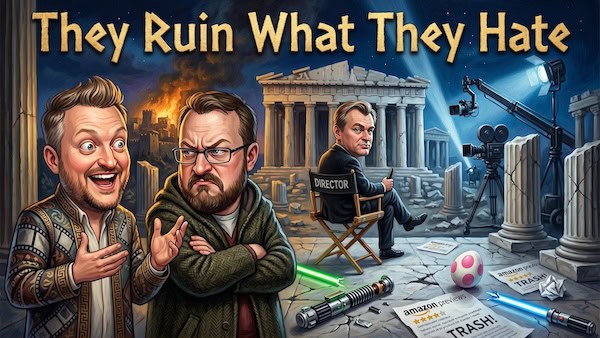
Faithful Adaptation: Honoring the Source Material
In stark contrast to the deconstructive approach, a second, and often more successful, path lies in faithful adaptation—a methodology that prioritizes honoring the original source material and its spirit. This approach has demonstrably resonated with audiences and revitalized fan bases.
-
Destiny 2‘s Renegades Expansion: The popular first-person shooter Destiny 2 recently released its Renegades expansion, a beat-for-beat adaptation of Star Wars IV: A New Hope. This expansion, featuring lightsabers, Star Wars-themed environments, and force-like abilities, has been credited with revitalizing the game’s player base. It serves as a potent counterpoint to the perceived failure of EA’s Outlaws, a game that aimed for a similar Star Wars experience but ultimately alienated its audience. The success of Renegades sends a clear message: audiences crave genuine connections to the stories they love.
-
The Warhammer 40,000 Universe: The grimdark universe of Warhammer 40,000, despite recent struggles with its novel offerings, has consistently found success in its video game adaptations. Space Marine 2 has been lauded as a fantastic experience, and the Secret Level episode on Amazon Prime is considered pinnacle 40k storytelling. The immense anticipation surrounding Henry Cavill’s upcoming Warhammer 40,000 Amazon series is further testament to the appeal of adaptations helmed by creators with a deep respect for the source material. Cavill’s known dedication to the lore of the properties he engages with bodes well for fans.
These examples highlight a fundamental truth: people connect deeply with stories. When these stories are reinterpreted by creators who appear to disregard or even disdain the source material or its original creators, it breeds resentment. The underlying message is that adaptation, when done with respect for the creator, the source material, and the audience, can lead to renewed enthusiasm and commercial success.
The Perils of Pride and the Power of Love: Lessons from Star Wars and Beyond
The narrative of Star Wars serves as a potent cautionary tale. George Lucas’s decision to disregard the established Expanded Universe content—years of rich lore that had deeply enriched the franchise between the original trilogy and the prequels—demonstrates a misstep born from a belief that his vision superseded the collective passion of his fanbase. This alienation, it is argued, ultimately contributed to his decision to sell the franchise to Disney. The enduring popularity of sub-IPs that echo the original trilogy or The Clone Wars animated series, while other ventures have faltered, underscores the idea that authenticity and respect for established lore are paramount.
The subsequent attempts to introduce new characters and storylines in the sequel trilogy, while ambitious, failed to capture the same spark. The introduction of characters like Rey, while intended to be a new generation’s hero, failed to resonate with many of the same foundational principles that made Luke Skywalker so compelling. The criticism often leveled is that these new characters, despite superficial resemblances to iconic figures like Darth Vader, lacked the depth and narrative foundation that made their predecessors so enduring. The contrast with characters like Thrawn, introduced in Timothy Zahn’s Thrawn Trilogy, is stark. Thrawn, a villain whose power lay in intellect and strategic brilliance rather than Force abilities, became one of Star Wars‘ most beloved antagonists precisely because he offered a fresh, anti-establishment take that complemented, rather than mimicked, the existing dynamics. This highlights how innovation can thrive within established frameworks, provided it is rooted in a deep understanding of what makes the universe compelling.
The concept of "Diet Darth Vader" used to describe some of the sequel trilogy’s villains, who adopted similar aesthetics without the underlying narrative complexity, further emphasizes the point. True innovation lies not in imitation, but in creating something that stands on its own merits while respecting the foundation. The notion that Mara Jade, a beloved character from the Expanded Universe, would have been a more compelling choice than Rey for many fans, speaks to the power of well-developed, existing characters and the potential missed opportunities when original lore is sidelined.
Commentary: The Audience’s Voice and the Creator’s Responsibility
The debate surrounding these adaptations is not merely academic; it resonates deeply with audiences who have invested emotionally in these narratives.
Thomas: "My book club is reading The Odyssey right now because we were hyped over the poster for Nolan’s movie. Now, while we are still reading and enjoying The Odyssey, we are no longer planning to go see the film." This sentiment encapsulates a common reaction: initial excitement for a beloved story being tarnished by apprehension about the creator’s approach.
Jonathan: "There are several questionable decisions. The armor looks like Batman’s armor from The Dark Knight. Nolan tried to explain it as blackened bronze treated with sulfur, but it looks like Batman’s armor. No Greek actors were cast. A rapper was cast as a bard because Nolan said oral storytelling is more analogous to rap. The new Narnia on Netflix is chucking everything and using modern music." These points highlight specific creative choices that, to some viewers, feel like departures from the spirit of the original works, suggesting a deliberate effort to modernize or reinterpret in ways that feel incongruous.
Thomas: "They see these old works as things to fix. There is a common story on Author Update about estates censoring a dead author’s books for modern sensibilities. From a business side, this never works. People do not want a thing they already did not want just because it was remade to be slightly less repulsive to them." This speaks to a broader trend of "fixing" older works for contemporary audiences, a strategy that often backfires. The analogy to Las Vegas attempting to become family-friendly in the ’90s, only to be saved by embracing its core identity, is particularly poignant.
Thomas: "This is what killed Marvel. Marvel had high scores among men and lower scores with women, so they put women in charge, changed plots, and featured female characters. The result was that Marvel became way less popular with men and just as popular with women as before. They broke the first law of book marketing: love your reader as much as you love your book." This critique of Marvel’s perceived shift in focus, aiming to broaden its appeal by alienating its core demographic, is a recurring theme in discussions about the franchise’s recent performance. The emphasis on "loving your reader" as a fundamental principle of marketing is crucial.

Jonathan: "Henry Cavill was the best live-action Superman. He came to the role with genuine love for the character and put extra effort into making Superman as bright as possible in Man of Steel. That was a movie for people who love Superman. The latest Superman did not feel like it was made for Superman fans." This directly contrasts the perceived intention behind Cavill’s Superman with Gunn’s current vision, suggesting a preference for adaptations that cater to existing fan bases.
Thomas: "Condescension is bad for marketing with one narrow exception: high art targeted at a tiny aristocratic audience where the whole point is exclusivity. But in publishing, there is no money in targeting just those people. You cannot build a career on it." This point addresses the danger of creators assuming superiority over their source material or audience, a strategy that is rarely successful in mainstream entertainment.
Thomas: "We will have a great case study between Epic: The Musical, which has been shockingly successful, and Nolan’s Odyssey. Imagine pitching Epic: The Musical, an opera for Gen Z and Gen Alpha based on a 2,500-year-old poem. They would laugh you out of the room. It has a billion streams. Jorge Rivera-Hernández made it with love, and it shows." The success of Epic: The Musical, a modern and passionate adaptation of Homer’s Odyssey, stands as a powerful testament to the potential of loving and innovative interpretation.
Thomas: "Peter Jackson’s changes to The Lord of the Rings were made out of love. Christopher Tolkien hated the movies, but what saved them was that the changes came from someone who loved the story and loved Tolkien. His interpretation simplified and adapted it into a commercially viable action film, but it was adapted out of love." This highlights that even significant changes can be accepted if they stem from a place of genuine affection for the source material.
Jonathan: "Destiny 2’s Renegades expansion is beat-for-beat Star Wars IV poured into the Destiny universe. Same story, same structure, with a superweapon, lightsaber fighting, and a Sith Lord. It brought the player base back and told Lucasfilm that people love the classic Star Wars. Stop making different Star Wars." This reiterates the success of faithful, albeit creatively integrated, adaptations.
Thomas: "The Thrawn Trilogy is key. Timothy Zahn created the best villain in Star Wars after Darth Vader by going in the exact opposite direction. Thrawn had no Force powers. His superpower was theory of mind. He would study the art of your planet and predict what you would do in battle. He was always five moves ahead. The Republic would route in space battles just at the rumor he was there. It is a brilliant narrative device: create a villain who is the anti-Darth Vader, and by doing so, create the second-most beloved villain in Star Wars." This showcases how creative innovation, when it respects the established universe, can lead to enduring success.
Jonathan: "They should have gone with Mara Jade instead of Rey. She is a great female character with a fascinating story." This opinion reflects a segment of the fanbase that feels overlooked in the pursuit of new characters over well-established ones from existing lore.
Thomas: "The bottom line for authors is that you have to love your reader, and you have to love your book. These are not in conflict, and if they are, you are not ready to publish. The Super Mario Bros. Movie was made with love by people who loved Mario and loved the fans. My children loved it and chattered about it all the way home. If you allow hatred to creep into your heart, you will walk the path of the dark side." This concluding thought emphasizes the core message: love for the source material and its audience is the most crucial ingredient for successful adaptation, a principle that extends far beyond the realm of authorship.
Implications: The Future of Fandom and Creative Integrity
The ongoing tension between deconstructive and faithful adaptation presents significant implications for the future of fandom and the very concept of creative integrity.
On one hand, the drive for reinvention can lead to genuinely groundbreaking works that introduce new audiences to classic stories or offer fresh perspectives that resonate with contemporary issues. The success of Epic: The Musical demonstrates that even ancient narratives can find vibrant new life when infused with passion and a deep understanding of modern engagement.
However, the consistent backlash against adaptations that are perceived as disrespectful or dismissive of their source material cannot be ignored. This suggests a growing demand for creators to approach beloved IP with a sense of stewardship, acknowledging the legacy and the emotional investment of existing fan bases. The financial success of properties that prioritize faithfulness, like Destiny 2‘s Renegades expansion, serves as a powerful market indicator.
The challenge for creators and studios lies in finding the delicate balance between innovation and reverence. It is about understanding what makes a story resonate and why audiences connect with certain characters. As the cultural conversation around adaptation continues to evolve, it will be fascinating to observe which approaches ultimately prevail and what lessons are learned from the successes and failures of this ongoing creative experiment. The future of beloved narratives hinges on whether creators can harness their artistic vision without alienating the very people who have kept these stories alive for generations.


Leave a Comment