
The Shadow of Barbed Wire: Britain’s Concentration Camps in the Boer War
Introduction: A Dark Chapter in Imperial History
The Second Anglo-Boer War (1899-1902), often referred to as the South African War, stands as a stark and controversial chapter in the annals of British imperial history. Beyond the conventional battlefields and tactical maneuvers, this conflict witnessed the systematic detention of civilian populations in camps, a practice that would later become synonymous with some of the 20th century’s most horrific atrocities. The British authorities, grappling with a tenacious Boer guerrilla insurgency, implemented a policy that led to the establishment of "concentration camps" for civilians – primarily Boer women and children, but also a significant number of Black Africans. These camps, initially conceived as a means to deprive Boer fighters of logistical support and provide refuge for displaced families, quickly devolved into overcrowded, unsanitary death traps due to a catastrophic lack of planning and severe neglect. The resulting humanitarian crisis claimed the lives of tens of thousands, predominantly children, casting a long shadow over Britain’s conduct in the war and leaving an indelible mark on the region’s history.
The Roots of Conflict: Anglo-Boer Rivalry
The backdrop to this devastating war was a complex tapestry of economic ambition, political tension, and deep-seated rivalry in Southern Africa.
Economic Ambition and Political Tensions
At the heart of the escalating conflict lay the immense natural wealth of the region. The discovery of diamonds in Kimberley in the 1860s and, more significantly, vast gold deposits in the Witwatersrand basin (Transvaal) in the 1880s, transformed the economic landscape. These riches became a powerful magnet for British imperial interests, clashing directly with the independent Boer republics of Transvaal (South African Republic) and the Orange Free State. The Boers, descendants of Dutch, French Huguenot, and German settlers, had a long history of trekking into the interior to escape British rule and establish their own self-governing states.
British desire for control over these mineral resources, coupled with a broader ambition to consolidate its dominance across Southern Africa, fueled growing animosity. Another significant point of contention was the treatment of British Uitlanders (foreigners) in the Boer republics, particularly in the gold-rich Transvaal. The Boers, fearing being outnumbered and outvoted, denied the Uitlanders political rights, despite their substantial economic contributions. This discriminatory policy provided Britain with a convenient pretext to intervene, portraying itself as the protector of its subjects.
The First Skirmishes and Rising Stakes
Mutual suspicions and provocations further inflamed the situation. The ill-fated Jameson Raid of 1895, an unofficial British-backed attempt at a coup in Transvaal, was a spectacular failure but served to confirm Boer fears of British expansionism. In response, the Transvaal government bolstered its defenses by acquiring foreign arms and solidified its alliance with the Orange Free State. Crucially, Transvaal also signed a treaty with Germany, a development that horrified Britain. The prospect of German involvement in a strategically vital region directly threatened British interests and its hegemonic position across the continent, raising the stakes considerably.
The two sides had already clashed in the First Anglo-Boer War (1880-81), a conflict largely characterized by skirmishes that the Boers, employing effective guerrilla tactics against a complacent British force, had decisively won. This earlier victory instilled a sense of confidence in the Boers, but it would be tragically overshadowed by the "massive scale and savagery" of the second, far more brutal, confrontation.
The War Unfolds: From Conventional Battles to Guerrilla Warfare
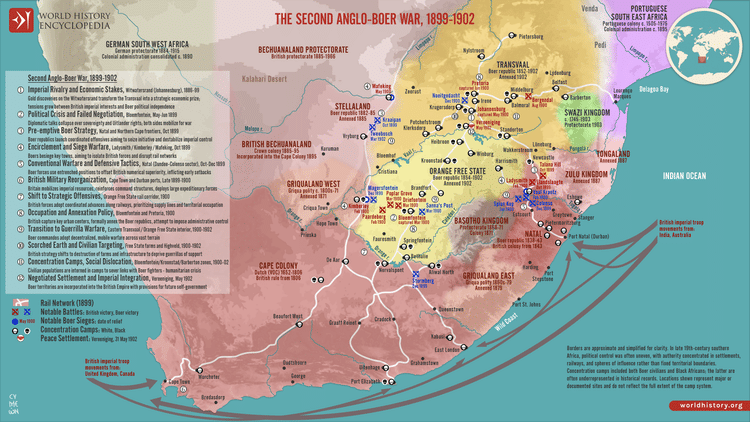
The Second Anglo-Boer War officially began on 11 October 1899, with an initial Boer cavalry routing a British force.
Early Boer Successes
The Boers, though not formally trained in the European military tradition, were formidable fighters. They possessed excellent rifles and were highly skilled marksmen, intimately familiar with the rugged Southern African terrain. Organizing themselves into highly mobile units known as commandos, they leveraged their knowledge of the local environment to devastating effect. In the early stages of the war, these commandos inflicted several embarrassing defeats upon the British, largely due to superior Boer tactics and often, poor British generalship.
British Counter-Offensive and the Scorched-Earth Policy
However, the tide soon turned as the British government, determined to secure victory, committed vast resources. Unlike the previous conflict, Britain dispatched substantial reinforcements to its colonial forces. The British Army, augmented by 30,000 colonial troops from Australia, New Zealand, and Canada, rapidly swelled from 25,000 to an overwhelming 250,000 men. This sheer numerical superiority eventually enabled the British to seize major Boer towns and capitals, including Pretoria, Bloemfontein, and Johannesburg.
Faced with these military reversals and the loss of their primary urban centers, the Boers adapted their strategy, reverting to the effective guerrilla tactics that had served them well in the first war. Small, mobile commando units launched hit-and-run attacks, ambushing supply lines, disrupting communications, and harassing British forces across the vast landscape. This protracted, unconventional warfare proved incredibly frustrating and costly for the British, who had anticipated a swift, decisive victory.
In response to this persistent and elusive enemy, the British commander-in-chief, Lord Horatio Herbert Kitchener, implemented a brutal and controversial counter-insurgency strategy. This included a widespread "scorched-earth" policy, designed to deny the guerrillas any local support or sustenance. Crops were systematically destroyed, livestock confiscated or slaughtered, and thousands of civilian farms and homes were burned to the ground. This scorched-earth campaign aimed to make it impossible for Boer commandos to resupply themselves from the countryside. As historian T. Pakenham notes, Kitchener also restricted Boer movement by dividing "both the ex-republics into a huge steel chequerboard made of barbed wire fence lines, guarded by concrete blockhouses" (577), effectively trapping and isolating the remaining combatants and the civilian population.
The Genesis of the Camps: A Controversial Strategy
The scorched-earth policy, while militarily effective in theory, created a massive humanitarian crisis, leaving tens of thousands of Boer families homeless and destitute. It was this situation that directly led to the establishment of the concentration camps.
Depriving the Enemy of Support
Initially, captured Boer combatants and suspected sympathizers were sent to prison camps abroad, in places like St Helena and Ceylon (modern-day Sri Lanka), where they were generally treated according to European conventions of war. However, as the guerrilla war dragged on far longer than anticipated, the British attitude hardened. Recognizing that the fighting Boers relied heavily on their civilian farms for food, fodder for their horses, and intelligence – often from their own wives and families – Kitchener escalated his strategy. He ordered not only the continued destruction of farms but also the arrest and detention of Boer women, children, and their household servants (who were predominantly Black Africans). These civilians were then forcibly relocated to newly established camps within South Africa, which soon became known as concentration camps due to their dense populations and confinement.
The primary military rationale behind this policy was clear: to sever the lifeline between the Boer commandos and their support network. By removing civilians from the countryside, the British aimed to isolate the guerrillas, making it impossible for them to forage, resupply, or receive intelligence from their families.
A ‘Refuge’ of Despair
The British authorities also offered a secondary, ostensibly humanitarian, justification for the camps: to provide accommodation for those who had lost their homes and livelihoods due to the ongoing conflict and the scorched-earth campaign. Many families, their farms burnt and their livestock gone, were indeed left without shelter or food. The camps were, therefore, presented as "refuge camps" or places of safety.
This dual purpose, however, was fraught with ethical complexities and practical failures. While some British soldiers expressed discomfort with the policy – one Yeomanry trooper reportedly commented it was "the most disgusting thing we had to do" (James, 130) – there was a widespread belief among the troops that such drastic measures were necessary to bring the protracted and costly war to an end.
The detainees themselves were not a monolithic group. They included civilians who actively or passively supported the Boer commandos, as well as those who had collaborated with the British but whose farms had been destroyed either by mistake or by Boer commandos for their perceived disloyalty. These pro-British refugees were also held in concentration camps, though they were often afforded slightly better rations and conditions than other detainees. Captured Boer combatants, meanwhile, were increasingly sent to separate prisoner-of-war camps within South Africa itself, distinct from the civilian concentration camps.
Segregation and Forced Labor
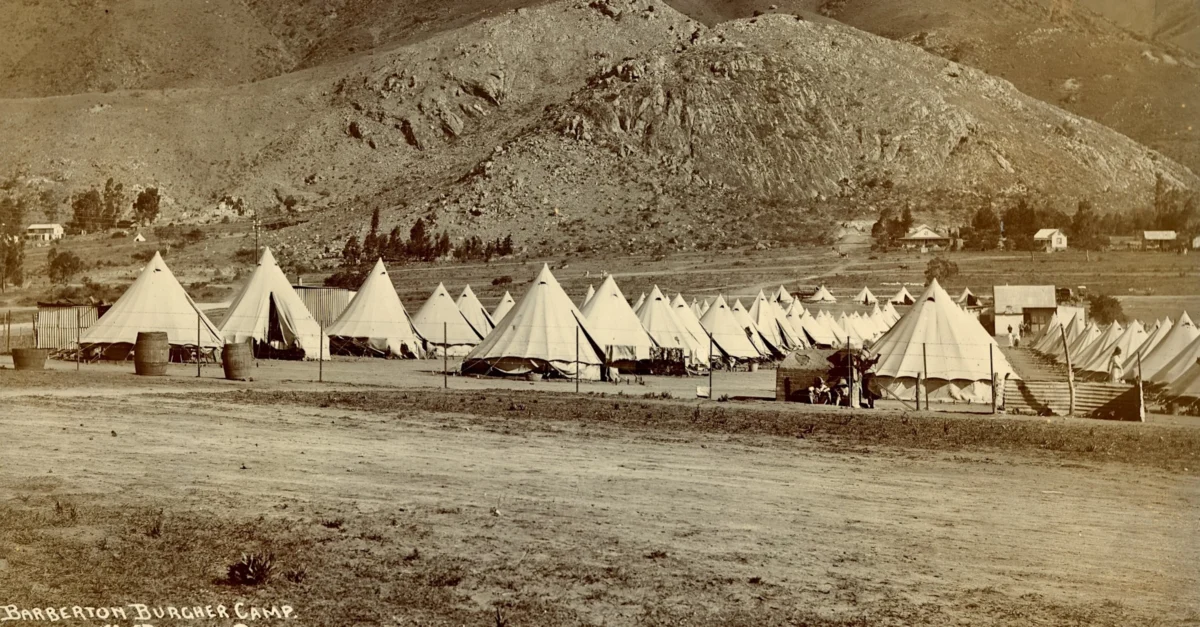
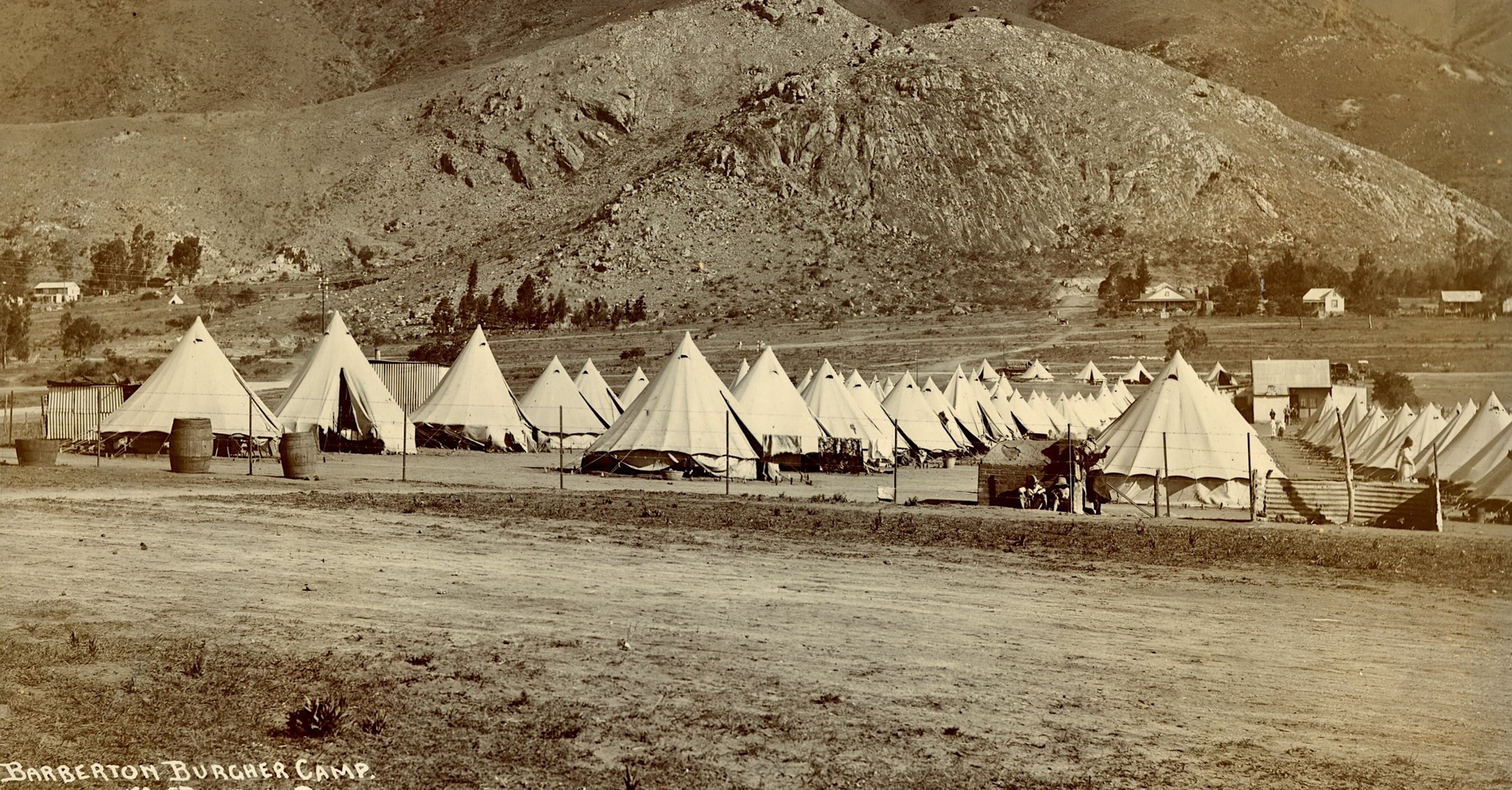
In total, the British established 46 concentration camps for Boers and an additional, separate network of camps for Black Africans. Inmates were housed in primitive buildings or rows of tents, all enclosed by impenetrable barbed wire. By 1902, the scale of detention was immense: approximately 117,000 Boer women and children, alongside an estimated 119,000 Black Africans, were held in these camps.
A critical distinction existed between the camps: White Boers and Black Africans were detained in entirely separate facilities. The conditions in the Black African camps were invariably worse. Unlike the White Boer detainees, Black African inmates were often compelled to work as laborers, further highlighting the racial discrimination inherent in the British policy. Lord Kitchener, the architect of the policy, never visited these camps. He famously and dismissively reassured authorities in London that, despite growing reports to the contrary, everyone in the camps was "happy." This willful ignorance or deliberate misrepresentation by the commander-in-chief would have catastrophic consequences, as his negligence regarding the practical details of accommodating such vast numbers of civilians led directly to widespread suffering and death.
Life and Death Behind Barbed Wire: Conditions in the Camps
The reality inside the concentration camps was a grim testament to overcrowding, disease, and chronic neglect.
Overcrowding and Inadequate Shelter
The sheer number of detainees quickly overwhelmed the nascent camp infrastructure. Tents and primitive shelters were packed beyond capacity, offering little respite from the harsh South African climate. Emily Hobhouse, a welfare campaigner who investigated the camps, vividly described a scene in a Bloemfontein camp in January 1901: "Imagine the heat outside the tents, and the suffocation inside! We sat on their khaki blankets, rolled up, inside Mrs. Botha’s tent; and the sun blazed through the single canvas, and flies lay thick and black on everything — no chair, no table, nor any room for such; only a deal box, standing on its end, served as a wee pantry. In the tiny tent live Mrs. Botha, five children (three quite grown up) and a little Kaffir servant girl. Many tents have more occupants…" (Fremont-Barnes, 79). Such descriptions underscore the severe lack of space and basic amenities, creating an environment ripe for the spread of disease.
The Scarcity of Sustenance: Malnutrition and Disease
Rations for all inmates were woefully inadequate, especially for women and children. Historian T. Pakenham describes the diet: "There were no vegetables, nor jam; no fresh milk for babies and children; just a pound [450 g] of meal and about half a pound of meat a day, with some scrapings of sugar and coffee; much worse than the diet of the barrack room, or the official diet of the troops on campaign" (494). This monotonous and nutritionally deficient diet, lacking essential vitamins and fresh produce, quickly led to widespread malnutrition, particularly among the most vulnerable – infants and young children, whose immune systems were compromised.
Conditions were even more dire in the camps for Black Africans, where many detainees resorted to eating insects to survive, a testament to the extreme hunger they endured. Clothing was scarce across all camps, offering little protection against the intense heat of summer or the biting cold of winter nights, further weakening the health of the already vulnerable population.
A Medical Crisis
The lack of proper medical care was a critical factor in the high mortality rates. Each camp was typically assigned just one doctor, assisted by a handful of nurses – and even these limited resources were often absent in the Black African camps. Medical supplies quickly ran out, leaving doctors powerless against the onslaught of illness. Water supplies were frequently contaminated, and sanitary conditions were appalling; in some camps, even basic soap was unavailable.
These conditions created a perfect storm for the rapid spread of infectious diseases. Typhoid, dysentery, measles, and pneumonia ripped through the overcrowded camps, claiming lives indiscriminately. Rina Viljoen, a mother detained in one of the camps, recounted the devastating impact on children: "There were a lot of diseases in the camp. People were often sick and many died, especially the children…and when the authorities learnt there was a sick child in your tent, they took that child to a hospital. And the Boer women strongly believed that within three days that child would be dead. You were also not allowed to visit that child in hospital. So if a child became ill you just hid him in the tent and kept him there" (Jackson, 153). This desperate measure, born of distrust and fear, tragically illustrates the profound breakdown of care and the residents’ perception of the "hospitals" as places where children went to die, rather than to recover.
The Plight of Black African Detainees
While the suffering of Boer women and children was immense, the conditions in the separate camps for Black Africans were even more severe and received far less attention at the time. Black African families, dispossessed by the war and often caught between British and Boer forces, were also rounded up. Unlike the Boer camps, where providing basic shelter was at least an stated aim, the Black African camps often lacked even rudimentary infrastructure. Detainees were frequently forced into labor, further exposing them to disease and hardship, and their rations were even poorer than those in the Boer camps. The British military did not consider them a priority for humanitarian aid, viewing them primarily as laborers or as an adjunct to the Boer population. This systemic neglect led to even higher mortality rates among Black African detainees, a tragedy that remained largely unacknowledged for decades.
The Staggering Toll: A Humanitarian Catastrophe
The cumulative effect of these abysmal conditions was a humanitarian disaster of epic proportions.
Mortality Statistics
The figures are chilling. "An estimated eighteen thousand to twenty-four thousand people died from exposure, typhoid, and diseases" in the camps for Boers (Corey, 54). Historian L. James places the figure even higher, estimating 28,000 Boer deaths, tragically noting that a staggering 80% of these fatalities were children. This statistic highlights the extreme vulnerability of the young to malnutrition and infectious diseases in such conditions.
Compounding this tragedy, between 14,000 and 20,000 Black Africans also perished in their segregated camps. When these figures are compared to the approximately 7,000 Boer combatants killed in actual fighting during the entire war, the scale of civilian casualties in the camps becomes starkly evident. The death toll in the camps far outstripped battlefield losses, making the concentration camps arguably the deadliest aspect of the entire conflict.
Debating Intent: Incompetence vs. Malevolence
The horrific mortality rates inevitably led to accusations of deliberate cruelty and even genocide from some on the Boer side, both at the time and in later historical interpretations. However, most historians today argue that while the outcome was catastrophic, it was not the explicit intention of the British authorities to cause so many deaths. As James points out, "They were victims of a combination of bureaucratic incompetence and medical ignorance rather than malevolence: 28,000 British soldiers also died from the same infections that killed the detainees" (130).
This perspective, supported by findings like the Fawcett Commission, suggests that the majority of deaths in the camps were preventable had adequate medical and logistical measures been implemented from the outset. Instead, the disaster was largely attributable to a lethal cocktail of "red tape, indifference to civilians, and general incompetence," characteristics that, according to the original article, were "all-too-familiar" in the British Army’s colonial wars throughout the 19th century. The army medical corps, already struggling to cope with disease within its own ranks, was utterly unprepared and ill-equipped to manage the health needs of a massive civilian population confined in conditions ripe for epidemics. While not explicitly genocidal in intent, the systemic neglect and racial prejudice nonetheless created conditions that led to mass deaths, raising profound questions about accountability and culpability.
The Outcry and Official Response
As news of the unfolding humanitarian disaster began to trickle out, it sparked outrage both within Britain and internationally.
Emily Hobhouse: A Voice for the Voiceless
One of the most instrumental figures in exposing the true horrors of the camps was Emily Hobhouse (1860-1926), a British welfare campaigner. Deeply disturbed by initial reports, Hobhouse personally traveled to South Africa and toured both Boer republics over a period of four months in late 1900 and early 1901. Her firsthand observations were damning. In April 1901, she published a detailed and scathing report, exposing the government’s incompetence and the appalling conditions within the camps.
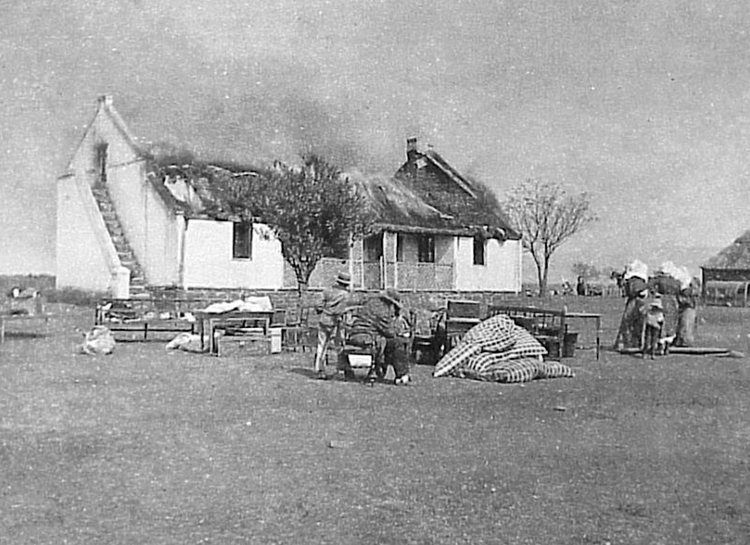
Hobhouse’s report provided vivid, undeniable evidence of the suffering, describing the overcrowding, the inadequate food, the lack of sanitation, and the devastating impact of disease on children. Her personal accounts, like the description of Mrs. Botha’s tiny, suffocating tent, brought the abstract statistics to life, forcing the British public to confront the human cost of their government’s policies.
Public and Political Condemnation
Hobhouse’s revelations, alongside increasing reports in the British press, ignited public outrage. Parliament was compelled to debate the issue, and the Liberal party leader, Henry Campbell-Bannerman, launched a fierce attack on the government’s conduct. In a powerful public speech, he famously denounced the camps as "methods of barbarism" (Fage, 479), a phrase that resonated deeply and encapsulated the moral revulsion many felt.
International condemnation also mounted. The press in France, Germany, and other European nations widely reported on the atrocities, further tarnishing Britain’s reputation on the global stage. This widespread criticism, both domestic and international, exerted significant pressure on the government to act.
Gradual Reforms and Shifting Control
While painfully slow, the public and political pressure eventually forced the British government to acknowledge the crisis and implement reforms. The first crucial step was to remove control of the camps from the military, which had proven incapable or unwilling to manage civilian welfare effectively, and place them under the authority of civilian administrators. This change allowed for a greater focus on humanitarian concerns rather than purely military objectives.
A commission, headed by Millicent Fawcett (the Fawcett Commission), was dispatched to investigate the camps in late 1901. Its findings largely corroborated Hobhouse’s report, detailing the appalling conditions and the preventable nature of most deaths. The commission’s recommendations included improving sanitation, increasing rations, providing better medical care, and constructing more adequate shelter.
Under this mounting pressure and the recommendations of the commission, Kitchener himself eventually ended the scorched-earth policy in December 1901 and issued orders that no more Boer women and children were to be arrested and sent to the camps. This marked a significant shift, signaling an end to the most brutal phase of the counter-insurgency strategy. Conditions in the camps, which the British euphemistically labeled "camps of refuge," gradually began to improve, though the scars of neglect and suffering would remain.
Legacy and Lasting Impact
The Second Boer War officially concluded in May 1902 with the signing of the Treaty of Vereeniging. However, for many of the detainees in the concentration camps, the ordeal was far from over.
The Treaty of Vereeniging and its Aftermath
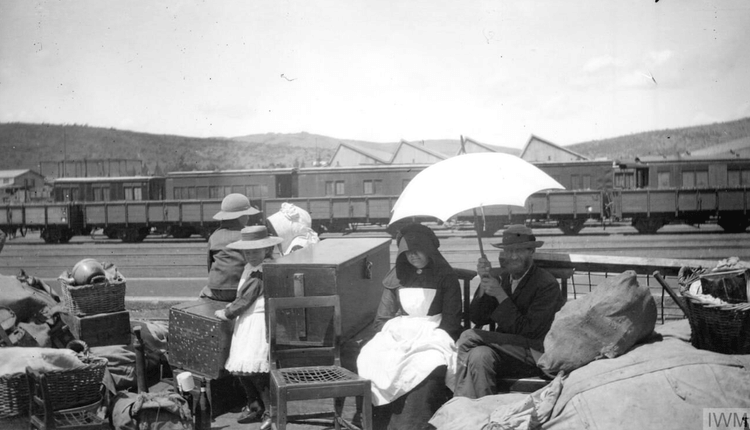
Even after the peace treaty, thousands of Boer and Black African detainees had to endure several more months of incarceration before they were finally allowed to return home. For many, "home" no longer existed, their farms having been destroyed by the scorched-earth policy. The process of repatriation and rebuilding was arduous and emotionally taxing, leaving deep psychological and physical wounds.
The political outcome of the war saw Britain formally annex Transvaal and the Orange Free State. In 1910, these two former Boer republics were unified with the British colonies of Cape Colony and Natal, along with several former African kingdoms, to form a single entity: the Union of South Africa. This new dominion, while theoretically self-governing, remained firmly within the British Empire.
Seeds of Future Conflict and Nationalism
The trauma of the concentration camps became a foundational element of Afrikaner nationalism, solidifying anti-British sentiment for generations. The suffering endured by Boer women and children was enshrined in collective memory, serving as a powerful symbol of British oppression and fueling a desire for complete independence and self-determination. This historical grievance would play a significant role in South African politics for decades, contributing to the rise of Afrikaner power and, tragically, the institutionalization of apartheid.
For Black Africans, the war and the camps exacerbated their already precarious position. Despite their significant contributions as laborers and scouts, and their immense suffering in the camps, they gained no political rights or recognition from the Treaty of Vereeniging. Instead, the unification of South Africa under British auspices laid the groundwork for further racial segregation and discrimination, with their experiences in the concentration camps largely ignored by official histories for many years.
A Precedent for Atrocity
The British concentration camps in the Boer War were not, as the article notes, the first of their kind. The Spanish army had employed similar tactics in Cuba during their guerrilla war with rebels just a few years prior. However, their scale and the devastating mortality rates in South Africa shocked the world and firmly embedded the term "concentration camp" into the global lexicon, forever associating it with civilian suffering and state-sponsored detention.
Tragically, this would not be the last time such camps were utilized. They made an unwelcome reappearance in other 20th-century conflicts and genocides, serving as a chilling precedent for future atrocities. Examples include the German use of concentration camps in German South West Africa (modern-day Namibia) in the early 1900s during the Herero and Namaqua genocide, Fascist Italy’s internment camps during its occupation of Libya in the early 1930s, and, most infamously and on an unprecedented scale, by Nazi Germany in occupied Europe during the Second World War (1939-45). The British camps, though different in intent from the extermination camps of the Holocaust, undeniably established a disturbing model for the mass detention of civilians, demonstrating the devastating consequences when human lives are reduced to mere strategic tools in warfare.
Historical Memory and Lessons Learned
The legacy of the Boer War concentration camps continues to be debated and re-evaluated by historians. While initially downplayed or justified, their historical significance as a moment of profound ethical failure and human suffering is now widely acknowledged. They serve as a powerful reminder of the brutal realities of imperial warfare, the vulnerability of civilian populations caught in conflict, and the catastrophic consequences of military expediency combined with bureaucratic indifference. Understanding this dark chapter is crucial for appreciating the complexities of colonial history, the roots of modern South Africa, and the enduring importance of humanitarian principles even in times of war.



Leave a Comment