
Marie Ndiaye’s "The Witch": A Disorienting Dream of Female Identity, Mediocrity, and Elusive Freedom
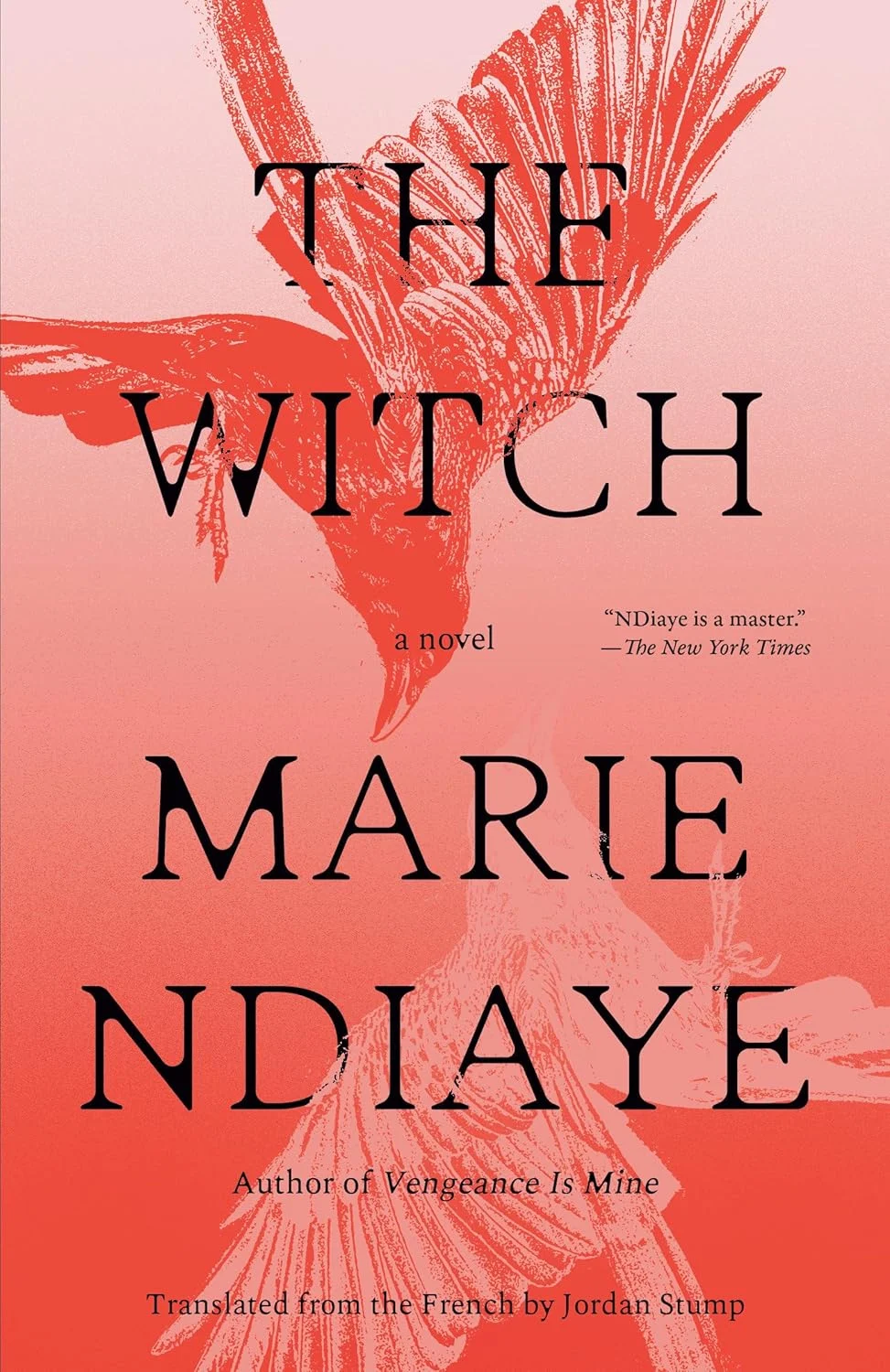
PARIS, France – Marie Ndiaye’s enigmatic novel, The Witch (originally La Sorcière, 1996), translated from the French by Jordan Stump, has resurfaced in contemporary literary discourse, recognized with a shortlisting for the prestigious International Booker Prize. This recognition, decades after its initial publication, underscores its enduring, albeit challenging, literary merit and its profound exploration of female identity, inherited burdens, and the elusive nature of freedom. Reading The Witch is often likened to experiencing a vivid, unsettling early morning dream – a sequence of events that feel logically coherent within their own strange universe, yet unfold with a disorienting rapidity, leaving the observer trapped, restless, and ultimately haunted by its fleeting impressions.
The novel plunges readers into a narrative that is at once compelling and frustrating, where the boundaries between reality, magic, and psychological states are deliberately blurred. It is a work that challenges conventional expectations of character development and plot resolution, instead offering a meditation on the human condition through a distinctly feminine lens, filtered through the peculiar prism of inherited witchcraft.
Main Facts: An Enigmatic Tale Resurfaces
The Witch centers on Lucie, an unhappily married woman in a mundane suburban existence, who is burdened by an inherited, seemingly mediocre, magical "craft." The novel garnered significant attention upon its shortlisting for the International Booker Prize, a testament to Marie Ndiaye’s unique literary voice and Jordan Stump’s masterful translation, which captures the original French’s elusive quality. Originally published in 1996, its contemporary re-evaluation highlights its timeless themes and its provocative narrative structure.
The core premise revolves around Lucie’s attempt to pass on this ancestral witchcraft to her twelve-year-old twin daughters, Lise and Maud, a tradition mandated by her maternal lineage, all while concealing it from her unsuspecting husband, Pierrot. However, this seemingly straightforward plot quickly devolves into a labyrinthine exploration of domestic strife, personal disillusionment, and the strange, often unrewarding, paths women navigate in pursuit of agency and identity. The novel’s initial reception, and its continued discussion today, reflects a persistent fascination with Ndiaye’s ability to craft narratives that defy easy categorization, blending elements of magical realism, psychological drama, and social commentary into a singular, unsettling experience.
Chronology: The Disorienting Tapestry of Lucie’s Life
The narrative of The Witch unfolds with a deliberate fragmentation, mirroring the "early morning dream" sensation articulated by many readers. It resists a linear, cause-and-effect progression, instead presenting a series of scenes that feel both intimately connected and wildly disparate, creating a sense of being perpetually off-balance.
Lucie’s journey begins in a state of quiet desperation, her life defined by a pervasive unhappiness. Her primary concern, beyond her own malaise, is the transmission of her family’s occult craft to her twin daughters, Lise and Maud. The nature of this witchcraft remains largely undefined for the reader, an intuitive process of observation and absorption rather than explicit instruction. This ambiguity immediately establishes the novel’s departure from conventional fantasy, grounding the magic not in grand spectacle, but in the subtle, often mundane, fabric of daily life. Lucie’s own magical abilities are depicted as "slight," barely enough to perpetuate the gift, a fact noted by her "seemingly omnipresent nosy neighbour," Isabelle, who had previously been the subject of Lucie’s failed initiation attempts. Isabelle, too, is a practitioner, though her powers are singularly focused on divining the future of her "good-for-nothing son," Steve.
The catalyst for Lucie’s deeper descent into chaos is the sudden departure of her husband, Pierrot, described as "a talented and permanently worn-out sales agent." He absconds not only from their marriage but also with Lucie’s financial inheritance, embarking on a new life and family elsewhere. This abandonment shatters Lucie’s already fragile existence, leaving her in an "empty house" and prompting a desperate quest to reclaim her money and, perhaps, her lost sense of self.
Simultaneously, the twins, Lise and Maud, who initially showed indifference to the ancestral craft, discover their own formidable capacity for shapeshifting. This newfound power becomes their pathway to freedom, and they too flee the confines of their unhappy home, leaving Lucie further isolated.
In the wake of these successive abandonments, Lucie embarks on a convoluted, almost hallucinatory, journey. Her pursuit of Pierrot is less a determined chase and more a series of fragmented encounters, guided by the "trivial details" her magic allows her to perceive. Intertwined with this quest, she bizarrely resolves to "fix her parents’ marriage," a relationship long dissolved. The culmination of this disorienting odyssey finds Lucie teaching at Isabelle O.’s Women’s University of Spiritual Health, a place where she openly admits to "faking her powers in front of students," declaring, "I make a better professional fake than a real witch." This confession marks a poignant, if cynical, turning point, as Lucie grapples with the potential non-existence of her inherited gift, questioning if her only true talent was "fabrication."
Throughout this fragmented chronology, Ndiaye deliberately withholds traditional markers of plot progression or character development. Events bleed into one another, motivations are murky, and the reader is left to piece together the emotional landscape of Lucie’s unraveling life, much like trying to recall the fading details of a compelling but elusive dream. The narrative’s refusal to conform to conventional structures underscores its thematic concerns, particularly the subjective and often illogical experience of trauma, loss, and the search for meaning in a world that often denies it.
Supporting Data: Unpacking the Enigmas of "The Witch"
Marie Ndiaye’s The Witch is a rich, if unsettling, tapestry of themes, character studies, and narrative experimentation. Its enduring power lies in its willingness to pose profound questions about female existence without offering comfortable answers.
The Paradox of Witchcraft: Inheritance, Burden, and Rebellion
Central to the novel is the concept of witchcraft, but Ndiaye subverts its traditional heroic or villainous portrayals. Here, witchcraft is not a source of power or pride, but an inherited "craft" that feels more like a burden or an obligation. Lucie’s capabilities are "slight, apparently just strong enough to keep the gift going, to pass it along" (p. 6). She views her own abilities as "laughable," offering only "trivial details," yet it is precisely these seemingly insignificant insights that lead her to Pierrot and her lost inheritance. This paradox underscores a core tension: is the magic truly inconsequential, or does its subtle nature reflect the quiet, often overlooked, forms of strength and perception that women possess?
The intergenerational aspect of this witchcraft is particularly poignant. Lucie’s mother, a "powerful witch," actively denied her powers and begrudgingly passed them on. In turn, Lucie’s daughters, Maud and Lise, show "complete indifference," labeling it "lame." For them, once absorbed, the knowledge becomes merely "a path to freedom," a stark contrast to their mother’s constrained existence. This raises crucial questions about tradition and inheritance: what are we compelled to pass on, and what do the next generations choose to retain, adapt, or reject? The novel subtly hints at witchcraft as a metaphor for inherited gender roles, expectations, and the silent struggles passed from mothers to daughters, often with a "hint of rebellion and defiance." It becomes ambiguous whether these powers serve to empower or entrap the women who wield them.
A Gallery of Unhappy Women: Motherhood, Identity, and Elusive Freedom
Ndiaye populates The Witch with a spectrum of unhappy women, each grappling with societal pressures, personal disillusionment, and the complex bonds of family. Lucie stands as the archetype of this unhappiness, her identity inextricably tied to her relationships. When abandoned by her husband and daughters, she is left with nothing, her purpose evaporated. Her journey is less one of self-discovery and more a desperate attempt to reassemble a fractured life, culminating in the cynical performance of a "professional fake" witch. Her inability to find agency or develop beyond her initial state of unhappiness is a deliberate choice by Ndiaye, challenging the reader’s expectation of a protagonist’s growth.
Other female characters further illuminate this theme:
- Isabelle: Lucie’s neighbor, trapped in an unbearable marriage and burdened by a disappointing son, she uses her limited magic to anxiously scrutinize his future.
- Lucie’s Mother: Powerful yet divorced, she actively rejects her magical heritage while striving for a new life with a man who feigns ignorance of her past. Her denial speaks to the societal pressures that often force women to suppress their unique qualities.
- "Mama" (Lucie’s Mother-in-Law): Oppressed by her own children, she finds a fleeting sense of purpose and happiness only when her daughter becomes pregnant, offering her a new child to raise. This highlights the societal expectation that women find fulfillment primarily through caregiving and motherhood.
- Lise and Maud: Lucie’s pre-teen daughters inhabit "a distant, hypothetical world, the world of their future glory" (p. 38). Their indifference to witchcraft and their subsequent flight through shapeshifting represent a nascent, albeit ruthless, pursuit of personal freedom, unburdened by the disappointments of the present.
Motherhood, in The Witch, is not romanticized but presented as a complex, often suffocating, institution. It is entwined with the witchcraft, an inherited legacy that can feel more like a curse than a blessing. The central conundrum of the novel emerges: "What does freedom mean or what makes a woman free?" Ndiaye suggests that true freedom often manifests as agency—the ability to choose. Lucie’s mother chooses divorce; Isabelle chooses to abandon her husband and son; Mama’s daughter chooses abortion; Maud and Lise choose to flee. These women, despite their varied circumstances, demonstrate a decisive break from the ties that bind them, a contrast to Lucie and Mama, whose identities are so deeply rooted in their relationships that abandonment leaves them utterly bereft.
Narrative Style and Literary Comparisons
The immersive, dreamlike quality of The Witch is not merely stylistic; it is integral to its thematic impact. Jordan Stump’s translation masterfully renders Ndiaye’s prose, preserving its compelling yet disorienting rhythm. The rapid scene changes, the sense of being an "observing eye" trapped within a narrative, and the lingering, haunting aftermath all contribute to this unique reading experience. The novel reads "almost like a psychological thriller," as Lucie’s desperate quest to "fix one thing after the other" propels the fragmented plot forward. Yet, the resolution of these mini-quests, particularly her eventual role as a fake witch, undermines any conventional sense of achievement or closure.
This stylistic approach places The Witch within a lineage of contemporary literary fiction that explores themes of alienation and female disillusionment through unconventional narrative means. The review draws apt comparisons to Han Kang’s The Vegetarian and Mieko Kawakami’s All The Lovers In the Night. These novels share common ground with Ndiaye’s work: protagonists who are "mediocre, unhappy… fading away from their life," and a "narration that is both detached and distant." However, a crucial distinction is drawn: while The Vegetarian and All The Lovers In the Night compensate for their lack of external movement with profound internal introspection, The Witch largely eschews this. Lucie’s internal world remains largely opaque, preventing the reader from developing deep empathy. Instead, she evokes "pity and discontent," a deliberate narrative choice that alienates readers seeking emotional and psychological depth. This refusal to offer conventional emotional engagement is a hallmark of Ndiaye’s challenging aesthetic.
The Translator’s Art: Jordan Stump’s Contribution
The success of The Witch in English-speaking literary circles owes much to the exquisite translation by Jordan Stump. Known for his work on challenging French authors like Antoine Volodine and Jean-Philippe Toussaint, Stump navigates Ndiaye’s elusive prose with remarkable skill. He preserves the original’s dreamlike atmosphere, its subtle ambiguities, and its precise, often stark, language. Translating a text that deliberately blurs lines between reality and imagination, and that relies heavily on mood and suggestion over explicit detail, is a formidable task. Stump’s ability to render this complex narrative into an English that feels both faithful and fluid is a significant factor in the novel’s continued critical relevance and its ability to disorient and captivate readers decades after its initial publication.
Broader Critical Discourse: The Witch in the Literary Landscape
Marie Ndiaye, a recipient of the prestigious Prix Goncourt for her novel Three Strong Women (2009), occupies a unique and significant position in contemporary French literature. Her works are consistently lauded for their psychological intensity, their exploration of race and gender, and their distinctive, often unsettling, narrative styles. The Witch, predating her Goncourt win, showcases many of these nascent qualities.
The novel’s shortlisting for the International Booker Prize, even years after its original publication, underscores its enduring impact and its relevance to global literary conversations. This recognition places The Witch alongside works that challenge conventional narrative structures and explore complex social and psychological landscapes. It aligns with a broader trend in translated fiction that seeks out voices unafraid to confront uncomfortable truths or to present human experience in fragmented, non-linear ways.
In a literary landscape increasingly attuned to diverse voices and experimental forms, The Witch stands as a powerful commentary on the archetype of the "witch." Historically, women who defied societal norms, possessed unconventional knowledge, or simply existed beyond patriarchal comprehension were often labeled as witches. Ndiaye’s novel revisits this trope, transforming it from a figure of supernatural power into a symbol of inherited female burden, quiet rebellion, and the frustrating mediocrity of unfulfilled potential. The comparison of Lucie’s inherited practice to "a well-performed scam that results in a series of images of police, jail, contempt, and fire" (a sequence that ultimately "leads to nothing") further reinforces the novel’s cynical view of this legacy, mirroring Lucie’s own "weird, complicated, and insignificant" life. This perspective invites readers to reconsider the socio-cultural implications of labels and the persistent challenges women face in asserting their agency.
Implications: A Haunting, Unresolved Reflection
The Witch leaves readers with far more questions than answers, a deliberate choice by Marie Ndiaye that is both its strength and its potential point of alienation. The novel refuses to provide catharsis or clear resolutions, opting instead for a lingering sense of unease and a challenging ambiguity. This artistic decision, while potentially frustrating for readers seeking emotional engagement or traditional character arcs, forces a deeper reflection on the novel’s core themes.
The lasting implication of The Witch lies in its unflinching portrayal of female unhappiness and mediocrity. It dares to suggest that not all lives are extraordinary, not all burdens lead to triumph, and not all quests result in self-actualization. Lucie’s journey, or lack thereof, becomes a powerful, if uncomfortable, mirror to modern anxieties about identity, purpose, and the societal constraints that subtly shape women’s lives. The novel’s themes—motherhood, freedom, witchcraft, family dynamics, love, and betrayal—remain tantalizingly unexplored in a conventional sense, forcing the reader to grapple with their inherent complexities without the comfort of authorial interpretation.
Ultimately, The Witch is a testament to the power of a narrative that defies easy categorization and emotional attachment. Its unsettling atmosphere, its fragmented portrayal of a life unfulfilled, and its enigmatic characters coalesce into a work that may alienate those seeking conventional satisfaction but profoundly resonates with readers open to a more challenging, introspective, and haunting literary experience. It is a book that demands patience, provokes thought, and lingers in the mind long after the final page, much like the indelible, yet fading, remnants of an early morning dream.



Leave a Comment