Mastering the Map: A Deep Dive into the Enduring Appeal of Area Control Board Games
In the vast and ever-evolving landscape of board gaming, few genres capture the essence of strategic dominance and direct player interaction quite like area control. These games fundamentally challenge players to assert their influence, expand their territories, and outmaneuver opponents across a shared map. Unlike games where diplomacy and negotiation might be primary tools, area control often distills conflict to its purest form: conquer or be conquered. This genre resonates deeply with players who relish strategic planning, tactical execution, and the thrill of visible territorial gains.
This article delves into the core mechanics that define area control, exploring its historical trajectory and highlighting a selection of prominent titles that exemplify the genre’s diversity and enduring popularity. From sprawling galactic conflicts to intricate woodland skirmishes, and even cooperative efforts against encroaching threats, area control games offer a rich tapestry of experiences for those who aspire to rule the world, one territory at a time.
The Strategic Heart of Area Control: Core Mechanics and Evolution
Area control board games trace their lineage back to classic wargames, evolving from simple dice-rolling conflicts to intricate systems that blend various mechanics. At its heart, the genre is characterized by players vying for dominance over a shared game board divided into distinct regions or territories. The primary objective typically involves gaining and maintaining control over these areas, often by deploying units, placing tokens, or establishing influence.
Early iterations, such as Risk, established the foundational principles: reinforce territories, attack adjacent regions, and eliminate opponents. However, modern area control games have significantly expanded upon this blueprint, integrating elements from other genres like worker placement, deck-building, and even role-playing to create more nuanced and engaging experiences. This evolution has led to a rich diversity, from highly confrontational "dudes-on-a-map" games to more subtle, indirect forms of territorial assertion.
Key mechanics often include:
- Unit Deployment and Movement: Strategically placing and moving forces across the map to secure and defend regions.
- Resource Management: Gathering and allocating resources (money, materials, influence) to fund expansion, recruit units, or activate special abilities.
- Combat Resolution: Methods for resolving conflicts when opposing forces occupy the same territory, ranging from simple dice rolls to complex card-driven systems.
- Victory Conditions: Diverse objectives beyond mere elimination, such as controlling specific regions, accumulating victory points, or completing secret goals.
- Asymmetry: A growing trend where different factions possess unique abilities, units, and even victory conditions, leading to highly varied gameplay experiences.
The enduring appeal lies in the direct player interaction and the tangible progress displayed on the board. Each move carries weight, and the ebb and flow of control creates compelling narratives of triumph and defeat, ensuring high replayability and strategic depth.
Featured Frontlines: Exploring Iconic Area Control Titles
The following games represent a spectrum of area control design, showcasing how designers have innovated within the genre to deliver distinct and memorable experiences.
Star Wars: Rebellion – The Galactic Chess Match
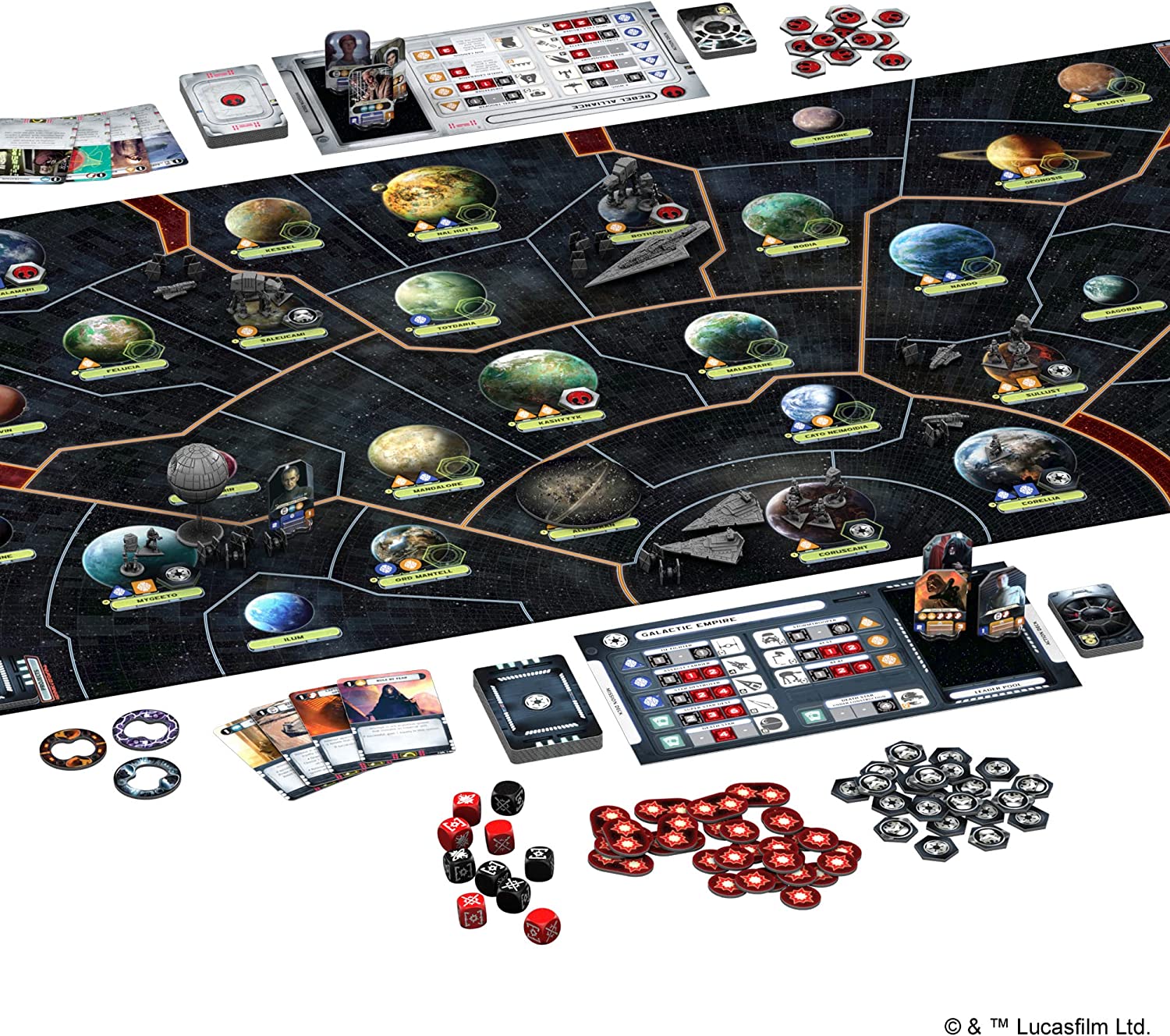
Star Wars: Rebellion stands as a monumental achievement in thematic area control, translating the epic struggle between the Galactic Empire and the Rebel Alliance into a sprawling, two-player board game. Designed by Corey Konieczka and published by Fantasy Flight Games, this game masterfully captures the narrative essence of the original trilogy, offering an asymmetric cat-and-mouse game across the vast galaxy.
Supporting Data:
Players assume one of two roles: the Galactic Empire, wielding immense military power, or the fledgling Rebel Alliance, relying on subterfuge and widespread support. The Empire’s objective is to locate and eradicate the hidden Rebel base, deploying fleets and armies across known systems. The Rebels, in contrast, must evade detection while completing secret objectives, garnering enough popular support across the galaxy to spark a full-scale rebellion and achieve victory. The game combines strategic troop deployment and combat with a hidden movement mechanic for the Rebel base, creating immense tension and strategic depth. Mission cards, representing key characters like Luke Skywalker or Darth Vader, drive the narrative, allowing players to attempt daring feats or execute brutal crackdowns. Combat is resolved through custom dice, emphasizing tactical decisions over pure luck. A typical game can last 3-4 hours, accommodating two to four players with an optional expansion, and has garnered significant critical acclaim, including multiple Golden Geek Awards.
Official Responses & Implications:
The design philosophy behind Star Wars: Rebellion was to create an experience that felt authentically Star Wars – not just a reskin of a wargame, but a strategic simulation of the specific struggle depicted in the films. The asymmetric objectives and hidden movement were crucial to this, ensuring that both sides played fundamentally differently, mirroring their cinematic counterparts. This approach has set a high bar for thematic board games, demonstrating how mechanics can be intrinsically tied to narrative. Its success underscores the demand for deeply immersive, story-driven strategic experiences within the area control genre, offering immense replayability as players explore different strategies for both factions.
Root – Woodland Warfare with Asymmetric Charm

Root, designed by Cole Wehrle and published by Leder Games, redefined asymmetric gameplay within the area control genre. Set in a charming yet brutal woodland, players control one of four (or more, with expansions) distinct factions vying for control of the vast wilderness. The whimsical art style by Kyle Ferrin belies a deeply strategic game of conflict, negotiation, and cunning.
Supporting Data:
At its core, Root is an area control game where each faction operates under entirely different rules and victory conditions. The Marquise de Cat aims to industrialize the forest, building workshops and sawmills to produce resources. The Eyrie Dynasties follow a strict decree, expanding their territory while constantly facing the threat of civil war if their leader fails to fulfill their promises. The Woodland Alliance sparks rebellion, converting territories to their cause and using guerrilla tactics. The Vagabond plays a lone wolf, manipulating other factions to complete quests and gather items. Later expansions introduced factions like the Riverfolk Company (merchants) and the Great Underground Duchy (subterranean invaders), further diversifying the strategic landscape. The interplay between these factions is the game’s centerpiece, with players constantly reacting to each other’s unique actions and trying to exploit their specific weaknesses or leverage their strengths. A typical game accommodates 2-4 players (up to 6 with expansions) and usually concludes within 60-90 minutes, making it a relatively quicker but equally deep area control experience. It won the Golden Geek Award for Game of the Year in 2018.
Official Responses & Implications:
Cole Wehrle, Root‘s designer, envisioned the game as a "story generator," where the unique interactions between asymmetric factions would create emergent narratives that were distinct in every playthrough. This focus on "player-driven narrative" rather than a fixed story has been a major influence on modern board game design, proving that deep strategic complexity can coexist with an inviting theme and stunning aesthetics. Root‘s success has solidified the appeal of highly asymmetric designs, challenging players to not only master their chosen faction but also understand the intricate mechanics of their opponents. It fosters a dynamic meta-game where alliances are fleeting and betrayals are inevitable, ensuring its continued prominence in the hobby.
Belfort – Architectural Influence in a Fantasy Realm

Belfort, designed by Jay Cormier and Sen-Foong Lim and published by Mayfair Games, offers a Eurogame take on area control, blending worker placement with territorial influence in a charming fantasy setting. Players take on the roles of master builders, employing Elves, Dwarves, and Gnomes to construct buildings and gain influence within the bustling city of Belfort.
Supporting Data:
The game centers on collecting resources (wood, stone, metal) through worker placement on a central board. These resources are then used to construct buildings within the five distinct districts of Belfort. Each building grants influence in its respective district, and players vie for majority control to earn victory points. Additionally, players can hire specific fantasy races – Elves, Dwarves, and Gnomes – to run their buildings, each granting unique special abilities or bonuses. The strategic depth comes from balancing resource acquisition, efficient building placement, and the tactical deployment of workers to secure district majorities. The game accommodates 3-5 players and typically runs for 90-120 minutes. It emphasizes economic engine building alongside direct competition for influence, offering a different flavor of area control that prioritizes planning and efficiency.
Official Responses & Implications:
Belfort showcases how area control can be integrated into a Eurogame framework, moving away from direct military confrontation towards a more subtle battle for economic and civic influence. The designers aimed to create a game where resource management and worker placement directly fueled territorial dominance, appealing to players who enjoy strategic optimization alongside competitive interaction. Its blend of mechanics has made it a respected title for its clever design, providing a satisfying experience for those who prefer building and efficiency over outright conflict, yet still desire the competitive tension of vying for control.
Defenders of the Wild – Cooperative Conquest Against the Machines

Not all area control games demand cutthroat competition; some foster collaboration against a common enemy. Defenders of the Wild, a cooperative area control game, flips the traditional competitive script, tasking players with working together to reclaim a forest overrun by a relentless machine threat.
Supporting Data:
In Defenders of the Wild, players embody powerful guardians of nature, united against an encroaching blight of wretched machines and their factories. The game board represents the forest, segmented into areas that players must defend and reclaim. Players collectively manage resources, deploy their unique abilities, and strategize to push back the machine threat, ultimately aiming to dismantle the factories that spawn them. The game is designed as a delicate balance of risk versus reward, often heavily favoring calculated risks to achieve objectives. Success hinges on precise coordination and synergistic play, as no single player can effectively combat the overwhelming machine presence alone. Each player’s actions impact the collective effort, emphasizing the critical importance of teamwork and shared strategic vision. The game supports 1-4 players and offers a challenging, evolving difficulty curve, making each playthrough a unique test of collaborative strategy.
Official Responses & Implications:
Defenders of the Wild exemplifies the growing popularity of cooperative board games and demonstrates how area control mechanics can be effectively utilized in a non-competitive context. The designers’ intent was to create a truly collaborative experience where players felt genuinely reliant on one another, fostering a sense of shared victory or defeat. This shifts the "official response" from individual strategic success to collective problem-solving. It highlights the genre’s versatility, showing that the core concept of controlling territory can serve as a compelling framework for cooperative storytelling and strategic challenge, appealing to players who enjoy working together towards a common goal rather than directly opposing each other.
Carcassonne – The Art of Tile-Laying Territorial Expansion

Carcassonne, designed by Klaus-Jürgen Wrede and published by Hans im Glück (and Z-Man Games in North America), is a seminal title in modern board gaming, famous for its elegant tile-laying mechanics and subtle yet profound approach to area control. While lacking the "dudes-on-a-map" conflict, it introduces a unique form of territorial assertion where players collectively build the game map.
Supporting Data:
In Carcassonne, players take turns drawing and placing landscape tiles featuring roads, cities, monasteries, and fields. After placing a tile, a player can choose to deploy one of their "meeples" (small wooden figures) onto a feature on that newly placed tile, claiming ownership. As features like cities or roads are completed by subsequent tile placements, the player who claimed them scores points. Farmers, placed in fields, score points based on adjacent completed cities at the end of the game, creating a powerful, long-term strategic element. The game accommodates 2-5 players (more with expansions) and typically lasts 30-45 minutes, making it an accessible "gateway game" that introduces strategic concepts without overwhelming complexity. Its simplicity belies a rich strategic layer, as players must decide not only where to place tiles but also how to claim features to maximize their points while potentially blocking opponents.
Official Responses & Implications:
Carcassonne‘s design was a breakthrough in making area control accessible and engaging for a wide audience. Klaus-Jürgen Wrede’s vision was to create a game that was easy to learn but offered surprising strategic depth, allowing players to build a unique landscape with every play. Its success demonstrated that area control could be abstract and indirect, focusing on resource management (meeples) and spatial puzzle-solving rather than direct military confrontation. Carcassonne has received numerous awards, including the Spiel des Jahres (Game of the Year) in 2001, and its influence on subsequent tile-laying and Eurogame designs is undeniable. It remains a cornerstone of many board game collections, proving that territorial expansion can be achieved with a simple tile and a well-placed meeple.
Dune: Imperium – Uprising – Worker Placement and Deck-Building on Arrakis
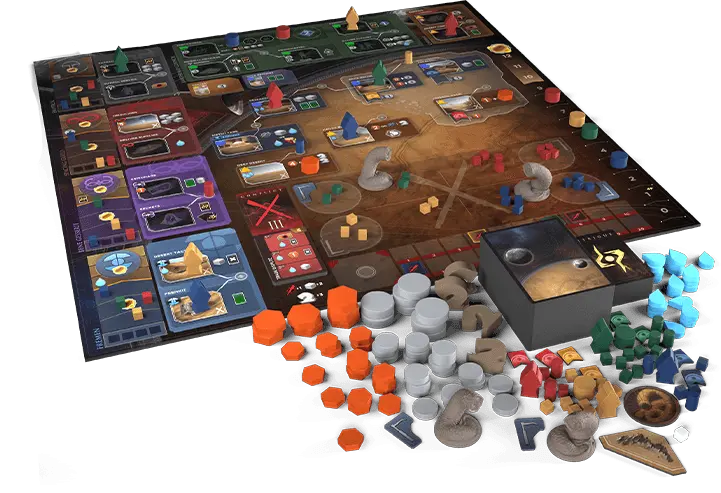
Dune: Imperium – Uprising, designed by Paul Dennen and published by Dire Wolf, is not merely an expansion but a standalone game that refines and builds upon the critically acclaimed Dune: Imperium. It masterfully blends worker placement, deck-building, and area control into a cohesive and highly thematic experience set in Frank Herbert’s iconic universe.
Supporting Data:
Uprising retains the core gameplay loop of Dune: Imperium: players deploy agents to locations on the board to gain resources, influence, and trigger effects, while simultaneously managing a deck of cards that dictate their actions and combat strength. The area control aspect manifests in the "Conflict" phase, where players commit troops to battles on Arrakis, vying for control of valuable territories and the rewards they offer. Uprising introduces new mechanics such as the ability to field powerful sandworms (Worms) and integrate new types of cards (Spice Must Flow cards), offering fresh strategic avenues. Critically, it can be played as a standalone game for 1-4 players (up to 6 with an expansion), or integrated seamlessly with the original Dune: Imperium as an expansion. Games typically last 60-120 minutes. The careful balance between building an economic engine through deck-building and asserting military dominance on the board is the game’s central tension.
Official Responses & Implications:
The design philosophy behind Uprising was to iterate and enhance an already successful formula, providing both a refined entry point for new players and exciting new content for veterans. Dire Wolf aimed to deepen the strategic options and heighten the thematic immersion of the Dune universe, particularly with the introduction of Worms and the integration of the conflict system. Uprising demonstrates how hybrid genre games can leverage multiple mechanics to create a rich, strategic experience where resource management and military might are intrinsically linked. Its success highlights the appeal of games that offer a nuanced blend of strategic depth across different gameplay elements, further cementing the Dune: Imperium series as a modern classic that continues to evolve and captivate players.
The Enduring Allure and Future of Area Control
The diverse array of games discussed illustrates the incredible breadth and adaptability of the area control genre. Whether it’s the grand strategic narrative of Star Wars: Rebellion, the intricate asymmetry of Root, the Eurogame elegance of Belfort, the cooperative challenge of Defenders of the Wild, the accessible tile-laying of Carcassonne, or the hybrid brilliance of Dune: Imperium – Uprising, the core appeal remains constant: the satisfaction of outmaneuvering opponents and asserting dominance over a shared landscape.
This genre continues to thrive because it taps into fundamental human desires for strategic thinking, competition, and visible progress. Its adaptability, allowing for thematic variety and seamless integration with other mechanics, ensures its longevity. Future trends will likely see even more innovative blends of mechanics, pushing the boundaries of what area control can be, perhaps with greater digital integration, more complex narrative elements, or further exploration of cooperative and solo play modes. As designers continue to experiment, area control will undoubtedly remain a cornerstone of strategic board gaming, offering endless opportunities for players to conquer, influence, and ultimately, master the map.
BoLS might make a few bucks on anything you buy from these links. But, be honest, you don’t enjoy randomly browsing online stores. So let us do the annoying part for you. Help us help you.

Matt has loved games of all kinds his whole life: board, video, war, roleplaying, and card. He’s worked as a writer for BoLS since 2017.

Writer, Former Cosplayer, Tapletop RPGer, Mom, ASL Student, & Coffee Addict. To find Meaghan elsewhere on the internet, check out her LinkTree at https://linktr.ee/habie_cosplays
Any emails regarding articles or potential game or accessory spotlights can be sent to [email protected].