
The Unseen Architect: Exploring the Metaphysical Underpinnings of Human Purpose and Consciousness
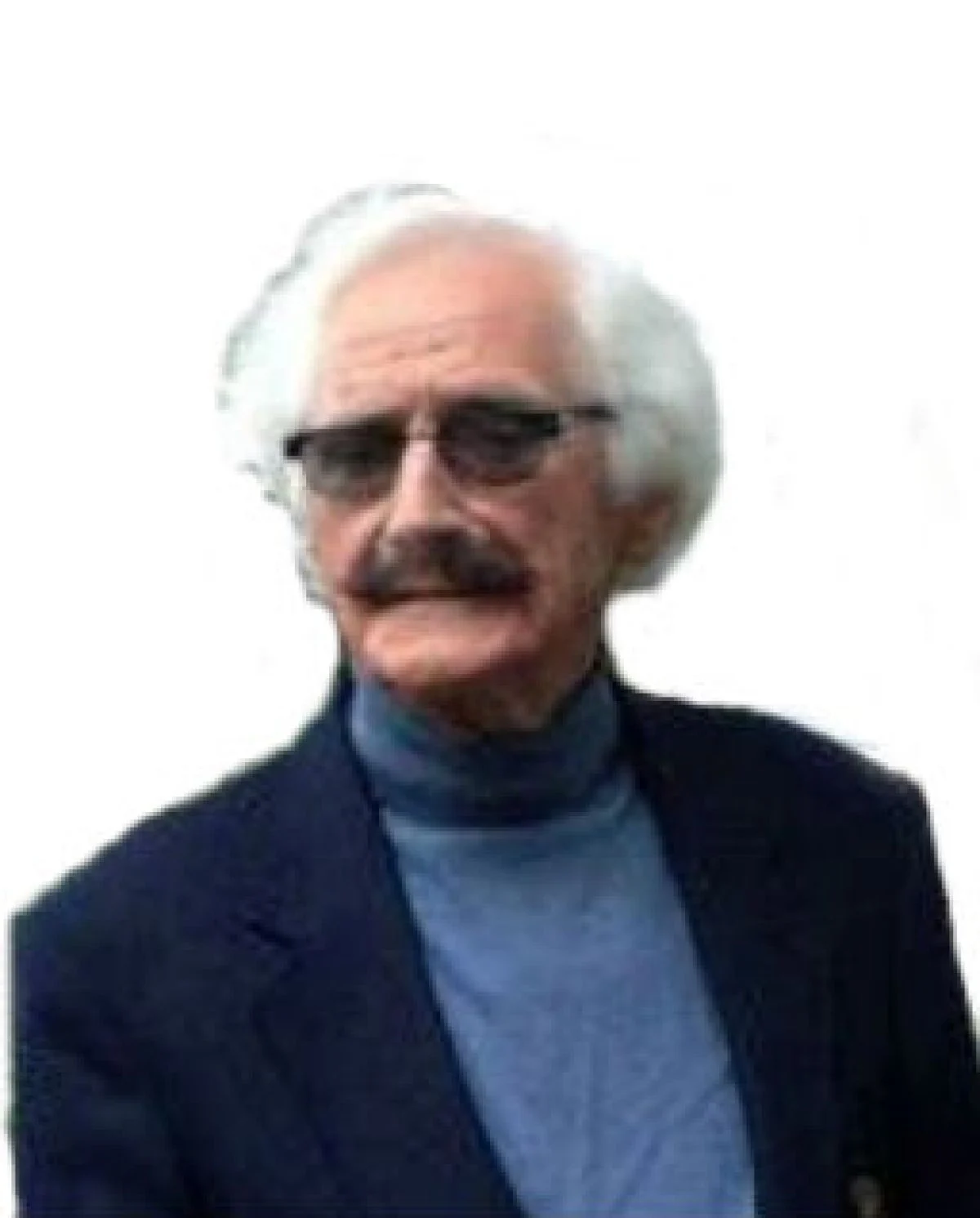
A chance encounter at a local coffee shop, sparked by a routine car service, led a retired philosophy and psychology professor down a rabbit hole of existential inquiry with two university students. The conversation, which began innocuously, soon delved into the profound and often overlooked concept of "metaphysical," revealing a potential disconnect between the pursuit of knowledge and the deeper understanding of human consciousness and purpose.
Main Facts:
The core of this narrative revolves around a retired professor’s attempt to explain the concept of "metaphysical" to two university students. The professor, a former academic in philosophy and psychology, found that one of the students possessed a rudimentary understanding of the term, while the other remained largely unaware. This disparity in awareness, the professor posits, highlights a broader societal trend of focusing on empirical, sensory-driven knowledge at the expense of exploring the abstract, intuitive, and spiritual dimensions of human existence. The discussion touched upon the historical struggles for peace and tolerance, the altruistic endeavors of organizations like Doctors Without Borders, and the philosophical origins of the term "metaphysical," attributed to Aristotle. The professor concluded by referencing the views of neuroscientist Wilder Penfield, who described the mind as a "non-temporal, non-spatial entity," further reinforcing the metaphysical perspective.
Chronology of the Encounter:
The narrative unfolds chronologically, beginning with a simple, everyday activity: a car service.
- The Setting: The story commences with the author (the retired professor) at a local coffee shop while his car undergoes servicing. This mundane setting serves as the backdrop for a profound intellectual exchange.
- The Incidental Meeting: As is often the case, the author strikes up a conversation with two students from a nearby university campus. This encounter is presented as a recurring phenomenon, suggesting the author’s frequent engagement with younger generations.
- The Revelation of Expertise: Upon learning the author’s background in philosophy and psychology, the students naturally gravitate towards asking questions related to his expertise. This is the pivot point where the conversation shifts from casual to substantive.
- The Question of Purpose: The students’ initial questions, though not explicitly stated, are implied to revolve around fundamental aspects of human existence, likely touching upon purpose and meaning. The author immediately frames this as a challenging topic, referencing historical conflicts and the ongoing struggle for benevolent and spiritually tolerant attitudes.
- Illustrating Altruism: To provide a tangible example of humanistic drive, the author points to the work of Doctors Without Borders. He highlights the immense risks taken by medical professionals in dangerous regions, driven by compassion and an altruistic need to act. This serves as a bridge to discussing the "human spirit."
- Introducing "Metaphysical": The conversation then pivots to the term "metaphysical." The author observes that only one of the two students has any inkling of its meaning, signifying a potential gap in their academic or personal understanding.
- Defining Metaphysical Awareness: The author elaborates on "metaphysical awareness" as a consciousness that transcends the visible world and the limitations of the five senses. He connects it to the constant questioning of imagination and the psychological complexity of the self, driven by what he terms "spirit" or the "human spirit."
- Aristotle’s Contribution: The author credits Aristotle with coining the term "metaphysical" to describe this abstract mental activity, explaining "meta" as "beyond" or "after." He links this to concepts of mind, thoughts, ideas, feelings, hunches, and ruminations, all considered intuitive and potentially inspirational, stemming from the "soul."
- The Duality of Consciousness: The discussion progresses to the established duality of human consciousness: the rational, sensory brain directed outward, and the intuitive, spiritual brain directed inward. These, the author argues, form the "mind."
- The Disconnect: The author attempts to gauge the students’ engagement with their own inner lives by asking if they ponder the unique nature of their personalities. The response, characterized by "blank looks," underscores the perceived disconnect.
- The Parting Thought: As the coffee and the conversation conclude, the author leaves the students with a profound quote from Wilder Penfield, a renowned neuroscientist. Penfield’s description of the mind as a "non-temporal, non-spatial entity" serves as a powerful, lingering statement on the metaphysical nature of consciousness.
Supporting Data and Philosophical Concepts:
The article draws upon several key philosophical and psychological concepts to support its central argument:
- Philosophy and Psychology: The author’s background in these disciplines frames the entire discussion. Philosophy, in its broadest sense, grapples with fundamental questions about existence, knowledge, values, reason, mind, and language. Psychology, on the other hand, scientifically studies the mind and behavior. The intersection of these fields is where the author’s expertise lies, enabling him to bridge the empirical and the abstract.
- The Nature of Purpose: The article acknowledges the difficulty in defining purpose, both for individuals and nations. It implicitly references the human search for meaning, a perennial philosophical and psychological concern. The author’s mention of historical conflicts underscores the fact that the pursuit of purpose has often been marred by violence and intolerance, suggesting that a purely rational or empirical approach may be insufficient.
- Altruism and Compassion: The example of Doctors Without Borders serves as a powerful illustration of altruistic behavior. Altruism, a concept explored in both ethics and psychology, refers to selfless concern for the well-being of others. The author highlights that these acts are often driven by an internal force, the "human spirit," which transcends mere self-interest.
- Metaphysics: This is the central concept. Metaphysics, as a branch of philosophy, is concerned with the fundamental nature of reality. It explores questions that cannot be answered by empirical observation alone, such as the nature of existence, causality, time, space, and consciousness. The author defines it as a level of awareness beyond the sensory world, a realm of abstract thought and intuition.
- The Five Senses vs. Intuition: The article draws a distinction between knowledge gained through the five senses (empirical, rational) and intuitive understanding. While empirical knowledge is crucial for understanding the physical world, the author suggests that a deeper understanding of consciousness and purpose requires engaging with intuitive faculties.
- Imagination: The role of imagination is highlighted as a driving force behind metaphysical awareness. Imagination allows us to conceive of possibilities beyond our immediate experience, to explore abstract ideas, and to delve into the complexities of the self.
- The Human Spirit: This intangible yet potent force is presented as the wellspring of altruistic action and the driver of metaphysical inquiry. It is described as an internal motivator that goes beyond rational calculation.
- Aristotle’s "Metaphysics": The author correctly attributes the origin of the term "metaphysics" to Aristotle. Aristotle’s work, Metaphysics, explored subjects that came "after physics" or "beyond physics" in the order of study, dealing with first principles and ultimate causes. The author uses this historical context to legitimize the concept of abstract inquiry.
- Duality of Consciousness (Rational/Sensory vs. Intuitive/Spiritual): This concept, prevalent in various philosophical and psychological traditions, posits that human consciousness operates on at least two distinct levels. The rational and sensory brain processes external information and logical reasoning, while the intuitive and spiritual brain accesses deeper insights, feelings, and abstract understanding.
- The Mind as a "Non-Temporal, Non-Spatial Entity": Wilder Penfield’s description of the mind offers a scientific perspective that aligns with the metaphysical viewpoint. By labeling the mind as non-temporal and non-spatial, Penfield suggests it operates outside the constraints of the physical universe, further supporting the idea of a consciousness that transcends material reality.
Official Responses (Hypothetical Context):
In the context of this reflective piece, there are no "official responses" in the traditional journalistic sense, as no specific policy or event is being reported. However, we can infer hypothetical responses from the academic and societal spheres to the ideas presented:
- Academic Institutions: Universities, as centers of learning, would likely respond by emphasizing the importance of a well-rounded education that encompasses not only STEM fields and empirical sciences but also the humanities, philosophy, and psychology. There might be calls for greater integration of critical thinking and existential inquiry within curricula. Academic departments might see renewed interest in interdisciplinary studies that explore consciousness, ethics, and the human condition.
- Psychological and Philosophical Societies: Professional organizations would likely champion the continued exploration of consciousness, subjective experience, and the ethical dimensions of human behavior. They might organize conferences and publish research that bridges empirical findings with philosophical contemplation. There could be initiatives to promote public understanding of these less tangible aspects of human experience.
- Educational Policy Makers: Policymakers might face pressure to re-evaluate educational standards, ensuring that students are not solely assessed on their ability to recall factual information or perform logical operations. There could be a push for educational approaches that foster creativity, critical self-reflection, and an appreciation for abstract thought and emotional intelligence.
- Public Discourse: The ideas presented could spark broader public discussions about the meaning of life, the role of spirituality in a secular society, and the balance between technological advancement and humanistic values. Media outlets might feature articles, documentaries, or podcasts exploring these themes.
Implications of the Encounter:
The implications of this seemingly minor coffee shop encounter are far-reaching and speak to broader societal trends:
- The "Metaphysical Gap": The author’s observation that one student was largely unaware of the meaning of "metaphysical" suggests a potential "metaphysical gap" in contemporary education and public discourse. In an era dominated by scientific materialism and technological advancement, abstract philosophical concepts and the exploration of the inner life may be relegated to the sidelines.
- The Importance of Introspection: The "blank looks" received when the author inquired about personality introspection highlight a potential decline in the practice of self-reflection. If individuals are not encouraged or equipped to ponder their own unique inner landscapes, they may struggle to understand themselves and their place in the world.
- The Foundation of Altruism and Empathy: The author implicitly connects the ability to engage with metaphysical concepts and introspection to a deeper capacity for empathy and altruism. If we are disconnected from our inner selves and the abstract dimensions of human experience, our ability to connect with and care for others on a profound level might be diminished.
- The Search for Meaning in a Complex World: In an increasingly complex and often turbulent world, the search for purpose and meaning is more critical than ever. The author’s conversation implies that a purely empirical or materialistic worldview may not provide adequate answers to these fundamental human needs.
- The Role of Education: The encounter serves as a subtle critique of modern educational systems, which may be prioritizing quantifiable knowledge over the cultivation of wisdom, critical self-awareness, and an appreciation for the intangible aspects of human existence.
- Bridging the Divide: The author’s attempt to explain complex philosophical ideas in an accessible way underscores the need for continuous dialogue between academia and the wider public, and between different generations. There is a responsibility to ensure that profound insights are not lost but are actively communicated and explored.
- The Enduring Power of the Human Spirit: Despite the challenges and the perceived gaps in understanding, the author’s reference to Doctors Without Borders and the "human spirit" offers a note of optimism. It suggests that even in the face of widespread distractions and a potential disconnect from deeper philosophical inquiry, the innate human drive for compassion, purpose, and meaning continues to manifest in powerful ways. The metaphysical, though often unarticologized, remains a potent force in human motivation and action.

Leave a Comment