Locus Magazine Unveils a Stellar Lineup: Speculative Fiction Pushes Boundaries in Upcoming Releases
SAN FRANCISCO, CA – January 15, 2026 – Locus Magazine, the premier publication for science fiction, fantasy, and horror news, reviews, and interviews, has recently spotlighted an exciting array of upcoming titles poised to captivate readers and critics alike. Featuring a diverse blend of debut collections, innovative novels, and insightful non-fiction, the curated list reflects the vibrant and ever-evolving landscape of speculative fiction, demonstrating the genre’s enduring power to explore complex human experiences, societal anxieties, and the boundless reaches of imagination.
From surreal historical fantasies that reimagine pivotal moments to cutting-edge near-future science fiction grappling with artificial intelligence, and from deep-space epics to chilling tales of generational curses, these selections promise to challenge perceptions and offer fresh perspectives on familiar tropes. The featured works, scheduled for release between January and April 2026, collectively showcase the genre’s robust health and its capacity for both profound literary artistry and thrilling adventure.
Main Facts: A Glimpse into Tomorrow’s Narratives
The releases highlighted by Locus span a remarkable spectrum of speculative fiction, indicating a rich period for the genre. Headlining the list are several anticipated short story collections, including Senaa Ahmad’s The Age of Calamities, Kim Samek’s I Am the Ghost Here, Samantha Mills’s Rabbit Test and Other Stories, and Michael Swanwick’s The Universe Box. These collections promise to deliver sharp, inventive narratives from both emerging and established voices.

On the novel front, Justin Feinstein’s satirical debut, Your Behavior Will Be Monitored, tackles the timely issue of AI in advertising, while Cecile Pin’s Celestial Lights offers a poignant journey into deep space. Terry Dowling returns with a new novel, Bedlam Rose, set in his intricately crafted far-future Earth, alongside a UK publication of his classic collection, Wormwood. Young adult horror finds a compelling new entry in Sara Hashem’s Where No Shadow Stays, and Andrew Ludington continues his thrilling Splinter Effect series with Double Shadow. Rounding out this impressive slate is Trace Elements, a non-fiction collection of essays and poems by esteemed authors Jo Walton and Ada Palmer, offering a scholarly and personal look at the mechanics of science fiction and fantasy.
This selection underscores a clear trend: speculative fiction is increasingly a fertile ground for literary experimentation, thematic depth, and a keen engagement with contemporary issues, all while retaining its core commitment to wonder and the fantastic.
Chronology of Anticipated Releases
The coming months are set to be particularly fruitful for enthusiasts of speculative fiction, with a steady stream of compelling titles arriving across various imprints. Locus Magazine provides a chronological roadmap to these literary journeys, commencing in late January and continuing through the spring.

January 2026: Kicking Off the Year with Profound Inventiveness
The literary year begins with a collection that immediately signals the genre’s capacity for daring imagination:
- Senaa Ahmad, The Age of Calamities (Holt, January 26)
- Senaa Ahmad’s debut collection of nine stories, The Age of Calamities, emerges as a bold statement in surreal, fantastic, and historical fiction. With only two reprints among its nine narratives, the collection largely introduces readers to Ahmad’s fresh voice and unique vision. Readers are invited into worlds where history is fluid, myths are tangible, and the impossible is a mere twist of fate. Highlights include a darkly humorous premise where Anne Boleyn repeatedly defies execution, returning to life despite Henry VIII’s relentless efforts. Another story plunges readers into a choose-your-own-apocalypse scenario set against the backdrop of the Manhattan Project, forcing confronting choices about scientific responsibility and catastrophic consequences. Perhaps most intriguing is a dinner party mystery that gathers an anachronistic guest list ranging from Nefertiti to Marilyn Monroe, promising a clever commentary on fame, power, and legacy across millennia. Acclaimed author Kelly Link praises the collection as "Dazzlingly inventive… These stories make it clear how ancient history and myths still linger in contemporary life," suggesting Ahmad’s profound ability to weave historical echoes into modern narratives. This collection is poised to establish Ahmad as a significant new talent capable of blending historical depth with fantastical whimsy.
February 2026: Diverse Voices and Unsettling Visions
February brings a rich tapestry of stories, ranging from the intimately personal to the grandly cosmic, often exploring the nuanced interplay between humanity and the strange.
-
Kim Samek, I Am the Ghost Here (Dial, February 26)

- Kim Samek’s debut collection, I Am the Ghost Here, offers twelve stories, six of which are reprints, that delve into the lives of women navigating peculiar yet strangely familiar situations. Samek’s prose is characterized by a blend of the weird, witty, and absurd, often exploring the complexities of human connection in an increasingly technologically mediated world. The collection skillfully incorporates elements of magical realism, allowing the fantastical to seep into everyday realities and illuminate deeper truths about the human condition. Thematic explorations prominently feature trauma, illness, and grief, approached with a delicate touch that avoids sensationalism, instead focusing on the internal landscapes of her characters. Samek’s work is anticipated to resonate with readers who appreciate narratives that are both intellectually stimulating and emotionally resonant, pushing the boundaries of realism while remaining deeply human.
-
Michael Swanwick, The Universe Box (Tachyon, February 26)
- Michael Swanwick, a multi-award-winning titan of speculative fiction, delivers The Universe Box, a collection of nineteen stories, including two new works. Known for his audacious imagination and narrative versatility, Swanwick presents an eclectic array of topics and styles that defy easy categorization. His narratives masterfully blend elements of magic and science, creating new myths and legends that feel both ancient and entirely contemporary. From fables reimagined with futuristic twists to explorations of arcane sciences bordering on the mystical, Swanwick’s prose is celebrated for its evocative power and graceful execution. Gary K. Wolfe, a respected voice in genre criticism, notes, "For all his narrative adventurousness and sly wit, Swanwick can also be a master of evocative, graceful prose," affirming the collection’s promise of intellectual stimulation paired with linguistic beauty. The Universe Box is expected to be a quintessential Swanwick experience, delighting long-time fans and serving as an excellent introduction for new readers to his distinctive genius.
March 2026: Unveiling Intricate Worlds and Profound Reflections
March continues the momentum with a blend of established masters and compelling new voices, offering both expansive world-building and intimate character studies.
-
Terry Dowling, Bedlam Rose and Wormwood (PS Publishing, March 26)

- Noted Australian author Terry Dowling receives a significant UK publication for his collection Wormwood, originally released by Aphelion in 1991. This new edition includes an additional story, enriching the original ten linked narratives. Wormwood transports readers to a far-future Earth, radically transformed by mysterious alien influences, creating a landscape imbued with strangeness and deep wonder. Complementing this collection is Dowling’s new novel, Bedlam Rose, which returns to the captivating, enigmatic setting established in Wormwood, promising new adventures and further revelations about this richly imagined world. Alexandra Pierce praises the collection, stating, "The collection is a very good introduction to Dowling’s stylised, complicated, and also playful prose," highlighting his unique literary craftsmanship. Dowling’s work is revered for its intricate plotting, lyrical prose, and the profound sense of mystery it cultivates, making these releases a treat for connoisseurs of literary speculative fiction.
-
Cecile Pin, Celestial Lights (Holt, March 26)
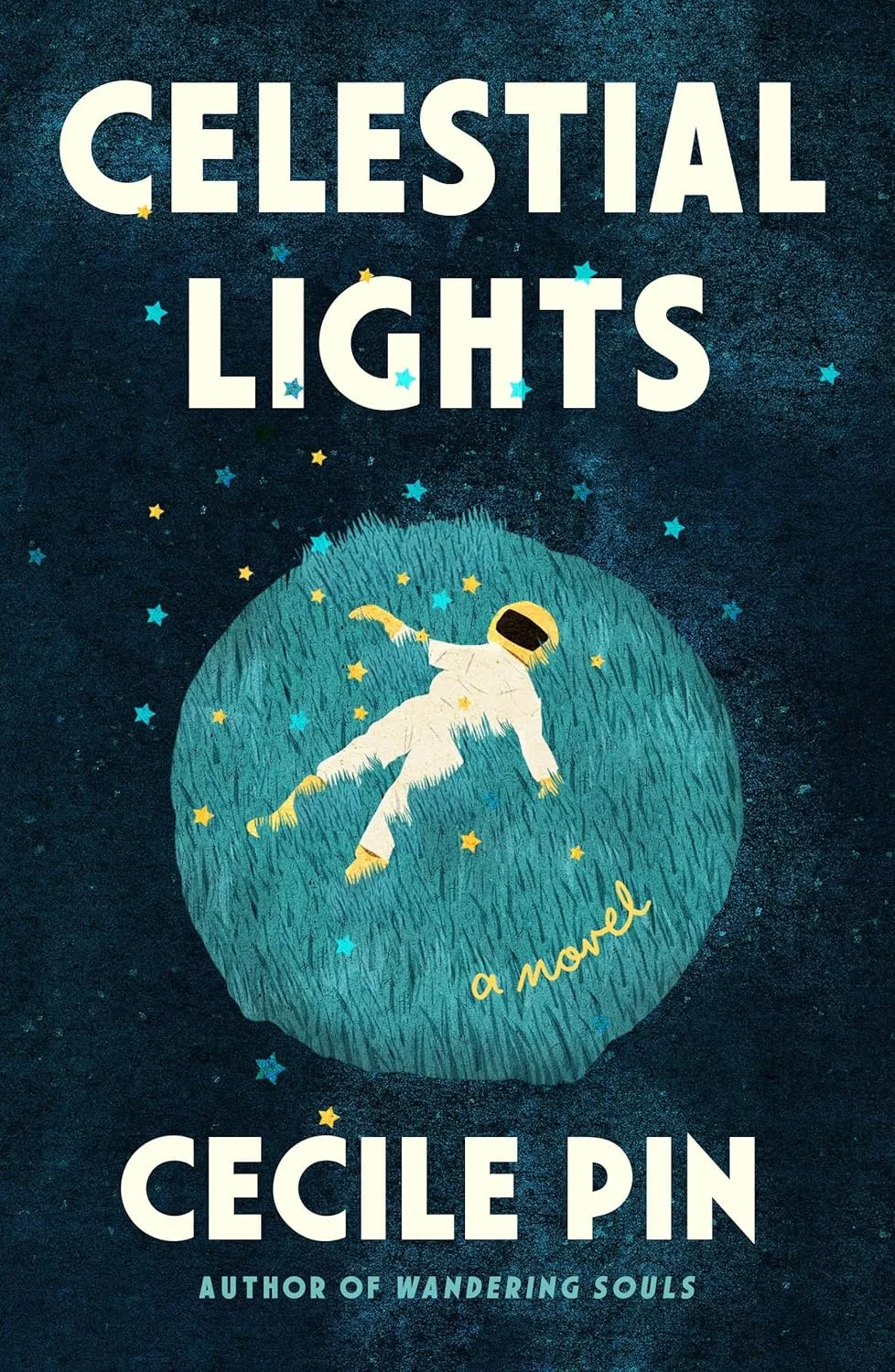
- Cecile Pin’s Celestial Lights is a beautifully crafted novel that follows the compelling journey of astronaut Oliver Ines. Born on the day the space shuttle Challenger tragically exploded, Oliver’s life becomes singularly defined by an ambition to reach the stars. His relentless pursuit culminates in a deep space mission to Europa, one of Jupiter’s enigmatic moons, a destination that holds both scientific promise and existential peril. Colleen Mondor describes the novel as "beautifully written and achingly realistic," suggesting a narrative that combines the grandeur of space exploration with profound human emotional depth. Pin’s novel is expected to be a meditative and evocative exploration of ambition, destiny, and humanity’s yearning for discovery, appealing to readers who appreciate literary science fiction that grounds its cosmic scope in intimate human experiences.
-
Sara Hashem, Where No Shadow Stays (Holiday House, March 26)
- Sara Hashem makes a striking entry into young adult horror with Where No Shadow Stays. The novel centers on an American-Egyptian homecoming queen whose visit to Egypt unleashes a sinister presence that follows her home, tied to an ancient family debt. Hashem masterfully weaves a narrative that flows through different time periods and multiple points of view, slowly unraveling the terrifying truth behind a generational curse. This multi-layered approach allows for a rich exploration of cultural heritage, family secrets, and the enduring power of the past. The novel promises a chilling and atmospheric read, combining supernatural dread with a compelling mystery rooted in Egyptian lore, offering a fresh and culturally resonant take on the horror genre for young adult audiences.
-
Jo Walton & Ada Palmer, Trace Elements (Tor, March 26)

- Trace Elements, subtitled Conversations on the Projects of Science Fiction and Fantasy, is a unique non-fiction collection from two of the genre’s most distinguished practitioners, Jo Walton and Ada Palmer. Comprising twenty-five essays and five poems, the book offers an insightful and often personal exploration of the science fiction and fantasy genres. Walton and Palmer share their scholarly and writerly perspectives on how the genre is crafted, its fundamental mechanics, its historical evolution, and the myriad ways in which it is read and interpreted. Gary K. Wolfe lauds the collection, stating, "It offers a lively and sometimes surprisingly personal appreciation of the field today by two of its most distinguished practitioners." This work is invaluable for anyone seeking a deeper understanding of speculative fiction as a literary and cultural phenomenon, providing a rich dialogue between two brilliant minds on the art and craft of genre storytelling.
April 2026: Explorations of Humanity and Technology
April brings a focus on the intersection of human experience with technological advancements and the thrilling implications of time and space.
-
Samantha Mills, Rabbit Test and Other Stories (Tachyon, April 26)
- Samantha Mills’s debut collection, Rabbit Test and Other Stories, solidifies her reputation as a formidable voice in contemporary speculative fiction. Featuring thirteen stories, two of which are new, the collection gathers works originally published from 2018 onwards. Its title story is a testament to Mills’s talent, having garnered the prestigious Hugo, Nebula, Sturgeon, and Locus Awards—a rare quartet of accolades. Mills enhances the collection with an afterword and notes on the inspirations behind her stories, offering readers a deeper insight into her creative process. Abigail Nussbaum notes, "In every story here, there is a twist on the familiar that is entirely unexpected," indicating Mills’s consistent ability to subvert expectations and deliver fresh, thought-provoking narratives. This collection is a must-read for anyone interested in the cutting edge of short speculative fiction, showcasing a writer with a profound understanding of genre and human nature.
-
Justin Feinstein, Your Behavior Will Be Monitored (Tachyon, April 26)

- Justin Feinstein’s first novel, Your Behavior Will Be Monitored, is a sharply satirical near-future science fiction work that takes a cynical yet humorous look at the pervasive influence of artificial intelligence. The story centers on a man tasked with training a revolutionary advertising AI to craft emotionally manipulative copy, exposing the darker underbelly of targeted marketing. Feinstein employs an innovative narrative structure, telling the story through "questionably obtained" company emails, chat transcripts, and other digital ephemera, immersing the reader directly into the corporate machinations. Ian Mond highlights the novel’s topicality, noting that Feinstein "was constantly revising the manuscript to stay ahead of the rapid acceleration of AI," underscoring the book’s timely engagement with an ever-evolving technological landscape. This novel promises a witty, unsettling, and highly relevant commentary on privacy, ethics, and the future of human interaction in an AI-driven world.
-
Andrew Ludington, Double Shadow (Minotaur, April 26)
- Andrew Ludington delivers Double Shadow, the second installment in his thrilling Splinter Effect series. This science fiction thriller continues the adventures of time-traveling archaeologist Rabbit Ward, who is dispatched to first-century Jerusalem. His mission: to track down a deadly time-traveling thief, an antagonist whose actions could have catastrophic implications for history. Ludington masterfully blends elements of romance, high adventure, and the chilling pursuit of a serial killer, creating a fast-paced narrative that keeps readers on the edge of their seats. The series is lauded for its ingenious premise and its ability to weave complex historical settings with cutting-edge science fiction concepts. Double Shadow is anticipated to be a compelling continuation, offering both intellectual puzzles and heart-pounding action for fans of historical mysteries and temporal paradoxes.
Supporting Data: The Evolving Landscape of Speculative Fiction
The books highlighted by Locus Magazine provide a compelling snapshot of current trends and enduring themes within speculative fiction. There’s a clear emphasis on hybridity, with authors like Senaa Ahmad and Michael Swanwick effortlessly blending historical elements, surrealism, magic, and science. This genre fluidity suggests a move away from rigid categorization, embracing narrative possibilities that transcend traditional boundaries.
Another prominent theme is the exploration of technology and its impact on humanity, particularly artificial intelligence. Justin Feinstein’s novel directly confronts the ethical dilemmas and societal implications of advanced AI, a topic that resonates deeply in our contemporary world. Similarly, Kim Samek’s collection often examines human connection through technology, reflecting on how our digital lives shape our emotional realities.

The enduring appeal of historical reinterpretation and myth-making is also evident. Ahmad’s Anne Boleyn narrative and the Nefertiti/Marilyn Monroe dinner party illustrate a playful yet profound engagement with history, using fantastic elements to uncover new layers of meaning. Terry Dowling’s far-future Earth, transformed by alien influences, creates a new mythology for a distant tomorrow.
Furthermore, the list showcases a healthy mix of debut authors and established luminaries, indicating a vibrant ecosystem within the genre. The inclusion of award-winning authors like Michael Swanwick and Jo Walton alongside new voices like Senaa Ahmad, Kim Samek, and Justin Feinstein speaks to the genre’s continuous renewal and its capacity to foster both tradition and innovation. Publishers like Tachyon and Holt appear multiple times, signaling their commitment to publishing cutting-edge speculative fiction that pushes boundaries and garners critical acclaim. The non-fiction entry by Walton and Palmer further solidifies the genre’s growing academic and critical self-awareness.
Official Responses: Critical Acclaim and Anticipation
The critical blurbs accompanying each entry are not mere marketing snippets; they are considered endorsements from respected authors and critics within the speculative fiction community, offering valuable insights into the literary merit and unique qualities of these works.

Kelly Link’s praise for Senaa Ahmad’s The Age of Calamities as "Dazzlingly inventive" and its ability to reveal "how ancient history and myths still linger in contemporary life" highlights the collection’s intellectual depth and its fresh approach to historical fantasy. Abigail Nussbaum’s observation of "a twist on the familiar that is entirely unexpected" in Samantha Mills’s Rabbit Test and Other Stories underscores Mills’s skill in subverting genre expectations and delivering genuine surprise.
Alexandra Pierce’s comment on Terry Dowling’s "stylised, complicated, and also playful prose" points to a distinctive authorial voice that prioritizes literary craftsmanship. Ian Mond’s note on Justin Feinstein’s continuous revisions for Your Behavior Will Be Monitored to "stay ahead of the rapid acceleration of AI" emphasizes the novel’s real-world relevance and its commitment to timely commentary. Colleen Mondor’s description of Cecile Pin’s Celestial Lights as "beautifully written and achingly realistic" speaks to the novel’s emotional resonance and literary quality, transcending typical genre classifications.
Finally, Gary K. Wolfe, a highly regarded critic, offers two significant blurbs. His commendation of Michael Swanwick’s "narrative adventurousness and sly wit" alongside "evocative, graceful prose" for The Universe Box encapsulates Swanwick’s mastery. His appreciation for Jo Walton & Ada Palmer’s Trace Elements as "a lively and sometimes surprisingly personal appreciation of the field today by two of its most distinguished practitioners" validates its importance as a critical work within the genre. These "official responses" collectively paint a picture of a genre that is not only creatively vibrant but also critically engaged and intellectually robust.

Implications: Shaping the Future of Storytelling
The upcoming releases heralded by Locus Magazine carry significant implications for the future trajectory of speculative fiction and its broader cultural impact.
For Readers: This diverse slate promises an abundance of rich reading experiences. Readers can anticipate narratives that are not only entertaining but also thought-provoking, challenging them to consider complex ethical questions, re-evaluate historical perspectives, and imagine new possibilities for human existence. The blend of established masters and exciting new talents ensures that there is something for every taste, from hard science fiction to literary fantasy and chilling horror. It signals a period where engagement with the genre will be deeply rewarding, offering both escapism and profound introspection.
For the Genre: These works contribute significantly to the ongoing evolution of speculative fiction. The blurring of genre lines, the embrace of diverse voices, and the willingness to tackle contemporary societal issues with imaginative flair demonstrate the genre’s increasing maturity and literary ambition. Speculative fiction is no longer a niche; it is a powerful lens through which to examine our past, present, and potential futures. The critical acclaim garnered by these books further solidifies the genre’s standing in the wider literary landscape, attracting new readers and fostering a more sophisticated critical discourse. The emphasis on short story collections, in particular, highlights the enduring vitality of this form for experimental and impactful storytelling.

Broader Cultural Impact: Speculative fiction often serves as a barometer for societal anxieties and aspirations. The prominence of AI themes, the re-examination of historical figures, and the exploration of globalized identities (as seen in Hashem’s YA horror) reflect urgent contemporary concerns. By grappling with these issues through fantastical or futuristic lenses, these books offer unique ways for society to process complex changes and imagine alternative pathways. They contribute to a cultural conversation that extends beyond the confines of genre, influencing discussions about ethics, technology, history, and the very nature of humanity.
In conclusion, the curated list from Locus Magazine is more than just a preview of upcoming books; it is a testament to the boundless creativity and intellectual rigor that defines speculative fiction today. These releases promise to entertain, challenge, and inspire, further cementing the genre’s crucial role in shaping the narratives of our time.
While you’re here, please take a moment to support Locus with a one-time or recurring donation. We rely on reader donations to keep the magazine and site going. We publish hundreds of reviews and news stories each year, but we can’t do it without your help.