
Pauline Whitby: Unmasking the Dual Legacy of a Science Fiction Pioneer and Global Humanitarian
Hatfield, Hertfordshire – In the annals of science fiction, few figures present as intriguing and multifaceted a narrative as Pauline Whitby, known to readers by her various pseudonyms, most notably Pauline Ashwell and Paul Ash. Born in 1926, Whitby crafted a literary career marked by intermittent brilliance and critical acclaim, earning a Hugo nomination for her novelette "Unwillingly to School." Yet, her story extends far beyond the realm of speculative fiction. For decades, while her words navigated distant stars and future societies, Whitby herself dedicated her life to profound real-world impact, serving as a respected zoologist, university lecturer, and a United Nations Nutrition Officer across Africa. Her journey, punctuated by periods of literary silence and triumphant returns, paints the portrait of a quiet pioneer whose contributions to both literature and global development deserve renewed recognition.
Whitby’s career was characterized by a fascinating duality: a gifted storyteller who often obscured her gender through her chosen pen names, and a committed scientist and humanitarian whose practical work addressed critical needs in the developing world. Her ability to seamlessly transition between crafting imaginative narratives and implementing vital public health initiatives speaks to an extraordinary intellect and an unwavering dedication to both her passions. This article delves into the remarkable life of Pauline Whitby, exploring the genesis of her literary personas, the significance of her work in science fiction’s Golden Age, and the enduring legacy of her humanitarian efforts, culminating in a posthumous appreciation of a life lived with purpose across disparate yet equally impactful domains.
A Life of Two Worlds: A Chronological Journey
Pauline Whitby’s life unfolded as a testament to intellectual curiosity and a profound commitment to both imaginative exploration and tangible human betterment. Born Pauline Whitby on January 25, 1926, in Hatfield, Hertfordshire, her early environment was steeped in academia. Her parents served as the headmaster and headmistress of Merchant Taylors’ School, situated in the picturesque village of Ashwell. This familial connection to the village would later provide the inspiration for her most enduring pseudonym, Pauline Ashwell, a subtle nod to her roots that few readers would have discerned. Growing up alongside her younger sister, Marie, both girls received their education at the very institution their parents helmed, an upbringing that undoubtedly fostered a robust intellectual foundation and a keen sense of discipline.
The Dawn of a Literary Career
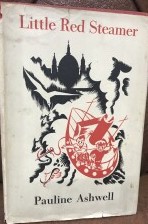
Whitby’s precocious talent emerged remarkably early. At just 15 years old, in 1941, she made her literary debut with the chapbook Little Red Steamer, a children’s fantasy published by Methuen. For this inaugural work, she adopted the pseudonym Pauline Ashwell, signaling from the outset a deliberate separation between her public and private identities. The context of a young female author publishing fantasy in wartime Britain is significant, hinting at an early inclination towards escapism and imaginative worlds during a period of global upheaval.
The following year, in July 1942, her foray into speculative fiction began with the story “Invasion from Venus,” appearing in the British magazine Yankee Science Fiction. For this science fiction piece, she used the slightly altered pseudonym Paul Ashwell, a move that subtly blurred her gender identity, a practice that would become more pronounced and strategically employed in the years to come. This early adoption of ambiguous or male-sounding pseudonyms was not uncommon for women writers in genre fiction, a tactic often employed to navigate perceived biases within the predominantly male readership and editorial circles of the time.
Ascension in the Golden Age of Sci-Fi
Whitby’s career truly gained momentum in the vibrant post-war landscape of science fiction, particularly in the United States. Her novelette, “Unwillingly to School,” marked a significant milestone, appearing in the highly influential American magazine Astounding Science Fiction. Published under her most recognized pseudonym, Pauline Ashwell, the story garnered widespread critical attention, culminating in a prestigious Hugo Award nomination. This was a remarkable achievement, placing her among the luminaries of a genre often dominated by male voices and demonstrating the exceptional quality of her storytelling. Astounding, under the formidable editorship of John W. Campbell, Jr., was the premier platform for hard science fiction, and publication within its pages signified a writer of serious merit and scientific rigor.
Just nine months later, another story, “Big Sword,” graced the pages of Astounding. However, this time, Whitby opted for the even more gender-neutral pseudonym, Paul Ash. This shift further underscored a potential strategy to allow her work to be judged on its own merits, free from any preconceived notions associated with a female author. The consistent appearance of her work in such a high-profile publication, under different pseudonyms, speaks volumes about her talent and the editorial recognition it received.
The year 1958 proved to be another pivotal moment. Under her Paul Ash persona, Whitby was nominated for the Best New Author Hugo Award. She was one of three remarkable women nominated that year, alongside Rosel George Brown and Kit Reed, a testament to the growing, albeit often understated, presence of female talent in science fiction. The award ultimately went to “No Award,” a peculiar outcome that saw Brian W. Aldiss, another prominent nominee, finish second. This nomination, regardless of the final result, solidified her standing as a significant new voice in the genre.
The Academic Interlude and Global Service
Following a productive period through the mid-1960s, during which she published a handful of stories across her various pseudonyms, Pauline Whitby seemingly vanished from the literary scene. This disappearance was partly attributed to the increasing difficulty of selling her work to British magazines, suggesting a broader challenge for speculative fiction authors in the UK at the time. However, her retreat from writing was not a retreat from intellectual pursuit or public service.
Whitby embarked on a distinguished academic career. She pursued higher education at St. Hilda’s College, Oxford, where she immersed herself in the study of zoology. This rigorous scientific training at one of the world’s most esteemed universities provided her with a deep understanding of biological systems and empirical research, skills that would undoubtedly inform her later professional life. After earning her degree, she transitioned into a lecturing role, sharing her expertise at prestigious institutions such as University College London and the London School of Hygiene and Medicine. Her work in these capacities highlights a sustained commitment to scientific inquiry and education, a world away from the fantastical narratives she wove.
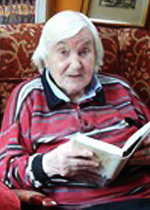
Yet, her journey of service took an even more profound turn. Following her academic tenure, Whitby embarked on a remarkable chapter of international humanitarian work. She traveled to Africa, dedicating herself to the crucial field of nutrition. Working for the United Nations as a Nutrition Officer, she served in Ghana, Sierra Leone, and Zambia. This period, spanning from the late 1960s to the mid-1970s, placed her at the forefront of addressing critical public health challenges in post-colonial nations. Her role would have involved designing and implementing nutrition programs, conducting research, educating communities, and working with local governments to improve food security and health outcomes. This was a challenging and impactful endeavor, requiring not only scientific knowledge but also cultural sensitivity, diplomacy, and immense resilience. Whitby retired from this demanding and vital work in the mid-1970s, having left an indelible mark on countless lives.
The Return to the Literary Fold
After decades of silence, Pauline Whitby made a surprising and welcome reappearance in the literary world in 1982. Her story “Rats in the Moon” was published in the November issue of Analog Science Fiction and Fact (the successor to Astounding), signaling a triumphant return to the genre she had left behind. This second phase of her writing career proved to be equally prolific and long-lasting, extending for fifteen stories over 19 years, concluding around 2001.
Remarkably, all of her professional science fiction sales, both in her first and second phases, were exclusively to Astounding or Analog. This speaks volumes about the consistency of her writing quality and its resonance with the editorial vision of both John W. Campbell, Jr. (who edited Astounding during her early career) and Stanley Schmidt (who took over Analog in 1978 and continued its legacy). This enduring relationship with a single editorial lineage is a rare feat in the often-fickle world of publishing.
In 1992, Whitby demonstrated her continued engagement with her past works by collecting four of her stories featuring the character Lysistrata Lee. These stories, two from each phase of her career, were compiled into the collection Unwillingly from Earth, a title that subtly echoed her earlier Hugo-nominated novelette. Her third book, Project FarCry, further solidified her later literary output. This was a "fix-up" novel, a common practice in science fiction where previously published short stories are revised and connected to form a cohesive longer narrative. Project FarCry integrated her "Paul Ash" stories “Big Sword” and “The Man Who Stayed Behind,” showcasing her ability to weave individual narratives into a broader, more intricate tapestry.
Final Years and Legacy
Pauline Whitby passed away on November 23, 2015, in Baldock, Hertfordshire, a correction to the erroneous 1915 date in some records, which would have predated her birth. Her death brought to a close a life of extraordinary accomplishment, both public and private.
Approximately five years before her passing, a poignant moment of connection occurred. Roy Kettle, a dedicated science fiction fan, successfully tracked Whitby down after learning that she lived near him. This personal encounter highlights the enduring curiosity and admiration fans hold for their favorite authors, particularly those who have maintained a degree of privacy. Kettle subsequently chronicled his experience in an article that appeared in the August 2010 issue of the fanzine Sense of Wonder Stories, edited by Rich Coad. This fanzine piece served as a valuable, if unofficial, biographical sketch, offering rare insights into the later life of an author who had largely remained out of the public eye. It underscored the vital role of fandom in preserving and celebrating the history of science fiction, ensuring that the contributions of authors like Whitby are not forgotten.
Supporting Data and Literary Context
Pauline Whitby’s unique career trajectory provides rich material for understanding broader trends within science fiction and the challenges faced by women writers in the mid-20th century.
The Pseudonym Phenomenon: Gender and Genre in Early SF
Whitby’s consistent use of multiple pseudonyms, particularly the gender-neutral "Paul Ash" and "Paul Ashwell," is a compelling case study in the pseudonym phenomenon prevalent among women authors in early genre fiction. In a field largely dominated by male writers and perceived to cater primarily to a male readership, adopting a male or ambiguous name was often a strategic decision. It allowed writers to bypass potential gender bias from editors, reviewers, and readers, ensuring their work was judged on its own merits rather than through a gendered lens.
This practice was not unique to Whitby. Iconic figures like C.L. Moore (Catherine Lucille Moore), who initially published under her initials, and the even more famous example of James Tiptree Jr. (Alice Sheldon), deliberately chose male pseudonyms to navigate the industry. While the motivations varied, the common thread was often a desire for fair evaluation and a reluctance to draw undue attention to their gender in a professional context. For Whitby, "Paul Ash" became the identity under which she received a Hugo nomination for Best New Author, suggesting that this particular pseudonym was effective in achieving a level of acceptance and recognition within the established structures of the genre. Her choice of "Pauline Ashwell" for her children’s fantasy and her Hugo-nominated novelette also speaks to a conscious differentiation, perhaps reserving the more feminine-sounding name for specific types of stories or for when she felt her gender would be less of a barrier.
Science Fiction’s Golden Age and Beyond
Whitby’s primary publishing outlets, Astounding Science Fiction and later Analog, place her firmly within the "Golden Age" of science fiction and its direct lineage. Under John W. Campbell, Jr., Astounding championed a particular brand of hard science fiction, characterized by rigorous scientific plausibility, exploration of technological advancements, and often, a focus on engineering solutions to grand problems. Whitby’s ability to consistently sell to Campbell suggests her stories aligned with this editorial vision, demonstrating a keen intellect and an understanding of scientific principles that likely stemmed from her own academic background in zoology.
Her later return to Analog under Stanley Schmidt further cements her place within this tradition. Schmidt, a physicist by training, continued Campbell’s legacy of promoting scientifically grounded speculative fiction. The enduring appeal of her work to both editors, across different eras, underscores the timeless quality of her storytelling and her ability to craft narratives that resonated with a readership valuing intellectual rigor alongside imaginative scope. While the original article does not detail specific themes in her stories, her academic background in zoology and her humanitarian work in nutrition strongly suggest that themes of biology, ecology, human survival, and societal organization might have featured prominently in her work, aligning well with the intellectual underpinnings of Astounding/Analog.
Critical Reception and Enduring Influence
While extensive critical analyses of Pauline Whitby’s individual stories are not readily available in the provided text, her Hugo nominations for "Unwillingly to School" and for Best New Author serve as clear indicators of her significant critical reception within the science fiction community. The Hugo Awards, voted on by fans, represent a direct measure of popularity and perceived excellence. Her consistent publication history across two distinct phases of her life, exclusively with the genre’s leading magazine, further attests to the high regard in which her work was held by influential editors and a dedicated readership.
Her contributions, even when made under a veil of pseudonyms, helped to subtly broaden the representation of women within the science fiction canon. By proving her capabilities and earning accolades, regardless of the name on the byline, she contributed to the slow but steady erosion of gender barriers in a field that historically marginalized female voices. Her later collection, Unwillingly from Earth, and the fix-up novel Project FarCry, demonstrate a sustained literary ambition and a commitment to shaping her narratives into larger, more cohesive works, a mark of a serious author.
Official Responses and Scholarly Interest
The concept of "official responses" typically refers to statements from estates, publishers, or formal academic institutions. Given the private nature of Pauline Whitby’s life and her intermittent presence in the public eye, such direct official responses are scarce. However, we can interpret "official responses" more broadly to include significant forms of recognition from the science fiction community itself, as well as the emerging scholarly and fan interest in her unique legacy.
Hugo Awards as a Measure of Recognition
The most "official" forms of recognition for Pauline Whitby came through the Hugo Awards. Her nomination for "Unwillingly to School" in the novelette category, and her subsequent nomination for Best New Author (as Paul Ash), are irrefutable testaments to her talent and the esteem in which she was held by the science fiction community. These nominations, decided by a wide base of fans, represent a collective acknowledgment of her narrative skill and innovative ideas. In a genre that prides itself on its meritocracy, the Hugo Awards serve as a crucial benchmark, and Whitby’s presence on the ballot, especially in the early years of the awards, marks her as a significant figure in the development of science fiction. The 1958 Best New Author nomination, in particular, is noteworthy for placing her alongside two other talented women, highlighting a nascent, though often overlooked, shift in the gender dynamics of the genre’s emerging talent pool.
Fandom’s Role in Preservation and Rediscovery
While formal institutional responses might be limited, the dedicated efforts of science fiction fandom have played a critical role in preserving and illuminating Whitby’s story. The act of Roy Kettle, an SF fan, tracking her down in her later years, represents a powerful form of "response" from the community. It signifies a deep-seated appreciation and curiosity for authors who have contributed to the genre, even those who have stepped away for extended periods. Kettle’s subsequent article in the fanzine Sense of Wonder Stories is invaluable. Fanzines, often produced by fans for fans, serve as informal archives and critical forums, offering insights and personal anecdotes that might otherwise be lost to history. This piece, edited by Rich Coad, provided a crucial, albeit informal, biographical update, shedding light on Whitby’s life beyond her literary output and ensuring that her story continued to resonate within the fan community. These grassroots efforts are often the first step in the broader rediscovery and re-evaluation of overlooked authors by scholars and publishers.
The Challenge of Rediscovery and Scholarly Interest
Pauline Whitby’s career presents a compelling challenge for literary historians and scholars. Her use of multiple pseudonyms, her decades-long hiatus from publishing, and her subsequent quiet return make her a fascinating, yet elusive, subject. Her story highlights the broader issue of how literary history, particularly in genre fiction, can inadvertently overlook significant contributions from authors who do not follow a conventional career path or who consciously obscure their identity.
As feminist literary criticism and genre studies continue to mature, there is a growing scholarly interest in unearthing and re-evaluating the contributions of women writers in science fiction. Whitby’s dual career, blending rigorous scientific pursuit with imaginative storytelling and dedicated humanitarian work, makes her a prime candidate for such re-examination. Future academic studies could delve into her unpublished works (if any exist), analyze her stories for recurring themes related to her scientific background or humanitarian experiences, and explore the precise impact of her pseudonyms on her career trajectory. The ongoing efforts by literary organizations and scholars to create more inclusive histories of science fiction will undoubtedly lead to a deeper appreciation of authors like Pauline Whitby, whose quiet brilliance often belied the profound impact of their work.
Implications and Legacy
Pauline Whitby’s life and career carry profound implications, offering valuable lessons for understanding literary history, the challenges faced by women in creative fields, and the power of a life dedicated to both imagination and service. Her story resonates far beyond the pages of her science fiction, leaving a multifaceted legacy.
A Trailblazer in Disguise
Whitby’s career stands as a testament to quiet perseverance and pioneering spirit. By successfully navigating the male-dominated landscape of mid-20th-century science fiction under multiple pseudonyms, she effectively carved out a space for her voice, ensuring her stories reached a wide audience and earned critical acclaim. Her ability to earn Hugo nominations and maintain a publishing relationship with the genre’s most prestigious magazine, regardless of the name on the byline, demonstrates her exceptional talent and the universal appeal of her narratives. She was a trailblazer, not by loudly asserting her identity, but by subtly reshaping perceptions through the sheer quality of her work. Her story challenges the conventional narratives of literary success, highlighting that impact can be achieved through various means, including strategic anonymity.
The Intersection of Science and Fiction
One of the most compelling aspects of Whitby’s legacy is the profound intersection of her scientific background and her imaginative writing. Her zoology degree from Oxford and her subsequent work as a university lecturer in biological sciences undoubtedly informed her approach to science fiction. This background would have provided a robust foundation for scientific accuracy and plausible world-building, characteristics highly valued in Astounding and Analog. Furthermore, her extensive experience as a UN Nutrition Officer in Africa—working on the front lines of public health and development—must have provided her with unique insights into human societies, resource management, ecological challenges, and the resilience of the human spirit. While specific thematic analyses are not detailed in the provided text, it is highly probable that these real-world experiences enriched her speculative narratives, lending them a depth and realism that only firsthand knowledge can provide. Her life exemplifies how deep engagement with the scientific and humanitarian worlds can profoundly inspire and inform the creation of compelling speculative fiction.
Re-evaluating the Canon and Enduring Relevance
Pauline Whitby’s story underscores the vital importance of continually re-evaluating the literary canon, particularly in genre fiction. Authors who, for various reasons, have been overlooked or whose careers do not fit neat historical classifications, deserve renewed attention. Her example highlights how many significant voices, especially those of women who adopted pseudonyms or had interrupted careers, might still be waiting to be fully appreciated. By bringing her story to light, we contribute to a more comprehensive and accurate understanding of science fiction’s rich and diverse history.
Beyond historical significance, the themes present in Whitby’s work, such as human adaptation, scientific exploration, and societal challenges (potentially informed by her UN work), are likely to retain their relevance for contemporary readers. In an age grappling with global health crises, environmental concerns, and the complexities of international development, her perspective, forged through both scientific rigor and humanitarian experience, could offer timely insights. Her dual life, dedicated to both envisioning futures and improving present realities, serves as an inspiring model of intellectual engagement and compassionate action, solidifying Pauline Whitby’s legacy as a truly remarkable figure in the tapestry of 20th-century intellectual life.



Leave a Comment