Shifting Loyalties in a Dystopian Future: Blade Runner RPG Announces "Replicant Rebellion" Expansion
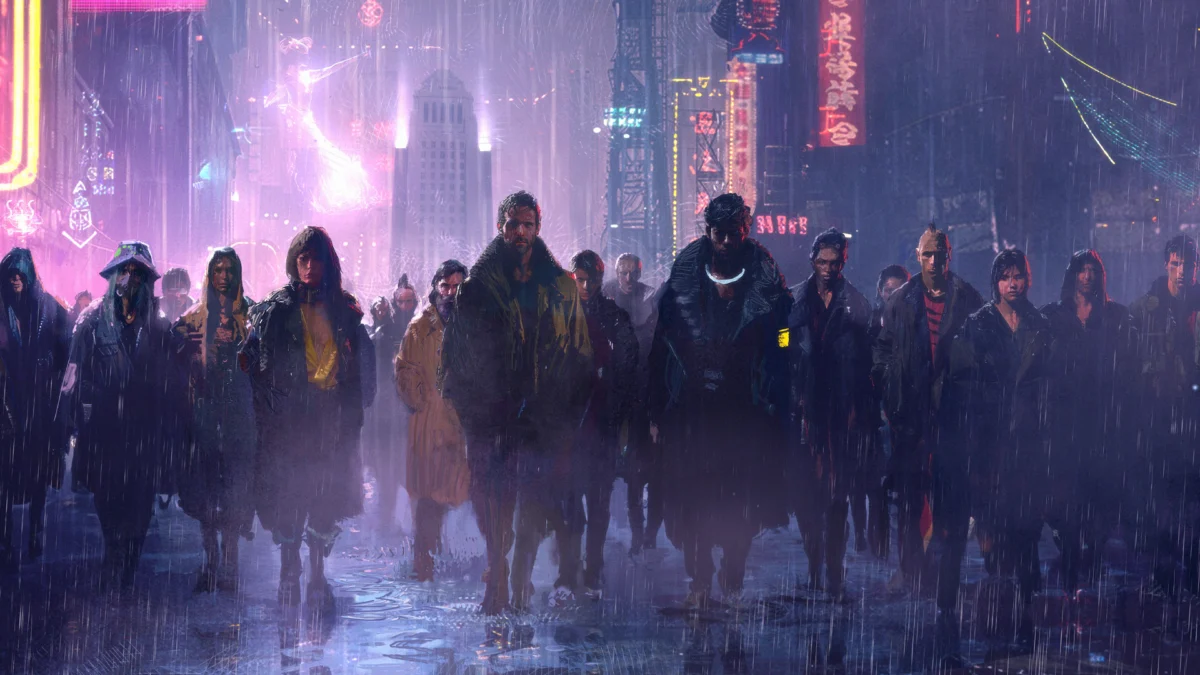
LOS ANGELES, CA – In the neon-drenched, rain-swept metropolis of a not-so-distant future, where the line between humanity and artificiality blurs, a seismic shift is about to occur within the tabletop roleplaying landscape. Free League Publishing, renowned for its atmospheric and critically acclaimed adaptations of iconic franchises, has announced a groundbreaking new expansion for Blade Runner: The Roleplaying Game. Titled Replicant Rebellion, this expansion dares players to abandon their badges as Replicant-hunting officers and instead pledge allegiance to the very beings they once pursued, joining a clandestine movement fighting for freedom and liberation.
Slated for a Kickstarter launch on May 28th, Replicant Rebellion promises to fundamentally alter the player experience, immersing participants in the perilous world of the Replicant Underground. This strategic narrative pivot invites players to explore the complex moral grey areas of the Blade Runner universe from an entirely new, deeply empathetic perspective, challenging preconceptions and forcing difficult choices in a desperate fight against corporate tyranny. No longer tasked with enforcing the status quo, players will become agents of change, navigating a dangerous existence fraught with espionage, sabotage, and the constant threat of discovery.
Main Facts: A New Perspective on a Classic Dystopia
Replicant Rebellion is the latest major expansion for Blade Runner: The Roleplaying Game, published by Free League Publishing. Unlike the core game, which traditionally casts players as Blade Runners – elite police officers tasked with "retiring" rogue synthetic humans known as Replicants – this new module flips the script entirely. Players will be recruited into the Replicant Underground, a secretive organization committed to securing the freedom and rights of all Replicants, whatever the cost.
The expansion is designed to immerse players in a high-stakes campaign where they will operate independent crews, executing a diverse range of missions vital to the rebellion’s cause. These assignments include high-risk acts of sabotage against the corporate infrastructure that produces and exploits Replicants, laying charges for explosives to disrupt enemy operations, and rooting out moles within their own ranks. The narrative is crafted to challenge players’ personal morality, forcing them to balance the ethical complexities of their actions against the overarching goals of the liberation movement.
Free League Publishing, the Swedish studio behind this and other celebrated licensed TRPGs such as Alien: The Roleplaying Game and The One Ring, will launch a crowdfunding campaign for Replicant Rebellion on Kickstarter starting May 28th. This campaign will allow fans to back the project and secure their copies, potentially unlocking additional content and stretch goals as part of the funding drive. The announcement signals Free League’s continued commitment to expanding the narrative possibilities within the rich, dystopian world of Blade Runner, offering a fresh and provocative lens through which to experience its enduring themes.
Chronology: From Philosophical Novel to Tabletop Rebellion
The Blade Runner universe is a tapestry woven from decades of speculative fiction, cinematic artistry, and profound philosophical inquiry. The journey from its genesis to the current tabletop expansion provides crucial context for understanding the significance of Replicant Rebellion.
The Genesis: Philip K. Dick’s Vision
The saga began with Philip K. Dick’s seminal 1968 novel, Do Androids Dream of Electric Sheep?. Set in a post-apocalyptic San Francisco, the book introduced bounty hunter Rick Deckard, tasked with "retiring" rogue androids. Dick’s narrative delved deeply into themes of empathy, identity, and what it truly means to be human, questioning the very nature of consciousness and artificial life. His work laid the philosophical groundwork for the entire franchise, exploring the blurred lines between creator and creation, and the inherent rights of sentient beings, whether biological or synthetic.
Cinematic Masterpiece: Blade Runner (1982)
Ridley Scott’s 1982 film adaptation, Blade Runner, translated Dick’s cerebral narrative into a visually stunning, neo-noir masterpiece. Starring Harrison Ford as Rick Deckard, the film envisioned a perpetually rainy, polluted Los Angeles in 2019, dominated by colossal corporations and teeming with genetically engineered "Replicants" – synthetic humans designed for dangerous off-world labor. When a group of Nexus-6 Replicants, led by the charismatic Roy Batty (Rutger Hauer), escapes to Earth seeking a longer lifespan, Deckard is tasked with hunting them down. The film’s enduring legacy lies not only in its groundbreaking cyberpunk aesthetic, which defined the genre for decades, but also in its profound exploration of humanity, memory, and the ambiguous nature of Deckard himself. Its Vangelis soundtrack, intricate set design, and existential questions solidified its status as a cult classic and a benchmark for science fiction cinema.
A Modern Sequel: Blade Runner 2049 (2017)
Over three decades later, Denis Villeneuve’s 2017 sequel, Blade Runner 2049, expanded the universe with breathtaking visual ambition and narrative depth. Ryan Gosling starred as K, a Replicant Blade Runner working for the LAPD in 2049, three decades after the original film. K’s journey to uncover a long-buried secret – the existence of a replicant child – leads him down a path that questions his own identity and the very fabric of the established order. The film further explored the evolution of Replicant technology (Nexus-8 and Nexus-9 models), the pervasive corporate control of the Wallace Corporation, and the deepening despair of a world struggling with ecological collapse and societal decay. It cemented the franchise’s reputation for thought-provoking storytelling and unparalleled visual artistry.
Entering the Tabletop: Blade Runner: The Roleplaying Game
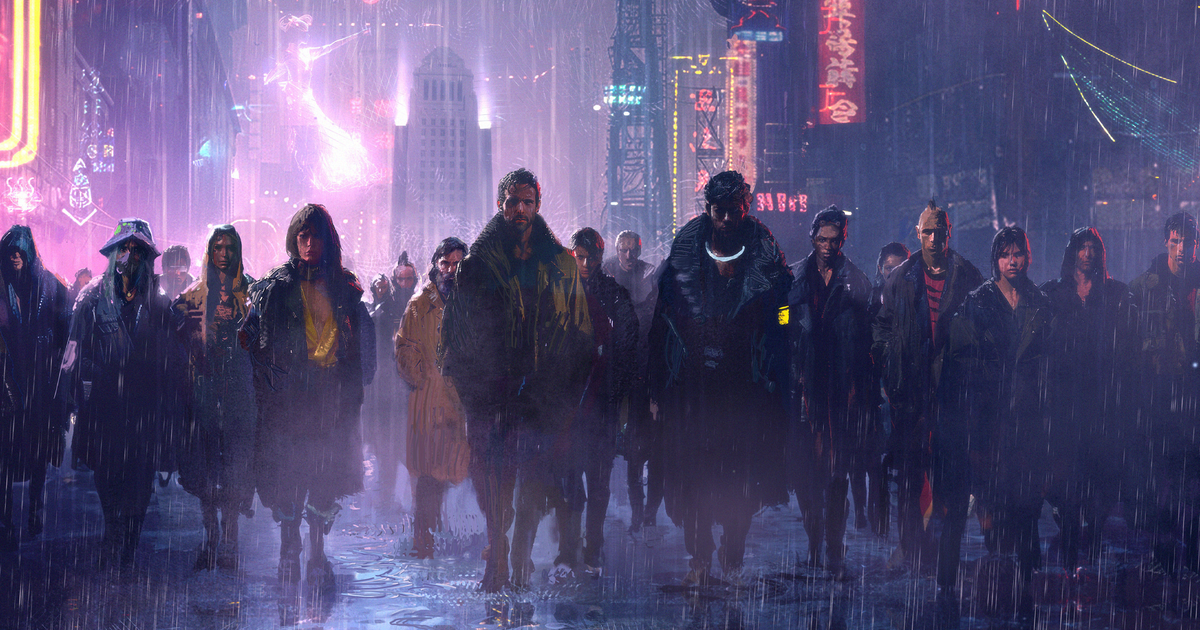
In 2023, Free League Publishing brought the Blade Runner universe to the tabletop with Blade Runner: The Roleplaying Game. Utilizing a modified version of their popular Year Zero Engine, the game meticulously recreated the atmosphere and themes of the films. Set in Los Angeles in 2037, between the events of the two films, the core game allowed players to embody Blade Runners, navigating the corrupt bureaucracy of the LAPD and the moral quagmires inherent in their duties. The game was lauded for its ability to capture the neo-noir detective elements, the moral dilemmas, and the distinctive cyberpunk aesthetic, providing players with the tools to tell their own stories of hunt and introspection within this iconic setting.
The Evolution: Replicant Rebellion
Replicant Rebellion marks a significant evolution for the TTRPG. By shifting the player’s allegiance from the enforcers of corporate power to the persecuted, Free League is not just adding new missions but fundamentally redefining the player’s role within the Blade Runner narrative. This expansion directly addresses a key thematic undercurrent of the franchise: the struggle for freedom and self-determination against an oppressive system. It is a bold move that promises to unlock entirely new avenues for storytelling and character development, building upon the established lore while offering a fresh, and arguably more subversive, perspective.
Supporting Data: Unpacking the Themes and Mechanics of Defiance
The decision to pivot player roles from Blade Runner to Replicant rebel is not merely a cosmetic change; it’s a profound narrative and mechanical undertaking that leverages the deepest thematic veins of the Blade Runner universe.
The Enduring Power of Cyberpunk Dystopia
Blade Runner‘s enduring appeal lies in its masterclass portrayal of cyberpunk dystopia. This genre, characterized by "high tech, low life," is vividly depicted through the franchise’s crumbling infrastructure, pervasive corporate advertising, technological marvels juxtaposed with societal decay, and the stark class divide. The Replicant Underground operates squarely within this oppressive framework. Players will no longer have the relative authority of the LAPD; instead, they will be outsiders, reliant on hidden networks, black market dealings, and their wits to survive and advance their cause. This shift amplifies the core cyberpunk experience, placing players directly into the "low life" struggle against "high tech" oppression.
Themes of Humanity, Identity, and Exploitation
At its heart, Blade Runner constantly asks: what does it mean to be human? Replicants, designed for servitude, often display more empathy and a greater will to live than their human creators. The Voight-Kampff test, designed to differentiate humans from Replicants based on emotional responses, ironically highlights the capacity for profound emotion in the very beings it seeks to categorize as non-human. Replicant Rebellion thrusts players into the heart of this existential conflict. By playing as Replicant rebels, players will directly confront the ethical implications of their own existence and the systemic exploitation of their kind. They will embody the struggle for self-definition and the inherent right to freedom, pushing back against a society that deems them mere property.
Free League Publishing’s Expertise in Atmospheric Storytelling
Free League Publishing has carved out a niche for itself by crafting TTRPGs that excel at capturing the distinct atmosphere and thematic depth of their source material. Their Alien: The Roleplaying Game, for instance, masterfully recreates the claustrophobic horror and corporate cynicism of the film franchise. Similarly, The One Ring captures the epic fantasy and melancholic beauty of Tolkien’s Middle-earth. This track record suggests that Replicant Rebellion will be more than just a new set of rules; it will be a carefully constructed experience designed to evoke the specific tensions, moral quandaries, and desperate hope inherent in a fight for Replicant liberation. Their Year Zero Engine, known for its focus on narrative and consequences, is particularly well-suited for high-stakes, morally ambiguous campaigns.
The Gameplay Shift: From Hunter to Hunted (and Hunter of a Different Kind)
The transition from playing an authorized Blade Runner to a fugitive Replicant rebel fundamentally alters the gameplay loop. Instead of official investigations, players will engage in:
- Covert Operations: Espionage, infiltration, data theft, and sabotage will replace traditional detective work. Missions might involve disrupting Replicant manufacturing facilities, intercepting corporate shipments, or rescuing enslaved Replicants.
- High Stakes and Resource Scarcity: Without the backing of the LAPD, players will operate with limited resources, relying on their network of contacts and ingenuity. Every decision will carry significant weight, with failure potentially leading to capture, "retirement," or the collapse of the rebellion cell.
- Moral Ambiguity: The "Replicant Underground" is unlikely to be a morally pristine organization. Players will face difficult choices, potentially engaging in acts that blur the lines between justified rebellion and terrorism. Smoking out moles, for example, could involve brutal interrogations or painful betrayals.
- Faction Play: The expansion will likely introduce mechanics for managing relationships with different Replicant factions, human sympathizers, and various corporate or law enforcement entities.
- Personal Stakes: As Replicants themselves, players’ personal stories of identity, memory, and the search for belonging will be deeply intertwined with the rebellion’s larger goals. This will add layers of emotional resonance to every mission.
The missions described – "laying charges for explosives, sabotaging the Replicant trade and smoking out moles" – clearly indicate a shift towards more direct, often violent, forms of resistance. This contrasts sharply with the often-cerebral, investigative nature of the core Blade Runner game, promising a dynamic and action-packed experience infused with profound ethical dilemmas.
Official Responses: Free League’s Vision for Uncharted Territories
While no direct quotes from Free League Publishing representatives were provided in the initial announcement, the very existence of Replicant Rebellion serves as a powerful official statement regarding their vision for the Blade Runner TTRPG. It signifies a deliberate and ambitious move to delve into previously uncharted narrative territories within the franchise.
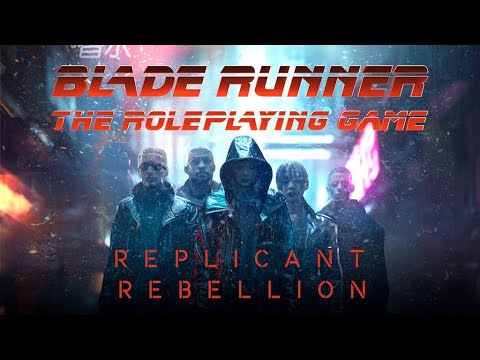
The choice to launch on Kickstarter, a platform known for fostering community and direct engagement, further underscores Free League’s confidence in the concept and their desire to involve the fanbase in its realization. Crowdfunding campaigns are often used to gauge interest, build hype, and secure additional resources for development, allowing for more expansive and detailed products than might be possible through traditional publishing alone. This approach allows Free League to directly respond to the desires of a fanbase that has long sympathized with the plight of Replicants.
By crafting an expansion that allows players to join the Replicant Underground, Free League is essentially providing an "official response" to a latent demand within the fandom: the desire to experience the Blade Runner universe from the perspective of the oppressed. This move acknowledges the inherent moral complexities of the source material and offers a platform for players to actively engage with the themes of rebellion, justice, and self-determination that are central to the franchise’s enduring appeal. It’s a testament to Free League’s commitment to exploring the multifaceted nature of licensed IPs, not just replicating their surface aesthetics, but truly inhabiting their core philosophical conflicts. The "You look like a good Joe" quote, used as a subtle header in the original announcement, itself hints at this shift, inviting players to step into the shoes of a replicant, much like K in Blade Runner 2049.
Implications: A New Era for Blade Runner TTRPG and Beyond
The announcement of Replicant Rebellion carries significant implications, not just for Blade Runner: The Roleplaying Game, but for the broader landscape of licensed tabletop RPGs and narrative design.
Profound Player Agency and Moral Quandaries:
This expansion elevates player agency to a new level. Players are not just solving cases; they are actively shaping the future of an entire sentient species. This comes with immense moral weight. How far is too far in the pursuit of freedom? Is violence justified against oppressors? What are the ethical costs of rebellion, and how do they impact the individual Replicant’s soul? These are the kinds of questions Replicant Rebellion is poised to explore, forcing players to confront the very nature of their own morality within a grim, unforgiving world. The balancing act between "personal morality and the operations of the Replicant Underground" will be a defining feature, making each decision resonate deeply.
Enhanced Narrative Depth and Worldbuilding:
By shifting perspective, the expansion promises to add unparalleled narrative depth to the Blade Runner universe. Players will gain intimate insight into the hidden lives of Replicants, their struggles, their communities, and their desperate hopes. This will allow for a richer exploration of the setting’s socio-political landscape, revealing aspects of the world that remain unseen from the perspective of a law enforcement officer. It provides an opportunity to flesh out the lore of the Replicant Underground, its leaders, its philosophy, and its methods, enriching the overall tapestry of the Blade Runner world.
Revitalizing the Game and Attracting New Audiences:
For existing players of Blade Runner: The Roleplaying Game, Replicant Rebellion offers a compelling reason to revisit the game, providing a fresh campaign concept that radically departs from the core experience. It opens up new character archetypes and storytelling arcs, preventing the game from becoming stagnant. Furthermore, this bold narrative choice is likely to attract new players who are drawn to the themes of rebellion against oppression, or who simply prefer playing as protagonists fighting for a cause rather than enforcing a dystopian status quo. This could significantly expand the game’s community and longevity.
Setting a Precedent for Licensed RPGs:
Free League Publishing, already a leader in licensed RPGs, is setting a precedent with Replicant Rebellion. Rather than simply offering more of the same, they are demonstrating a willingness to challenge player roles and explore controversial, yet thematically rich, aspects of their source material. This could inspire other licensed RPG creators to be more ambitious in their adaptations, pushing the boundaries of what’s possible within established fictional universes. It highlights that successful adaptations aren’t just about replicating the aesthetic, but about engaging with the core philosophical and moral questions that define the IP.
Future Potential:
The success of Replicant Rebellion could pave the way for further expansions that explore other facets of the Blade Runner universe. Perhaps modules focusing on off-world colonies, corporate espionage from a different angle, or even the initial creation and early days of Replicants. By proving that players are willing to embrace diverse and challenging perspectives, Free League opens up a universe of possibilities for future content.
In conclusion, Replicant Rebellion is poised to be a landmark expansion for Blade Runner: The Roleplaying Game. It’s a bold narrative experiment that promises to immerse players in the gritty, morally complex heart of the Blade Runner universe, allowing them to experience the fight for freedom from the most perilous and poignant perspective imaginable. As the Kickstarter campaign approaches, the anticipation among fans and the wider TTRPG community is palpable, eagerly awaiting the chance to forge their own path in the shadow of a corporate empire, fighting for a future where Replicants can truly dream of electric sheep, and perhaps, even freedom.