
Frostpunk Freezes the Tabletop Anew with Accessible Escape Room Experience
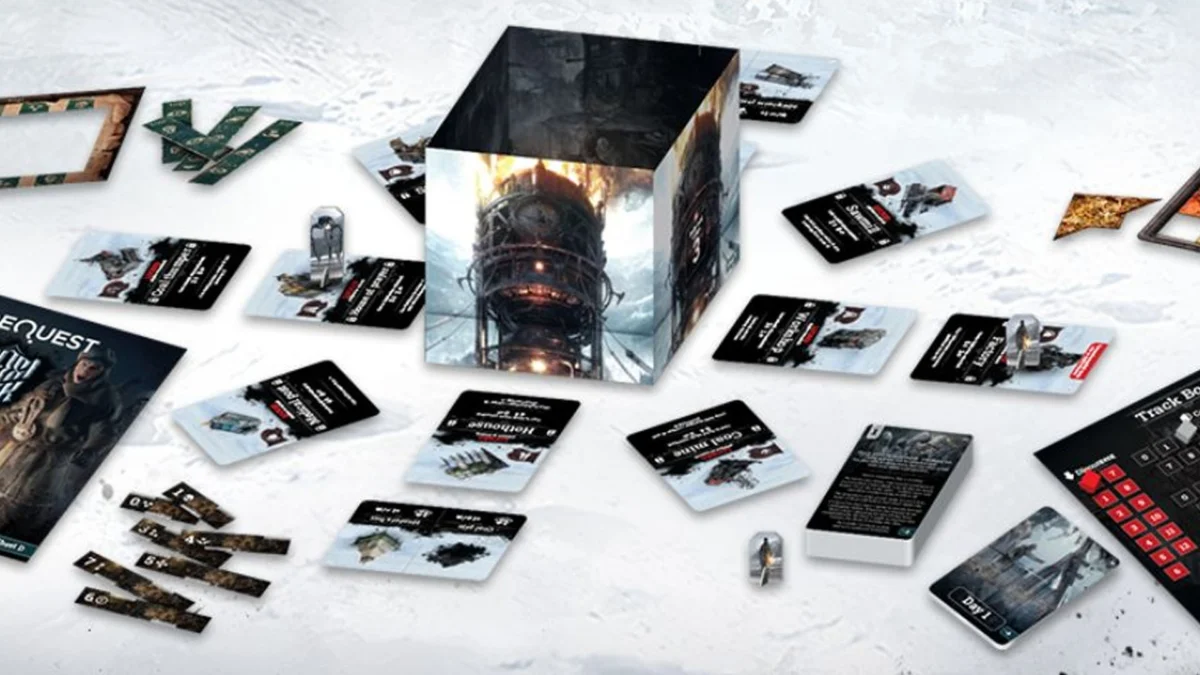
GEN CON, INDIANA – August 2024 – The desolate, unforgiving world of Frostpunk, renowned for its brutal survival challenges and stark moral dilemmas, is set to expand its icy grip on the tabletop gaming landscape once more. This summer, at the eagerly anticipated Gen Con convention, publishers Board&Dice and Lockme will unveil Side Quest: Frostpunk, a new escape-room-in-a-box experience that promises a comparatively streamlined yet equally compelling challenge for fans of the acclaimed video game and tabletop enthusiasts alike.
Departing from the monumental complexity of its predecessor, Frostpunk: The Board Game, this latest adaptation introduces players to a more focused, puzzle-driven narrative. Designed for solo play or up to four participants, Side Quest: Frostpunk casts players as a team of scouts venturing into the frozen wasteland, tasked with a critical mission: locate and reactivate an abandoned generator within a perilous six-day timeframe before vital supplies dwindle to nothing. This novel approach aims to deliver the core Frostpunk experience – the desperate struggle for survival, tough decisions, and resource management – through the engaging, time-pressured format of an escape room.
The Main Facts: A Chilling New Chapter
Side Quest: Frostpunk represents a strategic pivot for the intellectual property’s tabletop presence, offering an accessible entry point into its bleak, steampunk-infused post-apocalyptic universe. Unlike the sprawling, rules-heavy Frostpunk: The Board Game, this new iteration, rated as a two out of four on the publishers’ complexity scale, prioritizes narrative immersion and clever puzzle-solving over intricate resource engines and sprawling city-building.
Players assume the roles of intrepid scouts dispatched from the last city on Earth, navigating a treacherous frozen landscape. Their primary objective revolves around restoring a derelict generator, a task fraught with peril and demanding careful management of essential resources such as temperature, steam cores, and dwindling food supplies. The game’s inherent time limit, translating to roughly an hour to 90 minutes of real-time play, injects the characteristic urgency of Frostpunk into the escape room format.
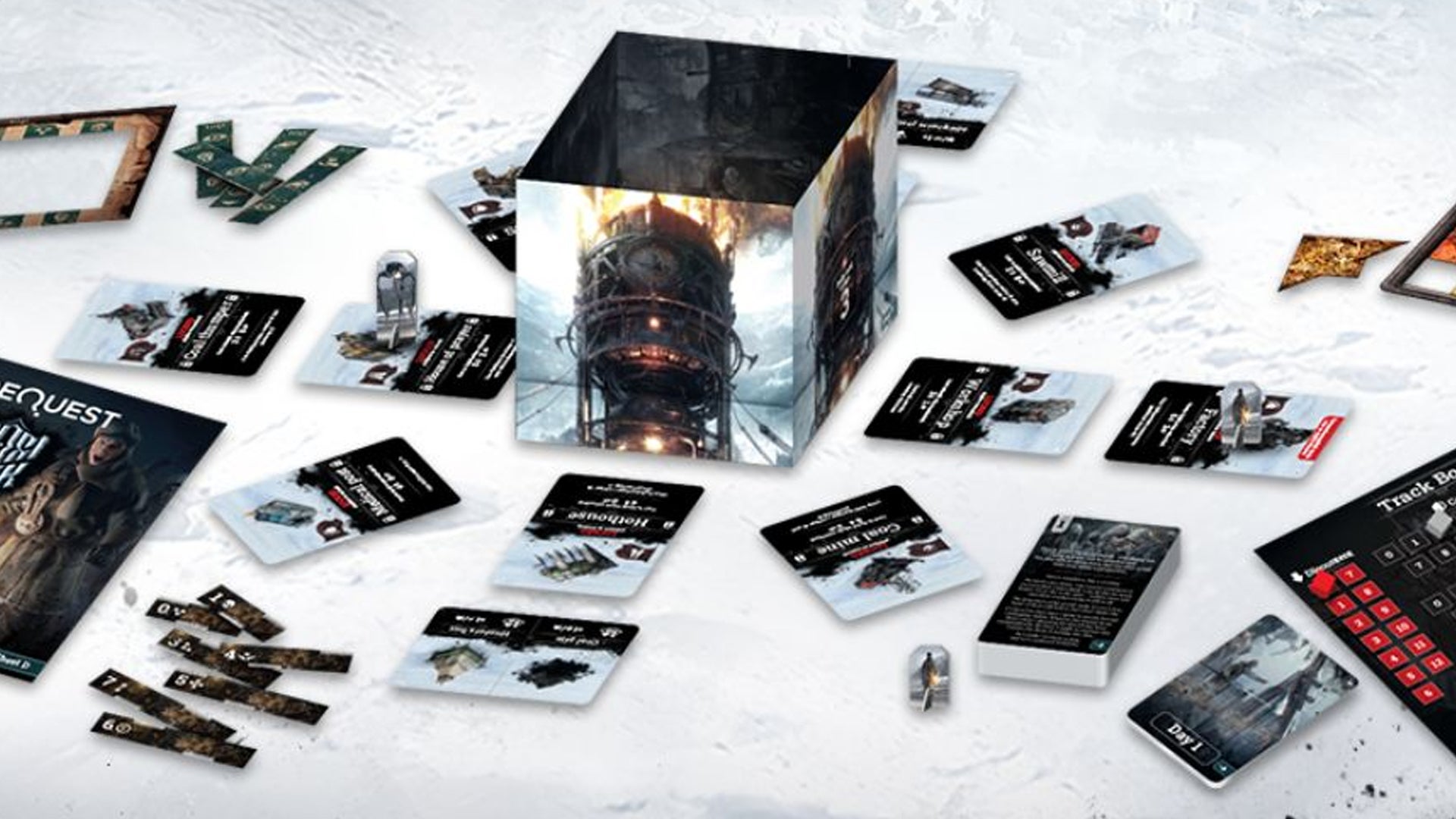
While specific puzzle mechanics remain shrouded in secrecy, a deliberate choice to preserve the element of surprise central to escape room experiences, promotional images hint at a visually engaging setup. Cards arranged to form the iconic central generator, surrounded by a ring of exploratory cards, suggest a dynamic interplay between core objectives and environmental challenges. Success will hinge on a blend of keen perception, lateral thinking, and creative problem-solving, all wrapped within an intriguing storyline promising both tough puzzles and even tougher decisions.
The game is a collaborative effort from seasoned designers Jakub Caban and Bartosz Idzikowski, known for their work on the popular Escape Tales series and other Side Quest titles, including adaptations for Nemesis and 7th Sea. Their expertise in translating complex settings into digestible, narrative-rich puzzle experiences positions Side Quest: Frostpunk as a promising addition to the burgeoning genre of tabletop escape rooms. The title is slated for its official debut at Gen Con in August, offering convention-goers a chance to brave the frozen wastes even as summer temperatures blaze outside.
A Chronology of Frost and Fortitude: From Digital Despair to Tabletop Trials
The journey of Frostpunk from a critically acclaimed video game to a multifaceted tabletop presence is a testament to the enduring appeal of its unique blend of survival, strategy, and moral quandaries.
The saga began in 2018 with the release of 11 Bit Studios’ Frostpunk for PC, a city-building survival game set in an alternate late 19th century where a global volcanic winter has plunged the Earth into an ice age. Players are tasked with leading the last city on Earth, centered around a massive steam-powered generator, making difficult decisions to ensure the survival of their populace. The game quickly garnered widespread acclaim for its innovative gameplay, challenging moral choices (often forcing players to choose between the lesser of two evils, such as child labor or starvation), and atmospheric narrative. Its themes of social class, resource scarcity, and the cost of survival resonated deeply with players, establishing Frostpunk as a benchmark in the survival strategy genre.
Following its digital success, the demand for a tabletop adaptation was immense. In 2020, an official board game adaptation, Frostpunk: The Board Game, was announced, developed by Glass Cannon Unplugged and published by Board&Dice. A highly successful Kickstarter campaign launched in October 2020, eventually raising over £2 million, showcasing the immense anticipation for a physical iteration. The board game, which began shipping to backers in late 2021 and saw wider retail release in 2022, was praised for its ambitious scope and faithful translation of the video game’s core mechanics. It brought the resource management, city-building, and profound moral dilemmas to the tabletop with remarkable fidelity. However, this faithfulness came with a significant caveat: the game’s immense complexity, extensive setup time, and voluminous rulebook earned it a reputation as a truly "heavy" board game, appealing primarily to dedicated hobbyists. Its sprawling nature, featuring a multi-tiered city board, numerous components, and intricate decision trees, made it a substantial commitment for any game night.
This brings us to the latest chapter: Side Quest: Frostpunk, set for release in August 2024. The "Side Quest" series, developed by Lockme in collaboration with Board&Dice, specializes in "escape-room-in-a-box" experiences that distill the essence of popular intellectual properties into engaging, puzzle-driven adventures. Previous successful entries include Side Quest: Nemesis and Side Quest: 7th Sea, demonstrating the designers’ knack for translating diverse settings into accessible puzzle formats. This new Frostpunk adaptation marks a deliberate move towards a more casual yet still challenging experience, bridging the gap between the intense digital game and the elaborate main board game, offering a quicker, more focused dive into the Frostpunk universe for a broader audience.
Supporting Data: The Anatomy of a Frozen Puzzle
The decision to develop Side Quest: Frostpunk is underpinned by several compelling factors, from the enduring appeal of the Frostpunk universe itself to the rising popularity of tabletop escape rooms and the proven track record of its design team.
The Enduring Appeal of the Frostpunk Universe: At its heart, Frostpunk is more than just a survival game; it’s a narrative about humanity’s resilience in the face of overwhelming odds. The Great Frost, the last remaining city huddled around a generator, the desperate search for resources, and the constant threat of societal collapse form a compelling backdrop for any interactive experience. The game forces players to confront the true cost of survival, where every decision carries moral weight and unforeseen consequences. This potent blend of dystopian sci-fi, historical aesthetics, and profound ethical dilemmas creates an immersive world that players are eager to explore in any format. Side Quest: Frostpunk taps into this established lore, promising to deliver a focused narrative arc that feels authentic to the IP, even within a different gameplay structure.
The Rise of Tabletop Escape Rooms: The concept of the escape room has exploded in popularity over the last decade, transitioning from physical venues to successful at-home versions. These "escape-room-in-a-box" games offer a condensed, portable, and often replayable version of the experience, allowing players to tackle puzzles, decipher clues, and unravel mysteries from the comfort of their own homes. Their appeal lies in their collaborative nature, the mental stimulation of diverse puzzles (logic, spatial, linguistic), and the strong narrative immersion they often provide. For Side Quest: Frostpunk, this format is particularly apt. The inherent time pressure of escape rooms mirrors the constant race against the clock in the Frostpunk video game, while the cooperative puzzle-solving aligns with the theme of collective survival. The designers can leverage the mystery and hidden information central to escape rooms to create a sense of discovery and urgency inherent in the Frostpunk setting.
Designers with a Proven Track Record: Jakub Caban and Bartosz Idzikowski are not newcomers to the realm of tabletop puzzle games. Their work on the Escape Tales series, which includes titles like Escape Tales: The Awakening and Escape Tales: Low Memory, has earned them a reputation for crafting intricate, story-driven escape room experiences that often feature branching narratives and tough moral choices – themes that resonate deeply with Frostpunk. Their ability to weave compelling storylines with clever, multi-layered puzzles makes them ideal candidates for this adaptation. Furthermore, their experience with other Side Quest titles, such as Nemesis (based on a dark sci-fi survival horror board game) and 7th Sea (a swashbuckling fantasy RPG), demonstrates their versatility in translating diverse thematic elements into the Side Quest format. This expertise suggests that Side Quest: Frostpunk will be more than just a collection of random puzzles; it will be a cohesive, thematic journey.
Target Audience and Accessibility: The "two out of four" complexity rating is a crucial piece of supporting data. It indicates a deliberate effort to make this Frostpunk experience more accessible than its "heavy" board game counterpart. This positions Side Quest: Frostpunk to appeal to several key demographics:
- Casual Gamers: Those who enjoy puzzle games or lighter cooperative experiences but are intimidated by complex rulebooks.
- Video Game Fans: Frostpunk video game players who want to engage with the IP in a physical format but found the main board game too daunting.
- Escape Room Enthusiasts: Players who regularly seek out new and thematic escape room challenges.
- Families/Groups: The 1-4 player count and shorter play time make it an ideal option for a single evening’s entertainment.
This broader appeal could significantly expand the reach of the Frostpunk IP within the tabletop community.
Inferred Gameplay Mechanics: While details are sparse, the text mentions "managing temperature, steam cores, food and more all playing into the group’s demands" and requiring "a mixture of perception and creativity." In an escape room context, this likely translates to:
- Resource Trackers: Players might manage physical tokens or card-based trackers for temperature, food, and steam cores, with puzzle solutions or narrative events causing fluctuations.
- Deduction Puzzles: Deciphering cryptic messages, analyzing diagrams, or interpreting symbols to find critical information.
- Spatial Puzzles: Arranging components, mapping routes, or manipulating objects to unlock new areas or solutions, potentially relating to the generator’s reconstruction.
- Inventory Management: Using found items in specific combinations or locations to solve problems.
- Moral Choices (Simplified): While less complex than the video game, the "tougher decisions" could manifest as binary choices on cards that affect resources or unlock different puzzle paths, adding a layer of thematic consequence.
The image showing cards forming the generator suggests a modular or evolving game board, where progress in puzzles might physically alter the layout or reveal new areas, adding to the immersion.
Official Responses: A Calculated Expansion
While direct quotes from the publishers and developers regarding Side Quest: Frostpunk are not yet widely available, their actions and past statements offer significant insight into their strategic approach.
Board&Dice and Lockme’s Strategic Silence: The publishers, Board&Dice and Lockme, are "staying unsurprisingly schtum on what exactly to expect from the escape room-style experience." This is a standard and wise practice for puzzle games, where revealing specifics would spoil the core gameplay experience. However, their decision to partner on this project speaks volumes. It indicates a clear strategy to diversify their portfolio and tap into different market segments. Board&Dice, known for heavier, Euro-style games like Teotihuacan and Dice Settlers, along with their role in publishing Frostpunk: The Board Game, demonstrates an understanding of the hobbyist market. Their collaboration with Lockme, a company specializing in escape room games, signifies a calculated move to capture a more casual, puzzle-oriented audience while leveraging a well-known IP. This suggests confidence in the "Side Quest" format’s ability to deliver a satisfying Frostpunk experience without alienating core fans.
11 Bit Studios’ IP Licensing Strategy: The developer of the original Frostpunk video game, 11 Bit Studios, has consistently shown a willingness to license its highly regarded intellectual property for various adaptations. Their approval of both the complex main board game and now the more accessible escape room format suggests a strategic vision for the Frostpunk universe. This approach allows the IP to reach diverse audiences through different mediums, each tailored to specific player preferences. It implies trust in the chosen design teams to faithfully translate the core themes and atmosphere of Frostpunk into new interactive experiences, ensuring brand consistency and quality across platforms. Their implicit endorsement validates the escape room’s potential to capture the essence of Frostpunk‘s grim survival.
Designers’ Insights (Inferred): Jakub Caban and Bartosz Idzikowski’s prior work provides a window into their design philosophy. Their Escape Tales series often features robust narratives, intricate multi-part puzzles, and moral dilemmas that impact the story’s progression. For Side Quest: Frostpunk, it can be inferred that they are focused on distilling the video game’s thematic weight into a more compact, puzzle-driven format. They understand how to build tension, create a sense of urgency, and integrate player choices into a cohesive narrative arc, all critical elements for a successful Frostpunk experience. Their objective would be to ensure that even with reduced complexity, players still feel the weight of their decisions and the constant threat of the frozen world.
Anticipated Community Reception: The announcement has already generated buzz within the tabletop community, particularly among Frostpunk enthusiasts and escape room fans. The game’s debut at Gen Con, one of the largest tabletop gaming conventions, is a strategic choice, ensuring maximum visibility and direct engagement with the target audience. The expectation is that Side Quest: Frostpunk will be well-received by those seeking a quicker, more narrative-focused Frostpunk fix, especially given the positive reputation of the "Side Quest" series. Its accessibility could also draw in new players who might have found the original board game too intimidating, thus expanding the Frostpunk community.
Implications: Broadening Horizons in the Frozen Wastes
The introduction of Side Quest: Frostpunk carries significant implications for the Frostpunk intellectual property, the tabletop gaming industry, and the evolving landscape of player engagement.
Broadening the Frostpunk IP’s Reach: Perhaps the most immediate implication is the expansion of the Frostpunk universe to a wider audience. The original video game and its complex board game adaptation, while critically acclaimed, cater to specific niches – strategy gamers and heavy board game enthusiasts, respectively. Side Quest: Frostpunk, with its lower complexity rating and shorter playtime, acts as a crucial bridge. It allows casual gamers, fans of escape rooms, and even those new to tabletop gaming to experience the unique atmosphere and challenging themes of Frostpunk without the steep learning curve. This multi-tiered approach to IP adaptation ensures that the brand remains fresh and relevant across diverse segments of the gaming market, potentially introducing new players to the deeper, more complex versions later on.
The Trend of Video Game IP Adaptation: This release further solidifies the growing trend of successful video game IPs transitioning into diverse tabletop formats. Beyond traditional board games, we are seeing more card games, RPGs, and now, escape-room-in-a-box experiences based on digital properties. This indicates a maturing market where publishers are recognizing the value of established lore and fan bases, and developers are increasingly open to creative adaptations. Side Quest: Frostpunk serves as a strong example of how to successfully translate the essence of a video game, rather than just its mechanics, into a different medium, focusing on thematic immersion and player experience.
Accessibility and Variety in Board Gaming: The shift from a sprawling, hours-long board game to a 60-90 minute escape room highlights a significant trend towards offering varied entry points for players within the same IP. It acknowledges that not every fan wants the same type of gaming experience. This focus on accessibility, without sacrificing thematic integrity, is crucial for the continued growth and diversification of the tabletop hobby. It empowers players to choose the depth and complexity that best suits their preferences and available time.
Future of the Side Quest Series: The success of Side Quest: Frostpunk could pave the way for more ambitious or thematically rich entries in the series. If it effectively captures the unique atmosphere and decision-making of Frostpunk within its puzzle format, it will demonstrate the series’ capability to tackle complex narrative structures and moral dilemmas. This could lead to adaptations of other story-heavy video games or even original concepts that delve deeper into narrative puzzle experiences.
Economic and Market Implications: For Board&Dice and Lockme, Side Quest: Frostpunk represents a strategic investment. By leveraging a popular IP in an accessible format, they stand to gain significant sales, particularly at major conventions like Gen Con and through broader retail distribution. This diversifies their product lines and strengthens their position in the competitive tabletop market. The relatively lower production cost compared to a full-fledged board game, combined with its wider appeal, could make it a highly profitable venture.
The Player Experience: A Balance of Challenge and Narrative: Ultimately, the success of Side Quest: Frostpunk will be measured by the player experience. Can it deliver the chilling atmosphere, the desperate resource management, and the difficult choices that define Frostpunk, all within the constraints of an escape room? The promise of an "intriguing storyline amidst the tough puzzles and tougher decisions" suggests a commitment to narrative depth. Players can anticipate a tightly focused, intense experience that challenges their wits and teamwork, offering a condensed yet potent dose of Frostpunk‘s grim survival saga. While the summer sun may shine outdoors, the world within the box promises to be a frosty, unforgiving puzzle that will test the mettle of even the most seasoned scouts.



Leave a Comment