Pazuzu: The Ancient Mesopotamian Demon Who Became a Modern Icon of Evil
Baghdad, Iraq – In the ancient lands of Mesopotamia, where civilizations rose and fell along the fertile crescent, a pantheon of gods and goddesses dictated the cosmos. Yet, alongside these benevolent and wrathful deities existed a complex array of spirits and demons, none perhaps as paradoxically powerful or enduringly famous as Pazuzu. This Babylonian/Assyrian demon, prominent in the first millennium BCE, was a terrifying figure, a harbinger of famine and storms, yet paradoxically, he was also revered as a formidable protector, a shield against the very evils he embodied.
Today, Pazuzu’s name echoes primarily through the annals of horror cinema, immortalized as the malevolent entity in William Peter Blatty’s 1971 novel and the iconic 1973 film, The Exorcist. This modern portrayal, however, casts a shadow over the nuanced role he played in the daily lives and spiritual landscape of ancient Mesopotamians, transforming a complex, dualistic figure into a symbol of absolute, unadulterated evil. Understanding Pazuzu requires a journey back to a world where supernatural entities were not merely good or evil, but intricate components of a dynamic cosmic order.
Pazuzu’s Fearsome Lineage and Destructive Domain
Pazuzu was not merely a demon; he was royalty among the underworld’s denizens. Son of Hanbi (or Hanba), the king of underworld demons, and brother to Humbaba – the formidable guardian of the cedar forest slain by Gilgamesh in the epic tale – Pazuzu held significant dominion. His primary association was with the destructive forces of nature: he commanded the west and south-west winds. These winds, particularly during the arid seasons, were harbingers of devastating famine, scorching crops and drying up vital water sources. In the rainy season, his command brought tearing storms, violent gales, and swarms of locusts that devoured everything in their path. To the ancient Mesopotamians, Pazuzu was the embodiment of these uncontrollable, life-threatening natural phenomena.
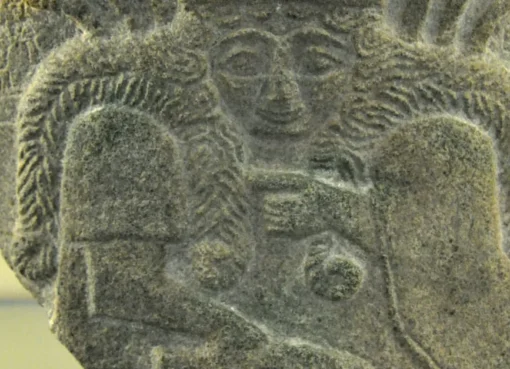
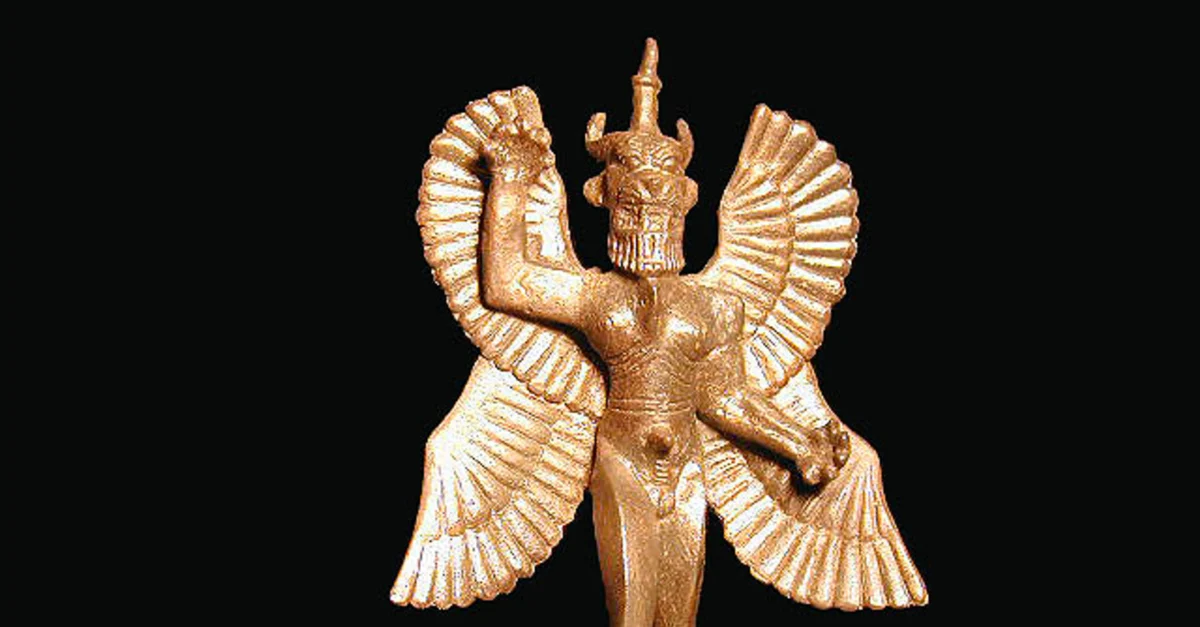
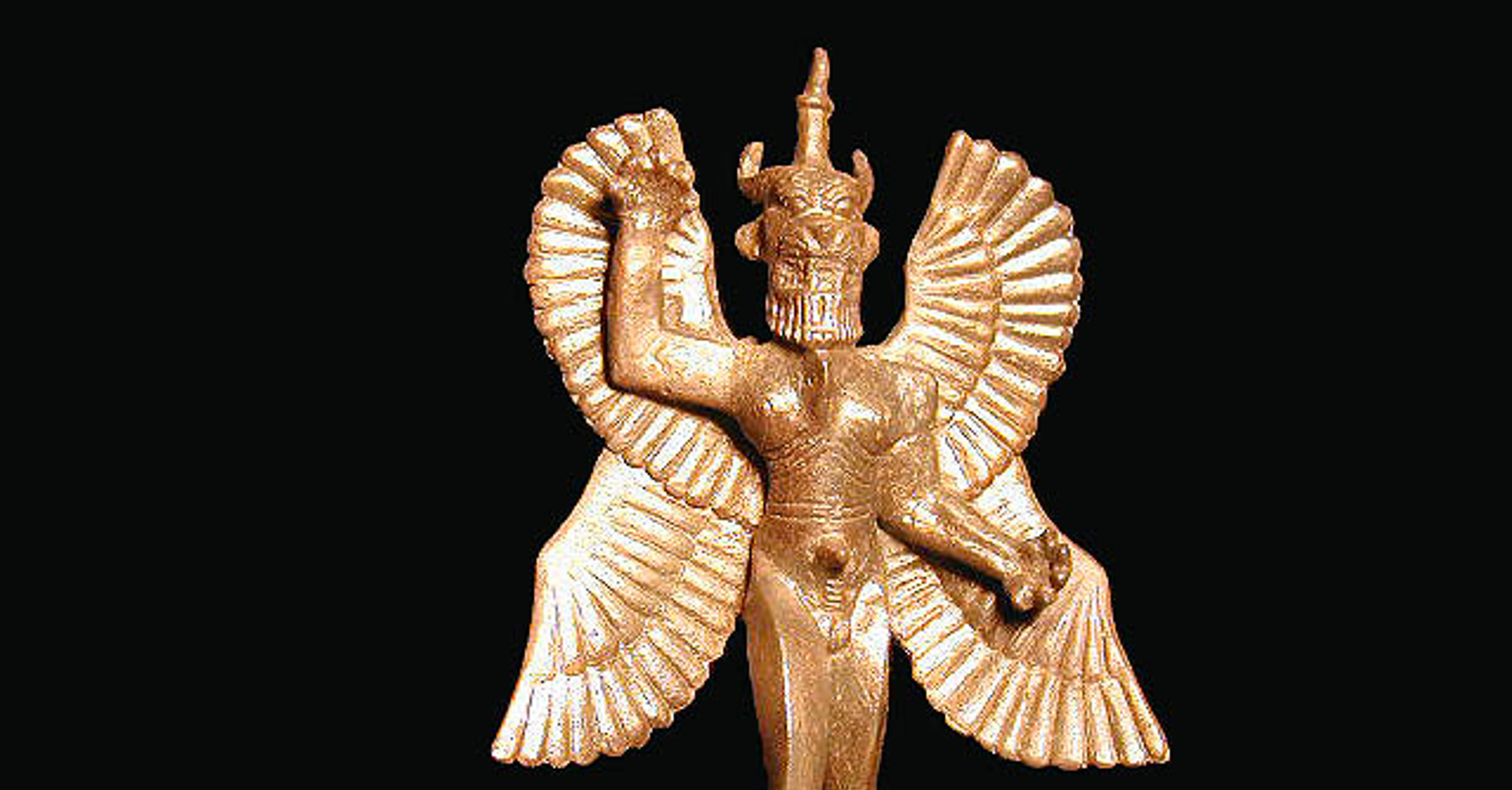
His physical description, as depicted in numerous statuettes and engravings, was designed to inspire terror and awe: bulging eyes set in a fearsome canine face, a scaly body, the talons of a large predatory bird, enormous, bat-like wings, and, most distinctively, a snake-headed penis. This terrifying composite form was not merely grotesque; it was a visual manifestation of his destructive power, a being capable of striking fear into the hearts of mortals and, crucially, lesser demons alike.
The Paradox of Protection: Invoking the Destroyer
Despite his terrifying nature and association with destruction, Pazuzu was frequently invoked for protection. This seemingly contradictory practice lies at the heart of understanding Mesopotamian demonology. Similar to the Egyptian god Set, whose destructive tendencies could be diverted for benevolent purposes, prayers and rituals directed at Pazuzu aimed to channel his immense power towards safeguarding rather than harming. The logic was simple: if Pazuzu commanded the destructive winds, he was also the most potent defense against them. Who better to ward off famine, storms, and pests than the entity who orchestrated them?
This dualistic perception meant Pazuzu was not viewed as "evil incarnate" in the modern sense. Rather, he functioned more like a powerful, temperamental trickster god, capable of both immense harm and crucial aid, depending on the circumstances and the invocation. His destructive capabilities were a testament to his strength, making him an ideal guardian against other malevolent spirits.
Demons in Ancient Mesopotamia: Beyond Good and Evil
To fully grasp Pazuzu’s ancient significance, one must shed modern connotations of the word "demon." In ancient Mesopotamia, as in ancient Greece, the term "daimon" (from which "demon" derives) simply meant "spirit." These spirits could be benevolent or malevolent, acting as agents of the gods, instruments of cosmic balance, or forces of chaos. They were not inherently aligned with a singular force of evil, as they would later be conceptualized in Abrahamic traditions.
Mesopotamian demons were often dispatched by the gods as a form of divine intervention – to punish transgressions, remind humanity of their duties, or test the righteous. Even those associated with death and destruction, like Pazuzu, were believed capable of performing good deeds. They were integral to the divine plan, not adversaries to it.
The Divine Blueprint: Demons as Agents of Cosmic Order
The ancient Mesopotamian worldview, particularly as articulated in myths like the Atrahasis, reveals a universe where demons played a vital, albeit often harsh, role. In the Atrahasis, humanity’s burgeoning population, their incessant noise, and their extended lifespans disrupt the god Enlil, who decides to unleash a great flood to eradicate them. After the deluge, Enki, the god of wisdom, proposes a new order: humanity will be recreated with shorter lifespans and daily threats to their existence. This new design incorporated disease, miscarriages, infertility, attacks by wild animals, and various forms of death.
Demons, therefore, were not aberrations but essential components of this divine plan. They served to regulate population, punish the wicked, and test the virtuous. Some demons specifically targeted fertility and sexual intercourse, ensuring that human populations remained within manageable limits. The demon Samana, for instance, with his dragon’s teeth, eagle talons, and scorpion’s tail, was a formidable threat to human reproduction and sustenance. Despite his malice, Samana was considered an agent of Gula, the Sumerian goddess of health and healing, highlighting the complex and often unfathomable ways in which divine will manifested through these entities. As scholar Gwendolyn Leick notes, "Sexual life per se, of the individual and of society at large, was under a potential threat from the wrath of vengeful gods or the malice of demonic forces" (224), a mechanism to control population.
A Chronology of Fear: The Evolution of Mesopotamian Demons
The conceptualization and depiction of demons in Mesopotamia were not static; they evolved significantly over millennia. Scholar Jeremy Black provides a valuable chronology of this development, illustrating how figures like Pazuzu represent the culmination of this progression:
- Formative Phase (Late Ubaid and Uruk periods): The earliest representations saw the initial combination of features from different animals into composite, unnatural beings, laying the groundwork for later demonic forms.
- Optimistic Phase (Akkadian period): Glyphic scenes from this era often depicted the capture and punishment of nefarious demons, suggesting a belief in humanity’s or the gods’ ability to control these forces.
- Balanced Phase (Old Babylonian period): Cylinder seal designs frequently blended images of gods, symbols, and motifs with both positive and negative associations for humankind, reflecting a more nuanced view of the supernatural.
- Transformative Phase (Mitannian, Kassite, and Middle Assyrian art, 14th to 11th centuries BCE): This period saw a shift from human-centered imagery to a preponderance of animal-headed hybrids, indicating a growing emphasis on more monstrous forms.
- Demonic Phase (Neo-Assyrian and Neo-Babylonian art, 1st millennium BCE): This is Pazuzu’s era, where individual demons were depicted in their full, terrifying horror. This phase aligns with a new theological understanding of a richly populated underworld and the practice of erecting monumental statues and reliefs, as well as burying small clay images, of magically protective beings in palaces and temples.
Pazuzu, therefore, emerged as the ultimate expression of this "demonic phase," a figure whose terrifying appearance was precisely what made him an effective protector.
Pazuzu’s Form and Function: Iconography and Amuletic Power
Pazuzu’s distinct and horrifying iconography was crucial to his role as a protector. His bulging eyes, snarling canine face, scaly body, serpentine phallus, taloned feet, and massive wings were designed to scare away any lesser demon or ghost that might threaten an individual. This fearsome aspect wasn’t a deterrent to those seeking his help; it was the very reason for his efficacy.
Unlike the common perception fueled by The Exorcist film, which shows a life-sized statue of Pazuzu, archaeological evidence primarily consists of small statuettes, amulets, and charms. The rarity of large, monumental depictions of underworld figures, such as Ereshkigal, Queen of the Dead, stems from a deeply ingrained belief: to create a large image of such a powerful entity was to attract its direct, often unwelcome, attention. Thus, while the Burney Relief (popularly known as the Queen of the Night) likely depicts Ereshkigal, it avoids explicitly naming her.
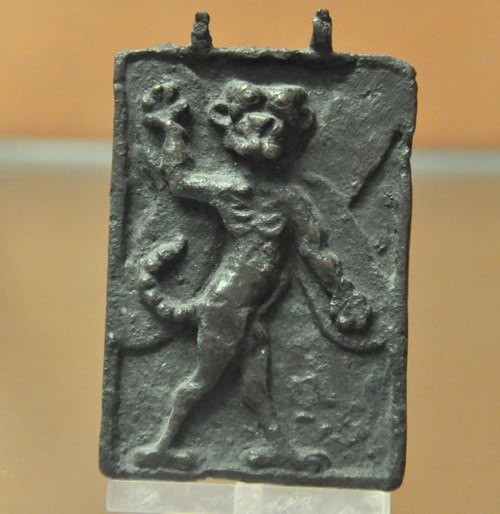
Small statuettes and amulets of Pazuzu, however, served a different purpose. Their diminutive size concentrated his power towards protection, making him accessible without drawing his full, potentially dangerous, attention. The individual invoking Pazuzu, by honoring him and seeking his protection, was seen as aligning with the demon, ensuring that Pazuzu would direct his formidable powers against external threats rather than the worshipper. These charms were often placed in children’s rooms, near doorways, or windows, acting as a spiritual security system. This practice mirrored that of the Nimrud Dogs, small canine statuettes buried under thresholds to guard against malevolent spirits, reflecting a broader Mesopotamian strategy of using powerful images for apotropaic (evil-averting) purposes.
Safeguarding the Vulnerable: Pazuzu Against Lamashtu
One of Pazuzu’s most critical protective functions was his role in warding off Lamashtu, a demon-goddess who preyed specifically on pregnant women, unborn fetuses, and newborn babies. Lamashtu was a horrific entity, blamed for miscarriages, stillbirths, and infant mortality. Against such a pervasive and terrifying threat, Pazuzu was considered the strongest defense. Pregnant women often wore amulets depicting Pazuzu or kept his statuettes nearby, believing his fearsome presence would drive Lamashtu away, ensuring the safe delivery and survival of their children. This specific protective role underscores the nuanced benevolent aspect of Pazuzu, highlighting his significance in the intimate, vulnerable moments of human life.
The Modern Reimagining: Pazuzu in "The Exorcist"
Pazuzu’s journey from ancient protector to modern antagonist is most dramatically illustrated by his starring role in The Exorcist. Scholar Stephen Bertman succinctly observes, "Though short on pizzazz, Pazuzu made it to Hollywood: he is the only Mesopotamian demon to have starred in a movie — The Exorcist" (125). In Blatty’s novel and William Friedkin’s film, Pazuzu possesses the young character of Regan MacNeil (Linda Blair), becoming synonymous with Christian Satan and the forces of absolute evil.
This portrayal, while cinematically powerful, represents a radical departure from Pazuzu’s historical identity. The film’s opening scene, where Father Merrin discovers a life-sized statue of Pazuzu in the ancient city of Hatra, is a dramatic visual, though historically inaccurate in scale. The novel, more faithfully to archaeological findings, depicts the priest handling a small Pazuzu statuette. Regardless, the narrative arc firmly casts Pazuzu as an agent of malevolence, a creature whose very existence is antithetical to good, a stark contrast to the complex, dualistic entity revered by ancient Mesopotamians.
From Ancient Protector to Modern Antagonist: Implications
The evolution of Pazuzu’s image from antiquity to the modern era carries significant implications for understanding cultural and theological shifts.
Implications for Ancient Society:
For ancient Mesopotamians, Pazuzu and other demons provided a framework for comprehending an often-unpredictable world. Misfortunes – famine, disease, infertility, infant death – were not random occurrences but manifestations of divine will or demonic malice. By understanding the nature of these entities and knowing how to interact with them (through invocation, amulets, rituals), individuals felt a degree of agency and protection in an otherwise frightening existence. Pazuzu’s dual nature meant that even the most terrifying forces could be harnessed for safety, reflecting a worldview that embraced complexity rather than rigid binaries of good and evil. This intricate system of belief shaped daily practices, religious ceremonies, and the very perception of life’s precariousness.
Implications for Modern Understanding:
The lasting legacy of The Exorcist has profoundly shaped contemporary perceptions of Pazuzu and, by extension, ancient Mesopotamian demons. Popular culture, driven by the narrative conventions of good versus evil, has largely stripped Pazuzu of his ancient nuance, firmly planting him in the camp of purely evil entities. This simplification obscures the rich, complex spiritual landscape of the ancient Near East, where supernatural beings often defied easy categorization.
The Theological Shift:
The rise of Christianity marked a profound theological shift in the understanding of demons. In the new faith, earlier religious beliefs were discouraged, and the diverse pantheon of gods and spirits was re-contextualized. Demons, along with the old gods, were relegated to the Christian hell, serving God’s adversary, Satan. The New Testament, particularly the Gospels and epistles, depicts Jesus Christ routinely casting out demons, and later texts describe them as servants of Satan, incapable of good. This radical departure from the Mesopotamian view solidified the concept of demons as purely evil, agents of temptation and eternal punishment, rather than complex participants in a divine plan. The letter of 1 John 4:1, admonishing believers to "test every spirit," reflects this new imperative to reject any entity not explicitly "of God."
Conclusion
Pazuzu, the Babylonian/Assyrian demon of the west and south-west winds, remains a compelling figure, a testament to the complex spiritual beliefs of ancient Mesopotamia. Born of the underworld, master of destructive forces like famine and storms, he was paradoxically invoked as a powerful protector, particularly against the demon-goddess Lamashtu, who threatened mothers and infants. His fearsome iconography, meticulously crafted into small amulets, served as a shield against a world rife with unpredictable dangers and malevolent spirits.
While modern audiences primarily know Pazuzu as the terrifying antagonist of The Exorcist, this portrayal, though impactful, largely omits the nuanced understanding of his ancient worshippers. For them, Pazuzu was not an embodiment of absolute evil but a potent, albeit dangerous, force whose immense power could be harnessed for safeguarding. He represents a worldview where good and evil were not always neatly separated, and even the most destructive entities played a role in the cosmic order. In an uncertain and often frightening ancient world, Pazuzu offered a unique form of security – a fearsome guardian, a shield against misfortune, and a poignant reminder of humanity’s enduring quest for protection against the unseen forces that shape their lives.