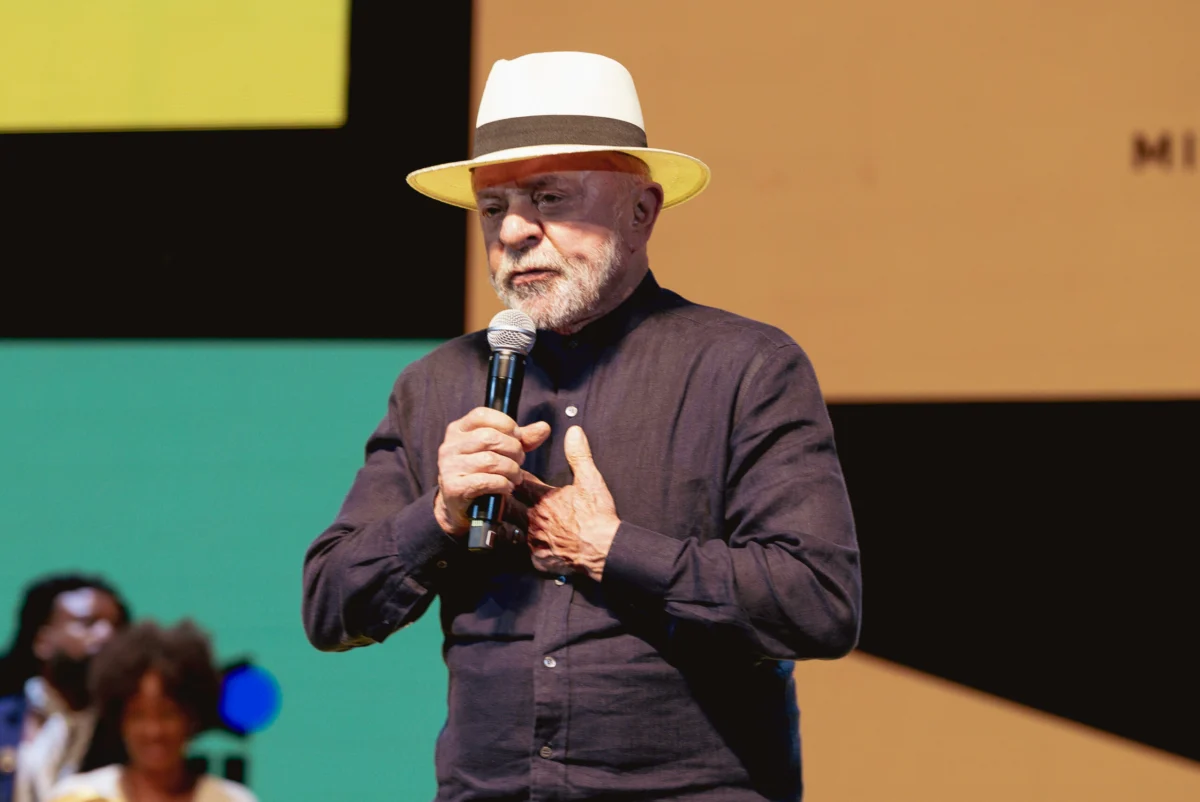
RIO DE JANEIRO, Brazil — In a move that signals a significant shift in the intersection of public policy, digital technology, and cultural preservation, President Luiz Inácio Lula da Silva has officially inaugurated Tela Brasil (Screen Brazil). Launched during the prestigious Rio2C event, the platform is the nation’s first free-of-charge public streaming service, designed to provide every Brazilian citizen with unfettered access to the country’s rich cinematic and televisual heritage.
The initiative, which arrives at a time of global consolidation within the streaming industry, represents a bold attempt by the Brazilian government to reclaim its cultural narrative. By offering a curated selection of over 500 productions—ranging from the silent era of the early 20th century to contemporary masterpieces—Tela Brasil aims to bridge the gap between the nation’s artistic output and its 214 million citizens.
I. Main Facts: The Digital Democratization of Brazilian Cinema
Tela Brasil is not merely a government repository; it is a sophisticated Video-on-Demand (VOD) platform developed through a strategic partnership between the Ministry of Culture and the Federal University of Alagoas (UFAL). The service is integrated into the Gov.br ecosystem, the official digital platform used by the Brazilian federal government for citizen services. Any individual with a valid Gov.br account can log in and stream content immediately at no cost.
At its launch, the platform boasts an initial catalog of 555 Brazilian productions. This collection is meticulously categorized to appeal to diverse demographics and academic interests:
139 Feature Films: Including historical classics and modern award-winners.
85 Medium-length or Television Movies: Bridging the gap between cinema and broadcast.
267 Short Films: A vital sector for emerging talent and experimental storytelling.
64 Series: Showcasing the evolution of Brazilian television and documentary filmmaking.
The timeline of the content is equally impressive, spanning from 1910 to 2025, ensuring that the platform serves as a living archive of the Brazilian identity. The inclusion of works yet to be released or currently in post-production (dated 2025) underscores the government’s commitment to the future of the industry, not just its past.
II. Chronology: From Concept to Rio2C Launch
The journey to the launch of Tela Brasil is rooted in the broader revitalization of the Ministry of Culture, which was reinstated under the current administration. The project was fast-tracked as a cornerstone of the "New Industry Brazil" (Nova Indústria Brasil) policy, which identifies the creative economy as a strategic sector for national development.
Development Phase (2023–2024): The Ministry of Culture collaborated with technical experts from the Federal University of Alagoas to build a robust, accessible streaming architecture. Simultaneously, negotiations were held with rights holders, including the Brazilian Communication Company (EBC), to secure a diverse array of content.
The EBC Agreement (May 2024): Just prior to the launch, a landmark agreement was inked between the Ministry of Culture and the EBC. This deal integrated more than 150 titles—totaling approximately 3,000 hours of content—into the Tela Brasil library. This included popular long-running programs like the talk show Sem Censura.
The Rio2C Unveiling (May 30): President Lula chose Rio2C, Latin America’s largest creativity and business gathering, as the stage for the announcement. Surrounded by industry titans, filmmakers, and high-ranking officials, the President framed the platform as a tool for national independence.
Future Milestones (June 2024 and Beyond): The government has already scheduled a follow-up seminar for June 17, involving federal public banks (BNDES, Caixa Econômica Federal, and Banco do Brasil) to discuss the next phase: financing and expanding the audiovisual production pipeline that will feed the platform.
III. Supporting Data: Investment, Content, and Economic Impact
The financial and statistical backbone of Tela Brasil reveals a calculated effort to treat culture as a serious industrial sector.
Financial Investment
The federal government has allocated R$9 million (approximately $1.8 million USD) for the 2024–2025 period. This investment covers:
Content Licensing: Ensuring filmmakers and producers are compensated for their work.
Technological Development: Creating a user-friendly interface and robust backend.
Accessibility Features: Implementing subtitles, audio descriptions, and sign language interpretation to ensure the service is inclusive.
Curation and Management: Professional oversight to maintain the quality and relevance of the catalog.
A Catalog of Icons
The platform’s strength lies in its curation. It features some of the most critically acclaimed works in the history of world cinema, including:
Cinema Novo Era: Glauber Rocha’s Black God, White Devil (1964), a cornerstone of revolutionary Brazilian filmmaking.
Social Realism and History: Cacá Diegues’ Xica da Silva (1976) and Suzana Amaral’s Hour of the Star (1985).
The Oscar Nominees: Fábio Barreto’s O Quatrilho (1995) and Bruno Barreto’s Four Days in September (1997).
Modern Blockbusters: Hector Babenco’s Carandiru (2003) and Jayme Monjardim’s Olga (2004).
Economic Indicators
According to Márcio Elias Rosa, the Minister of Industry, Commerce, and Services (MDIC), the audiovisual sector currently accounts for 0.6% of Brazil’s GDP. The industry generates over 680,000 direct jobs, characterized by a highly skilled and specialized workforce. The government’s stated goal is to leverage initiatives like Tela Brasil to increase this share to 1% of the GDP in the coming years.
IV. Official Responses: The Vision of Leadership
The launch ceremony featured several high-profile speakers who articulated the ideological and practical goals of the platform.
President Luiz Inácio Lula da Silva emphasized the psychological and social impact of the service:
“Tela Brasil will help people better understand a country like Brazil. I hope it becomes an important platform for bringing Brazilians closer to their own culture. It’s very important for us to get to know our own people. Culture opens minds, broadens horizons, and helps us see further. Our country must undergo a transformation so that it can, once and for all, chart its own course and fully assert its independence.”
Minister of Culture Margareth Menezes, a celebrated artist in her own right, viewed the platform as a means of cultural "reclamation." Her ministry’s collaboration with the EBC is seen as a way to ensure that public media reaches the widest possible audience in the digital age.
Minister of Industry Márcio Elias Rosa focused on the economic "upside" of the project:
“The audiovisual industry is a powerhouse of the new economy. Our goal of reaching 1% of the GDP is ambitious, but these professionals are capable, and we are committed to working toward it. By June 17, we will have a dedicated seminar to design credit lines tailored specifically to this industry, involving our major public banks.”
V. Implications: What Tela Brasil Means for the Future
The launch of Tela Brasil carries profound implications for the domestic market, the global streaming landscape, and the preservation of national identity.
1. Challenging the Dominance of Global Giants
By providing a free, high-quality alternative to subscription-based services like Netflix, Disney+, and Amazon Prime, the Brazilian government is addressing "digital poverty." Many Brazilians cannot afford multiple monthly subscriptions. Tela Brasil ensures that financial status is no longer a barrier to accessing the nation’s premier cultural exports.
2. A New Model for Public Media
Tela Brasil could serve as a blueprint for other nations seeking to protect their local film industries from being overshadowed by Hollywood-centric algorithms. By curating content based on cultural significance rather than purely on "watch time" or "retention metrics," the platform preserves works that might otherwise disappear from the public consciousness.
3. Boosting the Production Pipeline
The integration of the audiovisual sector into the "New Industry Brazil" program means that the industry will now have access to specialized credit lines from BNDES and other public institutions. This suggests that Tela Brasil will eventually move beyond being a repository and potentially become a co-producer or primary distributor for new independent Brazilian works, creating a self-sustaining ecosystem.
4. Cultural Diplomacy
As the platform matures, there is potential for it to be used as a tool for "soft power" and cultural diplomacy. While currently focused on domestic access via Gov.br, the digitalization of these 555 titles makes it significantly easier for Brazil to showcase its filmography at international festivals and via potential future global iterations of the service.
5. Education and Research
With films dating back to 1910, Tela Brasil becomes an invaluable resource for students, historians, and researchers. The accessibility of these works in high-definition formats via a public portal democratizes film education, allowing a new generation of filmmakers to study the masters of Cinema Novo and the "Retomada" period without needing access to private archives or expensive university libraries.
Conclusion
Tela Brasil represents a significant gamble on the value of national identity in the digital age. With an initial investment of R$9 million and a catalog that spans over a century of storytelling, the Lula administration is betting that culture can be both a source of national pride and a driver of economic prosperity. As the platform evolves, its success will be measured not just by its user numbers, but by its ability to weave the diverse threads of Brazilian life into a single, accessible digital tapestry.
The Academy of Motion Picture Arts and Sciences (AMPAS) has officially pulled back the curtain on the next generation of cinematic masters, announcing the winners of the 53rd Student Academy Awards. T
In the pantheon of 1980s toy-to-television juggernauts, names like Transformers, G.I. Joe: A Real American Hero, and My Little Pony stand as pillars of corporate success. During the mid-1980s, Hasbro
The name "Skywalker" has served as the narrative bedrock of the Star Wars franchise for nearly half a century. From the moisture farms of Tatooine to the throne room of the Death Star, the s







Leave a Comment