
Unearthing the Deep Roots of Western Thought: A Comprehensive Review of Shan Winn’s "Heaven, Heroes, and Happiness"
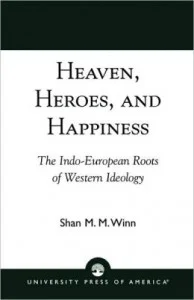
The enduring patterns of human civilization are often debated, with scholars frequently emphasizing the chasm between ancient and modern worldviews. However, a compelling counter-narrative, focusing on profound continuities, emerges from Shan Winn’s insightful work, Heaven, Heroes, and Happiness: The Indo-European Roots of Western Ideology. This book serves as a vital bridge, connecting the philosophical and structural underpinnings of pre-Christian Europe with the complex tapestry of contemporary Western thought.
While it is undeniable that our modern perspectives diverge significantly from those of our Bronze Age and Iron Age forebears, Winn masterfully argues for a persistent thread of shared understanding. The book posits that many fundamental aspects of Western ideology – from social stratification to spiritual inclinations – are deeply embedded in the cultural heritage of the Proto-Indo-Europeans, a people whose influence reverberates across millennia.
The Enduring Echoes of Antiquity: Shan Winn’s Central Thesis
Shan Winn’s Heaven, Heroes, and Happiness challenges readers to look beyond superficial differences and recognize the profound, often unacknowledged, continuities that link our present-day societies to the ancient Indo-European world. The central thesis is both ambitious and illuminating: that the core structures of Western ideology are not merely recent inventions but are, in fact, deeply rooted in the cultural, social, and religious models established by the Proto-Indo-Europeans. This perspective encourages a re-evaluation of how we perceive historical progress, suggesting that certain foundational concepts have proven remarkably resilient, adapting and evolving rather than being entirely replaced.
The reviewer of this work acknowledges the validity of focusing on divergences between historical eras, particularly the transformative impact of Christianity on European thought. However, the true power of Winn’s argument lies in its insistence on exploring the equally real and weighty continuities. By highlighting these persistent patterns, the book offers a richer, more nuanced understanding of Western identity, revealing how ancient paradigms continue to shape our institutions, values, and even our subconscious understanding of the world. It’s a compelling argument for the deep historical memory embedded within our collective cultural DNA.
Tracing the Proto-Indo-Europeans: A Journey Through Time
To fully appreciate Winn’s thesis, it is essential to understand the people at its heart: the Proto-Indo-Europeans (PIE). Their story is one of innovation, migration, and profound cultural dissemination, laying the groundwork for much of what we recognize as Western civilization.
Origins and Migrations
The Proto-Indo-Europeans were not a single, monolithic empire but rather a group of related peoples who likely originated in the Pontic-Caspian steppe, a vast grassland region spanning parts of modern-day Ukraine, Russia, and Kazakhstan. Their emergence in the Bronze Age marked a significant turning point in Eurasian history. These were primarily nomadic or semi-nomadic pastoralists, a lifestyle that fostered adaptability and mobility. Crucially, they were among the first peoples to domesticate horses and utilize wheeled carts, technologies that revolutionized transportation, warfare, and communication. This mobility facilitated their extensive migrations, which saw them settle and profoundly influence diverse societies across Eurasia. From the British Isles to the Indian subcontinent, their cultural footprint became indelible.
The impact of their migrations during the Bronze Age cannot be overstated. As they moved, they brought with them not only their languages but also their social structures, mythologies, and technological innovations. This process was often complex, involving both conquest and cultural exchange, leading to the formation of numerous daughter cultures that would become the bedrock of future civilizations.
Linguistic and Cultural Lineage
One of the most enduring legacies of the Proto-Indo-Europeans is the vast Indo-European language family. With a few notable exceptions like Basque and Finnish, almost all modern European languages – including Celtic, Germanic, Italic (Latin and its descendants), Hellenic, Slavic, Baltic, Albanian, and Armenian – are direct descendants of the original Proto-Indo-European language. Beyond Europe, the family extends to Anatolian (extinct), Iranian (e.g., Persian), and Indo-Aryan (e.g., Sanskrit, Hindi), underscoring the immense geographical reach of these ancient peoples.
However, Winn emphasizes that the Indo-Europeans bequeathed far more than just linguistic structures. They transmitted a shared cultural "model" that underpinned their various descendant societies. This model encompassed a distinct worldview, a common set of values, and particular ways of organizing society and understanding the cosmos. This shared cultural DNA, often subtle but pervasive, forms the core of Winn’s exploration into the "Indo-European roots of Western ideology." It speaks to a deep continuity of thought, where fundamental ideas about governance, heroism, and even the pursuit of happiness were established long before the advent of what we now consider "Western" civilization.
The Blueprint of Society: Tripartism and its Legacy
Among the most compelling examples of Indo-European continuity is the pervasive tripartite hierarchical structure, a concept championed by the influential scholar Georges Dumézil and central to Winn’s analysis. This social and cosmic blueprint offers a striking insight into the enduring Indo-European worldview.
Georges Dumézil’s Groundbreaking Work
Georges Dumézil, a towering figure in Indo-European studies, was the first to meticulously identify and analyze the remarkable centrality of tripartism in Indo-European social structures and mythologies. His work, spanning decades, revealed a consistent pattern across diverse Indo-European cultures, from ancient India and Iran to early Rome, the Norse, and the Celts. Dumézil proposed that Indo-European societies were typically organized into three distinct, yet interdependent, functional tiers, each associated with specific roles and divine patronage.
-
The First Function (Sovereignty and the Sacred): This tier comprised the rulers and priests. It embodied the concepts of divine authority, justice, sacred knowledge, and cosmic order. In Roman society, this function was linked to Jupiter (sovereignty) and the Flamen Dialis (chief priest). In Norse mythology, figures like Odin (wisdom, magic, kingship) and Tyr (justice, law) often represent aspects of this function. In India, the Brahmins (priests) and sometimes the Kshatriyas (rulers) held sway here. This function was responsible for maintaining cosmic and social harmony, administering law, and performing religious rites.
-
The Second Function (Force and Warfare): This tier was occupied by the warriors, responsible for defense, conquest, and the use of physical force. They protected the community, expanded its territory, and embodied martial valor. Mars in Rome, Thor in Norse mythology, Indra in Vedic India, and figures like the Celtic hero Cú Chulainn all represent the embodiment of this warrior function. Their virtues included courage, strength, and strategic prowess.
-
The Third Function (Production and Fertility): This broadest tier encompassed the commoners – farmers, merchants, craftspeople, and herders. Their role was to ensure the material well-being, fertility, and prosperity of the society. This function was associated with agricultural abundance, wealth, and the continuation of the lineage. Quirinus in Rome, Frey and Freya in Norse mythology, and the Vaishyas (producers) in India exemplify the deities and social groups linked to this function.
Cosmic Reflections and Numerical Significance
What makes this tripartite structure so uniquely Indo-European, as Winn highlights, is not just its presence in social organization but its deep integration into their cosmology. The divine realm itself was often ordered according to this structure, with gods and goddesses closely tied to specific functions. For instance, a pantheon would typically feature deities representing sovereignty/magic, war/strength, and fertility/wealth. This mirroring of earthly and divine order reinforced the legitimacy and naturalness of the social hierarchy.
Furthermore, the number three held a profound and frequent symbolic significance across Indo-European mythologies, cosmologies, and ritual practices. This contrasts sharply with the prominence of the number seven in the ancient Middle East (e.g., seven days of creation, seven planets) or the number four in many American Indian groups (e.g., four cardinal directions, four sacred colors). The recurrence of "threes" – trios of gods, three-part narratives, three-fold fates – is a distinctive hallmark of Indo-European thought, further underscoring the deep structural consistency.
Modern Resonance
While modern Western societies have long abandoned a strict, legally enforced tripartite hierarchy, Winn argues that this ancient model remains a primary "reference point" around which our societies are implicitly ordered. We can observe echoes in various contemporary structures:
- Government: The division into executive, legislative, and judicial branches can be seen as a functional tripartition, albeit highly evolved.
- Social Stratification: Even in ostensibly egalitarian societies, functional divisions often persist, implicitly categorizing individuals by their roles in governance/intellectual leadership, defense/security, and economic production/innovation.
- Ideological Frameworks: The persistent admiration for intellectual leadership (first function), military prowess (second function), and economic success (third function) reflects a lingering cultural appreciation for these distinct societal contributions.
The "banally obvious" nature of such a division to many Westerners, as the reviewer notes, is precisely what makes Winn’s argument so powerful: it suggests that this specific way of conceptualizing social organization has become so ingrained as to feel natural, almost universal, precisely because of its deep Indo-European roots.
Spiritual Continuities: From Ancient Pantheon to Monotheistic Influences
The influence of Indo-European thought extends beyond social structures, deeply impacting the development of religious and philosophical ideas, particularly those that would shape later monotheistic traditions. Winn explores how ancient themes provided the raw material for spiritual innovation.
Zarathustra and the Iranian Connection
One of the most striking examples is the figure of Zarathustra (or Zoroaster), the Iranian prophet who lived in the second millennium BCE. Zarathustra was not an isolated figure but emerged from an Indo-European society, specifically the ancient Iranian branch. His teachings, which developed into Zoroastrianism, represented a profound philosophical and theological departure from the polytheistic traditions of his ancestors. He emphasized a dualistic cosmology, pitting the benevolent creator deity Ahura Mazda against the destructive spirit Angra Mainyu, and introduced concepts of free will, moral choice, a final judgment, and a heaven and hell.
Yet, as Winn illustrates, Zarathustra did not create his philosophy in a vacuum. He skillfully employed and reinterpreted existing Indo-European mythical themes and concepts as the raw materials for his radical new vision. Elements like fire worship, the reverence for a supreme cosmic order (Asha), and certain ritual practices can be traced back to common Indo-Iranian roots. The genius of Zarathustra lay in his ability to synthesize these inherited elements into a coherent, ethically driven monotheistic (or dualistic-monotheistic) system.
The influence of Zoroastrianism on later monotheistic religions, especially Judaism, Christianity, and Islam, is well-documented by scholars. Concepts such as a cosmic struggle between good and evil, the existence of angels and demons, a savior figure, a bodily resurrection, and an apocalyptic end-time with a final judgment, all find parallels and potential origins in Zoroastrian theology. Thus, through Zarathustra, the ancient Indo-European philosophical landscape indirectly contributed foundational elements to the spiritual bedrock of a significant portion of the Western world.
Indo-European Religious Frameworks
Beyond Zarathustra, Winn implicitly or explicitly touches upon broader commonalities within Indo-European religious frameworks. These often included:
- A pantheon of gods: typically anthropomorphic, reflecting human characteristics and societal functions.
- Sacred rituals: often involving animal sacrifice, libations, and ceremonial feasting.
- Emphasis on oaths and contracts: reflecting the importance of social bonds and cosmic order.
- A cosmology involving multiple realms: heaven, earth, and underworld, with heroes sometimes bridging these worlds.
- The concept of fate or destiny: often overseen by powerful female figures (Norns, Moirai).
These shared religious and mythological themes, though diverse in their specific manifestations, point to a common intellectual and spiritual heritage that continued to evolve, influencing later spiritual developments and providing a deep substratum for Western religious thought.
Navigating Scholarly Debates: Winn, Dumézil, and the Gimbutas Controversy
A comprehensive study of Indo-European roots inevitably leads to engagement with the field’s most influential, and sometimes controversial, scholars. Winn’s work, and the reviewer’s commentary on it, highlight this dynamic, particularly concerning Georges Dumézil and Marija Gimbutas.
Affirming Dumézil’s Contributions
The reviewer expresses strong endorsement for the "soundness" of Georges Dumézil’s ideas, especially his identification and analysis of tripartism. Dumézil’s meticulous comparative methodology, drawing on linguistic, mythological, and social data from diverse Indo-European cultures, established a powerful framework for understanding their shared ideological structures. His work is widely respected for its analytical rigor and its ability to illuminate deep, systemic patterns that would otherwise remain obscured by the apparent diversity of individual cultures. The reviewer’s ready acceptance of Dumézil’s theories underscores their robust scholarly foundation and their continued relevance in Indo-European studies.
The "Old Europe" Hypothesis and its Critics
However, Winn’s reliance on Marija Gimbutas’s work elicits a more critical response from the reviewer. Gimbutas, a Lithuanian-American archaeologist, proposed the highly influential, yet equally controversial, "Old Europe" hypothesis. According to Gimbutas, pre-Indo-European Europe (roughly 7000-3500 BCE) was a uniformly peaceful, egalitarian, matriarchal, and sedentary agrarian society. These communities, she argued, worshipped a Great Goddess, placed a high value on art, and developed complex social structures without the need for warfare or hierarchy. Her vision painted a picture of a harmonious, sophisticated civilization that existed prior to the arrival of the Proto-Indo-Europeans.
Gimbutas contended that the arrival of the "Kurgan culture" (her term for the Indo-Europeans) from the Pontic-Caspian steppe was a catastrophic event. These patriarchal, warlike, horse-riding invaders, she asserted, mercilessly conquered and subjugated the peaceful peoples of Old Europe, effectively erasing their way of life and imposing their own hierarchical, male-dominated culture. This narrative established a stark dichotomy between the supposedly idyllic, Goddess-worshipping indigenous Europeans and the aggressive, sky-god-worshipping Indo-European invaders.
A Critical Examination of Gimbutas’s Narrative
While the reviewer concedes "there’s something to be said for the idea that the peoples who inhabited Europe before the arrival of the Indo-Europeans lived in a manner that’s closer to that imagined way of life than did the Indo-Europeans," they ultimately argue that Gimbutas "greatly overstates her case." The critique centers on several points:
- Oversimplification and Dichotomy: Gimbutas’s work is seen as creating an overly stark and simplistic dichotomy between "good" Old Europe and "bad" Indo-European invaders. Archaeological evidence suggests a much more complex and varied picture of pre-Indo-European societies, which likely included internal conflicts, social hierarchies, and diverse religious practices, not a universal matriarchal utopia.
- Ideological Bias: The reviewer suggests that Gimbutas’s vision "played directly into the unrealized hopes and dreams of mid-to-late-twentieth-century liberalism/progressivism." Her narrative provided a supposedly historical "utopian model" that resonated with feminist movements and those seeking alternatives to patriarchal, war-torn histories. This perceived ideological alignment, while perhaps unintentional, may have influenced her interpretations of archaeological data.
- Lack of Conclusive Evidence: Critics of Gimbutas argue that the archaeological record does not definitively support a universal, peaceful, matriarchal "Old Europe." While Goddess figures certainly existed, interpreting them as evidence of a dominant matriarchal social structure is often seen as an overreach. The nature of the Indo-European "conquest" is also debated, with many scholars suggesting a more complex process of cultural fusion, elite dominance, and gradual assimilation rather than outright annihilation.
Winn’s Engagement with Gimbutas
The reviewer notes that Winn "mostly accepts Gimbutas’s work uncritically," which is a significant point of contention. This uncritical acceptance leads to what the reviewer describes as an "annoying habit" in Winn’s analysis: the assumption that any Indo-European goddesses encountered in their mythologies could only be holdovers from Gimbutas’s Old Europe. This perspective implies a "cartoonishly patriarchal" Indo-European society, one so utterly devoid of female divine agency that it couldn’t have generated any original goddesses of its own. Such a view, the reviewer implies, reduces the complexity of Indo-European religious development and overlooks the potential for indigenous female deities within their own pantheons, which clearly featured powerful goddesses associated with fertility, war, and sovereignty (e.g., Freya, Frigg, Minerva, Juno).
Interestingly, the reviewer points out that Winn makes only "one passing reference to the obvious, almost Zoroastrian dualism inherent in Gimbutas’s vision." This is a crucial observation, as it highlights a potential internal inconsistency: Gimbutas’s narrative itself, with its stark contrast between a benevolent Old Europe and a destructive Indo-European force, mirrors the very dualistic themes that Winn (and others) trace back to Indo-European religious innovations like Zoroastrianism. This subtle irony underscores the complexities of historical interpretation and the potential for scholars, even those critiquing one narrative, to inadvertently employ similar structural patterns.
Implications for Understanding Western Identity
The insights gleaned from Shan Winn’s Heaven, Heroes, and Happiness hold profound implications for our understanding of Western identity, moving beyond superficial historical narratives to reveal a deep cultural bedrock.
Beyond Language: A Shared Cultural DNA
Winn’s work powerfully demonstrates that the Indo-European influence on Western civilization extends far beyond the linguistic family tree. It is not merely about the words we speak, but about the very frameworks through which we perceive and organize our reality. The book argues for a shared "cultural DNA" that has been transmitted across generations, shaping fundamental ways of understanding the cosmos, structuring society, and even conceiving of divinity. This shared heritage suggests a deeper, more unified trajectory for Western thought than is often acknowledged, challenging the notion that each historical epoch completely reinvents its foundational principles. It highlights how core concepts of order, heroism, and the divine have evolved within a continuous tradition, rather than being constantly replaced.
The Unseen Threads in Modernity
Perhaps the most compelling implication of Winn’s thesis is the idea that these ancient Indo-European patterns subtly, yet profoundly, continue to influence contemporary Western thought, institutions, and values. While we no longer explicitly adhere to a tripartite social structure or worship specific Indo-European deities, the echoes remain.
- Veneration of Heroes: The Indo-European emphasis on heroic narratives, the pursuit of glory, and the idealization of certain virtues (courage, loyalty, wisdom) finds clear resonance in modern Western culture, from literature and film to political rhetoric.
- The Pursuit of Happiness: The very concept of "happiness" as a desirable state, and the individual’s journey towards it, can be traced back to philosophical currents with ancient Indo-European roots, where concepts of well-being and a flourishing life were central.
- Structure of Governance: As discussed, even modern democratic structures, with their divisions of power and specialized functions, retain faint but discernible echoes of the tripartite functional divisions. The enduring tension between the state’s role in maintaining order (first function), providing security (second function), and fostering economic prosperity (third function) reflects a long-standing conceptual framework.
- Ethical Frameworks: The emphasis on individual agency, moral choice, and accountability, which are foundational to many Western ethical systems, also finds parallels in the Indo-European concern with cosmic order (Rta/Asha) and the consequences of one’s actions.
These unseen threads demonstrate that our present is inextricably linked to our distant past, and that understanding these continuities provides a deeper appreciation for the enduring nature of human ideas.
A Call for Deeper Historical Awareness
Ultimately, Heaven, Heroes, and Happiness serves as a compelling call for deeper historical awareness. It urges readers to move beyond a fragmented view of history and recognize the underlying currents that connect disparate eras. By understanding the Indo-European roots of Western ideology, we gain a more comprehensive perspective on:
- Our own identity: Why certain values resonate deeply within us, and why certain social structures feel intuitively "right."
- Cultural evolution: How ideas transform and adapt over millennia, rather than simply disappearing.
- Contemporary challenges: Many modern societal debates, concerning social justice, power structures, and individual rights, can be enriched by understanding the long historical lineage of these concepts.
Avoiding the trap of viewing history as a series of disconnected events allows for a more integrated understanding of human civilization and its persistent patterns. Winn’s work provides a valuable lens through which to examine the subtle yet powerful ways in which ancient ideas continue to shape our present and influence our future.
Conclusion: A Recommended Journey into Our Past
Shan Winn’s Heaven, Heroes, and Happiness: The Indo-European Roots of Western Ideology stands as an excellent introduction to the intricate world of Indo-European society and mythology. It is a fascinating study that successfully illuminates the profound ways in which aspects of their worldviews and ways of life have not only survived but continue to resonate within the fabric of contemporary Western culture.
Despite the reviewer’s specific critiques regarding Winn’s sometimes uncritical adoption of Marija Gimbutas’s "Old Europe" hypothesis – a nuanced point that reflects ongoing scholarly debate rather than a fundamental flaw in the book’s overall premise – the work remains highly recommended. Its strengths lie in its clear articulation of Dumézil’s tripartite function, its exploration of linguistic and religious continuities, and its ambitious scope in connecting ancient thought to modern ideology.
For anyone seeking to understand the deep historical currents that have shaped Western civilization, and to appreciate the enduring power of ancient ideas, this book offers an illuminating and thought-provoking journey into our collective past.
Click here to view or buy Heaven, Heroes, and Happiness at Amazon.com.


Leave a Comment