
A Cinematic Reunion: Billy Ray and Barkhad Abdi Join Forces for Oscar Contender ‘Magan’s Fare’
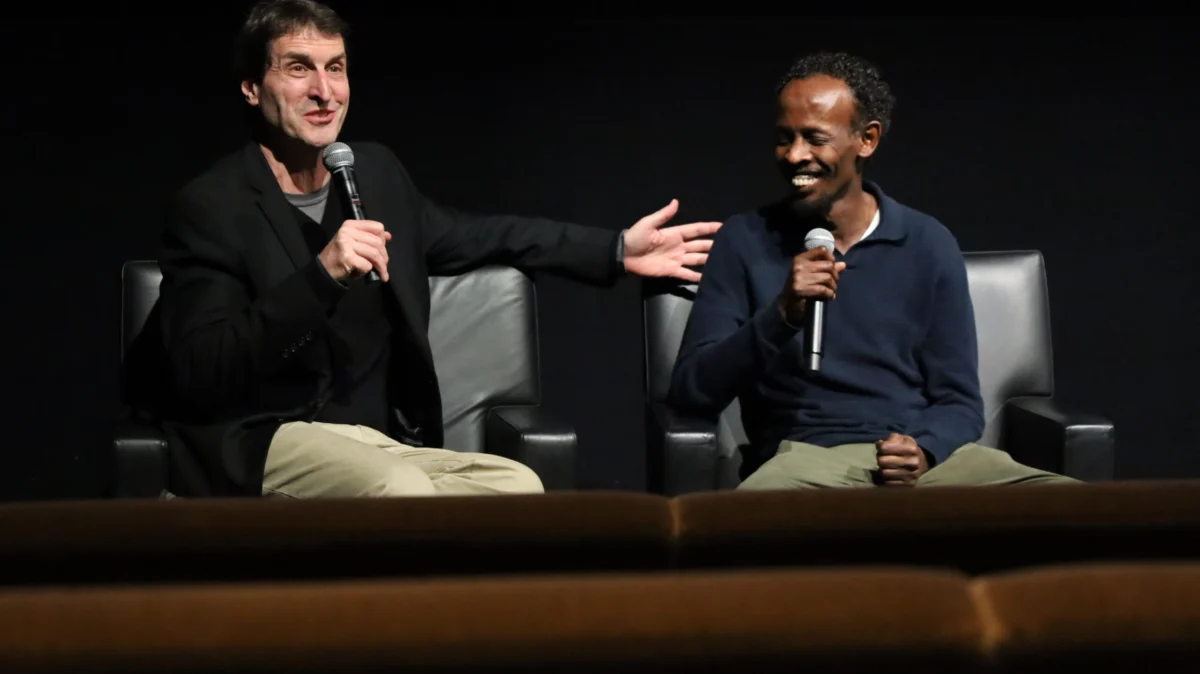
In the high-stakes world of the Academy Awards, momentum is often built on a foundation of critical acclaim, festival pedigree, and high-profile endorsements. For the upcoming 97th Oscars, the Best Live Action Short category is witnessing a significant surge in interest following the announcement of a creative reunion between two pivotal figures from 2013’s Captain Phillips.
Billy Ray, the Academy Award-nominated screenwriter behind modern classics such as The Hunger Games and Richard Jewell, has officially boarded the short film Magan’s Fare as an executive producer. This move reunites him with Somali-American actor Barkhad Abdi, who famously broke out in the Ray-penned Captain Phillips, earning a Best Supporting Actor nomination for his haunting and commanding debut performance. As Magan’s Fare moves through the festival circuit and enters the rigorous "For Your Consideration" (FYC) season, this partnership signals a powerful push for a film that explores the intersections of the immigrant experience, the gig economy, and the crisis of elderly care.
Main Facts: A Convergence of Talent and Social Advocacy
Magan’s Fare is a 26-minute drama directed by the filmmaking duo of Christopher Knoblock and Dana White. The film centers on Magan (Abdi), a Somali-born rideshare driver whose routine shift takes a harrowing turn. When he picks up an elderly woman named Jorani (played by Alexis Rhee) to return her to her nursing home, he discovers that the facility has unilaterally given away her bed and displaced her. Faced with a system that refuses to take responsibility for a vulnerable citizen, Magan is forced to navigate a moral and logistical minefield to ensure Jorani’s safety.
The film has already demonstrated its competitive strength on the international stage. It recently qualified for Oscar consideration after winning the top short film prize at the prestigious Raindance Film Festival. Following this success, the film is slated to screen at HollyShorts UK, further solidifying its standing among the year’s most elite short-form narratives.
The addition of Billy Ray as Executive Producer is not merely a ceremonial title. Ray, a veteran of the industry known for his ability to craft tension-filled, deeply human dramas, is lending his strategic weight to the film’s campaign. His involvement underscores a growing trend in Hollywood where established "A-list" creatives utilize their platforms to elevate independent short films that tackle pressing societal issues.
Chronology: From the Maersk Alabama to the Streets of Los Angeles
To understand the weight of this reunion, one must look back to 2013. At that time, Billy Ray was tasked with adapting the true story of Captain Richard Phillips and the hijacking of the Maersk Alabama. The resulting film, directed by Paul Greengrass, was a masterclass in tension, but its heart was the adversarial yet human relationship between Tom Hanks’ Phillips and Barkhad Abdi’s Muse.
Abdi, who was working as a limousine driver in Minneapolis before being cast, became a global sensation. His performance was characterized by a raw, desperate humanity that Billy Ray’s script carefully preserved. Now, over a decade later, the two are collaborating again, but the setting has shifted from the high seas to the urban sprawl, and the conflict has shifted from international piracy to the quiet, systemic failures of social services.

The production of Magan’s Fare began as an effort by Knoblock and White to tell a story about "the responsibility we have toward one another." After completing the film, the directors sought to build a campaign that would resonate with Academy voters. The film’s victory at Raindance acted as the catalyst, providing the necessary "qualified" status for the Oscars. It was during the subsequent screening and promotion phase that Billy Ray saw the film, recognized the familiar brilliance of Abdi’s acting, and decided to put his professional weight behind the project.
Supporting Data: The Landscape of the Best Live Action Short Race
The Best Live Action Short category is notoriously difficult to predict, often serving as a battleground between high-budget "calling card" films and gritty, independent social dramas. However, several factors place Magan’s Fare in a strong position:
- Festival Pedigree: Winning the Grand Jury Prize at a qualifying festival like Raindance is a primary hurdle. Only a small percentage of shorts globally meet the Academy’s eligibility requirements each year.
- Star Power: While the category often features unknown actors, having an Oscar nominee like Barkhad Abdi provides an immediate "hook" for voters who are sifting through dozens of entries.
- Industry Backing: Billy Ray’s filmography—including Shattered Glass, Breach, and his work on the Hunger Games franchise—commands respect across all branches of the Academy. Furthermore, his recent cultural footprint, including writing the ubiquitous Nicole Kidman AMC "We Make Movies Better" advertisement, has kept him at the forefront of the industry’s consciousness.
- Technical Excellence: The film’s 26-minute runtime is considered the "sweet spot" for shorts, allowing for enough character development to resonate emotionally without overstaying its welcome. Early reviews have highlighted the film’s cinematography and score as being of feature-film quality.
Official Responses: Voices from the Campaign
At a recent Los Angeles screening intended to kick off the film’s FYC campaign, Billy Ray spoke passionately about why he chose to support Magan’s Fare. He drew a poignant parallel between the economic struggles of small businesses and the challenges faced by independent filmmakers.
"The last two years have demonstrated on a grand level that small businesses need more help than big ones do," Ray stated. "Well, in our community, small movies need more help than big ones do. I’m happy to be helping this small movie. I hope all of you will too."
Ray went on to praise the specific craftsmanship of the film, noting, "It’s so beautifully written, it’s so beautifully directed, it’s so beautifully performed. The music, the cinematography, all of it, just executed with such love and care, and integrity."
Directors Christopher Knoblock and Dana White expressed their gratitude in a joint statement, emphasizing the thematic alignment between Ray’s body of work and their own film.
"We are deeply honored to have Billy Ray join our ‘Magan’s Fare’ FYC campaign as an executive producer," the directors said. "Billy is a remarkable storyteller whose writing creates complex, deeply human characters that stay with you long after the story ends. His work is an inspiration to us, and we’re especially excited by the opportunity to bring Billy and Barkhad Abdi back together through a film that speaks to the power of compassion and our responsibility to one another."

Implications: Why ‘Magan’s Fare’ Matters in the Current Climate
The significance of Magan’s Fare extends beyond the boundaries of an awards race. It touches upon several critical contemporary themes that are currently dominating public discourse.
The Gig Economy and the New Working Class
By casting Abdi as a rideshare driver, the film highlights the precarious nature of the gig economy. Magan is a character who exists on the margins, working long hours in a role that offers little security. Yet, he is the one who steps up when traditional institutions—like the nursing home—fail. This narrative flip suggests that the "moral center" of society is often found among those the system values least.
The Crisis of Elder Abandonment
The character of Jorani represents a growing and often invisible demographic: the elderly who are displaced by a healthcare system that prioritizes profit and bed turnover over human dignity. By pairing a Somali immigrant with an older woman of a different background (Jorani is portrayed by Korean-American actress Alexis Rhee), the film explores cross-cultural empathy. It suggests that the "responsibility to one another" transcends ethnic and generational divides.
The Evolution of Barkhad Abdi’s Career
For Abdi, Magan’s Fare represents a significant chapter in his evolution as an actor. Since his nomination for Captain Phillips, Abdi has appeared in high-profile projects like Blade Runner 2049 and Castle Rock, but Magan’s Fare allows him to carry a narrative as the lead. It proves that his talent was not a "one-off" phenomenon but a sustained capability to portray complex, empathetic protagonists.
The Power of the Short Film as Social Catalyst
Finally, the involvement of a powerhouse like Billy Ray in a short film campaign highlights the changing nature of the medium. Short films are no longer just stepping stones for student directors; they are potent tools for social commentary that can reach global audiences through the prestige of the Academy Awards. Ray’s advocacy suggests that the industry is beginning to recognize that some stories are best told in 26 minutes, provided they have the "integrity" and "care" he noted in his speech.
As the Academy prepares to release its shortlists in the coming months, Magan’s Fare stands as a testament to the enduring power of creative partnerships. The reunion of the writer who gave Barkhad Abdi his first great role and the actor who brought that role to life may just be the catalyst that carries this "small movie" all the way to the Dolby Theatre.