The Resurrection of Terror: Explaining the Brutal Conclusion of ‘Evil Dead Burn’ and the Future of the Deadite Saga
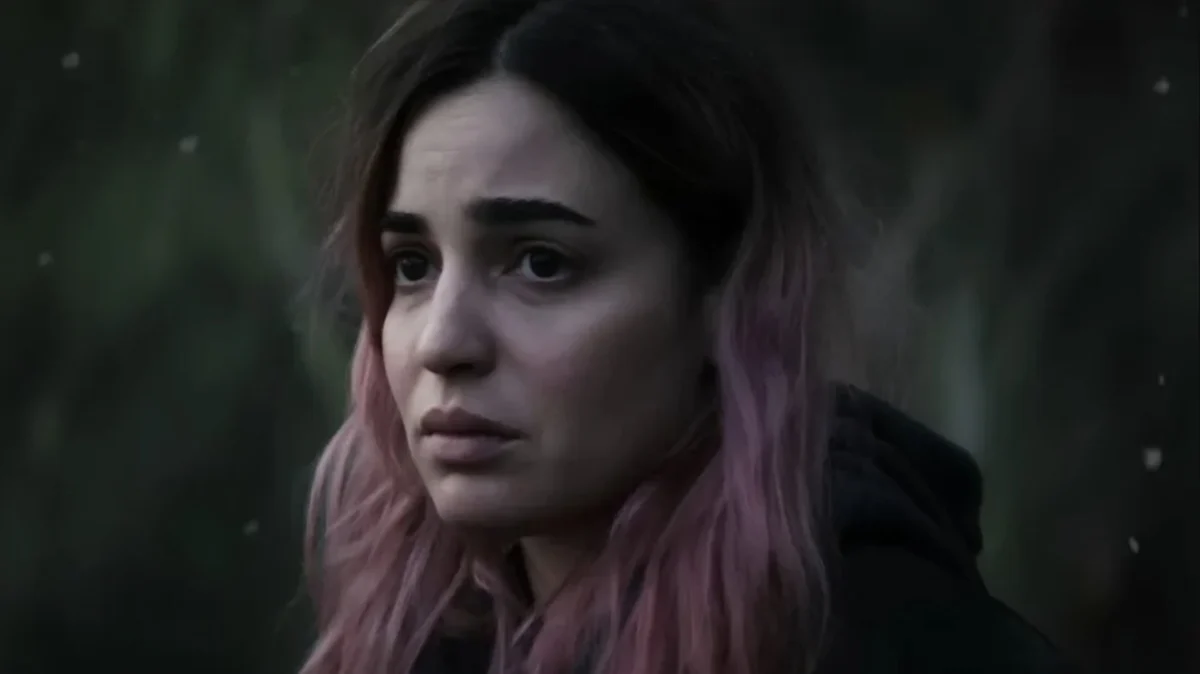
The Evil Dead franchise has long been a cornerstone of the horror genre, evolving from a low-budget "cabin in the woods" experiment into a sprawling multi-media empire. With the release of the sixth feature film, Evil Dead Burn, director Sébastien Vaniček has pushed the boundaries of the series further than ever before. Combining the visceral, unflinching violence of the New French Extremity movement with the claustrophobic tension of a family drama, Evil Dead Burn is being hailed as the most harrowing entry in the franchise’s 40-year history.
This analysis deconstructs the film’s complex narrative, explores the lore-heavy ending, and examines how this installment sets the stage for the upcoming 2028 prequel, Evil Dead Wrath.
Main Facts: A New Chapter in Necromantic Horror
Evil Dead Burn marks a significant shift in the franchise’s trajectory. While previous installments, such as Fede Álvarez’s 2013 reimagining and Lee Cronin’s Evil Dead Rise (2023), focused on isolated incidents of possession, Burn attempts to weave a tighter thread of continuity throughout the series.
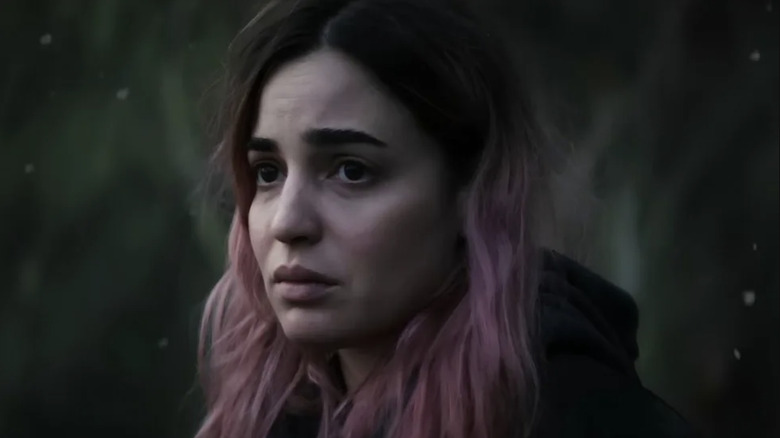
Written by Sébastien Vaniček and Florent Bernard, the film centers on Alice (Souhelia Yacoub), a woman trapped in an abusive marriage who finds herself at the center of a demonic outbreak during her husband’s funeral. The film introduces the "Circle of the Wisemen," a cult-like organization dedicated to studying the Naturom Demonto (Book of the Dead), adding a layer of organized mythology that has been largely absent from the films since 1992’s Army of Darkness.
The production is notable for its departure from the "slapstick gore" of the Bruce Campbell era, opting instead for a bleak, nihilistic tone. Critics have noted that Vaniček’s background in French horror brings a "mean-spirited" efficiency to the kills, making the Deadites feel more like psychological predators than mere monsters.
Chronology of Chaos: The Narrative Path of ‘Evil Dead Burn’
To understand the ending, one must trace the specific sequence of events that lead to the final confrontation at the ancestral home.
The Awakening
The film begins with Joseph (Hunter Doohan) discovering a hidden cache of occult items belonging to his late grandfather, Benjamin. Among these items are a recording of incantations and a uniquely designed Kandarian dagger. Unlike the ornate, skull-topped dagger seen in the original 1981 film, this version is a crude, shiv-like tool.
The awakening of the Deadites is directly linked to the events of Evil Dead Rise. The spirits are shown rising from the remote lake where the previous film concluded, tracking the "stench" of the Book of the Dead to Joseph’s location. This confirms that the various Books of the Dead across the franchise exist in a shared, chronological reality.
The Funeral Infection
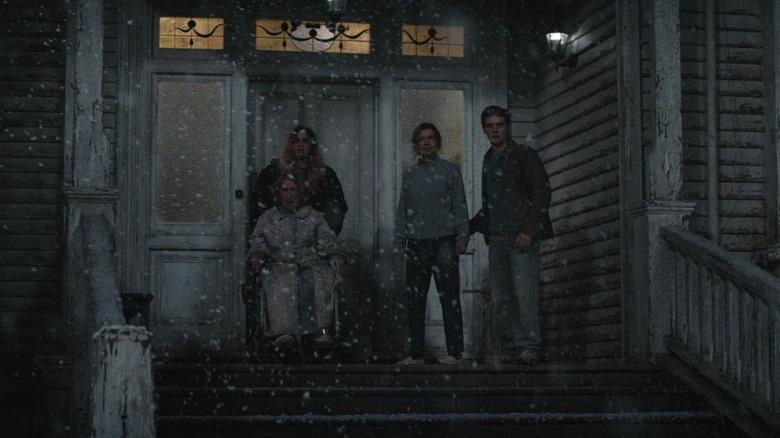
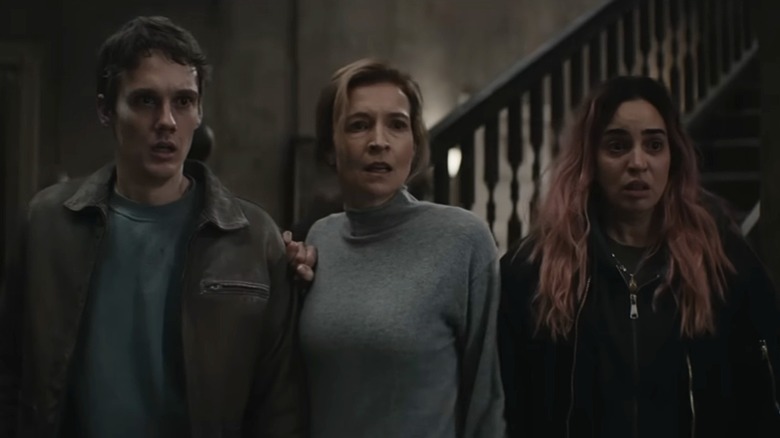
The primary setting is the family estate during the wake of Will (George Pullar), Alice’s abusive husband. After a car accident—later revealed to be influenced by the awakening spirits—Will becomes the "patient zero" for the Deadite infection. The virus-like spread of the possession moves through the family members: the patriarch Edgar (Erroll Shand), the resentful mother Susan (Tandi Wright), the girlfriend Thya (Luciane Buchanan), and the elderly Polly (Maude Davey).
The Siege
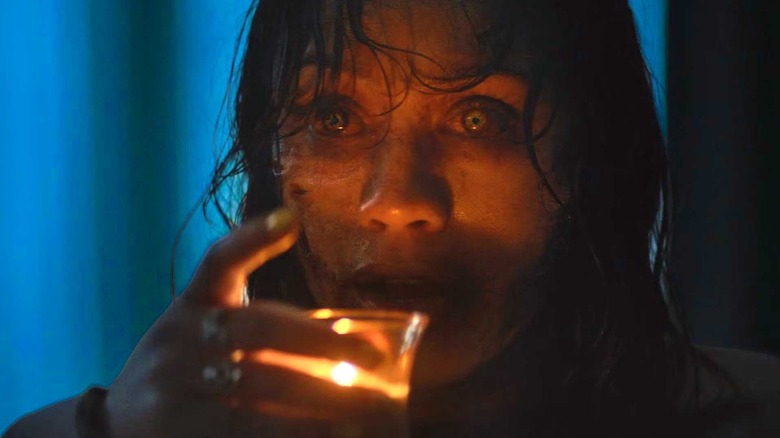
As the night progresses, the Deadites use the family’s internal rot—toxic masculinity, racism, and deep-seated resentment—as weapons. This psychological warfare culminates in a series of "ordeals" where Alice is forced to confront the physical manifestations of her trauma. The film’s middle act is a relentless gauntlet of body horror, including a standout sequence involving a "wax cocktail" that serves as a tribute to the franchise’s penchant for creative mutilation.
Supporting Data: Lore, Weaponry, and the "Melting Man"
The Evil Dead franchise has always played fast and loose with its rules, but Evil Dead Burn introduces specific data points that clarify the mechanics of possession.
The Kandarian Dagger Discrepancy
One of the most debated elements of Evil Dead Burn is the appearance of the Kandarian dagger. In the original trilogy, the dagger was a prehistoric-looking artifact. In Burn, it is described as a "Circle of the Wisemen" tool. This suggests one of two things:
- Multiple Artifacts: Just as there are three versions of the Necronomicon (as established in Army of Darkness), there may be multiple Kandarian daggers scattered throughout history.
- Timeline Shifts: Given the franchise’s history with time travel, the "Circle of the Wisemen" may have altered the artifacts’ physical forms through their rituals.
The "Melting Man" Phenomenon
The character of Will represents a new evolution of the Deadite. Typically, Deadites are either possessed corpses or living humans whose souls have been "swallowed." Will, however, becomes a "revenant"—a charred, perpetually burning corpse that retains a level of sentience and focused malice. This "Melting Man" aesthetic is a nod to 1970s grindhouse horror, emphasizing the physical toll of the demonic energy on human flesh.
New French Extremity Influence
Data from early screenings suggests that Evil Dead Burn features the highest on-screen body count and "gore-per-minute" ratio of the entire series. By drawing on the New French Extremity movement—characterized by films like Martyrs and Inside—Vaniček focuses on the "transgression of the body." The violence is not played for laughs; it is designed to make the audience feel the weight of the trauma Alice is enduring.
Official Responses: Creators and Studio Perspectives
While Warner Bros. Pictures has been secretive about the long-term roadmap, several key figures have commented on the film’s impact and the franchise’s future.
Sébastien Vaniček (Director):
"We wanted to take the ‘Evil’ in the title seriously. For me, the Deadites aren’t just zombies; they are the manifestation of everything we hate about our families and ourselves. Alice isn’t just fighting demons; she’s fighting the memory of an abusive man who won’t stay dead."
Bruce Campbell (Executive Producer):
"Every time we think we’ve run out of ways to torment people with a book, a new filmmaker comes along with a fresh nightmare. Sébastien brought a European coldness to the series that makes the blood run a little colder. It’s mean, it’s nasty, and it’s exactly what the fans deserve."
Rob Tapert (Producer):
"The goal with Burn was to bridge the gap. We saw what Lee [Cronin] did in the city, and we wanted to show that this evil is ancient and organized. The ‘Circle of the Wisemen’ is a thread we plan to pull on for a long time."
Implications: The Ending and the Road to ‘Evil Dead Wrath’
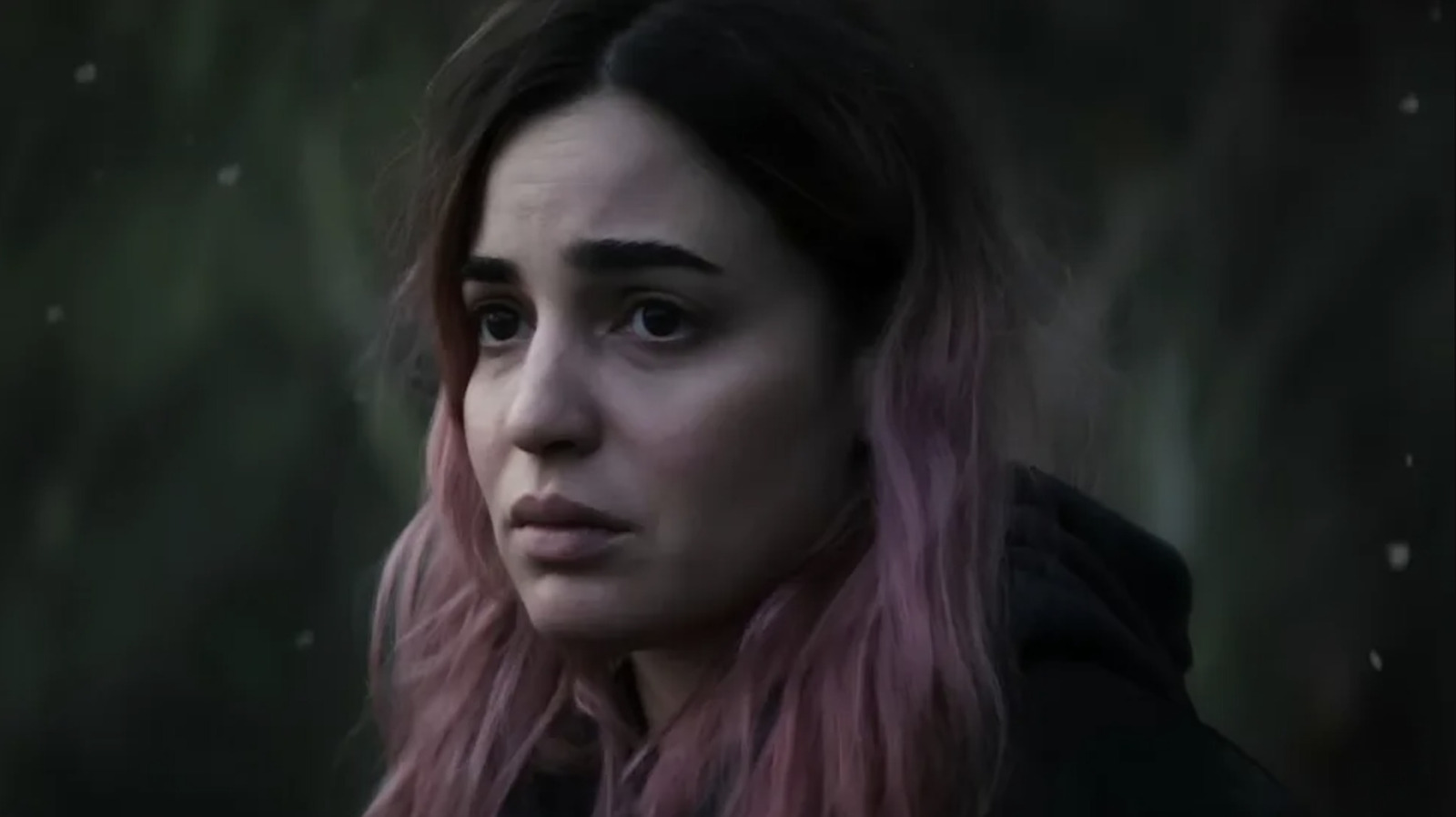
The final act of Evil Dead Burn leaves Alice as the sole survivor, but the victory is pyrrhic. After using the Kandarian dagger to dispel the spirit within the "Melting Man" Will, Alice is rescued by paramedics. However, the final shot of her eyes—flickering with a subtle, familiar amber hue—suggests a lingering infection or a permanent psychological scarring.
The "Final Girl" Evolution
Alice joins the ranks of Ash Williams, Mia Allen, and Beth as a "Deadite Survivor." However, unlike Ash (the "Chosen One") or Beth (the "Protector"), Alice is the "Liberated." Her journey is a metaphor for escaping domestic abuse. The implication that the evil remains within her suggests that trauma is never truly "killed"—it is managed.
The Post-Credits Tease
A mid-credits scene shows the Deadite version of Polly escaping into the woods and infecting a bystander. This confirms that the outbreak was not contained to the estate, marking the first time in the film series that the Deadite threat has successfully migrated toward a populated area without being immediately thwarted.
Looking Ahead: ‘Evil Dead Wrath’ (2028)
The seventh film, Evil Dead Wrath, directed by Francis Galluppi, has been confirmed as a prequel set in 1972. The implications of Evil Dead Burn suggest that Wrath will explore the origins of the "Circle of the Wisemen" and perhaps explain why Benjamin was in possession of the dagger and the book.
By shifting the focus to 1972, the franchise is moving toward a "Cinematic Universe" model. We are likely to see the connective tissue between the 1981 cabin incident and the modern-day outbreaks. If Burn is about the consequences of the book’s discovery, Wrath appears set to be about the futility of trying to contain it.
Conclusion
Evil Dead Burn is a masterclass in modern horror that honors its roots while aggressively carving out a new identity. It reframes the Deadites not as a freak occurrence, but as a persistent, organized malevolence that feeds on the darkest corners of the human experience. As Alice sits in the back of the ambulance, the message is clear: the fire may be out, but the world is still destined to burn.