A Final Eclipse in the Final Frontier: The Poignant Serendipity of Star Trek’s Bonnie Tyler Tribute
The intersection of science fiction and contemporary pop culture has always been a delicate tightrope for the Star Trek franchise. From the polarizing use of the Beastie Boys in the 2009 cinematic reboot to the disco-infused needle drops of Star Trek: Discovery, the series has often struggled to ground 20th-century music within its 23rd-century utopian framework. However, the third episode of Star Trek: Strange New Worlds Season 4, titled "Human Best Friend," has managed to achieve something rare: a moment of cultural synthesis that is both hilariously "Trek" and profoundly moving.
By featuring a Klingon-language rendition of Bonnie Tyler’s 1983 power ballad "Total Eclipse of the Heart," the series inadvertently created a masterpiece of timing. Following the passing of the legendary Welsh singer on July 8, 2026, the episode—filmed months prior—has transformed from a comedic set piece into a grand, intergalactic memorial.
Main Facts: The "Stoner Comedy" of Seznar Grand
"Human Best Friend" departs from the high-stakes galactic diplomacy of previous episodes to deliver a classic "crew on vacation" narrative, albeit with a psychedelic twist. The plot centers on the USS Enterprise visiting Seznar Grand, a resort planet renowned for its unique atmospheric composition. The air on Seznar contains a harmless, naturally occurring gaseous compound that mimics the effects of heavy intoxication on most humanoid nervous systems.
The episode serves as a showcase for the ensemble cast’s comedic range:
- The "Hangover" Subplot: Lt. Erica Ortegas (Melissa Navia) and Chief Engineer Montgomery Scott (Martin Quinn) lose their shuttlecraft in a haze of atmospheric "inebriation," spending much of the episode retracing their steps in a narrative style reminiscent of 21st-century stoner comedies.
- The Vulcan Hallucination: Spock (Ethan Peck), attempting to maintain his Vulcan discipline, finds his logic failing as he begins to see visions of James T. Kirk (Paul Wesley) in his hotel suite—a nod to the burgeoning "Kirk/Spock" dynamic that defines the original series.
- The Spiritual Healer: Ensign Nyota Uhura (Celia Rose Gooding) enters a state of "stoned enlightenment," offering unsolicited and deeply "profound" spiritual advice to her fellow officers.
- The Clumsy Mixologist: Dr. M’Benga (Babs Olusanmokun) attempts to operate a resort bar, resulting in a slapstick routine of shattered glassware and misunderstood drink orders.
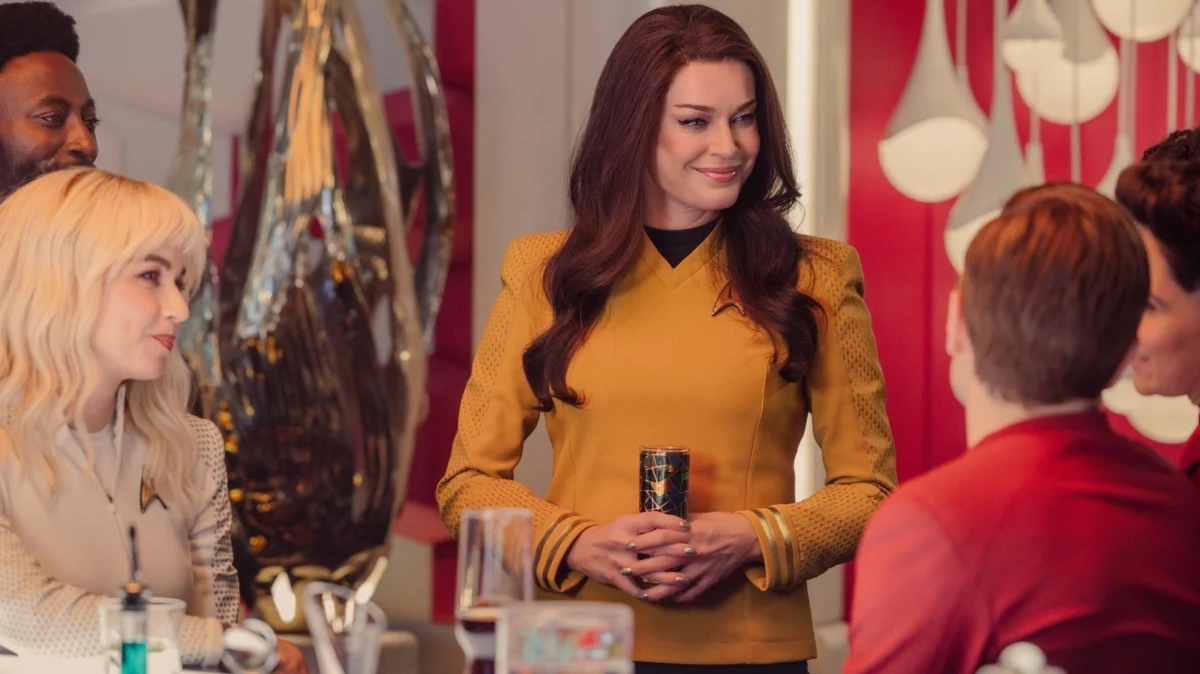
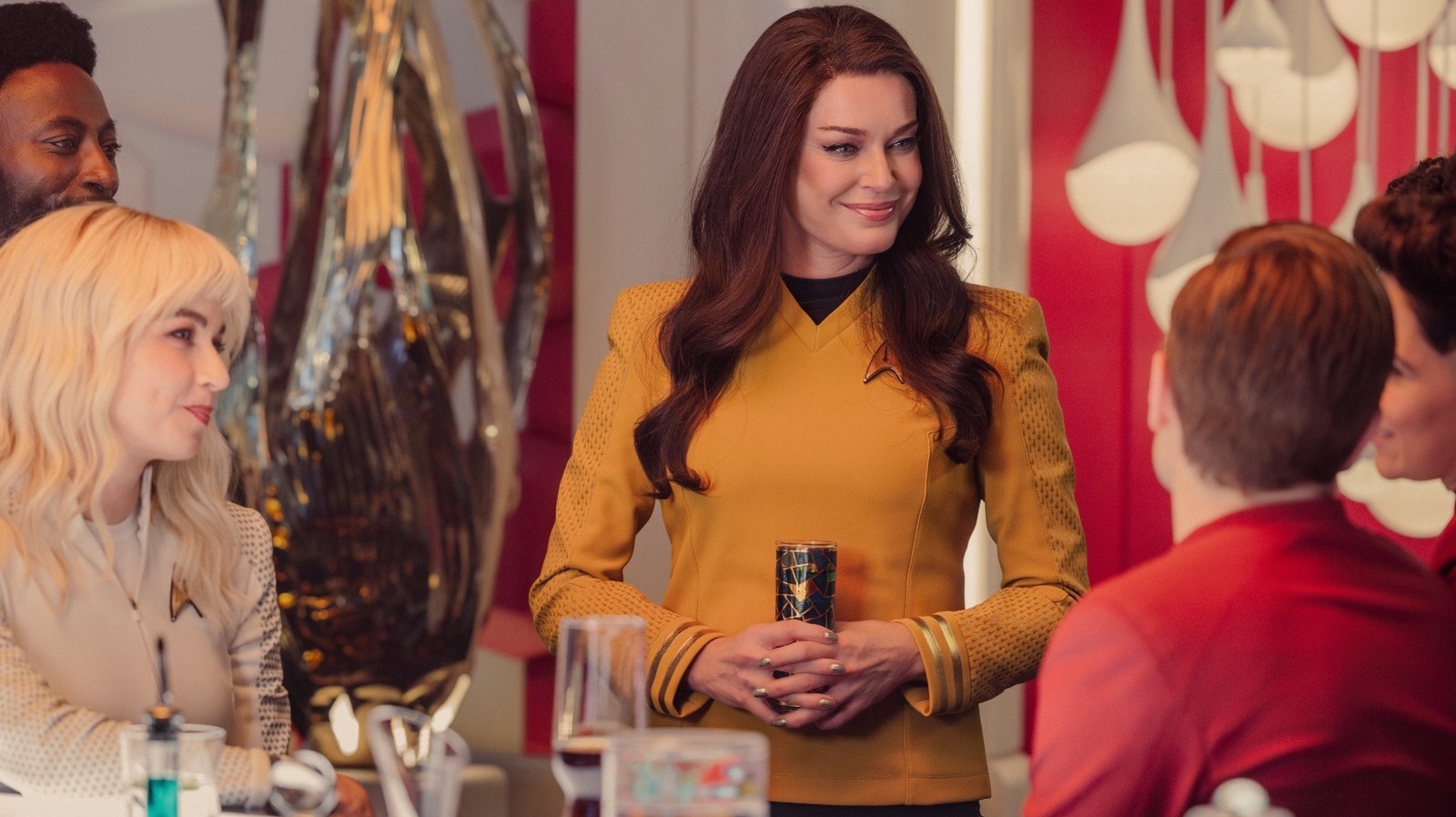
However, the emotional and cultural anchor of the episode is Commander Una Chin-Riley (Rebecca Romijn). While under the influence of the Seznar atmosphere, the normally reserved "Number One" dons a flamboyant rainbow boa and hijacks a karaoke stage. Her song of choice: "Total Eclipse of the Heart," performed entirely in the guttural, warrior-centric language of the Klingon Empire.
Chronology: A Timeline of Unintended Significance
The production of "Human Best Friend" followed a standard television cycle that makes its eventual release feel like a cosmic coincidence.
- Late 2025: Scripts for Season 4 of Strange New Worlds are finalized. Showrunners Akiva Goldsman and Henry Alonso Myers decide to lean into the show’s "episodic and experimental" nature by including a karaoke scene, choosing Bonnie Tyler’s hit for its bombastic, operatic qualities.
- Early 2026: Principal photography takes place. Rebecca Romijn works with a linguist to translate Jim Steinman’s complex lyrics into Klingon, recording the vocals in a studio session intended to be purely comedic.
- July 8, 2026: Bonnie Tyler passes away at age 75 due to complications following surgery for a perforated intestine. The music world enters a period of mourning for the "First Lady of Rock."
- August 6, 2026: "Human Best Friend" airs on Paramount+. What was meant to be a lighthearted joke about the longevity of 80s pop music becomes a poignant tribute to Tyler’s enduring legacy, airing less than a month after her death.
Supporting Data: The Anatomy of a Power Ballad in the 23rd Century
To understand why this tribute works, one must look at the nature of the song itself. "Total Eclipse of the Heart," written and produced by the late Jim Steinman, is not a typical pop song. It is a seven-minute Wagnerian rock opera characterized by its "ultra-bombastic" production and melodramatic lyrics.
Steinman, who also wrote Meat Loaf’s Bat Out of Hell, was known for creating music that felt larger than life. This "larger than life" quality is exactly why the song survives into the Star Trek era. In the logic of the show, "Total Eclipse" is not just an "oldie"; it is a piece of classical Earth literature that has been adopted by other cultures.
The episode implies that by the 2250s, Bonnie Tyler’s work has reached the status of a "standard," much like the works of Shakespeare or Mozart. The decision to have it sung in Klingon is a stroke of genius. The Klingon culture prizes honor, tragedy, and raw emotional power—themes that are central to Tyler’s discography. In the "Trek" universe, it is entirely plausible that a Klingon opera house would find "Total Eclipse of the Heart" to be a foundational text of "Human emotional warfare."
Official Responses and Production Insights
While Paramount+ has not issued a formal "in memoriam" statement within the episode’s credits (due to the timing of the broadcast relative to the production lock), the creative team has expressed a sense of "heavy-hearted pride" regarding the episode.
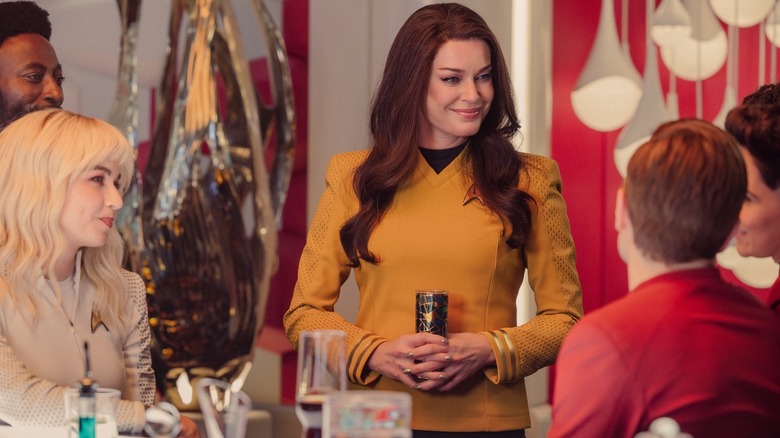
Sources close to the production indicate that Rebecca Romijn took the Klingon translation seriously, working with Marc Okrand’s linguistic framework to ensure the rhymes and meters of the original song were preserved. "Rebecca wanted it to feel like a real performance," a production assistant noted. "She wasn’t just making noises; she was singing a Klingon anthem. The fact that it now serves as a farewell to Bonnie Tyler is something the whole cast feels very deeply."
Musical historians have also weighed in on the "Trek-ification" of Tyler. Dr. Aris Thorne, a specialist in 20th-century media, suggests that Tyler’s voice—often described as "sandpaper and silk"—is the perfect bridge between human vulnerability and the ruggedness of the Star Trek future. "Tyler’s voice could blast barn doors open," Thorne noted. "It has the kind of power that translates across species. Seeing a Starfleet commander honor that power, even in a comedy episode, validates Tyler’s status as a global—and now galactic—icon."
Implications: The Persistence of Memory in a Post-Capitalist Future
The use of "Total Eclipse of the Heart" in Strange New Worlds raises interesting questions about the "Star Trek" utopia. The franchise takes place in a post-money society where intellectual property as we know it has likely ceased to exist. In this context, the inclusion of a 20th-century pop song is a declaration of its timelessness.
The Public Domain of the Stars
In the 23rd century, Bonnie Tyler’s music belongs to everyone. By showing the Enterprise crew engaging with her music, the writers are suggesting that in a world of warp drives and transporters, humanity still clings to the emotional anchors of its past. This provides a "humanizing" element to the series that helps ground its more fantastical elements.
A New Standard for "Trek" Needle Drops
Historically, Star Trek has struggled with pop music. Star Trek: Beyond (2016) used "Sabotage" by the Beastie Boys as a literal weapon to disrupt an alien swarm—a move that divided fans. "Human Best Friend" takes a different approach. It doesn’t use the music as a gimmick; it uses it as a character beat. Commander Chin-Riley isn’t just singing a song; she is releasing the pressure of command through the medium of a "centuries-old" classic.

The Accidental Memorial
The most significant implication of the episode remains its status as an unwitting tribute. It reminds audiences that art often takes on a life of its own, independent of the creator’s intent. The showrunners could not have known they were filming a eulogy, yet the sincerity of the performance and the reverence for the source material make it one of the most effective celebrity tributes in recent memory.
As Commander Chin-Riley belts out the final "Turn around, bright eyes" in the harsh, consonant-heavy tones of Klingon, the scene achieves a strange kind of perfection. It suggests that even in the year 2259, across the vast reaches of the Alpha Quadrant, Bonnie Tyler is still reaching out from the past, reminding us that every now and then, we all fall apart—and that there is a certain, rugged beauty in that collapse.
In the end, "Human Best Friend" is more than just a "stoner comedy" episode. It is a testament to the idea that some voices are too powerful to be silenced by time, distance, or even the end of a life. Bonnie Tyler may have left Earth in 2026, but according to Strange New Worlds, her voice will be echoing through the stars for centuries to come.