
The End of an Era: Media Titans Pay Tribute to Ted Turner, the Visionary Who Invented the 24-Hour News Cycle
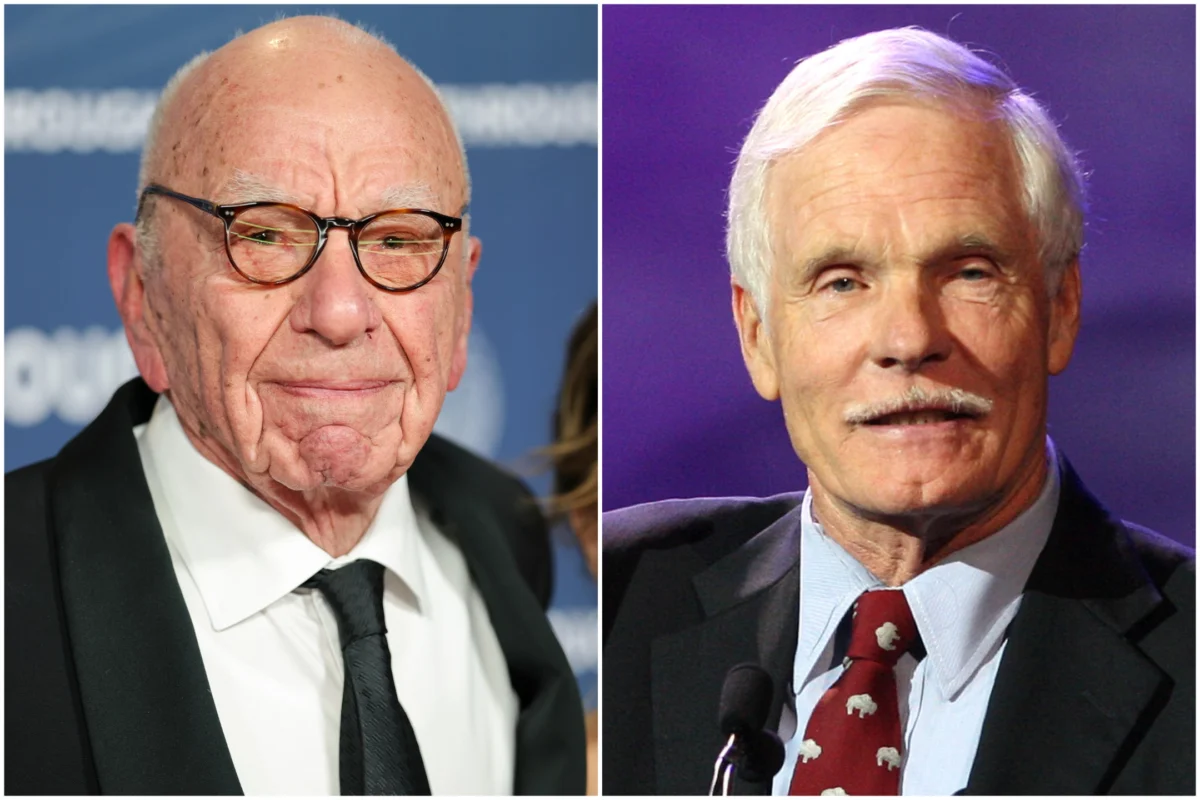
The landscape of global media shifted irrevocably this week with the passing of Ted Turner, the maverick entrepreneur, sportsman, and philanthropist who founded CNN and fundamentally altered how the world consumes information. Turner, who was 86, leaves behind a legacy that redefined the television industry, challenged the hegemony of the "Big Three" networks, and established the 24-hour news cycle as a cornerstone of modern civilization.
In an industry often characterized by cutthroat competition and public animosity, the outpouring of grief and respect from Turner’s contemporaries—including his fiercest rivals—underscores the magnitude of his influence. From Rupert Murdoch to the current leaders of Warner Bros. Discovery and Comcast, the consensus is clear: Ted Turner was the "giant on whose shoulders" the modern media world stands.
Main Facts: A Legacy of Disruption and Vision
Ted Turner’s death marks the conclusion of one of the most storied careers in American business. Known variously as the "Mouth of the South" and "Captain Outrageous," Turner was far more than a colorful personality; he was a strategic genius who saw the potential of satellite technology and cable television long before his peers.
The central pillar of his legacy is the 1980 launch of the Cable News Network (CNN). At a time when news was confined to 30-minute evening broadcasts on ABC, CBS, and NBC, Turner’s idea of a 24-hour news channel was widely mocked by industry insiders, who dubbed it the "Chicken Noodle Network." However, Turner’s gamble paid off, transforming CNN into a global powerhouse that provided a "front-row seat to history."
Beyond news, Turner’s fingerprints are across the entire entertainment spectrum. He pioneered the "Superstation" concept with WTBS, created networks like TNT, Cartoon Network, and Turner Classic Movies (TCM), and was a major figure in professional sports as the owner of the Atlanta Braves and Atlanta Hawks. His philanthropic efforts were equally audacious, most notably his $1 billion pledge to the United Nations in 1997.
Chronology: From Billboard Sales to Global Dominance
To understand the weight of the tributes pouring in, one must examine the chronological ascent of the Turner empire, which was built on a foundation of risk-taking that often bordered on the reckless.
The Early Years and the Superstation (1963–1976)
After the tragic death of his father in 1963, a young Ted Turner took over the family’s struggling billboard business. He quickly turned it around and began investing in radio and television. In 1970, he purchased a failing UHF station in Atlanta, WJRJ (later WTCG). By utilizing the then-nascent technology of satellite transmission, Turner transformed WTCG into WTBS, the first "Superstation," broadcasting local Atlanta sports and classic movies to cable systems nationwide.
The Birth of CNN (1980)
On June 1, 1980, Turner launched CNN from a converted country club in Atlanta. It was the world’s first 24-hour all-news television network. Despite early financial struggles and skepticism from the New York media establishment, Turner remained steadfast in his belief that the public wanted news on demand.
Expansion and the Gulf War (1981–1991)
Throughout the 1980s, Turner expanded his portfolio, launching CNN Headline News (now HLN) and acquiring the MGM film library, which provided the content for the launch of TNT in 1988 and TCM in 1994. However, it was the 1991 Persian Gulf War that cemented CNN’s—and Turner’s—place in history. CNN was the only news outlet with live coverage from Baghdad during the initial bombings, proving the necessity of a 24-hour news presence.
The Time Warner Merger and Beyond (1996–2006)
In 1996, Turner Broadcasting System merged with Time Warner in a $7.5 billion deal. While the move made Turner the largest individual shareholder in the combined company, the subsequent disastrous merger with AOL in 2000 led to a significant loss of his personal fortune and his eventual departure from the company’s daily operations. In his later years, Turner focused heavily on land conservation and the Turner Tomorrow Fellowship.
Supporting Data: The Impact of the Turner Revolution
The statistical impact of Turner’s ventures provides a quantitative look at how he reshaped the industry. When CNN launched in 1980, it was available in just 1.7 million households. By the time of the Gulf War in 1991, that number had surged to over 55 million in the U.S. alone, with a growing international footprint that reached over 100 countries.
Turner’s success paved the way for the competitive landscape we see today. His model of niche cable programming directly influenced the creation of:
- Fox News (1996): Launched by Rupert Murdoch specifically as a conservative-leaning alternative to the "establishment" tone of CNN.
- MSNBC (1996): A joint venture between NBC and Microsoft, now known as MS NOW under Versant Media.
Furthermore, Turner’s acquisition of the MGM library (comprising roughly 2,200 films) for $1.5 billion in 1986 was initially criticized as overpaying. Today, that library forms the bedrock of the Warner Bros. Discovery streaming strategy, proving Turner’s foresight regarding the long-term value of "content libraries" decades before the streaming wars began.
Official Responses: Titans of Industry Reflect
The news of Turner’s passing elicited statements from the highest echelons of the media world, reflecting a rare moment of industry-wide solidarity.
Rupert Murdoch: A Respectful Rivalry
Perhaps the most poignant tribute came from Rupert Murdoch, the 95-year-old Chairman Emeritus of Fox Corp. While Murdoch and Turner were famously bitter rivals—at one point Turner even challenged Murdoch to a televised boxing match—Murdoch’s statement focused on Turner’s pioneering spirit.
"Ted Turner’s vision for 24-hour cable news transformed the media industry and gave viewers everywhere a front seat to witness history unfold," Murdoch said. "His impact as a trailblazer has left an indelible mark on our cultural landscape. He was a great American and friend."
David Zaslav: The Architect of Modern WBD
David Zaslav, CEO of Warner Bros. Discovery—the company that now houses Turner’s original networks—emphasized Turner’s role as a foundational force. In a memo to employees, Zaslav wrote:
"Ted was a visionary, a trailblazer, and a foundational force behind many of the brands that are central to Warner Bros. Discovery today. He believed deeply in the power of ideas, in doing things differently and in building platforms that could inform, inspire and connect people around the world. He did not just disrupt media. He transformed it."
Brian Roberts: A Mentor to Future Leaders
Comcast Chairman and Co-CEO Brian Roberts recalled Turner’s influence on his own early career. "I feel so fortunate to have been on his board of directors early in my career and to have learned so much from him," Roberts stated. "He was a true pioneer and an extraordinary philanthropist, and his impact is profound and lasting."
Mark Thompson: The DNA of CNN
Current CNN CEO Mark Thompson, who joined the network in late 2023, spoke to the enduring "spirit" of Turner that still drives the newsroom. In an interview with Dana Bash, Thompson noted:
"We have lost one of our giants… I’m constantly evoking Ted, because I think that is the spirit that media needs now, particularly legacy media, given the enormous number of challenges we have and the fundamental changes in the way audiences want news." Thompson highlighted Turner’s core insight: that the public wants news "when they want it and when they need it," rather than on a schedule dictated by a network.
Mark Lazarus: The "Inner Ted"
Mark Lazarus, CEO of Versant Media (parent of MS NOW), worked closely with Turner in the past. He urged current industry leaders to channel Turner’s risk-taking appetite. "The industry will be served well if we can all ‘find our inner Ted,’" Lazarus said. "He pushed all of us to think beyond what was comfortable."
Implications: The Future of News in a Fragmented World
Ted Turner’s passing comes at a time of profound crisis and transition for the very industry he created. The 24-hour cable news model is currently facing its greatest challenge since its inception, as cord-cutting and digital platforms erode traditional viewership.
The Digital Shift and Legacy Media
As Mark Thompson noted, the "spirit of Ted" is required to navigate the current shift from linear television to digital-first consumption. Turner’s original insight—that news should be available whenever the viewer wants it—has reached its logical conclusion in the era of social media and mobile apps. The challenge for modern news organizations is how to maintain the journalistic integrity Turner championed while adapting to a landscape where news is consumed in seconds-long clips.
The Return to Risk-Taking
The tributes from Lazarus and Zaslav suggest a realization within the industry that the era of "safe" corporate management may be hitting a wall. Turner’s career was defined by "bet-the-company" moves. As legacy media companies struggle to compete with tech giants like Alphabet and Meta, there is a growing sense that the industry needs a return to the bold, disruptive leadership that Turner personified.
The Philanthropic Blueprint
Turner’s legacy also extends to the "Giving Pledge" era of billionaire philanthropy. By giving $1 billion to the UN, Turner challenged other moguls to use their wealth for global problem-solving rather than just local charity. This "Turner-esque" approach to philanthropy has become a standard for the modern billionaire class, influencing the likes of Bill Gates and Warren Buffett.
Conclusion: A Legacy That Will Not Fade
Ted Turner did not just build a network; he changed the way the human race experiences reality. Before Turner, news was a scheduled event; after Turner, news became a continuous river of information. While the platforms may change from cable boxes to smartphones, the fundamental architecture of the global information exchange remains the house that Ted built.
As the media world mourns his passing, the greatest tribute to his life will not be the statements issued by his rivals, but the continued existence of a free, fast, and global press that refuses to blink when history unfolds. In an age of uncertainty, the industry would indeed do well to "find its inner Ted."

Leave a Comment