"A Forest of Vanity and Valour": A Dark Reimagining That Captivates the Fantasy Landscape
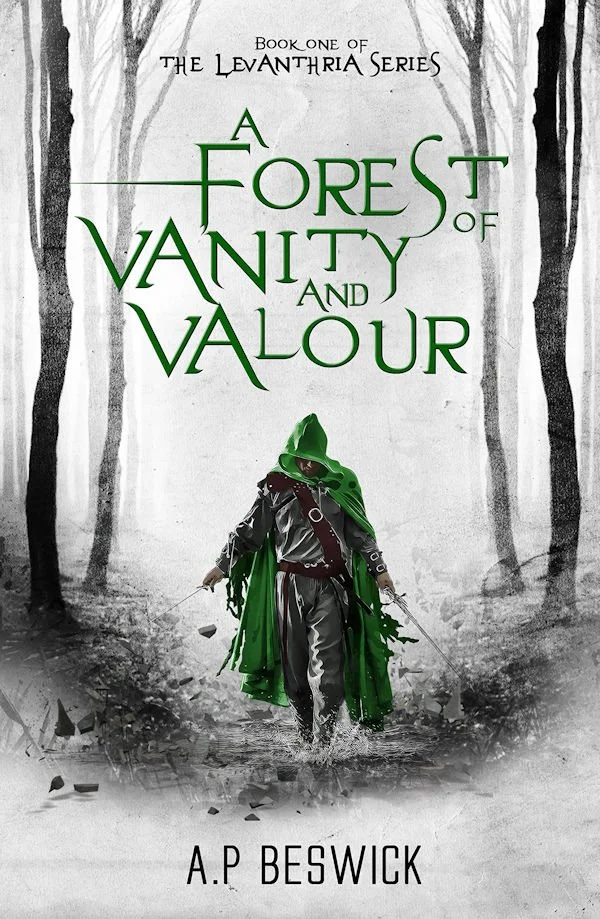
LONDON, UK – A groundbreaking new voice in fantasy literature, M.A. Beswick, has delivered a compelling and subversive take on a classic legend with the release of A Forest of Vanity and Valour. Published by [Publisher Name, if available, otherwise omit], this novel has quickly garnered attention for its inventive premise, morally ambiguous characters, and relentless pace, offering a fresh, dark perspective on the Robin Hood mythos. Rather than adhering to predictable tropes, Beswick utilizes the familiar foundation to construct a gripping narrative that feels both resonant and remarkably original, challenging readers to reconsider established notions of heroism and villainy.
The novel introduces Vireo Reinhold, a self-centered official who thrives on the perks of his unorthodox position as a tax collector for a perpetually warring monarch. His world, defined by luxury and the coercive collection of royal dues, is irrevocably altered by the discovery of an ancient spellbook, a tome promising access to a shadowy, forgotten magic. This revelation, coupled with a clandestine affair and a forced, unthinkable act, propels Vireo into exile. Stripped of his power and with the potent spellbook now in adversarial hands, his survival hinges on an unexpected turn: becoming a savior to others. The narrative poses a poignant question: can this fallen agent, accustomed to exploiting the vulnerable, truly redeem himself as a champion for the people before a sinister fate engulfs them all?
A Narrative Unfolding: From Coercion to Consequence
The story of A Forest of Vanity and Valour is meticulously structured around a pivotal inciting incident that dramatically reshapes the lives of its two central protagonists, intertwining their destinies in an intricate dance of power and principle.
Vireo Reinhold’s Downfall and Metamorphosis: The narrative opens with Vireo Reinhold firmly established in his role as a ruthless tax collector. He is a man who not only performs his duty to collect the monarch’s exorbitant dues but relishes the power and personal gain it affords him. His world is one of opulence, sustained by the endless war funded by the very taxes he extorts. This life of comfortable corruption, however, is built on shaky ground. His illicit affair with a fellow noble’s wife adds a layer of personal recklessness to his professional ruthlessness.
The chronological turning point arrives with two significant events: the unearthing of an ancient spellbook, which tantalizes him with the promise of forbidden power, and the forced commission of an "unthinkable act." While the details remain shrouded to avoid spoilers, this act is catastrophic, leading directly to his swift and brutal exile. His meticulously crafted world shatters. He loses his ability to coerce, his luxury, and crucially, the very spellbook that held the key to his ambitions falls into enemy hands. This dramatic reversal forces Vireo, a man defined by self-interest, into a desperate struggle for survival, where his only recourse is to cultivate skills in saving others – a profound irony given his past.
The City of Askela and Jareb’s Burden: Parallel to Vireo’s journey, the novel delves into the plight of Askela, the city under the control of Jareb, a figure entrusted with its governance by an absent king consumed by expensive warfare. Jareb finds himself in an "impossible situation," caught between the monarch’s insatiable demands and the growing despair of his populace. The story explores how Vireo’s actions, both past and present, directly impact Jareb’s leadership and the stability of Askela.
The Forest of Opiya and the Shifting Sands of Morality: Driven into exile, Vireo finds himself in the dangerous Forest of Opiya, a stark contrast to the urban confines of Askela. This new environment forces a radical shift in his perspective and survival strategies. The narrative masterfully tracks the evolution of both protagonists’ roles, motivations, and beliefs from the moment of the inciting incident. Their initially opposing positions gradually blur, creating a dynamic exploration of justice, power, and responsibility. The chronological unfolding of events systematically dismantles their preconceived notions, binding their individual arcs together through shared consequences and an escalating conflict that threatens to consume their world. This careful plotting ensures that the story’s themes are not merely stated but are actively shaped by the characters’ evolving circumstances, making their journeys both satisfying and thought-provoking.
Supporting Data: A Deep Dive into Beswick’s Craft
The critical reception of A Forest of Vanity and Valour highlights several key strengths that contribute to its distinctive appeal within the fantasy genre.
Thematic Depth: Embracing Moral Ambiguity
One of the novel’s most celebrated aspects is its courageous embrace of moral ambiguity. Beswick eschews simplistic portrayals of good versus evil, instead presenting characters whose decisions are complex tapestries woven from perceived duty, personal ambition, and the primal urge for survival. This nuanced approach allows readers to empathize with figures on opposing sides of the escalating conflict, fostering a deeper understanding of their motivations. In a retelling of the Robin Hood legend, this moral complexity is particularly fitting, as the very essence of that myth revolves around questions of justice that often depend on one’s perspective rather than objective right or wrong. This enriches the conflicts and decisions within the story, elevating its exploration of power and responsibility far beyond a straightforward battle, injecting a rare depth into the narrative.
Narrative Voice and Pacing: Urgency and Readability
The choice of first-person present tense, while often a stylistic challenge, proves to be a masterstroke in A Forest of Vanity and Valour. This narrative choice imbues the story with an immediate, urgent momentum, effectively placing the reader directly into the protagonists’ experiences. The action feels palpable and consequential, driving the plot forward with an relentless energy. The prose itself, while not overtly lyrical or descriptive, is commendably readable. It prioritizes clarity and forward movement, allowing the intricate character dynamics and unfolding events to take center stage. When the narrative does momentarily slow, it serves a clear purpose: to deepen relationships or underscore the emotional repercussions of prior actions, ensuring that quieter moments resonate without disrupting the overall pace.
World-Building and Character Development: Intimate Focus
The primary settings of Askela and the dangerous Forest of Opiya are vividly depicted, forming a compelling backdrop for the unfolding drama. While the focused first-person perspective on the main protagonists offers profound insight into their internal worlds, it does, by design, limit extensive development for some supporting characters, such as Lek and Gillam, and a broader exploration of the wider world. However, this is noted not as a flaw, but as a desire for more, indicating the intriguing nature of the world Beswick has crafted. The intimacy of the narrative choice enhances the character journeys, making the reader keenly invested in Vireo’s transformation and Jareb’s struggles.
Integrating Fantasy Elements: Subtlety and Wonder
Beswick seamlessly weaves traditional fantasy elements – including monsters, magic, and arcane texts – into the fabric of the story. These elements add a compelling sense of wonder and danger without ever overshadowing the core narrative of human ambition, betrayal, and redemption. The magic feels organic to the world, enhancing the plot rather than existing merely as window dressing. This judicious integration suggests that A Forest of Vanity and Valour is not merely a standalone retelling but potentially the foundational chapter of a much larger, intricately conceived world.
Purposeful Plotting and Optimal Length
The novel is lauded for its excellent pacing and concise length. Every plot decision feels deliberate and purposeful, contributing directly to the narrative’s progression. The story maintains its momentum even during moments of character reflection or scene-setting, demonstrating a clear understanding of its own scope. This efficiency ensures that the narrative never feels rushed, yet equally avoids unnecessary digressions. It is a story that knows precisely what it wants to achieve and executes it with remarkable precision, a testament to Beswick’s confident storytelling.
A Dark Streak and Inventive Twists
A distinctive "dark streak" permeates the novel, delivering several inventive moments that are genuinely surprising and cleverly rooted in the spirit of the Robin Hood myth, albeit twisted into unexpected forms. These moments of grim ingenuity provide A Forest of Vanity and Valour with a unique identity, distinguishing it from more conventional fantasy adventures and cementing its place as a fresh, subversive entry in the genre.
Authorial Vision and Critical Perspective
While direct "official responses" from the author are not available in the provided text, the critical review offers significant insight into Beswick’s likely authorial vision and the anticipated reception of A Forest of Vanity and Valour.
Authorial Vision: Beswick appears to be an author deeply interested in deconstructing archetypes and exploring the grey areas of morality. The decision to cast a self-serving tax collector as the central figure in a Robin Hood-esque narrative speaks volumes about a desire to challenge conventional heroism. The focus on character transformation, particularly Vireo’s forced journey from exploiter to potential champion, suggests an authorial intent to explore themes of redemption, the nature of justice, and how circumstances can fundamentally alter an individual’s moral compass. The seamless integration of fantasy elements indicates a vision for a rich, immersive world that respects classic folklore while daring to reinterpret it through a darker, more complex lens. The deliberate pacing and concise narrative point to an author who prioritizes impactful storytelling over sprawling epics, ensuring every plot beat serves a purpose.
Critical Perspective: The review itself serves as a strong critical endorsement. It highlights the novel’s "inventive premise" as its "greatest strength" and praises the "real confidence" with which it is executed. The appreciation for the moral ambiguity, the effective use of first-person present tense, and the "wonderfully dark streak" all point to a novel that successfully achieves its ambitious goals. The reviewer’s enthusiasm for the character arcs and the novel’s ability to "spark curiosity" about future installments indicates that Beswick has not only delivered a compelling standalone narrative but has also laid robust groundwork for a captivating series. The minor criticisms regarding supporting character development and wider world-building are framed as desires for more of a good thing, rather than fundamental flaws, reinforcing the overwhelmingly positive reception.
Implications: A New Era for Reimagined Folklore
A Forest of Vanity and Valour carries significant implications for the contemporary fantasy genre, particularly in its approach to reimagining classic folklore.
Subverting Tropes and Elevating Retellings: Beswick’s novel demonstrates that beloved legends can be revitalized not by mere repetition, but by bold subversion. By taking a figure diametrically opposed to the traditional Robin Hood and forcing him into a similar redemptive arc, the book pushes the boundaries of what a "retelling" can be. This signals a trend towards more complex, morally challenging interpretations of classic tales, moving beyond simple adaptations to offer profound thematic explorations.
Setting the Stage for a Larger Saga: The careful integration of magic, the deliberate pacing, and especially the "closing tease of another iconic piece of British folklore" strongly imply that A Forest of Vanity and Valour is merely the genesis of a much grander narrative. This strategic world-building suggests Beswick is building a universe that intertwines various elements of British mythology, offering a rich tapestry for future installments. Readers can anticipate a series that continues to delve into the intricate relationship between human nature, ancient magic, and the enduring power of myth.
Impact on Dark Fantasy: The novel’s "dark streak" and willingness to explore grim realities solidifies its position within the burgeoning dark fantasy subgenre. It showcases how grimness can be paired with compelling character development and inventive plotting, rather than solely relying on shock value. This contributes to the evolution of dark fantasy, proving that it can offer profound insights into the human condition within a fantastical framework.
Reader Expectations for Future Works: The positive reception and the tantalizing ending create high expectations for Beswick’s future contributions. Readers will undoubtedly look forward to seeing how the complex characters introduced in A Forest of Vanity and Valour navigate the challenges hinted at in the novel’s closing moments. The promise of exploring further iconic British folklore within this morally complex and dynamically paced world is a potent draw, establishing Beswick as an author to watch in the fantasy landscape.
In conclusion, A Forest of Vanity and Valour stands as an imaginative, fast-paced, and thought-provoking entry into the fantasy genre. With its memorable ideas, compelling character arcs, and a fresh perspective on familiar legends, it has successfully established itself as a must-read for enthusiasts of dark fantasy and nuanced storytelling. While leaving readers eager for more exploration of its wider world and supporting cast, these desires are a testament to the novel’s engaging quality, rather than a critique of its execution. The journey of Vireo Reinhold has only just begun, and the implications for both his personal redemption and the broader fantastical world are poised to unfold in exciting and unpredictable ways.