
A Millennia of Crossroads: Tracing the Deep History of Palestine
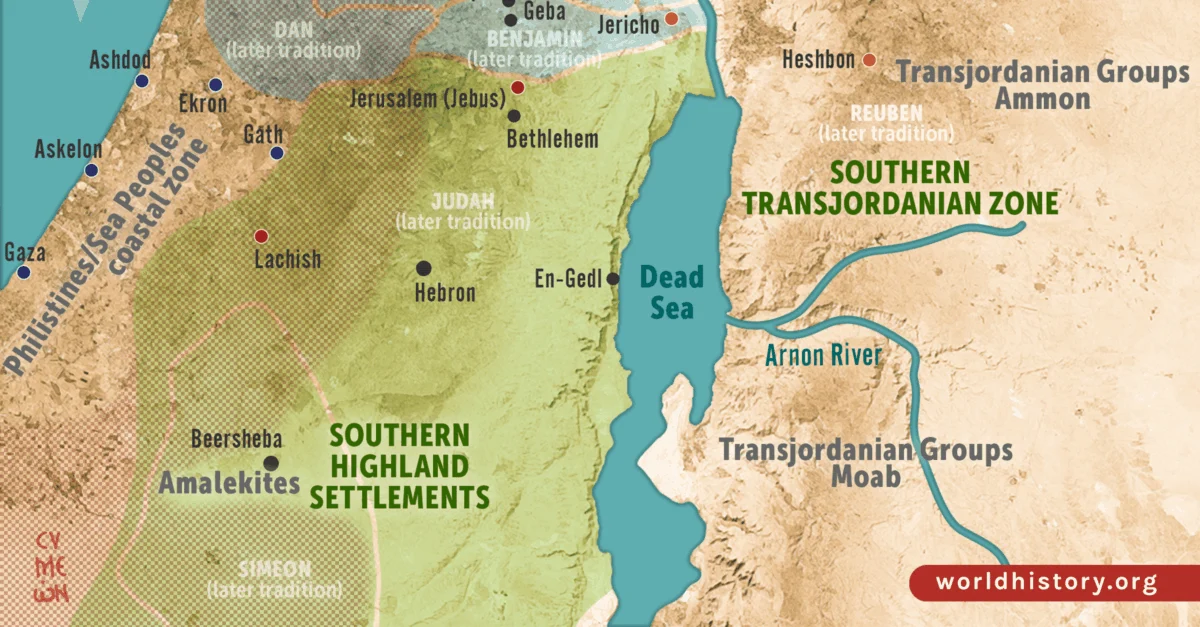
The land historically known as Palestine, a region of profound significance and enduring complexity, boasts a history stretching back tens of thousands of years. From its ancient identity as Canaan, a crossroads for early civilizations, to its modern designation as a deeply contested territory, this land has been a crucible of human settlement, cultural exchange, and persistent conflict. Its narrative is not a singular one, but a rich tapestry woven from the threads of countless peoples, empires, and belief systems, each leaving an indelible mark on its landscape and its legacy.
This article delves into the layered history of the region, exploring its evolving names, the diverse inhabitants who shaped its character, and the succession of powerful empires that vied for its control. Understanding this ancient past is crucial to comprehending the profound historical, cultural, and political dynamics that continue to define the region today.
Main Facts: An Ancient Nexus of Civilization and Conflict
The region we now refer to as Palestine was originally known as Canaan in ancient Mesopotamian texts and trade records dating back to the 18th century BCE. It was here that the foundational kingdoms of Israel and Judah emerged. The term "Palestine" itself is a later appellation, deriving from "Philistia," a name initially referring to a small southern coastal strip occupied by the Philistines. This name gained broader usage only from the 5th century BCE, notably in the writings of Herodotus, eventually supplanting "Canaan" in popular parlance.
Positioned strategically within the Fertile Crescent, a cradle of civilization, the land has witnessed continuous human habitation since before 10,000 BCE. It transitioned from nomadic hunter-gatherer societies to settled agricultural communities during the Early Bronze Age, flourishing through trade and becoming a prize sought by successive empires. Egyptian, Assyrian, Babylonian, Persian, Hellenistic, and Roman powers each asserted dominance, shaping the region’s demography, culture, and political structure. This long history of conquest and cultural overlay culminated in the Roman renaming of the province to Syria-Palaestina after the Bar-Kochba Revolt in the 2nd century CE, a punitive act that cemented the name "Palestine" in official usage. Subsequent Byzantine and Islamic rules further layered its identity, making it a pivotal site for Christianity and Islam, just as it had been for Judaism for millennia.
Chronology: A Tapestry of Empires and Peoples
The Dawn of Civilization: Pre-Bronze Age to Early Canaan (Pre-10,000 BCE – c. 2000 BCE)
The story of this land begins in the mists of prehistory. Archaeological evidence points to some of the earliest human settlements globally, with nomadic hunter-gatherer communities thriving here before 10,000 BCE. These early inhabitants, likely migrating from Mesopotamia, gradually transitioned to a sedentary agricultural lifestyle by the Early Bronze Age (c. 3300-2000 BCE). This period saw the establishment of permanent settlements and the burgeoning of farming communities. The region’s fertile lands and strategic position, nestled between the nascent urban centers of Mesopotamia, the Arabian Peninsula, and Egypt, quickly transformed it into a vital trading hub.
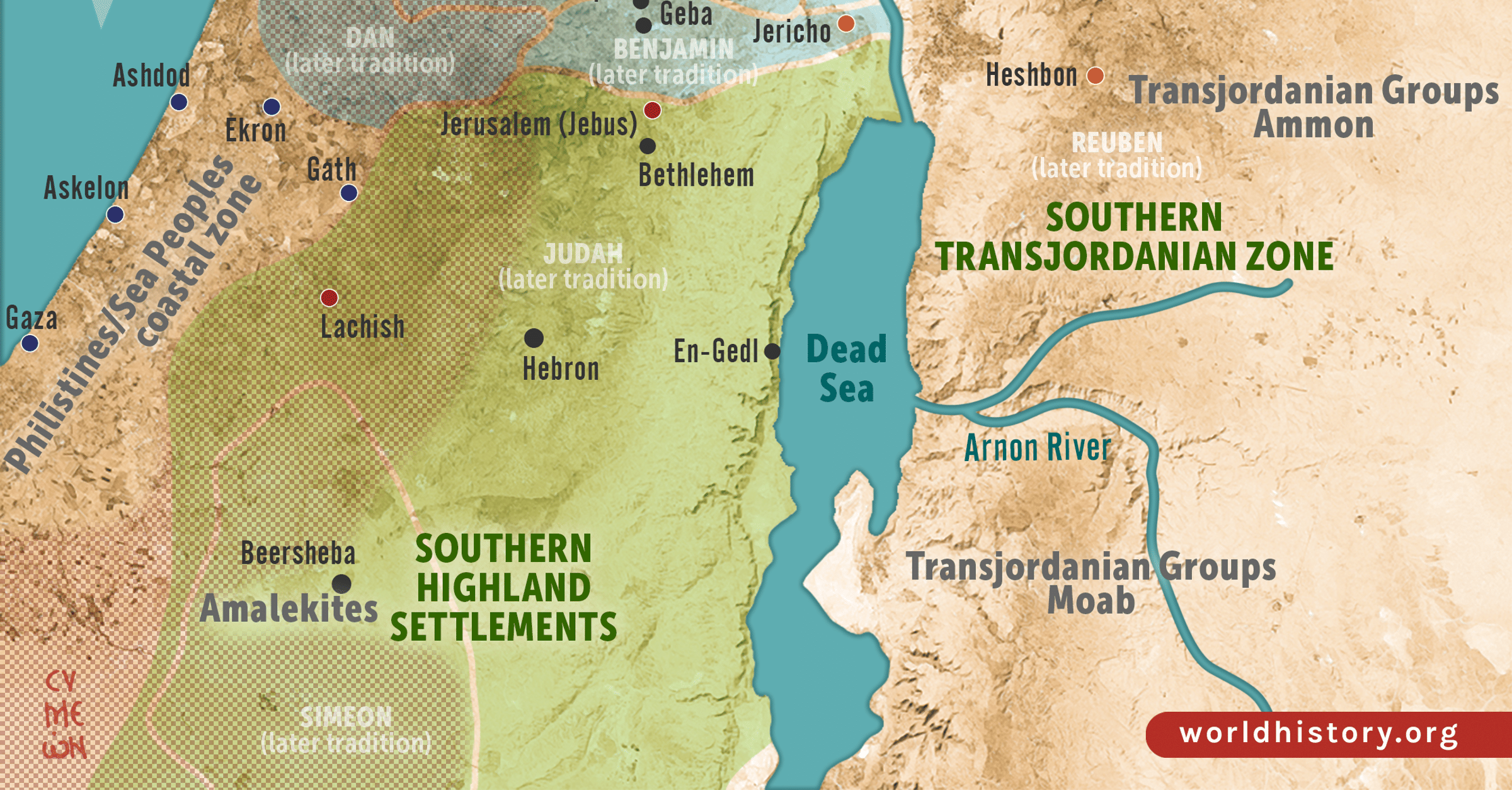
This growing affluence attracted the attention of powerful neighbors. Around 2300 BCE, Sargon the Great (reign 2334-2279 BCE) absorbed Canaan into his vast Akkadian Empire. This imperial integration spurred urbanization, leading to a flourishing period for the region’s cities. However, the fall of Akkad to the Gutians in 2154 BCE plunged the region into a period of de-urbanization, with populations returning to a more rural, agrarian existence, the exact reasons for which remain a subject of scholarly debate.
The Middle Bronze Age and Egyptian Hegemony (c. 2100 BCE – c. 1550 BCE)
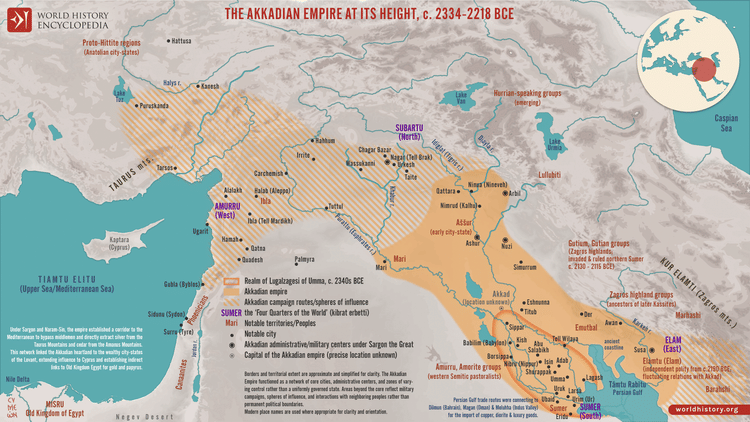
The Middle Bronze Age (c. 2100-1550 BCE) marked a resurgence of urbanization and an expansion of international trade. Byblos, a prominent port city, had already established commercial ties with Egypt as early as 4000 BCE. By 2000 BCE, Egypt had solidified its position as Canaan’s most influential trading partner, a relationship reflected in shared cultural practices, such as burial rituals, where grave goods in Canaanite tombs often mirrored Egyptian styles.
This period of prosperity was disrupted by the arrival of the Hyksos, a group of Semitic peoples, around 1725 BCE. Referred to in Egyptian inscriptions as "foreign kings," the Hyksos leveraged their presence in Canaan to establish a foothold in the delta region of Lower Egypt, eventually forming a significant political entity at Avaris. Their growing power enabled them to control trade, raise armies, and exert considerable influence over Lower Egypt, effectively ending the Egyptian Middle Kingdom.
The New Kingdom and the Bronze Age Collapse (c. 1570 BCE – c. 1150 BCE)
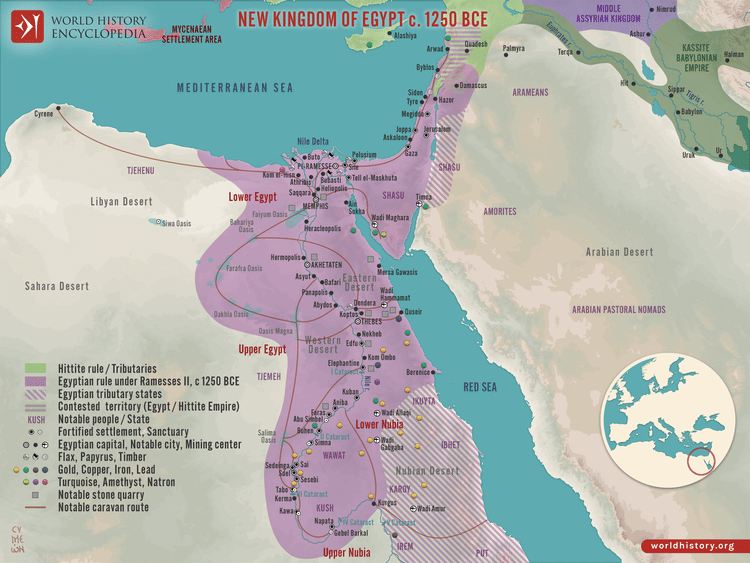
The Hyksos’ reign in Egypt ended dramatically with their expulsion by Ahmose I of Thebes in 1570 BCE. Ahmose’s victorious campaign pursued the Hyksos northward through Canaan into Syria, leaving a trail of devastation and scattered communities. Following this triumph, Ahmose I incorporated the region into the newly formed Egyptian Empire, also known as the New Kingdom (c. 1570-1069 BCE). This strategic move was designed to create a buffer zone, preventing future foreign incursions into Egypt, a policy expanded by subsequent pharaohs.
The New Kingdom era was a golden age for Canaan, benefiting from the patronage of illustrious pharaohs like Hatshepsut (reign 1479-1458 BCE), Thutmose III (reign 1458-1425 BCE), Amenhotep III (reign 1386-1353 BCE), and Ramesses the Great (reign 1279-1213 BCE). These rulers encouraged trade, invested in infrastructure, and maintained a relatively stable regional order. However, even during this period, internal disturbances like those caused by the Habiru – described as outlaws who rejected societal norms rather than foreign invaders – occasionally challenged the peace. Scholars today largely discredit earlier attempts to link the Habiru directly to the Hebrews, recognizing them as a broader socio-economic class.
The late Bronze Age, however, ushered in an era of unprecedented turmoil known as the Bronze Age Collapse (c. 1250-1150 BCE). This widespread cataclysm affected the entire Near East, and Canaan was no exception. During this period, a mysterious confederation known as the Sea Peoples emerged as a major disruptive force. They clashed with Egypt, notably during the reigns of Ramesses the Great, Merenptah (1213-1203 BCE), and Ramesses III (1186-1155 BCE), and wreaked havoc on the mighty Hittite Empire and across the Levant.
The Rise of Israel and the Philistines (c. 1250 BCE – c. 931 BCE)
Amidst the chaos of the Bronze Age Collapse, two significant groups emerged in Canaan: the Israelites and the Philistines. The biblical book of Joshua recounts an Israelite invasion and conquest of the land, followed by its division among their tribes. While archaeological evidence from around 1250-1200 BCE indeed shows widespread destruction in the region, modern scholarship suggests that the scale and nature of this upheaval might also be attributed to the Sea Peoples, making a neat alignment with the biblical narrative challenging.
The earliest extra-biblical mention of "Israel" appears on the Merenptah Stele (c. 1208 BCE), where the pharaoh boasts, "Israel is devastated, its seed is not." This inscription refers to Israel as a people or tribal group rather than a unified kingdom or city-state, suggesting their presence in Canaan during this tumultuous period. Following this period of upheaval, the Israelites firmly established themselves, leading to the formation of the Kingdom of Israel in the north around 1020 BCE. This united monarchy flourished under kings like Saul, David, and Solomon (reign 970-931 BCE) before splitting into the Kingdom of Israel (capital: Samaria) and the Kingdom of Judah (capital: Jerusalem) after Solomon’s death.
The Philistines, believed to have originated from the Aegean area, possibly Crete, arrived on Canaan’s southern Mediterranean coast around the 12th century BCE. They had been repulsed in their attempted invasion of Egypt by Ramesses III in 1175 BCE and subsequently settled along the coast, establishing a powerful confederation of five main cities: Ashdod, Ashkelon, Ekron, Gath, and Gaza. These highly organized and militarily capable people quickly asserted dominance over existing settlements and became the perennial adversaries of the early Israelite kingdoms, as extensively documented in the Bible. King Saul battled them, King David achieved significant victories, and they remained a formidable presence even during Solomon’s reign, constantly challenging Israelite control over the interior.
Imperial Succession: Assyrians, Babylonians, Persians, and Hellenists (c. 722 BCE – c. 63 BCE)
The relative autonomy of the Israelite and Philistine polities was short-lived as a new wave of imperial powers swept through the Near East. In 722 BCE, the Neo-Assyrian Empire, under its formidable rulers, invaded the region. The Kingdom of Israel was utterly destroyed, its population deported, and the Philistines were completely subdued, losing their autonomy. Assyrian king Sennacherib (reign 705-681 BCE) launched further campaigns, making the Kingdom of Judah a vassal state, though Jerusalem famously resisted his siege in 701 BCE.
The Assyrian grip on the region loosened with the fall of their empire in 612 BCE. This power vacuum was swiftly filled by the Neo-Babylonian Empire. In 598 BCE, the Babylonians, under Nebuchadnezzar II, invaded Judah, sacked Jerusalem, destroyed Solomon’s Temple, and initiated the "Babylonian Captivity," deporting much of the Jewish elite to Babylon. A subsequent invasion between 589 and 582 BCE completed the destruction of Judah and further scattered the Philistines, effectively ending their distinct historical presence.
Babylon’s ascendancy was brief, falling to Cyrus the Great (d. 530 BCE) and his Achaemenid Persian Empire in 539 BCE. Cyrus, famous for his enlightened policies, allowed the exiled Jews to return to their homeland and rebuild the Temple, ushering in a period of relative peace and a flourishing Jewish community under Persian suzerainty.
The Persian Empire, in turn, succumbed to the military genius of Alexander the Great in 330 BCE. Following Alexander’s premature death, his vast empire was divided among his generals, and the region of Palestine came under the control of the Seleucid dynasty. This Hellenistic period saw the strong influence of Greek culture, which eventually led to tensions with the Jewish population, culminating in the Maccabean Revolt around 168 BCE. This successful rebellion established the Hasmonean dynasty, an independent Judean kingdom that lasted for approximately a century, representing the last period of true Jewish sovereignty until modern times.
Roman Rule and the Renaming of the Land (63 BCE – 634 CE)
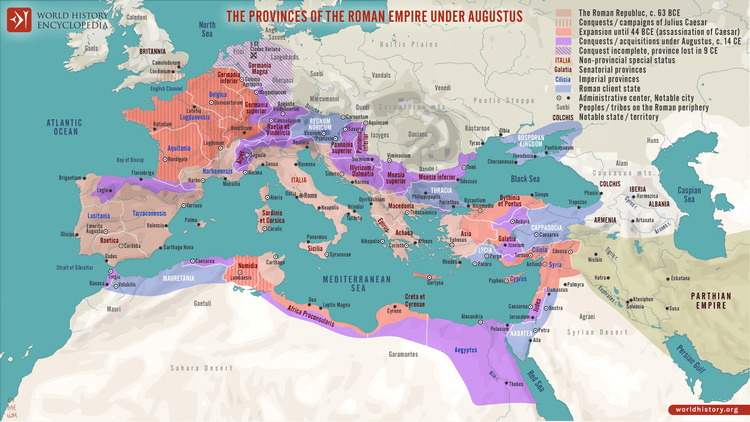
Rome’s shadow fell over the region in 63 BCE when Pompey the Great intervened in Hasmonean dynastic disputes, effectively ending their independence and incorporating Judea into the burgeoning Roman Republic. Under Emperor Augustus, the region formally became the Roman province of Judea around 31 BCE. Rome initially installed client kings, such as Herod the Great, but Roman rule, with its heavy taxation and foreign presence, was deeply resented by the local populace, particularly the Jews.
This resentment boiled over into a series of devastating conflicts known as the Jewish-Roman Wars. The First Jewish-Roman War (66-73/74 CE) saw the destruction of Jerusalem and the Second Temple by Titus in 70 CE, leaving only the Western Wall. This was followed by the Kitos War (115-117 CE). However, the most costly and impactful was the Bar-Kochba Revolt (132-136 CE). Emperor Hadrian, enraged by the persistent Jewish resistance and the immense casualties inflicted on both sides (over 500,000 Jewish combatants killed), enacted a punitive measure that would forever alter the region’s official identity. He renamed the province "Syria-Palaestina," deliberately choosing the names of two traditional enemies of the Jews – the Syrians and the Philistines – to eradicate Jewish ties to the land and punish their insurrection. He also banished Jews from Jerusalem, which he rebuilt as Aelia Capitolina. This act cemented the term "Palestine" in official Roman administration and gradually led to its broader adoption.
With the legalization and eventual establishment of Christianity as the state religion under Constantine the Great (reign 306-337 CE), Syria-Palaestina transformed into a crucial Christian province, becoming a focal point for the new faith and a destination for pilgrims. When the Western Roman Empire collapsed around 476 CE, the region remained under the control of the Eastern Roman, or Byzantine, Empire, which maintained its hold until the 7th century.
Islamic Conquest and the Crusades (634 CE – 1453 CE)
The 7th century witnessed another pivotal shift with the rise of Islam in Arabia. In 634 CE, Muslim armies swept through the Levant, conquering Syria-Palaestina from the Byzantines. The region was renamed Jund Filastin ("Military District of Palestine"), reflecting the new administrative and religious reality. For Muslims, the land held immense religious significance, particularly Jerusalem, which became a holy city alongside Mecca and Medina. Churches were often converted into mosques, echoing the earlier transformation of pagan temples into churches under Roman rule.
This Muslim control persisted for centuries, though it was violently contested during the period of the Crusades. Beginning with the First Crusade in 1096, European Christians, viewing the region as the "Holy Land," launched a series of military campaigns to reclaim it from Muslim rule. Supported by the Byzantine Empire, these Crusades, which continued through 1272, resulted in enormous loss of life and property but ultimately failed to establish lasting Christian dominion.
Supporting Data: Unpacking Names and Narratives
The evolution of the region’s name provides a compelling illustration of its layered history. Early Mesopotamian records from sites like Ebla and Mari consistently refer to the entire region as Canaan as far back as the 18th century BCE. The term "Palestine," however, is conspicuously absent from written records until the 5th century BCE, when it first appears in the Histories of the Greek historian Herodotus. His usage marked a turning point, as the term gradually gained currency and eventually superseded "Canaan" in broader geographical descriptions.
The etymology of "Palestine" itself is a subject of scholarly discussion, though there is broad consensus. While some theories suggest derivations from the word plesheth (meaning "root palash," an edible concoction carried by migratory tribes, symbolizing nomadic peoples) or even an ancient androgynous deity Pales, the most widely accepted origin links it directly to the Egyptian word Peleset or the Greek Philistia, both referring to the "Land of the Philistines." Scholars J. Maxwell Miller and John H. Hayes clearly articulate this: "Along the southern coastal plain of the Eastern Mediterranean seaboard…were settled the Philistines…during Classical Times the name ‘Philistia’ (‘Land of the Philistines’) came to be applied more generally to the whole southern end of the Eastern Mediterranean Seaboard…In short, then, the English term ‘Palestine’ derives ultimately from ‘Philistia’." This emphasizes how a geographically limited group’s name eventually became a metonym for the entire region.

The complex interplay between archaeological findings and historical texts is particularly evident in understanding the emergence of the Israelites. While the biblical narrative in the Book of Joshua describes a military conquest, archaeological evidence from the late Bronze Age Collapse period shows widespread destruction but does not always neatly corroborate a singular, swift Israelite invasion. The Merenptah Stele, the first non-biblical reference to "Israel," describes them as a defeated people rather than a settled kingdom, suggesting a more nuanced and gradual process of emergence amidst regional instability, possibly involving internal social shifts or integration with other groups, including the enigmatic Sea Peoples.
Official Responses: Imperial Decrees and Cultural Shifts
Throughout its history, the region has been profoundly shaped by the official policies and decrees of its various overlords. The Egyptian pharaohs, particularly during the New Kingdom, established it as a vital buffer zone, investing in its infrastructure and integrating it into their imperial administration. Later, Persian emperors like Cyrus the Great issued decrees allowing the return of exiled peoples, notably the Jews, and supporting the rebuilding of their Temple in Jerusalem, a policy that fostered a period of cultural and religious revival.
The Roman approach was characterized by direct governance and, at times, brutal suppression. The installation of client kings like Herod the Great was an attempt to manage local populations, but Roman tax levies and military presence fueled repeated revolts. The most significant "official response" was Emperor Hadrian’s renaming of Judea to Syria-Palaestina after the Bar-Kochba Revolt. This was not merely a change of name but a deliberate political act aimed at severing the Jewish people’s historical connection to their homeland and dissolving their national identity within the Roman framework. It was an official decree with profound and lasting cultural and political implications.
Following the Muslim conquest in 634 CE, the region was officially designated Jund Filastin, signaling its integration into the Islamic caliphate. This administrative change was accompanied by a shift in religious demographics and the establishment of new legal and social structures under Islamic law, leading to the construction of mosques and the veneration of sites sacred to Islam. These official responses, from renaming provinces to dictating religious freedoms and administrative structures, continuously redefined the identity and future of the land and its inhabitants.
Implications: An Enduring Legacy of Contention
The deep and layered history of Palestine has profound implications for understanding the present-day complexities and ongoing conflicts in the region. Each successive layer of inhabitants and conquerors – Canaanites, Israelites, Philistines, Egyptians, Assyrians, Babylonians, Persians, Greeks, Romans, Byzantines, Muslims, Crusaders, Ottomans, and eventually the British Mandate – has left behind not just archaeological remnants but also historical narratives, cultural legacies, and claims to the land that resonate powerfully in contemporary discourse.
The changing names of the region, from Canaan to Judea, Philistia, Syria-Palaestina, and Jund Filastin, reflect not just administrative shifts but also deliberate attempts by ruling powers to impose new identities and erase or diminish older ones. Hadrian’s renaming, in particular, illustrates how political power can manipulate historical memory, creating a contested legacy that persists today.
The ancient and medieval periods established the region as a unique nexus for three Abrahamic faiths: Judaism, Christianity, and Islam. Each faith developed deep historical and spiritual ties to the land, particularly to Jerusalem, leading to a constant interplay of shared veneration and exclusive claims. This religious dimension, woven throughout millennia of history, remains a central and often incendiary component of modern disputes.
The recurring theme of foreign occupation and local resistance, from the Israelite conflicts with the Philistines to the Jewish-Roman Wars and the Crusades, highlights a long-standing struggle for self-determination. The narratives of displacement, exile, and return, such as the Babylonian Captivity and the Roman expulsion of Jews, have become foundational elements of identity for various groups.
Ultimately, the complex historical narrative culminates in the 20th century, following the collapse of the Ottoman Empire and the British Mandate, with the United Nations’ declaration of the State of Israel in 1947-1948. This decision, intended to establish a homeland for the Jewish people after centuries of persecution, drew directly upon ancient historical claims but was implemented in a region with an existing Arab majority population, triggering immediate and ongoing conflict.
The present-day controversies surrounding the land are therefore not merely contemporary political struggles but deeply rooted in a history of successive conquests, diverse populations, shifting identities, and competing claims to heritage and sovereignty. The echoes of Canaan, Israel, Judah, Philistia, and Roman Palestine continue to shape the collective memory and aspirations of those who call this ancient land home, ensuring that its past remains inextricably linked to its troubled present and uncertain future.



Leave a Comment