
A Millennia Unveiled: Rethinking the "Dark Ages" Through a 20-Minute Lens
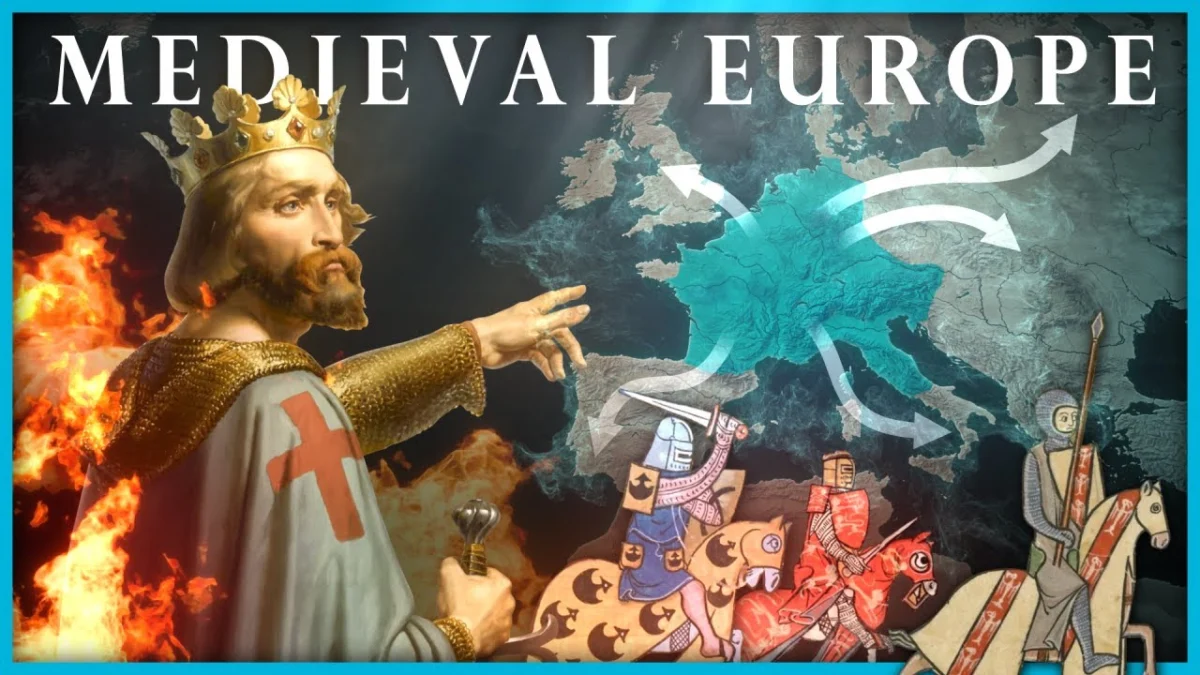
May 6th, 2026 – The historical period often shrouded in the pejorative label of "Dark Ages" is undergoing a significant re-evaluation, challenging long-held perceptions of decline and stagnation. While acknowledging the profound societal shifts and challenges that marked the transition from the Roman Empire, a compelling new resource is offering a condensed yet comprehensive overview of this pivotal era in European history. A recent YouTube video, produced by "How So," condenses a millennium of medieval European history into a mere twenty minutes, providing an accessible entry point for understanding the period’s complexities and its enduring legacy.
The Shadow of Decline: Initial Perceptions of the Medieval Era
Historically, the period following the fall of the Western Roman Empire has been characterized as a regression. Medievalists themselves often express reservations about the term "Dark Ages," finding it an oversimplification that overlooks the dynamism and innovation within the era. However, comparisons with the preceding Roman Empire and the subsequent Renaissance often fuel this perception.
As the 4th century dawned, Europe found itself in a state of considerable upheaval. The narrator of the "How So" video highlights the stark realities of this transition: "The great cities of antiquity were depopulated, some left in ruins." This was not merely a demographic shift; it signaled a broader systemic collapse. The intricate Roman transportation network, the backbone of communication and long-distance trade, began to decay. The disappearance of coinage meant the erosion of a stable economic system capable of supporting professional armies and large-scale endeavors. Literacy rates plummeted, crippling administrative capacities. Most critically, the pervasive sense of peace and security that had characterized the Pax Romana vanished, replaced by fragmentation and uncertainty. This initial depiction paints a grim picture, one that has historically contributed to the "dark" moniker.
A Millennium of Transformation: Key Epochs and Events
Despite the initial challenges, the millennium that followed was far from a void. The "How So" video meticulously charts the course of European development through a series of pivotal events and transformations. This period, often characterized by its perceived lack of grand intellectual output, was in fact a crucible of cultural, political, and religious evolution.
H2: The Shifting Tides of Power and Faith
The early medieval period witnessed significant geopolitical realignments. Justinian I’s ambitious efforts to reclaim lost territories and expand the Byzantine Empire in the East represented a significant attempt to preserve Roman traditions and influence. Simultaneously, the emergence and rapid expansion of the Islamic caliphate across North Africa, the Middle East, and into parts of Europe fundamentally altered the religious and political landscape. This era was marked by both conflict and cultural exchange between these burgeoning powers.
H3: The Carolingian Renaissance and the Dawn of New Kingdoms
A crucial turning point arrived with Charlemagne, whose unification of much of Western Christendom under the Carolingian Empire ushered in a period often referred to as the "Carolingian Renaissance." This era saw a renewed interest in classical learning and a significant effort to standardize administration and education. However, this newfound stability was soon challenged by a new wave of invasions. Vikings from the north, Magyars from the east, and Muslim raiders from the south tested the resilience of European societies, forcing them to adapt and fortify.
H2: The Rise of Fortifications and Feudalism
In response to these external threats, a distinct architectural and social system began to take shape: the castle. These formidable structures became the symbols of a decentralized power structure, giving rise to the feudal system. The video highlights the rise of castles and the feudal system as defining elements of medieval society, illustrating how land ownership and military service became intrinsically linked. This system, while often perceived as rigid, provided a framework for defense and governance in a fragmented continent.
H3: Intellectual Flourishing and Imperial Ambitions
The High Middle Ages, roughly from the 11th to the 13th centuries, witnessed a significant resurgence of intellectual life. The establishment of universities across Europe marked a profound commitment to higher learning, fostering theological debate, legal scholarship, and the early development of scientific inquiry. The creation of the Holy Roman Empire, though often a complex and contested entity, represented a continuation of imperial aspirations and a struggle for overarching authority.
H2: Defining Moments: Conquest and Catastrophe
The Norman Conquest of England in 1066, famously depicted on the Bayeux Tapestry, stands as a watershed moment, demonstrating the continent’s interconnectedness and the impact of military innovation. This period was not without its profound tragedies. The Black Death, which swept across Europe from the mid-14th to the early 16th centuries, stands as one of history’s most devastating pandemics.
The Seeds of Rebirth: The Plague and Societal Reconfiguration
The devastating impact of the Black Death, which claimed an estimated 25-50% of Europe’s population, is often viewed as a catastrophic end. However, the video posits that even this immense tragedy contained the seeds of societal rebirth. The narrator observes, "For some survivors, the consequences of the plague were not so grim. As the population dropped, land became widely available, and the demand for labor rose dramatically."
This demographic shift fundamentally altered the social and economic fabric of Europe. Peasants, now in higher demand, were empowered to demand better working conditions and wages. Revolts against oppressive rulers became more frequent, and ultimately, many laborers gained new freedoms and opportunities. This newfound agency fostered an environment where creativity and innovation in science and culture could flourish. It was within this context that European scholars, looking back at the preceding millennium, began to define it as the "Dark Ages," thereby positioning themselves as the bridge between a perceived past of obscurity and a burgeoning modern world.
Supporting Data and Scholarly Perspectives
The video’s condensed narrative draws upon a wealth of historical scholarship. The decline of Roman infrastructure, the fragmentation of political power, and the challenges to established trade routes are well-documented. Historians like Peter Brown have emphasized the continuities and transformations within the late antique and early medieval periods, moving beyond a simple narrative of decline. Scholars such as Chris Wickham have meticulously analyzed the economic and social structures of the period, revealing a complex and evolving society rather than a static one.
The rise of monasticism, the development of intricate legal systems, and the flourishing of artistic traditions, from illuminated manuscripts to Romanesque and Gothic architecture, all stand as testaments to the intellectual and creative energy of the medieval period. The establishment of universities, such as Bologna, Paris, and Oxford, demonstrates a commitment to organized learning that laid the groundwork for future scientific and philosophical advancements.
Official Responses and the Ongoing Dialogue
The "How So" video, by presenting a dynamic overview of a millennium of history, implicitly responds to the ongoing scholarly debate about the "Dark Ages." It offers a visually engaging and accessible format that can democratize historical understanding, making complex narratives available to a wider audience. The video’s approach suggests a shift away from a purely Eurocentric and triumphalist view of history, acknowledging both the challenges and the remarkable achievements of the medieval era.
The existence of such resources also reflects a broader trend in historical education, which increasingly seeks to engage audiences through multimedia platforms. The video’s success in condensing such a vast period into a digestible format underscores the growing demand for concise yet informative historical content.
Implications for Understanding the Present and Future
The video’s concluding remarks draw a parallel between the decline of the Roman Empire and potential contemporary societal challenges. The assertion that "some liken the current state of the world to the decline of the Roman Empire" is a provocative one, suggesting that historical cycles might offer insights into our present circumstances. If such parallels hold true, the video implies that, much like the medieval period that followed Rome’s fall, humanity may be on the cusp of another period of profound transformation and, perhaps, a future "Renaissance."
The journey through a thousand years of medieval European history, compressed into twenty minutes, is more than just an academic exercise. It is an invitation to re-evaluate our understanding of the past, to recognize the resilience and ingenuity of human societies in the face of adversity, and to consider the long arc of history as a continuous process of change, challenge, and eventual rebirth. The "Dark Ages," when viewed through this lens, emerge not as a period of utter darkness, but as a complex and vital epoch that profoundly shaped the world we inhabit today.
Related Content:
- A Free Yale Course on Medieval History: 700 Years in 22 Lectures
- What Did People Eat in Medieval Times? A Video Series and New Cookbook Explain
- How Everything in a Medieval Castle Worked, from Its Moats to Its Dungeons
- What Sex Was Like in Medieval Times?: Historians Look at How People Got It On in the Dark Ages
- How the Byzantine Empire Rose, Fell, and Created the Glorious Hagia Sophia: A History in Ten Animated Minutes
- Advice for Time Traveling to Medieval Europe: How to Stay Healthy & Safe, and Avoiding Charges of Witchcraft


Leave a Comment