
A Seismic Shift: Reform UK’s Triumph and the Global Cultural Realignment
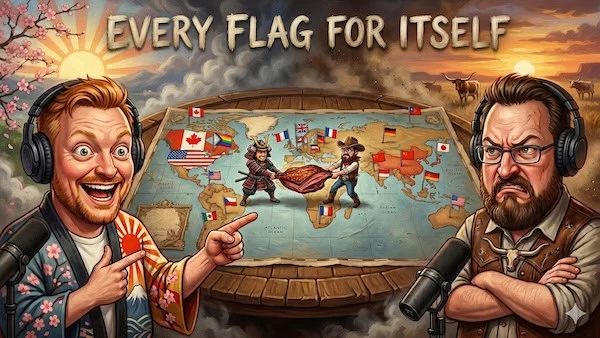
London, UK – May 8, 2026 – A political earthquake has reshaped the landscape of British democracy, with Reform UK achieving unprecedented gains in local council elections across England, Scotland, and Wales, held yesterday, May 7th. The results, which also included polls for the Scottish Parliament and the Welsh Senedd, signal a dramatic decline for the traditional Labour Party, which has lost hundreds of seats and relinquished control of numerous councils. This seismic shift mirrors a broader global trend of cultural realignment, as voters increasingly prioritize national identity and local culture over established political orthodoxies.
The Day of Reckoning: A Sweeping Victory for Reform UK
The most striking outcome of the May 7th elections is the meteoric rise of Reform UK. The party, which has positioned itself as a staunch advocate for national sovereignty and a critique of prevailing globalist agendas, secured a staggering 873 additional council seats, bringing their total to 936. This surge in support has propelled Reform UK to control seven local authorities, including significant victories in Sunderland, Havering, Essex, Suffolk, Thurrock, and Wakefield. Their triumph in these areas, particularly in the North East with Sunderland, represents a historic recalibration of the political map.
In stark contrast, the Labour Party experienced a devastating setback, losing a net of 595 seats. Their control has dwindled to just 22 councils, surrendering long-held "heartland" authorities such as Tameside, Hartlepool, Wigan, Birmingham, and critically, Sunderland, which was also captured by Reform UK. The Conservative Party, often referred to as the Tories, also suffered significant losses, shedding a net of 303 seats and losing control of councils including Essex, Suffolk, and Hampshire. While the Liberal Democrats and Green Party managed to gain seats in targeted constituencies, their progress was overshadowed by the dramatic ascendant of Reform UK.
National equivalent vote share, as analyzed by Sky News, paints a stark picture: Reform UK commanded 27% of the vote, followed by the Conservatives at 20%, and Labour at a mere 15%. This represents a fundamental fragmentation of the traditional two-party system in the UK, drawing parallels to a hypothetical scenario where the Democratic and Republican parties in the United States were to be supplanted by new political forces.
A Historic Defeat in Wales and the Echoes from Japan
The electoral disarray extended to Wales, where the Labour Party suffered a defeat of historic proportions. For the first time in over a century, Labour has been relegated to third place in the Welsh Senedd elections, securing only 10 seats. The personal toll was significant, with First Minister Eluned Morgan losing her own seat, a symbolic blow to a party long dominant in Welsh politics.
These developments in the UK are not isolated incidents but appear to be part of a larger global narrative. Just weeks prior, on February 8, 2026, Japanese voters delivered a resounding mandate to Prime Minister Sanae Takaichi and her Liberal Democratic Party (LDP). The LDP secured an astonishing 316 out of 465 seats, a post-war record for a single party achieving a two-thirds supermajority. Takaichi’s platform, centered on national pride, constitutional reform for enhanced self-defense, a more assertive stance on China and immigration, and an "Japan First" economic policy, resonated deeply with the electorate, signaling a powerful wave of nationalist sentiment.
A Global Cultural Realignment: The Shifting Sands of Identity
The electoral outcomes in the UK and Japan are potent indicators of a profound global cultural realignment. In the United Kingdom, Reform UK is demonstrably supplanting the traditional Conservative Party as the primary voice for national sovereignty. Simultaneously, in Labour’s former strongholds, the rise of Green and Muslim independent candidates suggests a fragmentation of the old consensus, with both established parties losing ground to forces that champion distinct cultural and identity-based platforms.
This pattern is mirrored in Germany, where the Alternative for Germany (AfD) has surged in popularity, challenging the Green Party, often perceived as the vanguard of globalist priorities concerning climate, migration, and supranational governance. The United States, too, exhibits this trend, albeit with its own distinct characteristics. On the left, figures like Democratic Socialist Zohran Mamdani, who recently secured the New York City mayoralty in a stunning upset, represent a more radical, internationalist vision that is displacing traditional Democrats. On the right, the MAGA movement has decisively overtaken the old-guard Republican establishment with an unapologetically "America First" agenda.
At its core, this phenomenon is not primarily an economic struggle, but a profound cultural contest. The central ideological divide appears to be between those who advocate for a homogenized, borderless global monoculture, often framed through the lens of progressive diversity initiatives, and those who champion the preservation and assertion of distinct regional and national cultures. Nationalists, in this context, advocate for specific cultural identities – Japanese for Japan, Welsh for Wales, Texan for Texas. The explosive nature of this debate is often ignited by immigration, which becomes the focal point for the clash between the globalist ideal of "diversity is our strength" and the nationalist concern over cultural dilution.
The new political forces, such as Reform UK, the AfD, and the MAGA movement, are not merely opposing illegal immigration; they are often advocating for a significant reduction, or even cessation, of all immigration. These sentiments are gaining traction within center-right political factions, while more extreme parties are emerging with even more radical proposals, such as the expulsion of existing immigrant populations.
Deconstructing the "Baffling": A Cultural Lens on Modern Phenomena
This cultural war provides a framework for understanding phenomena that might otherwise appear perplexing. The "Gays for Palestine" movement, for instance, can be interpreted not necessarily as an endorsement of Hamas rule, but as a tactical utilization of non-Western groups to challenge prevailing local majority cultures. Similarly, the recent convergence of Japanese and American nationalists on platforms like X (formerly Twitter) can be attributed to a shared visceral rejection of what they term "gay communism" and the perceived deliberate dilution of their respective cultures.
The bonding between self-described racists in America and Japan, as described in some analyses, represents a shift from older forms of racism based on racial superiority to a new iteration focused on a preference for specific cultural identities over a homogenized global culture. Even Hollywood’s casting decisions, such as the absence of Greek actors in prominent roles in Christopher Nolan’s upcoming "The Odyssey," can be seen through this lens as "cultural erasure dressed up as ‘inclusivity’."

From Tokyo to Cardiff, Berlin to New York, voters are increasingly choosing the symbols and identities of their heritage over the homogenizing influence of a perceived "global village." The battle is undeniably cultural, immigration is the potent catalyst, and the pattern is becoming increasingly unmistakable.
Implications for Storytelling and Cultural Representation
This seismic shift in political and cultural sentiment has profound implications for narrative and storytelling. The traditional trope of a diverse band of heroes confronting a monolithic empire, once a resonant theme, may no longer hold the same sway with audiences. The concept of diversity itself is being re-evaluated; in this new paradigm, it is increasingly perceived by some as a tool of a "globalist empire" to dismantle distinct regional and national cultures, rather than a force for liberation. The narrative of diversity as the agent of the Death Star, rather than its destroyer, is gaining traction among certain segments of the population.
The burgeoning political movements, such as MAGA in the US, Reform UK in the UK, and the AfD in Germany, represent a significantly underserved audience in the cultural landscape. The creation of content that authentically reflects and champions their specific cultural identities and nationalistic sentiments presents a significant opportunity for cultural creators. The success of an AI-generated "God-and-country, guns-and-Bibles" influencer from India, who garnered thousands of dollars by tapping into this demand, underscores the unmet need for content that boldly expresses local cultures in opposition to global homogenization.
Writers and creators are encouraged to embrace their specific cultural contexts. As articulated by some commentators, the advice is to "speak to your culture." For American creators, this might mean adopting an "America First" ethos, even if not explicitly aligned with MAGA, to resonate with a large and engaged audience. Going further, focusing on specific regional cultures within the United States, such as Texan or Appalachian identity, could tap into a deep-seated longing for representation in fiction that has historically been absent.
The concept of a "Timothy," an ideal reader embodying specific cultural values and perspectives, becomes crucial for targeted storytelling. By understanding this specific reader, creators can craft narratives that resonate deeply, fostering a sense of belonging and representation. This approach allows for the creation of content that speaks directly to a culture, whether it be the tribal strength found in hockey romance novels, the military life of Marines, or the burgeoning separatist sentiments in regions like Alberta, Canada.
The Alberta Movement: A Canadian Separatist Undercurrent
In Canada, the anti-globalist sentiment is manifesting as a growing separatist movement, particularly in Alberta. The province has garnered sufficient signatures to trigger a vote on secession from Canada. Alberta shares a greater cultural affinity with regions like Texas than with cosmopolitan centers like Toronto. The province contributes significantly to the national economy, with many feeling that these contributions are not adequately reciprocated. While seeking closer economic ties with the United States, particularly concerning energy pipelines, Albertans are asserting a desire for self-determination, distinct from Canadian federal policy and what they perceive as the globalist leanings of Toronto and broader Canadian culture.
Canada’s challenge lies in its inherent cultural fragmentation. Quebec has long maintained a distinct identity and separatist aspirations. Major Canadian cities often find themselves culturally closer to their American counterparts than to other Canadian urban centers. The nation has struggled to develop a cohesive national cuisine, a marker of a strong cultural identity, with dishes like poutine being singular rather than indicative of a broader culinary tradition. In contrast, Texas boasts Tex-Mex, a vibrant cuisine born from a unique blend of Mexican and German influences, representing a distinct cultural synthesis.
The Longing for Belonging: Tribes, Hockey Romance, and Cultural Identity
The burgeoning popularity of hockey romance novels, as highlighted by recent industry reports, can be seen as a manifestation of a deeper societal need for belonging. The inherent tribalism of sports teams, particularly hockey with its strong team identity, offers a quasi-nationalistic and tribal strength. Readers are drawn to narratives that immerse them in strong, defined cultures, offering either a clash or a melding of identities.
This yearning for a "tribe" is interpreted by some as a direct response to the isolating effects of a globally homogenized culture. The desire for a community of like-minded individuals who offer acceptance and camaraderie is a powerful human need, finding expression in various forms, from sports teams to book clubs.
Official Responses and the Path Forward
As of the immediate aftermath of the elections, official responses from the major parties have been subdued, reflecting the shock of the results. Labour leadership is reportedly in crisis talks, grappling with the magnitude of their losses and the lack of clear successors. The Conservative Party faces an internal reckoning, attempting to understand how they ceded so much ground to Reform UK.
Reform UK, buoyed by their unprecedented success, has called for a fundamental re-evaluation of British policy, particularly concerning immigration, trade, and national sovereignty. Their leaders have indicated a desire to engage with the public on these core issues, promising to represent a voice that has been historically marginalized.
The implications of these results are far-reaching. The traditional political establishment faces a stark challenge to adapt to a public increasingly driven by cultural identity and national sentiment. The media landscape will also likely shift, with a greater demand for content that reflects these evolving cultural priorities. The global trend of cultural realignment, evidenced by these elections, suggests that the coming years will be defined by a renewed focus on national identity, cultural preservation, and the complex interplay between local traditions and global influences. The political and cultural landscape has been irrevocably altered, and the long-term consequences of this seismic shift are only beginning to unfold.




Leave a Comment