A Timeless Tapestry: ‘The Treasury of Folklore’ Unveils a Unified Vision of Global Myth
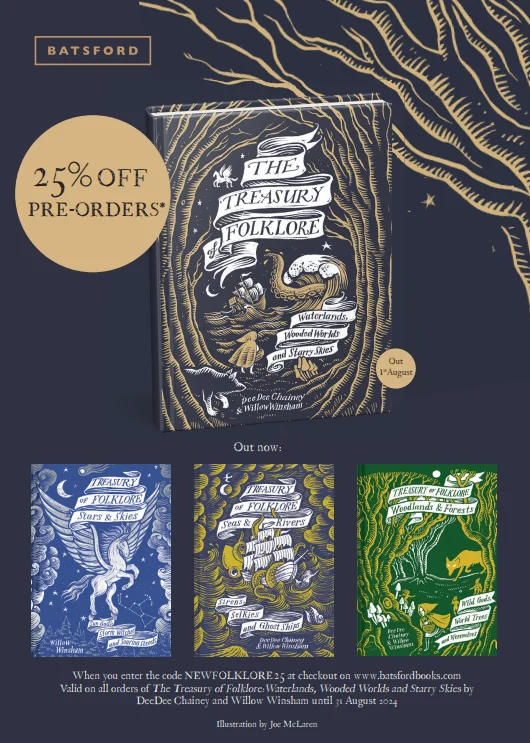
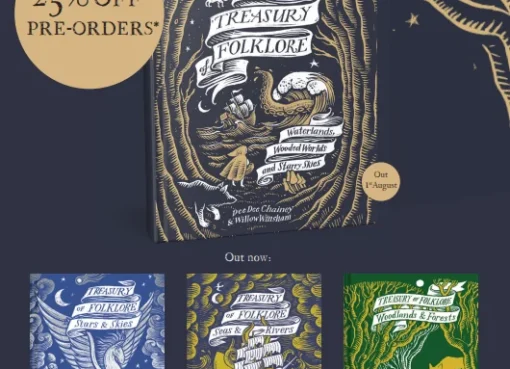
LONDON, UK – July 22, 2024 – Nearly a decade after its initial conception, the acclaimed Treasury of Folklore series culminates in a magnificent single-volume compendium, The Treasury of Folklore: Waterlands, Wooded Worlds and Starry Skies. Set for release on August 1, 2024, this ambitious publication brings together the most cherished tales, customs, and beliefs from the three original bestselling books – Seas and Rivers, Trees and Woodlands, and Stars and Skies – into one "hefty tome" designed to enchant and enlighten.
The journey to this unified volume began with a profound desire to understand the intricate ways humans connect with their physical landscapes through stories. What started as an initial vision for a single, all-encompassing book quickly revealed a wealth of material far too vast for one cover, leading to the creation of the popular three-part series. Now, through a meticulous curation process, authors Dee Dee Chainey and Willow Winsham, alongside illustrator Joe McLaren, have realized their foundational dream, offering readers a comprehensive and beautifully presented exploration of our shared human narrative.
Chronology: From Scattered Threads to a Unified Tapestry
The genesis of The Treasury of Folklore series dates back nearly a decade, born from a burgeoning fascination with popular folklore. The authors were particularly inspired by the vibrant, global outpouring of stories and shared experiences facilitated by the #FolkloreThursday hashtag, recognizing in it a powerful testament to the enduring human need for narrative. This digital movement underscored a universal truth: despite geographical and cultural divides, humans across the globe share fundamental fears, dreams, and a profound connection to the natural world.
Their initial ambition was grand: a single volume that would traverse every type of physical landscape inhabited by humans worldwide, cataloguing the customs, beliefs, and tales born from these environments. However, as they delved deeper into their research, the sheer volume and richness of the material became apparent. The project organically expanded, necessitating a division into three distinct, yet interconnected, books. This led to the successful publication of Seas and Rivers, exploring the myths of aquatic realms; Trees and Woodlands, delving into the mysteries of forests and groves; and Stars and Skies, gazing upwards to the celestial narratives that have captivated humanity since time immemorial.
The reception to these individual volumes was, as the authors describe, "surprising and heartwarming." The books resonated deeply with a diverse readership, affirming the universal appeal of folklore and validating the authors’ initial premise about our shared humanity. The popularity of the series eventually sparked a new idea: to revisit the original vision and compile the most beloved and representative folklore from the three books into a single, special edition.
This undertaking was no small feat. It involved considerable work behind the scenes, with the authors revisiting their own words with fresh eyes, carefully selecting which tales and insights would best serve the overarching narrative of a unified compendium. The goal was to create a cohesive volume that seamlessly spanned shared landscapes across time and place, distilling the essence of the series into a definitive collection. The end result, a "hefty tome" combining the best of the series, has left the creators "blown away" and "utterly thrilled" to share it with the public.
Supporting Data and Thematic Deep Dive: The Enduring Resonance of Folklore
At its heart, The Treasury of Folklore champions the idea that folklore is more than just quaint stories; it is a fundamental language of humanity, reflecting our deepest anxieties and loftiest aspirations. The authors’ initial search for understanding revealed that, beneath the surface variations of dress, custom, and the names we give our mythical beings, we are all "inherently the same." We share primal fears of the unknown, manifest in the darkness of the nighttime forest or the depths of the ocean. We share universal dreams of discovery, longing for the "treasures and pleasures that the wide world around us can offer." And we share a profound awe for the "eternity of time under the glimmer of ancient stars," prompting contemplation on the unwritten future of our own fleeting lives.

This compendium, while containing no new material, is a meticulously curated journey through these shared human experiences, brought to life by Joe McLaren’s wonderful original illustrations. The book is thoughtfully split into three sections, each drawing extracts from the original trio of books, offering a cohesive narrative that underscores the interconnectedness of global myths.
Water Horses: Guardians and Deceivers of the Deep
The allure and terror of water have inspired countless myths, and among the most captivating are the water horses – majestic yet malevolent creatures lurking beneath lakes and rivers. These beings personify the dangers of the unknown depths and serve as cautionary tales, reminding humans of the power of nature.
The Scottish Kelpie, arguably the most famous water horse, is often used interchangeably with the broader term, but distinct. While kelpies frequent rivers, other water horses like the each-uisge inhabit the expansive lochs and lakes. Both share a sinister purpose: luring unwary travellers onto their backs before dragging them to a watery demise. Yet, folklore also offers glimmers of control. Tales suggest a kelpie could be temporarily tamed with a bridle marked with a cross, forced into labour before inevitably returning to its watery abode, sometimes with its rider still attached. The ultimate defeat, as with many folkloric creatures, often involves red-hot iron, a powerful symbol of human ingenuity against supernatural forces. The enduring power of the kelpie myth is strikingly visible in the modern landscape, with Andy Scott’s colossal 30-meter-tall Kelpies sculptures near Falkirk standing as a testament to its hold on the Scottish imagination. Its presence in contemporary literature, from Lari Don to J.K. Rowling’s Fantastic Beasts and Where to Find Them, further solidifies its place in popular culture. Interestingly, the article notes a curious absence of such creatures in English folklore, a stark contrast to its Celtic neighbours.
This deficit is spectacularly redressed in Wales with the Ceffyl Dwr. A staple of Welsh belief into the 19th century, this water horse exhibited regional variations. In the north, it was a shapeshifting spirit, prone to violence. In the south, it consistently appeared as a small, enchanting horse, luring victims to their doom through impossible speed and sudden disappearances. A fascinating detail highlights a unique exception for clergymen of any creed, who could ride the Ceffyl Dwr unscathed, while their accompanying deacons or clerks were often less fortunate. This narrative element provides a glimpse into the societal values and religious beliefs woven into these tales.
Across the North Sea, Scandinavian folklore presents the bäckahäst, or "brook horse." Often seen in the fog, this luminous and majestic creature similarly entices riders, plunging them into the water where they are unable to dismount. Many bäckahäst tales feature children as victims, perhaps to heighten the sense of peril or underscore the vulnerability of innocence. A popular story tells of boys playing near a frozen river, saved from the horse’s grasp when the last child mispronounces a rhyming phrase as "Jesus Christ," causing the creature to vanish due to its aversion to the sacred name. These stories, while perilous, often conclude with the riders surviving, and like the kelpie, the bäckahäst could sometimes be tricked into servitude.
Lords of the Wild: Nature’s Untamed Sovereigns
Venturing into the "verdant greenery of the forest," we encounter the domain of the Lords of the Wild – powerful spirits and creatures that embody the untamed essence of nature. These figures range from benevolent protectors to malevolent tricksters, reflecting humanity’s complex relationship with the wilderness: a source of both sustenance and danger.
In Finnish mythology, Tapio, also known as Metsähine or Hiisi, reigns as the king of the forest realm. He is depicted as tall and thin, cloaked in ermine fur or moss, with a mossy beard and bushy eyebrows, often resembling the Green Man figures of Europe. Uniquely, he is said to appear fully human from the front but possess the back of a gnarled tree, symbolizing his intrinsic connection to the forest. Tapio is both the personification and protector of the woods, and historically, hunters would seek his blessing, pledging respect for the land and its creatures to ensure a successful hunt. He commanded all forest creatures, capable of granting plentiful hauls or cursing hunters with empty hands. His family includes his wife, Mielikki (benevolent) or Kuurikki (malevolent), and their children, Nyrikki, who guides hunters, and Tulikki, who directs prey. The Estonian equivalent shares similar traits, though with the singular eye reminiscent of the Norse god Odin.

The Slavic Leshy (or leshii, lyeshy) is a formidable tutelary spirit of the woods, a protector of trees and animals, particularly wolves and bears in some regions. Like bears, the leshy hibernates, disappearing in winter. Known by many names, always linking him to the forest, he is often compared to Greek satyrs, sporting horns, claws, and a beard described as forest green or entirely moss-covered. A master shapeshifter, the leshy can alter its size and form at will, appearing taller than a tree or as small as a blade of grass, or disguising itself as any forest inhabitant. When in human form, tell-tale signs include a lack of eyelashes or brows, shoes worn on the wrong feet, or clothing wrapped in an unusual manner. Some possess only one eye, all are covered in wild hair, and many have cloven feet, linking them to fauns or even the Devil. Their bellowing can whip up winds, sending creatures fleeing, and their shrieking laughter, clapping, or howling serves as a warning to intruders. Those who disregard these warnings often find themselves lost in the wilds, confused and disoriented by the leshy’s trickery.
Leshies are notorious tricksters, capable of mimicking voices to lure victims, sometimes tickling them to death. They can also sound like creaking branches or rustling leaves, further disorienting travelers. They inflict illness, abduct women for marriage, and steal children cursed by their parents or found wandering. Farmers in the Olonetsky District of Russia even sacrificed cows annually to appease leshies, who were known to curse entire farms and drain milk from herds. To ensure safety, offerings of bread or tobacco could be left, or a prayer said before entering the forest. Intriguingly, like many fae folk, leshies can be thwarted by turning clothing inside out or wearing shoes on the wrong feet, actions said to make them laugh and return the lost to their rightful path. Swearing at them remorselessly or making the sign of the cross are other methods of banishment. For those daring enough to summon a leshy, the method involves cutting young birch trees, arranging them in a circle with tops touching, standing in the centre without Christian symbols, and calling out to the "grandfather of the forest." Leshies are also depicted with surprisingly human traits, living alone or with their lesovikha wives and children, engaging in battles with clubs, frequenting taverns (one from Vologda District reportedly guzzled a bucket of vodka), and notoriously gambling with squirrels or playing cards (excluding clubs, due to their resemblance to the Christian cross).
The Hare on the Moon: Celestial Narratives of Sacrifice and Fate
Finally, our gaze turns skyward to the moon, a celestial body whose surface has inspired myriad interpretations and tales across cultures. A common and endearing motif is that of a rabbit or hare living on the moon, its features often discerned in the lunar mare – the Sea of Tranquillity as its head, the seas of Fertility and Nectar as its ears.
One of the most profound stories comes from the Buddhist Sasa-Jātaka, where a benevolent hare, along with his friends (an otter, jackal, and monkey), vows to offer alms to beggars on a fast day. To test their sincerity, the deity Sakka (ruler of Trāyastriṃśa heaven and a protector of Buddhism) descends disguised as an old man, asking for food. While his companions readily offer their catches, the hare, having only grass, knows it would be an unsuitable offering. In an ultimate act of self-sacrifice, the hare offers himself to be eaten, leaping into a fire. Sakka, moved by this faithfulness, saves the hare and sets his image upon the moon for all eternity, a symbol of profound compassion. Some versions describe Sakka using an essence extracted from squeezing a mountain to draw the image. Similar tales of a self-sacrificing hare appear in Sri Lankan folklore, where Buddha, lost and hungry, is offered the hare’s own flesh. In Japan, the hare, known as Tsuki no Usagi (Moon Rabbit), similarly sacrifices itself for a beggar (the Man in the Moon in disguise), and is subsequently taken to live on the moon. This tale is especially popular, told to children during the September Harvest Moon and Mid-Autumn Festival, emphasizing themes of selflessness and divine reward.
A contrasting narrative from South Africa attributes a more tragic fate to the hare. Here, the hare is responsible for humanity’s mortality. The Moon sends Hare to deliver a message to people: just as she "dies" and returns each month, so too would humankind. However, the flighty hare misdelivers the message, telling people only that they would die permanently. Enraged by this blunder, Moon attacks Hare with a hatchet, intending to cleave him in two, but only manages to split his lip. In retaliation, Hare lashes out with his claws, scarring the Moon’s face – markings still visible today. This tale transforms the hare from a symbol of sacrifice into a figure of tragic consequence and even trickery, illustrating the diverse interpretations of animal archetypes across cultures.
Official Responses and Expert Commentary
The authors, Dee Dee Chainey and Willow Winsham, have expressed profound satisfaction with the culmination of their ambitious project. "When we began writing together nearly a decade ago, we could never have dreamed where it would take us," they reflect, acknowledging the surprising success of the individual books. Their excitement for the compendium is palpable: "To say we have been blown away by the end result is an understatement, and we are utterly thrilled to be able to share this beautifully bound volume with you." They particularly praise the physical attributes of the book – "the size and the cover combining everything and the beautiful cream paper: it is a ‘hefty tome’ indeed."
While the book contains no new text, its value lies in its careful selection and presentation. The publisher, Batsford Books (implied through the discount link), likely recognizes the demand for a definitive collection, offering both new readers a comprehensive entry point and existing fans a beautifully crafted collector’s item. The decision to compile reflects a deep understanding of the market and a commitment to the enduring legacy of the Treasury of Folklore series.

The enduring popularity of folklore, exemplified by the #FolkloreThursday movement that inspired the authors, underscores a growing public appetite for understanding cultural heritage and shared human experiences. This compendium serves as a significant contribution to this trend, making accessible the rich tapestry of global myths to a broad audience.
Implications and Future Outlook
The release of The Treasury of Folklore: Waterlands, Wooded Worlds and Starry Skies marks a significant moment for the series. By consolidating the most compelling elements of the three original books into a single, cohesive volume, the authors and publisher have enhanced the accessibility of their work. This "hefty tome" is not merely a collection of stories; it is a meticulously crafted artifact designed to be a "beautiful addition to any book case or coffee table, a conversation starter, a way to connect."
The book’s focus on universal themes – primal fears, shared dreams, and the human connection to the environment – ensures its lasting relevance. It serves as a powerful reminder that beneath the surface differences, humanity is bound by common experiences and an innate desire to make sense of the world through narrative. For academics, enthusiasts, and casual readers alike, it offers a rich resource for exploring comparative mythology, cultural anthropology, and the psychological underpinnings of storytelling.
As the book becomes available for pre-order and prepares for its official release on August 1, 2024, it solidifies the Treasury of Folklore series’ legacy as a cornerstone in popular folklore literature. It invites readers to embark on a journey across waterlands, through wooded worlds, and under starry skies, rediscovering the ancient wisdom and enduring magic of stories that continue to shape who we are.
The Treasury of Folklore: Waterlands, Wooded Worlds and Starry Skies is available for pre-order now and will be released on August 1, 2024. A 25% discount is available when ordering at Batsford Books with the code NEWFOLKLORE25.