The 78th Primetime Emmy Awards: A Night of Record-Breaking Sweeps, Production Pitfalls, and a Diversity Crisis
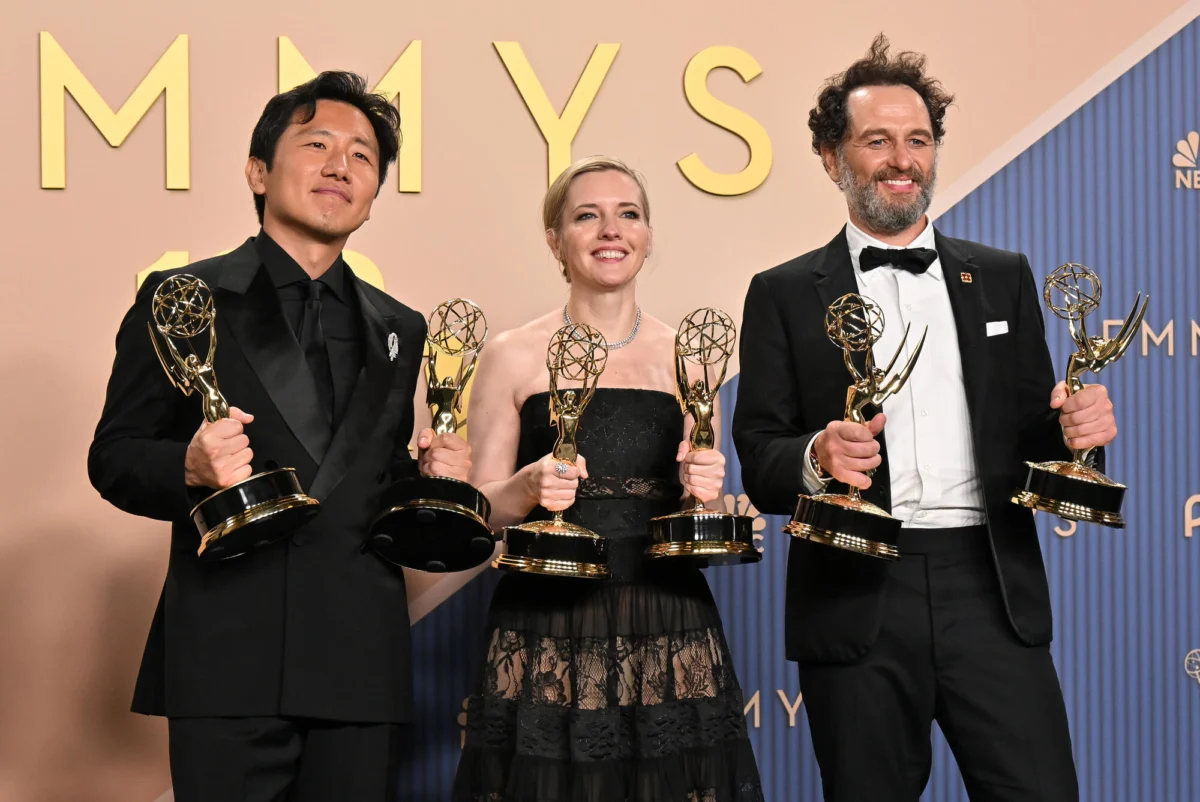
LOS ANGELES — The 78th Primetime Emmy Awards, held on September 14, 2026, at the Peacock Theater, will likely be remembered as a study in contradictions. It was a night that celebrated the long-awaited triumph of "Widow’s Bay" and the historic "triple-crown" achievement of Matthew Rhys, yet it was simultaneously marred by significant production errors, a controversial telecast structure, and a sobering statistic regarding representation that has sent shockwaves through the industry.
While the Television Academy attempted to modernize the ceremony with a traditional variety-show format hosted by Mariska Hargitay, the evening’s success was tempered by what many insiders are calling a "diversity blackout" in the major acting categories—the first such occurrence in half a decade.
Main Facts: The Duality of the 78th Emmys
The evening’s primary narrative was the total dominance of Apple TV+’s "Widow’s Bay." The series, which spent nearly two decades in development hell, secured a record-breaking sweep, including Outstanding Comedy Series, Outstanding Writing for a Comedy Series for creator Katie Dippold, and Outstanding Directing for Hiro Murai. Murai’s win was particularly historic, marking the first time an Asian director has taken home the trophy in the comedy category.

However, the celebration of "Widow’s Bay" stood in stark contrast to the night’s most troubling data point: for the first time in five years, not a single actor of color won in the lead or supporting acting categories. Despite a television landscape that is statistically more diverse than ever, the night’s winners were exclusively white, prompting immediate calls for the Academy to re-examine how it categorizes and celebrates "prestige" performances.
Technically, the show was a mixture of traditional charm and modern dysfunction. Mariska Hargitay, the first woman to host the ceremony in 15 years, delivered what critics described as an "adequate" performance, leaning heavily into musical numbers and pre-taped sketches. Yet, the production was plagued by a disastrous final ten minutes of "dead air" and a controversial decision to move major awards—including first-time wins for David Harbour and Linda Cardellini—off the main telecast.
Chronology of the Evening: From Red Carpet to Dead Air
The ceremony began with a nostalgic nod to the variety shows of yesteryear. Hargitay’s opening, which featured a choreographed musical number, signaled a departure from the stand-up comedy monologues that have defined the last decade of awards hosting. While the "Law & Order: SVU" star was praised for her poise, the choice to return to a traditional format was seen by some as a safe, perhaps uninspired, move for an Academy struggling with declining network viewership.
As the night progressed, the momentum was frequently interrupted by technical and pacing issues. The "In Memoriam" segment became a point of contention when the audience ignored explicit instructions to hold applause until the end. The segment’s ambiguous conclusion led to a cacophony of scattered clapping that many viewers found disrespectful.

The middle of the telecast saw the "Widow’s Bay" sweep begin in earnest. Matthew Rhys’s win for Lead Actor in a Comedy Series was the emotional high point of the first two hours, cementing his place in history as the first actor to win lead trophies in Drama, Comedy, and Limited Series categories.
However, the final act of the telecast descended into what industry veterans described as a "production nightmare." In an attempt to prevent the show from running over its allotted time, the Academy moved the Supporting Actor and Actress in a Limited Series categories to the non-televised portion of the evening. This meant that David Harbour and Linda Cardellini, stars of the hit "DTF St. Louis," were denied their "Emmy moment" on screen.
Ironically, this "time-saving" measure backfired. The show concluded with ten minutes of near-dead air, forcing presenters Matthew McConaughey and Woody Harrelson to "vamp" awkwardly. The duo, who were ostensibly there to promote their new Apple TV+ series "Brothers," were left to fill the void with aimless banter that many felt was more detrimental to the telecast than the missing award presentations would have been.
Supporting Data: The "Widow’s Bay" Effect and the Representation Gap
The data from the 78th Emmys paints a fascinating, if lopsided, picture of the current state of television.

"Widow’s Bay" by the Numbers:
- 20 Years: The time creator Katie Dippold’s spec script spent in development before being produced.
- Historic Firsts: Hiro Murai (First Asian Director to win Comedy); Matthew Rhys (First actor to win the "Triple Crown" of genre leads).
- Cast Wins: Beyond Rhys, Kate O’Flynn won Supporting Actress in a Comedy, and veteran Stephen Root finally secured his first Emmy for Supporting Actor in a Comedy.
The Diversity Deficit:
While "Widow’s Bay" was the night’s big winner, the lack of diversity in the acting winners was impossible to ignore. Analysis suggests this is not due to a lack of talent, but a "role hierarchy" issue. Actors of color such as Kevin Carroll ("Widow’s Bay"), Ali Ahn and Ato Essandoh ("The Diplomat"), and Shabana Azeez and Isa Briones ("The Pitt") were all part of Emmy-winning ensembles, yet their roles were categorized as "tertiary" or supporting, often losing out to more central, established white leads.
Furthermore, industry analysts noted that several high-profile roles for actors of color currently exist on platforms and networks that the Television Academy historically overlooks, creating a "prestige ceiling" that has yet to be shattered.
Official Responses and Industry Rumors
The Television Academy has yet to issue a formal statement regarding the "dead air" incident or the exclusion of the Limited Series supporting categories from the broadcast. However, sources close to the production suggest that the "countdown clock" bit, which failed during Nate Bargatze’s hosting stint the previous year, was discarded in favor of a more rigid—and ultimately flawed—timing script.

In the hallways of the afterparties, the conversation turned quickly to the future of the industry. At the Walt Disney celebration at Vibiana, showrunner Ryan Murphy was seen surrounded by the cast of "The Shards," despite the show being a critical misfire. The focus there was on Hulu’s "Furious," with star Emmy Rossum being hailed as the frontrunner for next year’s awards cycle.
At the Netflix gala at the Chateau Marmont, CEO Ted Sarandos and CCO Bela Bajaria maintained a jubilant atmosphere. Despite Netflix not winning the major series categories, their aggressive campaign for Matthew Rhys and Sally Field (who won for Lead Actress in a Limited Series) was viewed as a strategic "masterstroke."
Rumors also swirled regarding Apple TV+’s long-term strategy. Word among attendees is that the streamer plans to alternate seasons of "Widow’s Bay" and "The Studio" to maintain a vice-grip on the Comedy categories for the next several years. This strategy, combined with the impending return of "Ted Lasso," suggests a "streaming hegemony" that traditional networks are struggling to combat.
Implications: The Death of Late Night and the Network Identity Crisis
The 78th Emmys may also mark the beginning of the end for traditional Late Night variety series. The win for "The Late Show with Stephen Colbert" in its final season was seen by many as a "legacy award" rather than a celebration of a thriving genre. With Jimmy Kimmel’s future uncertain and rumors of Lorne Michaels’ eventual retirement from "Saturday Night Live," the Academy’s continued reliance on traditional network stalwarts suggests a refusal to acknowledge the shift toward digital and alternative variety formats.

The looming Paramount-Warner Bros. Discovery merger was the elephant in the room at the HBO Max afterparty at San Vicente Bungalows. The potential consolidation of "The Daily Show" and "Last Week Tonight with John Oliver" under one corporate umbrella raises significant questions about censorship, competition, and the future of political satire on television.
Ultimately, the 2026 Emmys served as a microcosm of an industry in flux. While the "Widow’s Bay" sweep proves that high-quality, long-gestating creative visions can still find a home and an audience, the production failures and the regression in representation indicate that the Television Academy is still struggling to navigate the transition from the "Peak TV" era to a more consolidated, streaming-dominated landscape.
As Peter Claffey of "A Knight of the Seven Kingdoms" sang "That’s Life" at the HBO Max karaoke bar late into the night, the sentiment resonated: television is currently experiencing the best of times and the worst of times, and the 78th Emmys captured every bit of that chaotic duality.
Additional reporting by Christian Zilko.