Anime’s Bold Brushstroke: "Baki-Dou" Delivers Unvarnished Critique of Trump’s Presidency
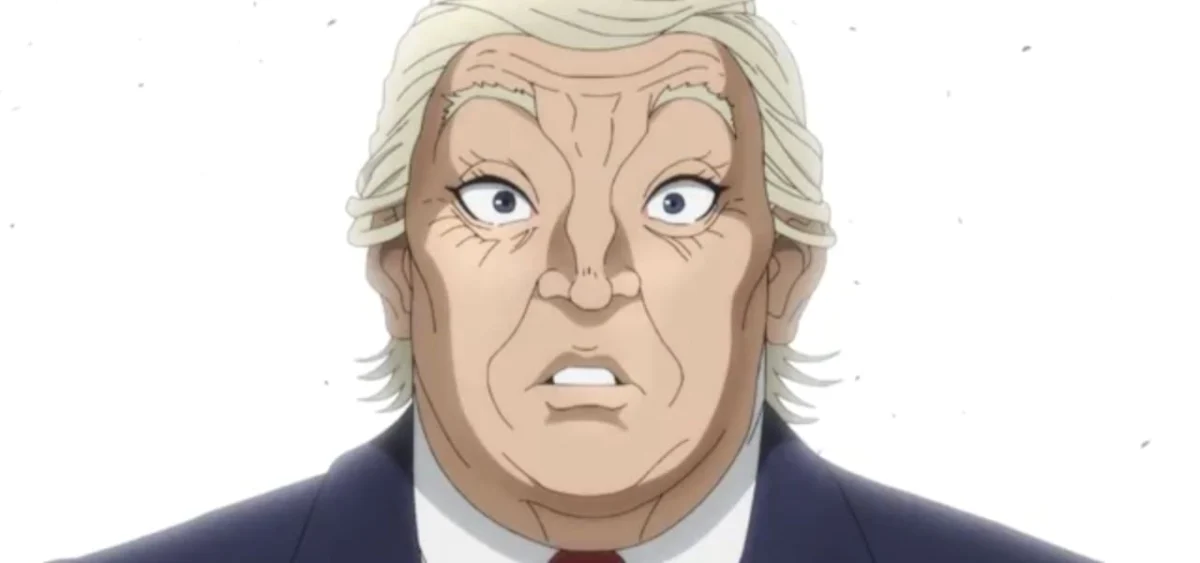
New York, NY – June 20, 2026 – In an era where political satire and commentary in Western media often navigate a minefield of potential repercussions, the Japanese anime industry appears to be charting a more uninhibited course. The latest season of the popular martial arts series, "Baki-Dou: The Invincible Samurai," has delivered a particularly striking and unflinching depiction of former U.S. President Donald Trump, portraying him in a scene of profound political and personal humiliation. This bold move by the anime world stands in stark contrast to the perceived tightening of critical expression within some mainstream Western entertainment circles.
A Glimpse into the "Baki-Dou" Universe: Superhuman Politics and Unflinching Satire
"Baki-Dou: The Invincible Samurai" is renowned for its over-the-top depiction of superhuman wrestlers, individuals possessing extraordinary physical prowess and engaging in battles that frequently carry significant geopolitical weight. These powerful fighters are often depicted as enforcers, instruments of spectacle, and sometimes, as shadowy manipulators of global affairs. The series has a history of incorporating real-world political figures and scenarios, often filtered through its unique lens of hyper-masculine combat and exaggerated power dynamics.
The current season introduces a character explicitly named "President Tranp," a thinly veiled analogue of Donald Trump, on the pivotal day of his inauguration. The narrative arc centers on Tranp’s forced pledge of allegiance to the formidable fighter Yujiro Hanma, a character who embodies ultimate power and authority within the "Baki-Dou" universe. This setup immediately positions Tranp not as a sovereign leader, but as a subordinate figure beholden to Hanma’s dominance.
The Humiliating Oath: A Visual Metaphor for Political Capitulation
The episode meticulously builds the tension surrounding Tranp’s impending oath. Mirroring the real-life persona of Donald Trump, the fictional Tranp is depicted as vehemently resistant to the idea of bending the knee to another man, viewing such an act as deeply emasculating. He is portrayed as defiantly vowing to reject the ritual, intending to assert his own authority and bring an end to the subservience. This internal struggle, however, is shattered upon his literal encounter with the awe-inspiring presence of Yujiro Hanma.
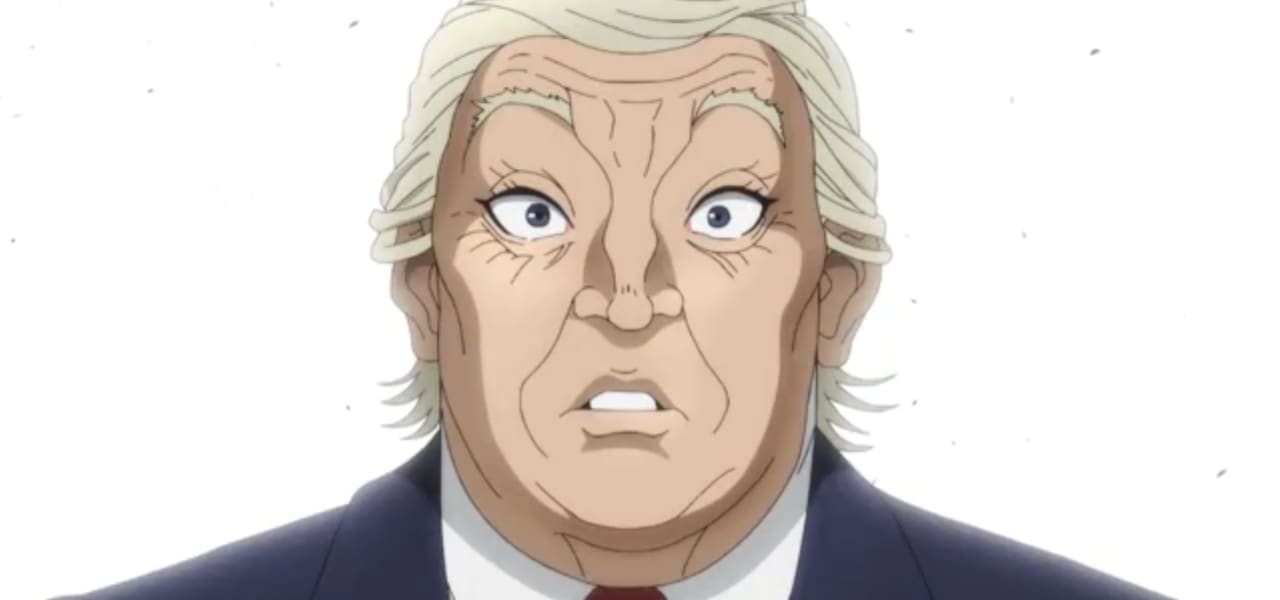
The climax of this particular narrative thread is graphic and visceral. The moment Tranp lays eyes on the hulking, near-mythical Hanma, the carefully constructed facade of defiance crumbles. The episode depicts a torrent of urine escaping his trousers, creating a visible flood around his feet. This immediate and involuntary physical reaction serves as a powerful, albeit crude, visual metaphor for his complete and utter capitulation. The humiliating accident precedes his swift and unhesitating commitment to the oath, which he had supposedly spent the entire night memorizing. The scene underscores a profound theme within the episode: that even the most outwardly defiant can be instantly humbled by overwhelming power, or perhaps, by their own inherent frailties.
The Broader Context: Censorship Fears and the Anime Exception
The airing of such a critical and unflattering depiction of a prominent political figure like Donald Trump, especially one who has held the highest office in the United States, resonates within a broader media landscape. The article implicitly raises concerns about the perceived chilling effect on critical commentary within Western entertainment. It suggests that some mainstream shows have faced repercussions for criticizing the Trump administration, while others have been more leniently treated. The piece also alludes to instances of perceived propaganda within streaming services, such as "trash Prime Video propaganda documentaries," and the pressure to produce certain types of content, citing "Rush Hour sequels are being forced upon us by the White House" as an example of undue influence.
In this context, "Baki-Dou’s" unflinching portrayal of Trump stands out as a testament to the relative freedom enjoyed by the anime industry. The article posits that while Western media might be constrained by political pressures or self-censorship, the anime world remains "unencumbered from the U.S. president’s allergy to criticism." This suggests a cultural and industrial environment within Japan that may be more receptive to direct and even crude political satire, or at least less susceptible to external pressures that might stifle such expression in the West. The article implies that this freedom allows anime creators to "pick up the baton and freely criticize Trump’s regime."
The Role of Satire in a Polarized Landscape
Political satire, when effective, serves multiple functions. It can act as a release valve for public frustration, a tool for holding power accountable, and a means of exposing hypocrisy and absurdity. In a deeply polarized political climate, such commentary can also serve to solidify existing viewpoints or, in rarer instances, to bridge divides by highlighting shared human vulnerabilities.
The depiction in "Baki-Dou" is undeniably crude, but its impact lies in its visceral nature. By reducing a powerful world leader to a moment of involuntary physical embarrassment, the creators bypass complex political arguments and deliver a blunt, emotional statement about perceived weakness and subservience. This form of satire is not new; historical and contemporary examples abound where political figures have been lampooned through exaggerated or embarrassing physical portrayals. However, the context of its appearance within a globally distributed anime series, particularly one that traffics in exaggerated displays of power, adds a unique layer of commentary. It suggests that even in the fantastical realm of superhuman combat, the perceived frailties of political leaders can be exposed and ridiculed.
Supporting Data and the Power of Visuals
The article references a specific tweet containing a video clip of the scene, embedding it within the narrative. This inclusion serves as crucial supporting data, allowing readers to directly witness the visual content being discussed. The tweet, shared by user "Trent (@Woodlandbuckle)" on June 19, 2026, with the caption "Here’s the full scene of Donald Trump meeting Yujiro Hanma," immediately contextualizes the anime’s critique. The visual evidence of Tranp’s predicament, the flood of liquid, and his subsequent snap into the oath, are undeniable and speak for themselves. This direct visual evidence amplifies the article’s claims and underscores the audacity of the creators.
The use of images, including a large header image and a smaller accompanying image, further enhances the article’s visual appeal and immediate engagement. The header image, depicting a scene from "Baki-Dou" with a prominent character that visually evokes the series’ aesthetic, sets the tone. The smaller image, also seemingly related to the series, provides additional visual context. While these images do not directly show the Trump scene, they establish the visual language and style of "Baki-Dou," preparing the reader for the kind of exaggerated and dynamic animation that characterizes the show.
Official Responses and Industry Reactions: A Developing Narrative
As of the publication date, there is no explicit mention of official responses from Donald Trump himself or his representatives to the depiction in "Baki-Dou." Similarly, the article does not detail any specific reactions from the U.S. White House or any official statements from the Japanese government regarding the anime’s content. This lack of immediate official backlash, as suggested by the article, is precisely what it highlights as a point of distinction for the anime industry.
.png)
The silence from official quarters, coupled with the article’s premise of Western media facing greater scrutiny, implies a significant difference in how political criticism is perceived and tolerated across different cultural and industrial spheres. While a direct response might be anticipated in the West for such a pointed critique, the absence of one in this instance could be interpreted in several ways: either the criticism is deemed too insignificant to warrant a response, or the industry’s relative autonomy allows such content to pass without the kind of political pressure that might be applied elsewhere.
The article does, however, quote a user named "Trent (@Woodlandbuckle)" whose tweet brought the scene to wider attention. This user’s commentary, along with the engagement on social media platforms, indicates that the scene has indeed generated discussion and awareness among fans and observers of both "Baki-Dou" and political commentary. The reactions on platforms like X (formerly Twitter) are often a barometer of public sentiment and can shape the broader narrative surrounding such content.
Broader Implications: Freedom of Expression and Cultural Exchange
The "Baki-Dou" incident raises significant questions about the boundaries of free expression in a globalized media landscape. It highlights how different cultural contexts can shape the acceptable forms and targets of political satire. While the West grapples with debates surrounding censorship, cancel culture, and the potential for political retribution against artists and creators, the anime industry, at least in this instance, appears to be operating with a greater degree of artistic license.
This could have several implications:
- Increased Global Reach for Unfiltered Criticism: If anime continues to be a platform for more direct and unvarnished political commentary, it could become an increasingly important source of critical perspectives on global leaders and events for international audiences.
- Shifting Perceptions of Political Discourse: The bold nature of the "Baki-Dou" scene might influence how audiences perceive the willingness of different media industries to engage with controversial political topics. It could lead to a reassessment of which platforms are perceived as more courageous or more constrained.
- Potential for Cultural Misinterpretation: While the creators of "Baki-Dou" may have intended their satire to be universally understood, the nuances of political critique can sometimes be lost in translation or cultural adaptation. The crude humor, while impactful, might also be interpreted differently by various audiences.
- A Catalyst for Dialogue: The controversy, or lack thereof, surrounding such depictions can spark broader conversations about the role of art in political discourse, the pressures faced by creators, and the evolving landscape of freedom of speech in the 21st century.
In conclusion, the latest season of "Baki-Dou: The Invincible Samurai" has not only delivered its signature brand of superhuman combat but has also injected a potent dose of political satire into the global anime conversation. By unsparingly depicting a fictionalized Donald Trump in a moment of extreme humiliation, the series underscores the perceived freedom of expression within the anime industry, offering a stark contrast to anxieties about censorship in some Western media. As the world continues to navigate a complex political terrain, the bold brushstrokes of anime may well become an increasingly significant canvas for unflinching critique.