The Forgotten Vanguard: How ‘The Secrets of Isis’ Paved the Way for the Superheroine Era
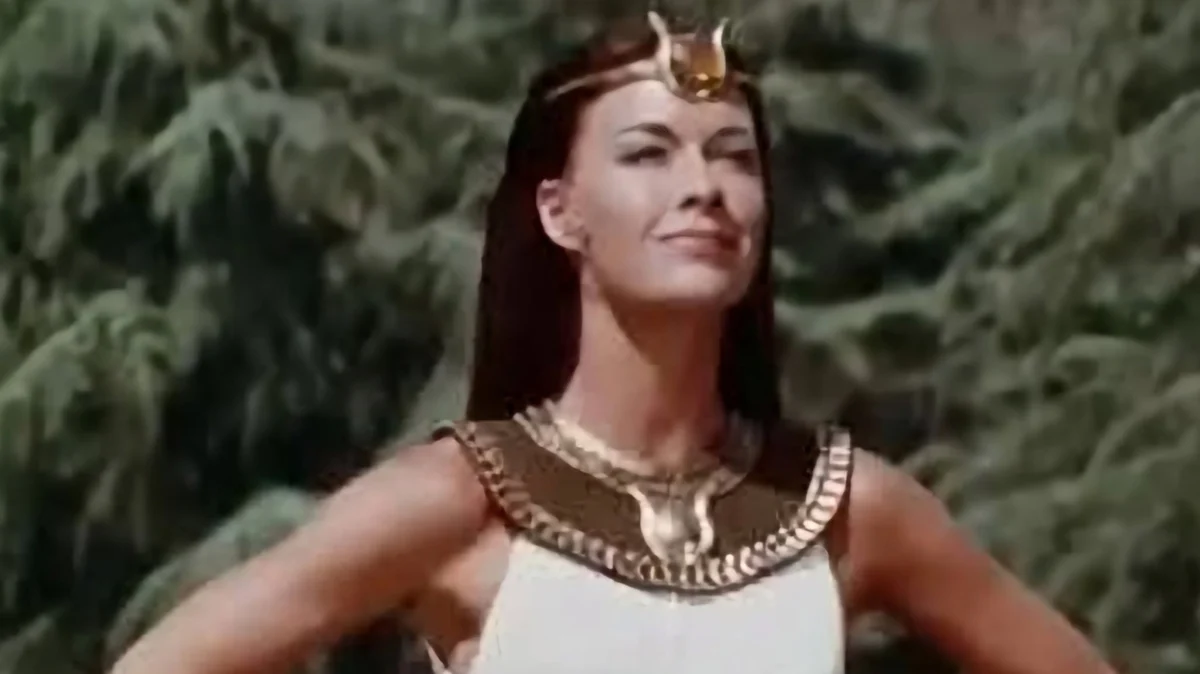
In the sprawling history of televised superhero narratives, certain names command immediate recognition: Lynda Carter’s Wonder Woman, Adam West’s Batman, and Christopher Reeve’s Superman. However, nestled within the grainy, sun-drenched archives of 1970s Saturday morning television lies a trailblazer that predates the Amazonian Princess’s solo debut and the cybernetic enhancements of the Bionic Woman. That show was The Secrets of Isis.
Produced by the legendary animation powerhouse Filmation, The Secrets of Isis was more than just a low-budget adventure series; it was a cultural milestone. It holds the distinct honor of being the first weekly live-action superhero television series to feature a female lead. While time and a crowded marketplace of capes and cowls have relegated it to a "forgotten" status for many, its influence on the industry and its role in the evolution of the DC Universe remain profound.
Main Facts: The Genesis of a Goddess
The Secrets of Isis debuted on September 6, 1975, as part of the "Shazam!/Isis Hour" on CBS. Created at a time when television was beginning to experiment with the viability of female-led action roles, the show introduced audiences to Andrea Thomas, played by the charismatic Joanna Cameron.
The Premise and the Power
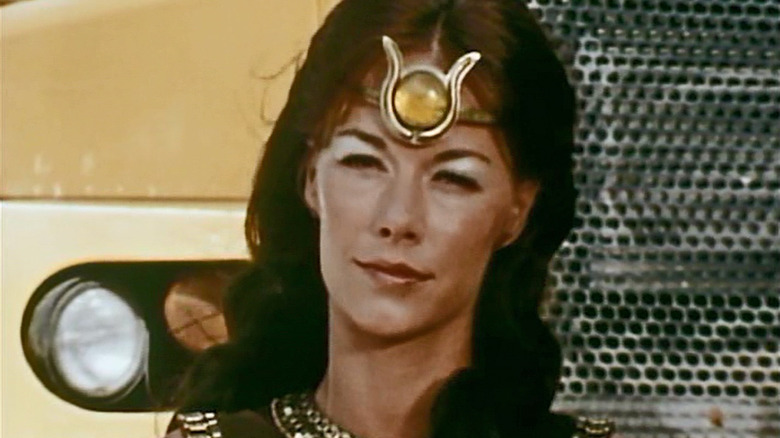
The narrative followed Andrea Thomas, a high school science teacher who, while on an archeological dig in Egypt, discovers an ancient "Tutmose" amulet. As a descendant of Queen Hatshepsut, Andrea finds she can harness the powers of the goddess Isis by donning the amulet and reciting the incantation: "Oh mighty Isis!"
Upon transformation, Andrea would gain a distinctive white-and-gold Egyptian-inspired costume and a wide array of god-like abilities. Unlike the physical brawling common in Wonder Woman, Isis’s powers were largely mystical and elemental. She famously activated these abilities through rhyming couplets, such as: "O zephyr winds, which blow on high / Lift me now, so I can fly."
Key Production Details
- Lead Actress: Joanna Cameron (who appeared in nearly 100 commercials before landing the role).
- Production House: Filmation Associates (Lou Scheimer and Norm Prescott).
- Network: CBS.
- Original Run: 1975–1976 (22 episodes).
- Spin-offs/Crossovers: Frequently crossed over with the live-action Shazam! series.
Chronology: From Animated Roots to Live-Action Success
To understand the rise of Isis, one must look at the trajectory of Filmation. Founded in 1963, Filmation became a staple of American childhood through its prolific output of animated hits like The New Adventures of Superman, Archie’s Funhouse, and later, the iconic He-Man and the Masters of the Universe.
1974: The Live-Action Pivot
In the mid-70s, Filmation co-founder Lou Scheimer sought to expand the studio’s reach by venturing into live-action. Their first major success was Shazam!, featuring Captain Marvel. The show’s popularity proved that there was a massive appetite for live-action superheroes on Saturday mornings, specifically those that blended action with moral lessons.
1975: The Launch of Isis
Building on the momentum of Shazam!, Filmation developed The Secrets of Isis. It was a landmark moment: for the first time, a female superhero was the primary protagonist of her own live-action show, beating ABC’s Wonder Woman (which began as a series of specials and didn’t launch its full weekly run until later in 1975/early 1976) and The Bionic Woman (which debuted in early 1976).
1976–1981: Life After the Series
Though the live-action show lasted only two seasons, the character of Isis remained a valuable asset. In 1978, an animated version of the character appeared in the series Freedom Force, where she was voiced by Diane Pershing. In this iteration, she fought alongside mythological figures like Hercules and Sinbad. Later, in 1981, she made guest appearances in the animated series Hero High.
Supporting Data: Mechanics and Cultural Formatting
The show was a product of a specific era of television regulation and social expectations. During the 1970s, groups like "Action for Children’s Television" pressured networks to include educational and "pro-social" content in Saturday morning programming.
The Power Set
Isis was arguably one of the most powerful superheroes on television at the time. Her abilities included:
- Elemental Control: Manipulating wind, fire, and water.
- Molecular Manipulation: The ability to walk through walls or change the density of objects.
- Time Travel: In extreme circumstances, she could reverse time to correct a tragedy.
- Telepathy: She shared a mental bond with her pet crow, Tut.
The "Moral of the Story"
Each episode concluded with a segment where Joanna Cameron, out of character, would speak directly to the camera. These segments were designed to fulfill the "educational" requirements of the era, teaching children lessons about safety, honesty, and environmental stewardship. This "breaking the fourth wall" approach became a hallmark of Filmation’s "pro-social" branding, later perfected in the "Loo-Kee" segments of She-Ra and the "moral segments" of He-Man.
The Mego Connection
The cultural footprint of Isis was cemented by the Mego Corporation. During the 1970s, Mego was the premier manufacturer of superhero action figures. Their 8-inch Isis doll, complete with a cloth outfit and plastic accessories, became a highly sought-after item. Today, a mint-condition, carded Mego Isis can fetch hundreds, sometimes thousands, of dollars among collectors, underscoring the deep nostalgia held by Generation X.
Official Responses and Industry Context
At the time of its release, The Secrets of Isis was viewed by the industry as a "safe" way to test female-led action. Unlike the primetime Wonder Woman, which carried a higher budget and aimed for a broader demographic, Isis was built for the Saturday morning "kid-vid" market.
Competitive Landscape
The mid-70s saw a "Girl Power" boom in television. While Isis was the first to air, she was quickly joined by:
- Wonder Woman (ABC/CBS): Starring Lynda Carter, which leaned more heavily into the DC Comics lore.
- The Bionic Woman (ABC/NBC): A spin-off of The Six Million Dollar Man, starring Lindsay Wagner.
- Police Woman (NBC): Starring Angie Dickinson, which proved women could lead gritty dramas in primetime.
Critics of the era noted that Isis was more "wholesome" and less "campy" than the 1960s Batman, but it lacked the high-octane stunts of its primetime competitors. Nevertheless, its ratings were strong enough to justify its place as a cornerstone of the CBS Saturday morning lineup.
Implications: The Legacy of Adrianna Tomaz
The most fascinating aspect of The Secrets of Isis is how it eventually folded back into the very medium it was inspired by: comic books. While the TV show was an original creation by Filmation, its frequent crossovers with Shazam! (a DC Comics property) created a lasting link.
Integration into the DC Universe
For decades, the character of Isis existed in a legal gray area between Filmation and DC. However, in the mid-2000s, DC Comics officially introduced a reimagined version of the character into their main continuity during the 52 maxiseries. This new version, named Adrianna Tomaz (a nod to the TV show’s Andrea Thomas), was a refugee who gained the powers of the Goddess Isis and became the wife of Black Adam.
Modern Cinematic Resonance
The legacy of the 1975 show reached its modern zenith with the 2022 film Black Adam. In the movie, actress Sarah Shahi plays Adrianna Tomaz. While the film’s version of the character is more grounded and lacks the "Oh mighty Isis!" transformation sequence of the 70s show, the DNA of Joanna Cameron’s performance is present in the character’s courage and leadership.
Conclusion: A Trailblazer Worth Remembering
The Secrets of Isis may not have the multi-billion-dollar brand recognition of the Marvel Cinematic Universe, but it remains a vital piece of television history. It proved that a female lead could carry a superhero series, it pioneered the "pro-social" educational format of the 70s, and it successfully bridged the gap between original TV creation and comic book canon.
For the children of the 70s, Andrea Thomas wasn’t just a teacher; she was a symbol of empowerment who showed that with a little bit of ancient wisdom—and a well-timed rhyming couplet—one could change the world. As we continue to celebrate the "Golden Age" of superhero cinema, it is only fitting to look back and say, "Oh mighty Isis," for starting it all.