Arkham Horror: The Card Game Unveils "Chapter Two": A Terrifying Mystery’s Fresh Start, or a Reckoning?
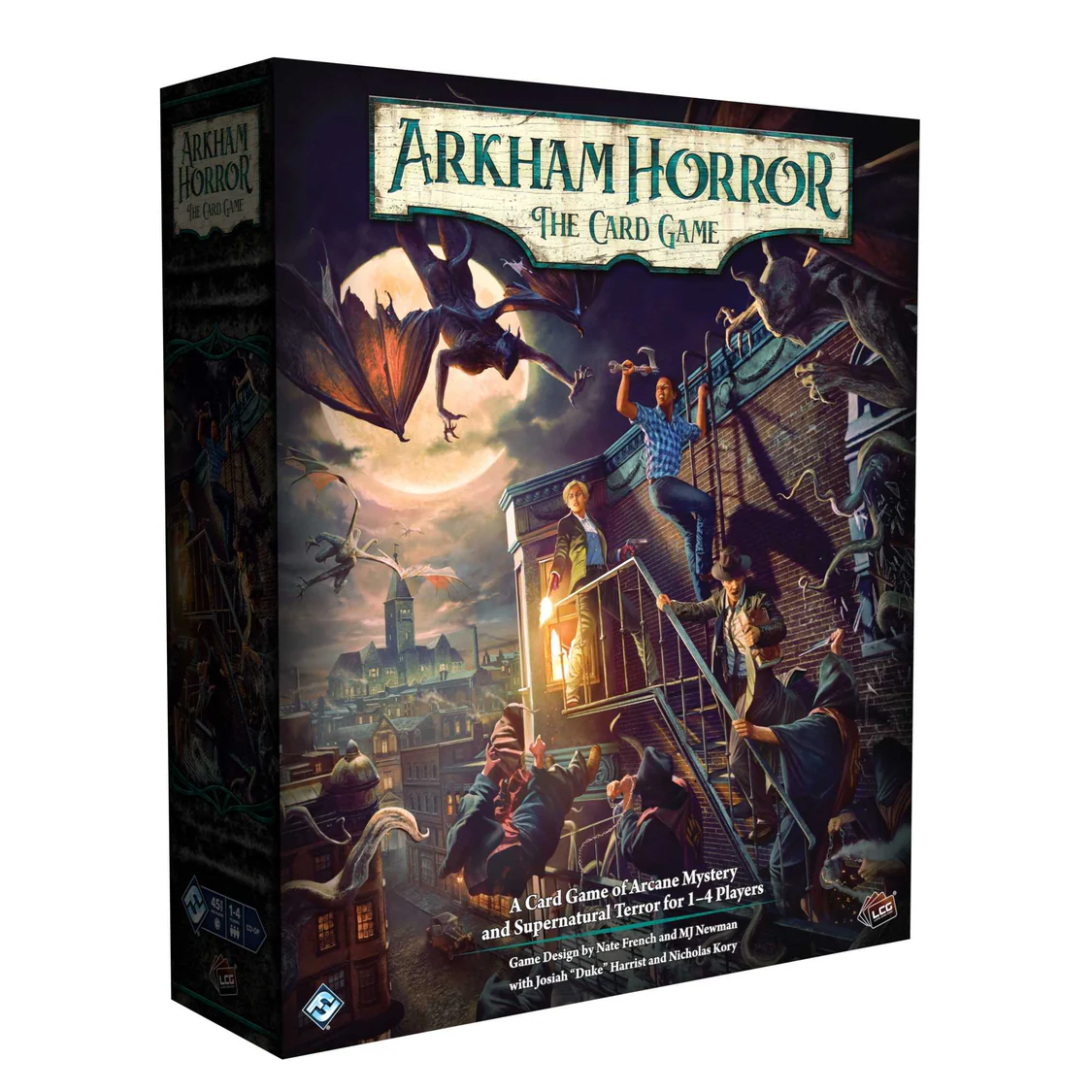
Fantasy Flight Games (FFG) is once again inviting players into the shadowy, sanity-shredding world of H.P. Lovecraft’s Cthulhu Mythos with the release of "Chapter Two" for Arkham Horror: The Card Game. This marks the third iteration of the cooperative Living Card Game (LCG)’s core set, a strategic move by the publisher to breathe new life into a critically acclaimed title that has, over the years, become an intimidating labyrinth for prospective players. While offering a much-needed entry point for newcomers, this relaunch raises significant questions about the long-term viability of the LCG model and the delicate balance between attracting new blood and retaining a dedicated veteran community.
Main Facts: A New Chapter for Cosmic Horror
Arkham Horror: The Card Game ("AHTCG") stands as a testament to the enduring appeal of cooperative, narrative-driven tabletop experiences. Since its initial release in 2016, it has garnered a loyal following, praised for its innovative blend of role-playing, deck-building, and branching storylines set against the backdrop of cosmic horror. Players assume the roles of unique investigators, each with their own deck of skills, allies, and equipment, embarking on perilous scenarios that interlock to form sprawling campaigns. The game’s ingenious use of cards to represent locations, enemies, and even the investigators themselves creates a flexible and immersive system, allowing for deep customisation and emergent storytelling.
However, the very success of AHTCG, and indeed Fantasy Flight Games’ broader Living Card Game model, has inadvertently created a barrier to entry. Over nearly a decade, the game’s product line expanded exponentially, featuring dozens of campaign expansions and individual "Mythos Packs." This vast catalogue, while providing immense depth for existing players, became overwhelmingly complex and expensive for newcomers. Many older packs fell out of print, commanding exorbitant prices on the secondary market and making it near impossible for a new player to assemble a complete collection or even follow a single campaign from its beginning.
"Chapter Two" is FFG’s direct response to this challenge. It represents a comprehensive re-packaging and re-launch of the core experience, designed to be more accessible, streamlined, and appealing to a fresh audience. The new core set aims to provide a clear and inviting pathway into the game, consolidating essential components and offering a more intuitive progression for those taking their first steps into the eldritch mysteries of Arkham. This initiative is not just a simple reprint; it’s a strategic re-evaluation of how a long-running LCG can sustain itself and grow its player base in an ever-evolving market.
Chronology: The Evolution of a Living Card Game
The Birth of the LCG Model
The Living Card Game (LCG) model was first introduced by Fantasy Flight Games in 2008 with Game of Thrones: The Card Game. It was conceived as a revolutionary alternative to the prevalent Collectible Card Game (CCG) model, which relied on "blind booster" packs containing random assortments of cards. CCGs, popularised by titles like Magic: The Gathering, often required significant financial investment and a degree of luck to acquire desired cards, leading to frustration and an uneven playing field.
The LCG model promised a different approach: fixed-content expansions. Players would know exactly what cards they were getting in each pack, eliminating the randomness and the costly chase for rare cards. This transparency was intended to make the games more accessible, more affordable in the long run, and fairer for competitive play. Following Game of Thrones, FFG successfully applied the LCG model to a host of other beloved franchises, including The Lord of the Rings: The Card Game, Android: Netrunner, and Star Wars: The Card Game. Each of these titles built dedicated communities around the predictability and depth offered by the LCG format.
Arkham Horror’s Journey
Arkham Horror: The Card Game launched in 2016 and quickly became one of FFG’s most celebrated LCGs. It distinguished itself with its strong narrative focus, blending card game mechanics with elements traditionally found in role-playing games. The game’s innovative campaign structure, where decisions and outcomes from one scenario would carry over to the next, resonated deeply with players seeking immersive storytelling.
The original release model involved a "Deluxe Expansion" that kicked off a new campaign arc, followed by six monthly "Mythos Packs" that advanced the story and introduced new player cards. This steady stream of content, while exciting, quickly led to a burgeoning product line. Over the years, AHTCG saw numerous cycles, standalone scenarios, and investigator expansions. By the time the game had several full campaign cycles under its belt, the sheer volume of releases had grown immense, with hundreds of unique cards and scenarios.
Recognizing the growing complexity, FFG made a previous attempt to streamline the game’s entry point in 2021. They re-released the core set and repackaged existing campaign expansions into larger, more cohesive boxes. While this effort made it slightly easier to purchase entire campaigns, it did not fully address the underlying issues of content bloat, out-of-print materials, and the sheer historical weight of the game. Newcomers still faced a daunting task of understanding the release order, tracking down elusive packs, and grappling with the overall scope of content. The advent of "Chapter Two" in 2024 (or 2026 as per the provided image dates) represents an even more radical overhaul, a testament to the persistent challenges of managing a highly successful, long-running LCG. The third iteration of the core box is a clear signal that FFG believes a truly fresh start, rather than just minor adjustments, is necessary to secure the game’s future.
Supporting Data: Unpacking the Relaunch and its Reception
The LCG’s Double-Edged Sword
The LCG model, while initially lauded for its transparency, has revealed its inherent vulnerabilities over time. The "constant churn" of new products, designed to keep players engaged with fresh content, ironically became a significant hurdle. For a game like Arkham Horror: The Card Game, with its deep narrative arcs, missing even a single Mythos Pack in a cycle could break the continuity of a campaign. As FFG moved on to new cycles, older packs would inevitably go out of print. This led to a frustrating scenario where players wanting to delve into past campaigns would find themselves unable to track down essential components, or worse, forced to pay "eye-watering amounts" on the secondary market for rare, out-of-print blisters. Instances of individual Mythos Packs fetching upwards of $100 or even $200 were not uncommon, effectively gatekeeping large portions of the game’s rich history.

The sheer scale of the product line—comprising over a dozen full campaign cycles, each with six Mythos Packs, plus numerous standalone scenarios, investigator packs, and alternative art cards—created a logistical nightmare for both players and retailers. New players would "balk at navigating the maze of entry," often discouraged by the sheer investment of time and money required to get up to speed. This bloat, more than any other factor, underscored the urgent need for a comprehensive relaunch like "Chapter Two."
A Welcome Mat for New Investigators
For those new to the cosmic horrors, "Chapter Two" is unequivocally the "best facet of this new box." It offers an unprecedented opportunity to "experience this wonderful design" without the baggage of years of releases. The core gameplay loop remains as compelling as ever:
- Cooperative Investigation: Up to four players (or solo) work together to unravel mysteries.
- Unique Investigators: Each character comes with a distinct identity, strengths, weaknesses, and a bespoke starting deck, allowing for diverse playstyles.
- Deck-building and Advancement: Players customise their decks between scenarios, using experience points gained to upgrade cards and tailor their investigator to the unfolding narrative.
- Tableau-Building: Cards played to an investigator’s area build a "stronger engine" of abilities, allies, and equipment, creating a sense of progression and power.
- Scenario-Driven Narrative: Each scenario is a self-contained mystery, with unique locations, foes, and challenges represented by intricate decks of cards. Special rules and unique goals, such as uncovering a murder or unearthing an artifact, keep each session fresh.
- Campaign Structure: The true genius of AHTCG lies in its linked campaigns. Decisions, successes, and failures in one scenario have lasting consequences, shaping the narrative and investigator progress over multiple sessions. This creates a deeply immersive, emergent story that players often reflect on, producing "cinematic tale[s] of adventure."
The game’s narrative prowess is particularly strong, often paralleling the thematic depth found in other popular Cthulhu Mythos titles like Mansions of Madness and Arkham Horror 3rd Edition. The abstract nature of cards comes alive through evocative artwork and text, drawing players into a world of creeping dread and cosmic terror. For new players, "Chapter Two" promises a clean slate, a clear entry point with consolidated components, and a streamlined introduction to these core mechanics and storytelling elements.
The Veteran’s Dilemma: Navigating the Old and New
While a boon for newcomers, "Chapter Two" presents a significant "problem of note" for existing players: its "rough integration of older content." Veterans who have meticulously built vast collections over years are left in an awkward position. The new core set introduces updated card templates, rules clarifications, and potentially rebalanced cards. This forces players to "adjudicate awkward decisions such as which versions of a card you will be using in your deck," leading to potential confusion and inconsistencies when blending old and new content. Playing older scenarios now requires "fiddling" to adapt to the new core set’s framework, which can be frustrating for those accustomed to the established rules.
The sentiment among the veteran community is, understandably, mixed. Some are "simply annoyed," feeling that their years of investment and dedication have been somewhat invalidated or complicated. Many may "choose to close off their collections and remain content with what they have," refusing to engage with the new system. Others might "consider this new version a separate game" entirely, unwilling to attempt the cumbersome integration. This risks "pushing away" the very community that has "kept the game humming for years," creating a significant "risk here for the publisher." The core tension lies in whether the influx of new players will compensate for the potential alienation of long-standing fans.

Content Gaps and Peripheral Push
Further compounding the challenges, the "Chapter Two" core set ships with a relatively "short three-scenario campaign." Disappointingly, one of these scenarios feels "very similar to a previous campaign in the original boxed set," potentially offering little new discovery for veterans or even astute newcomers. More critically, "no new scenarios are expected to arrive for some time." This is a "blunder" that risks "alienating the new blood that has been drawn in." After completing the core campaign, new players will undoubtedly "want additional content to explore," and its absence could lead to a drop-off in engagement. While there’s a "chance that fan-created scenarios may fill the void," relying on community efforts to plug a content gap is "asking a lot" of players, especially if they are already feeling neglected or frustrated.
Interestingly, while critical scenario support appears to be lacking, Fantasy Flight Games (and its sister company Gamegenic) has not "neglected peripherals." A "whole slew of player mats, card sleeves and deluxe tokens" is available. While the "quality is seriously impressive," so too is the "price tag." This move prompts questions about whether FFG is attempting to "cash in on the market for custom upgrades available on sites like Etsy." This focus on premium accessories, while commendable for quality, might be perceived as a misprioritisation by players hungry for more gameplay content.
Official Responses and Publisher Strategy
While specific detailed official statements regarding the "Chapter Two" relaunch are often framed in broad terms, Fantasy Flight Games’ overarching strategy can be inferred from the product itself and industry trends. The primary message from FFG typically revolves around accessibility, streamlining, and future-proofing.
FFG would likely articulate that this relaunch is a necessary evolution for Arkham Horror: The Card Game‘s longevity. They would emphasize that the previous product line, despite its richness, had become an undeniable barrier to entry for new players. The core goal is to grow the player base by making the game as welcoming as possible, ensuring that this beloved title can continue to thrive for years to come. This involves:
- Lowering the Barrier to Entry: By consolidating essential components and offering a self-contained, clear starting point, FFG aims to reduce the initial investment and complexity for newcomers.
- Modernizing the Experience: Updating card templates, rulebooks, and overall packaging ensures a polished and contemporary feel, aligning with modern tabletop gaming expectations.
- Ensuring Future Growth: A robust new player base is crucial for sustaining the development of future content. Without a steady stream of new investigators, the long-term health of the LCG could be jeopardized.
Regarding existing players, FFG’s typical approach is to acknowledge their dedication while framing the changes as a necessary evolution. They might suggest that veterans have the flexibility to continue with their existing collections or selectively integrate new components. However, the practical difficulties of this integration are often understated in official communications. The balancing act of serving both new players, who need a clean slate, and old players, who have invested heavily, is incredibly challenging. The "Chapter Two" release clearly prioritizes the former, with the implicit hope that veterans will either adapt or that their departure will be offset by a larger influx of fresh faces.

Implications: The Future of Arkham and the LCG Model
A Test Case for the LCG
The "Chapter Two" relaunch is more than just an update for Arkham Horror: The Card Game; it’s a significant test case for the Living Card Game model itself. FFG’s decision to effectively reboot a successful LCG after years of content raises fundamental questions about the long-term sustainability of the format. Is the LCG inherently prone to bloat, requiring periodic, disruptive reboots to remain viable? If even a successful LCG like AHTCG, with its dedicated fanbase, succumbs to this "bloat," what does it mean for other LCGs, current and future? This could set a precedent for similar re-launches across FFG’s other LCG lines or even for competitors adopting similar models. It suggests that while the fixed-content model avoids booster pack randomness, it doesn’t solve the problem of overwhelming product lines and the eventual difficulty of onboarding new players.
The Risk-Reward Equation
The success of "Chapter Two" hinges on a delicate risk-reward equation. The "large risk" for FFG is clear: alienating a significant portion of their most loyal, long-standing players. These veterans have been the lifeblood of the game, consistently purchasing new content and fostering a vibrant community. If a substantial number of them choose to abandon the line, FFG will need to attract a proportionally larger number of new players to make up the difference.
The reward, however, could be substantial. A more accessible entry point could unlock a much wider market, bringing in thousands of new players who were previously intimidated. This could reinvigorate the game, securing its financial viability and paving the way for years of new content development. The stakes for FFG and the broader Arkham Horror brand are high. A successful relaunch could solidify AHTCG’s position as a modern classic; a misstep could see it struggle to regain its former momentum.
A Path Forward (or a Fork in the Road)
Ultimately, Arkham Horror: The Card Game – Chapter Two emerges as a "mixed bag." The core game remains an "impressive, evocative and thrilling" experience, boasting a "compelling design that can function as a lifestyle game." The narrative depth, character customisation, and cooperative challenge are undeniable strengths. For those who have never delved into the mysteries of Arkham, "now is the perfect time to hop aboard."
However, the new set’s immediate drawbacks are equally evident. The limited content in the core box, coupled with the lack of immediate new scenario support, leaves new players potentially wanting more too quickly. The rough integration for veterans creates friction and disappointment within the established community. The long-term success of "Chapter Two" will largely depend on FFG’s commitment to releasing a consistent stream of high-quality new scenarios and how effectively they can manage the sentiment of their veteran player base.

Will this modern classic find its footing yet again, attracting a new generation of investigators to face the cosmic horrors? Or will the alienation of its most dedicated fans prove too great a cost? The answer lies not just in the initial sales of "Chapter Two," but in the sustained content support and community engagement that follows. Only time will tell if this fresh start is truly a revitalisation, or merely a temporary reprieve in the face of an ever-expanding cosmic dread.
Review by Charlie Theel
Play it?
Maybe. If you are new to this game and curious about what it has to offer, now is the perfect time to hop aboard, but existing players have much less incentive.
Try This if you Liked
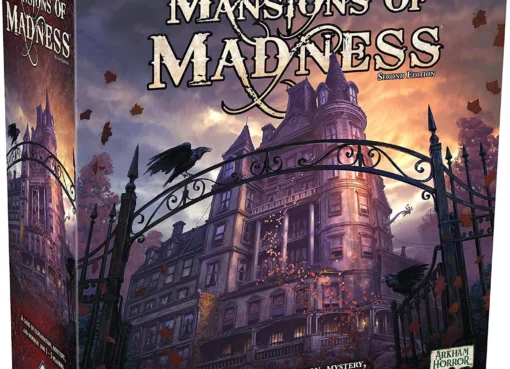
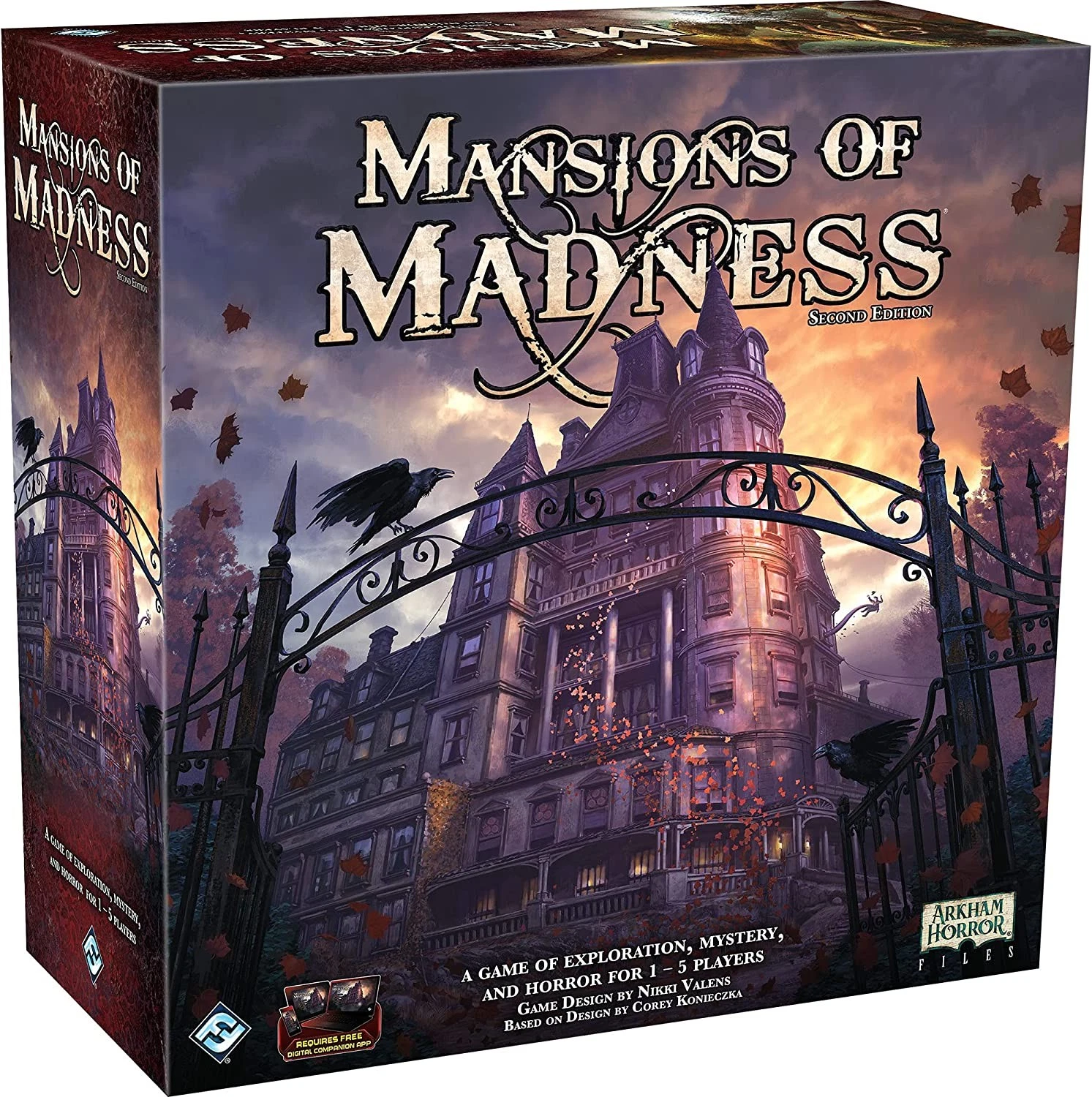
MANSIONS OF MADNESS
Mansions of Madness sees you exploring the dark corners of Arkham and unearthing terrors that will crush a person’s mind. You can carry on that vibe in a more flexible format with Arkham Horror: The Card Game.
About Arkham Horror: The Card Game – Chapter Two
Category: Card Games
Designers: Nate French, Josiah Harrist, Nicholas Kory, MJ Newman
Publisher: Fantasy Flight Games
Time to Play: 1-2h
Players: 1-4 Players
Age: 14+
RRP: £70
What’s in the Chapter Two Core Box?
- 5 Investigator character cards
- 5 Investigator mini cards
- 224 Player cards
- 133 Scenario cards
- 224 tokens
- Chaos bag
- Campaign book
- Rulebook