
Author Jeremy Szal Unveils "Wolfskin": A Journey Through Creative Resilience and Galactic Warfare
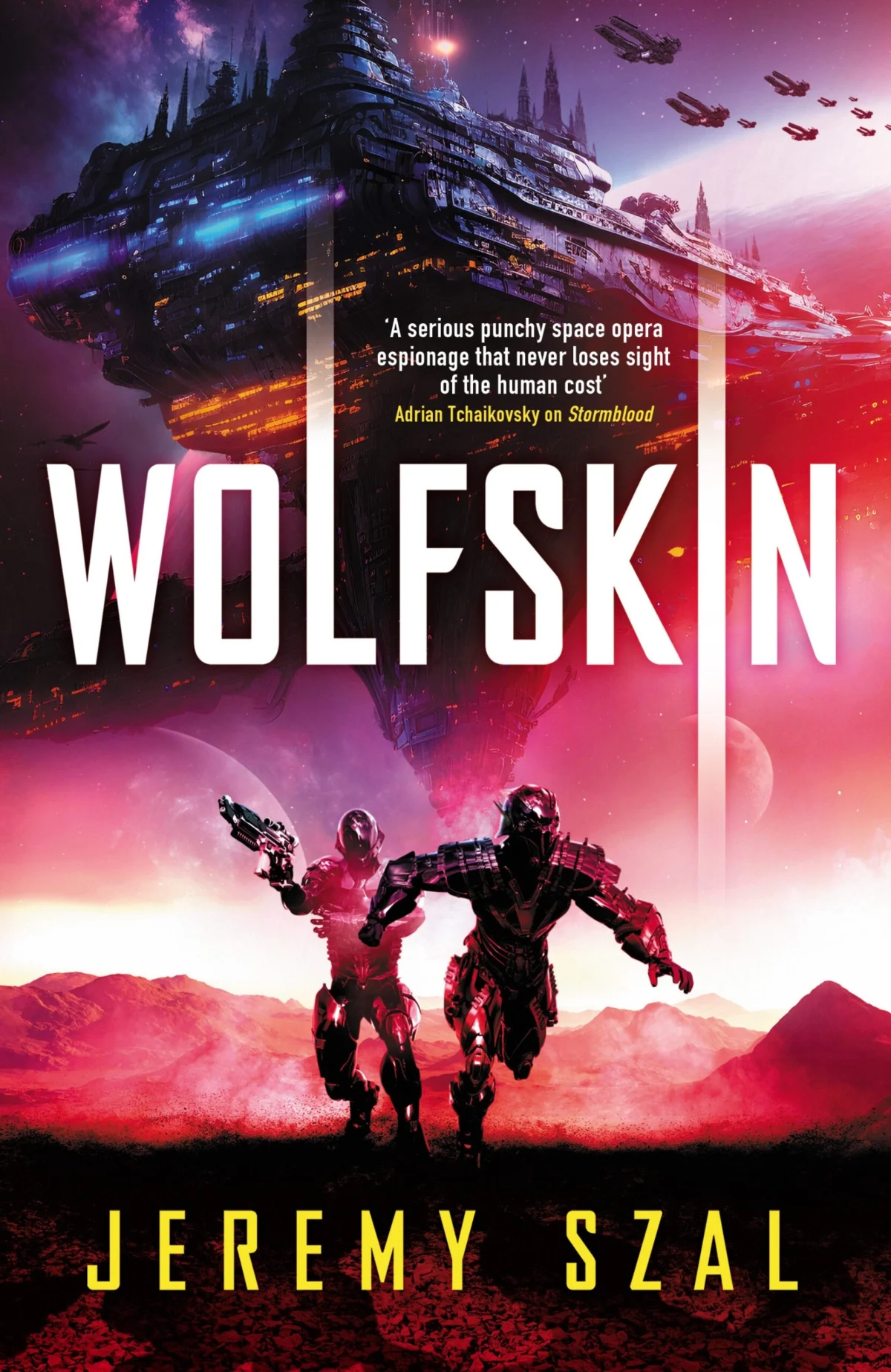
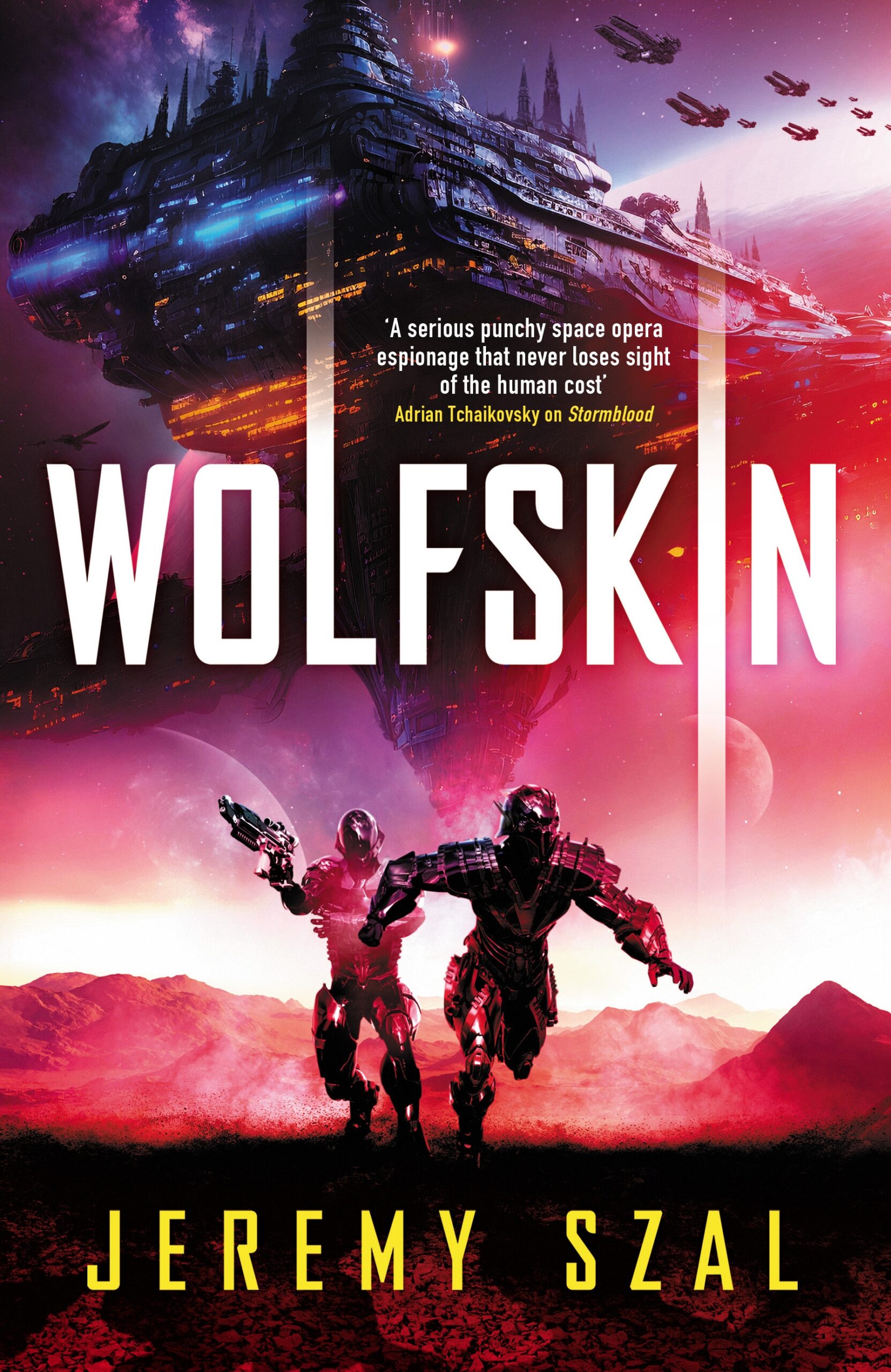
Sydney, Australia – Acclaimed author Jeremy Szal has pulled back the curtain on his latest dark space opera, "Wolfskin," the thrilling conclusion to his Common trilogy. In a candid exploration of his creative process, Szal shared five profound lessons learned during the tumultuous journey of writing this highly anticipated novel. These insights offer a compelling glimpse into the author’s dedication to his craft, his navigation of personal challenges, and the intricate tapestry of a universe teetering on the brink of annihilation.
The Stakes of "Wolfskin": A Galaxy on the Precipice
"Wolfskin" plunges readers into a desperate galaxy where the fate of countless species hangs precariously in the balance. The narrative centers on Vakov Fukasawa, a protagonist who has endured unimaginable torment at the hands of the ruthless House of Suns. Broken in body and spirit, Vakov’s resilience is the Common’s last, desperate hope against an encroaching darkness. The war against the Suns has escalated, engulfing entire star systems in violence and reducing once-thriving planets to ashes. The situation is further exacerbated by the summoning of the genocidal alien Shenoi, pushing billions towards an existential abyss.
To avert total destruction and save his people and home, Vakov must embark on an audacious mission: forge a formidable intergalactic army alongside his brother, Artyom. He is called upon to embody the hero his people believe him to be, a legend known as "The Black Wolf." This transformation demands immense courage, the ability to inspire loyalty, and a willingness to harness raw fury to survive. However, the central question looms: is Vakov prepared to pay the ultimate price for victory?
Five Pillars of "Wolfskin": Lessons in Creation and Resilience
Szal’s reflections on writing "Wolfskin" reveal a profound evolution in his approach to storytelling, marked by five key learnings:
H2: Allowing the Scenes to Guide the Narrative
Szal’s previous work, "Blindspace," the sequel to "Stormblood," was characterized by a strict adherence to a pre-defined outline. While this ensured narrative coherence, it also presented significant challenges. For "Wolfskin," Szal consciously loosened his grip on rigid structure, embracing a more fluid and intuitive approach.
"I learned to loosen things up for Wolfskin," Szal explained. "Sure, the overall shape of the story fits my vision, but I allowed myself to be a little faster and looser with how things swerved to reach that point." This creative freedom allowed for organic character development and unexpected plot turns. "Certain side characters introduced themselves to me, demanding to be written, and write them I did."
This embrace of spontaneity led to moments Szal admits he wasn’t sure he’d "get away with." He described a scene he anticipated readers would notice, and a chapter just before the midpoint that was entirely "pantsed" – meaning it was written improvisationally. This chapter introduced new characters, alien races, and intricate world-building details, all woven into a compelling set-piece. These elements, absent from the initial outline and first draft, ultimately enriched the narrative, demonstrating the power of allowing the story’s momentum and characters to dictate its path. "And I had enormous fun in doing so," Szal added.
H2: Trusting and Reclaiming One’s Authentic Voice
The writing process for "Blindspace" was marred by a difficult experience with negative feedback, which left Szal deeply questioning his storytelling abilities, his voice, and his chosen direction. This period of self-doubt was particularly acute for Szal, who identifies as neurodivergent. The constant anticipation of criticism stifled his creativity, making it difficult to commit even a single paragraph to paper.
"I’ve always known that I was neurodivergent. But all this made me realise how deeply it was impacting me," Szal shared. He recognized the critical need to reclaim his creative autonomy. "So I had to learn, all over again, how to give myself permission to do what I wanted to do. To remind myself that, yes, as the creator and CEO of this savage little world of mine, there was no objective right or wrong way for me to tell this story: only the way I wanted it to go."
This process of rebuilding his confidence was arduous, taking an additional year of persistent effort. "It took at least a whole extra year of sitting down everyday and pushing, forcing myself to stick with my goals, my voice, my vision." This dedication was crucial for undertaking the numerous risks and bold decisions required to complete "Wolfskin." Szal emphasized, "And I’m hella glad I did, because there are a lot of risks and bold decisions that I had to take in order to finish Wolfskin, and I don’t think I could have done it if I hadn’t built up that muscle."
H2: The Reality of Challenging, Not Always "Fun," Writing
While the passion for storytelling is often the driving force behind writing, Szal underscores that the act of professional writing, particularly for publication, is not always easy or consistently enjoyable. He distinguishes between the effortless flow of early writing experiences, such as fanfiction, and the demanding nature of crafting a publishable novel.
"Most of us aren’t writing to get rich (ha!) or for untold fame. We do it because we enjoy telling stories and putting our thoughts on paper. And ultimately, yes, the act should be enjoyable. But does it mean it will be easy? Or always fun? Absolutely not."
Professional writing requires sustained dedication, meticulous attention to craft, and the willingness to make difficult editorial choices. "It’s harder to show up day after day, writing hundreds and hundreds of pages with a close attention to craft and detail, making sure every scene is working as hard as it can, scraping entire chapters and characters if they do not fit, and sculpting a story arrows towards a conclusion that is logical and surprising and satisfying and half a hundred other things."
Szal acknowledges that there will be days when the process is frustrating, difficult, and overwhelming. For individuals with neurodivergent conditions, these challenges can be amplified. "As someone with ADHD, all this is especially true. And I’ve had to learn the hard way not to beat myself up when a given day’s writing does not rock the world, or when I’m not jumping out of bed to get to work everyday. You are allowed to have those days. You should not feel terrible if some projects are tougher to get done than others. You’re allowed to be human."
H2: Crafting Unforgettable "Bad-Ass" Moments
Beyond the narrative arc, Szal places significant emphasis on creating moments that resonate deeply with readers, eliciting a sense of catharsis and exhilaration. These are the "stand up and cheer moments" where characters transcend their limitations and confront their adversaries with unbridled fury.
"I write for myself. But I also write to be read, to leave an impact on the reader. And so I invested heavily in writing some epic ‘stand up and cheer moments,’ where there is a feeling of catharsis and liberation and satisfaction." He describes scenes where characters "shrug off the limits imposed on them by their tormentors and go after them with their fangs bared and wild fury in their eyes." These moments also encompass plot reveals where "all the pieces fall into place and the curtain is whisked away and a grin starts slowly spreading across the face of the reader as it all dawns on them all that has been in play behind the scenes."
Achieving these impactful scenes requires meticulous planning and execution. "It’s not easy, writing these scenes. But pulling them off successfully and making everything sync up together like clockwork? Immensely satisfying." Szal believes that when executed effectively, these moments elevate a novel to "new and riveting heights."
H2: The Inherent Darkness Within Characters and Creator
"Wolfskin" delves into the darkest emotional territories, particularly through the protagonist Vakov’s initial struggles with anxiety, depression, rage, hatred, self-loathing, and hopelessness. Szal resisted the urge to streamline these elements for the sake of pacing, viewing it as a betrayal to both the character and himself.
"For plot-related reasons that I do not wish to spoil, there’s a lot of dark emotional ground that is explored in Wolfskin, through the main character Vakov, especially at the start of the novel." He explained that these were not merely fictional explorations but reflections of his own experiences. "These issues were things that I myself had either endured, or was currently working on, and seeing them there, as part of my story, was hugely cathartic for me."
Channeling this darkness and exposing himself on the page was undoubtedly challenging. "Yes. Unquestionably." However, this process yielded significant personal growth. "But it also taught me a great deal about my own mind, and allowed me to have a higher level of empathy, both for my character and even for myself, as strange as that may sound." Szal believes this exploration of internal struggles has imbued his writing with a depth that readers will appreciate.
A Bonus Revelation: The Personal Journey Embedded in the Fiction
In a concluding bonus lesson, Szal reveals a profound connection between his personal journey and the creation of the Common trilogy. The challenges of writing and publishing these books occurred against the backdrop of global upheaval, including the COVID-19 pandemic. Having sold his first novel at 23, Szal acknowledges the inherent complexities of the publishing world for authors of any age.
"As you may have guessed from the above, writing and publishing these books have come with some significant challenges, during a time that was already challenging (COVID, anyone?)." He asserts that he "could not not write them the way that they had to be." His lifelong pursuit of becoming a writer, of sharing his vision and voice, and of overcoming personal and external limitations, is intrinsically woven into the fabric of the series.
"All my life, I’ve been seeking a way to be a writer. To get my vision and voice into the hands of other people. To rise above the limits imposed upon me, either by others or myself, and to let my fury shine. In many ways, this is my story." The "ups and downs" of his journey have been "crystallized in flawed memory" within the books, with every description and insight into human nature being a personal testament. Szal extends an invitation to readers to join him on this adventure, emphasizing the universal truth that "like life, we cannot survive it on our own."
About the Author and "Wolfskin"
Jeremy Szal, born in 1995, is an author known for his character-driven, morally grey epic fantasy and dark space opera. Raised in an environment he humorously describes as "by wild dingoes," Szal’s background has undoubtedly influenced his unique narrative style. His primary series, the Common trilogy, published by Gollancz/Hachette, includes "Stormblood," "Blindspace," and the newly released "Wolfskin." This trilogy explores the consequences of a drug derived from alien DNA that induces permanent addiction to adrenaline and aggression.
Beyond his novels, Szal is a prolific short story writer, with over fifty published works translated into sixteen languages, many of which are collected in "Broken Stars." He served as the editor for the Hugo-winning StarShipSofa until 2020 and holds a BA in Film Studies and Creative Writing from UNSW. Szal currently resides in Sydney, Australia, with his family, pursuing his passions for filmmaking, Japanese cuisine, urban exploration, language acquisition, cold weather, and dark humor.
"Wolfskin" is now available for purchase through major booksellers, including Bookshop.org and Amazon.



Leave a Comment