Autodesk’s AI Frontier: Navigating the Imperfect Art of Generative Filmmaking
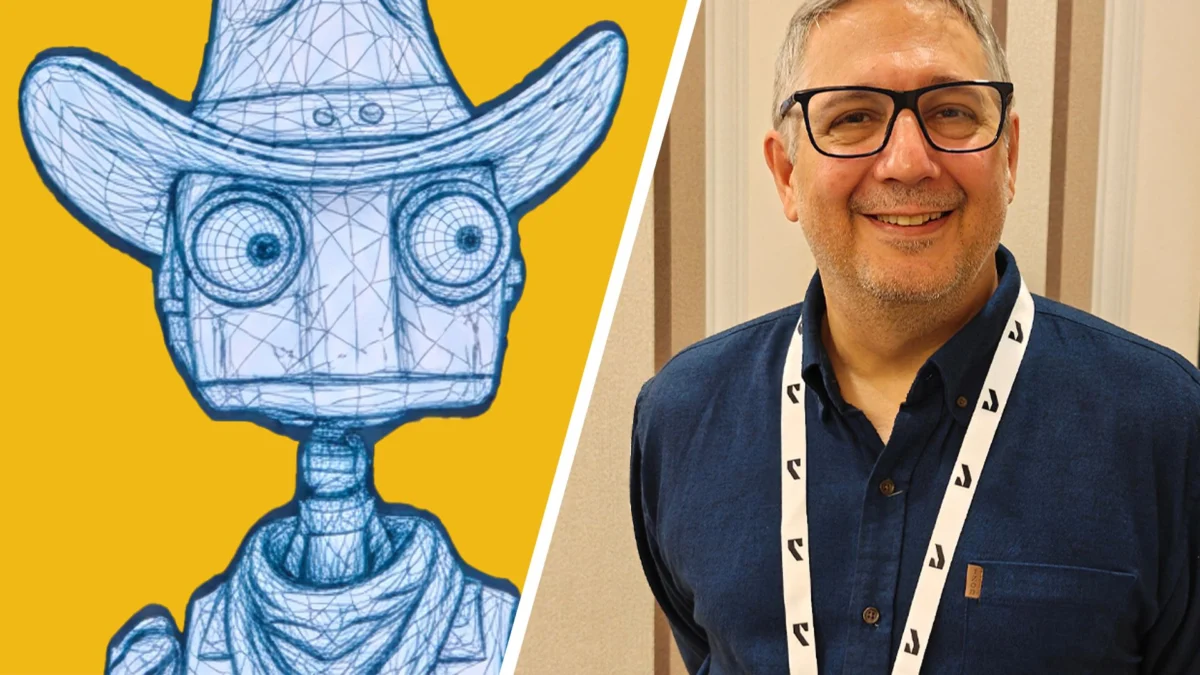
Las Vegas, NV – At the bustling Autodesk University 2026, amidst the cacophony of innovation and forward-thinking presentations, a subtle yet telling admission emerged from the heart of Autodesk’s own AI demonstration. The company’s self-produced AI demo film, "Robots of the Wild West," inadvertently showcased a continuity error – a character’s inexplicable shift in seating position within a few frames. This seemingly minor glitch, far from being an oversight, became a potent symbol of the current state of AI in filmmaking, and a central theme explored by Maurice Patel, Autodesk’s VP of M&E Industry Strategy.
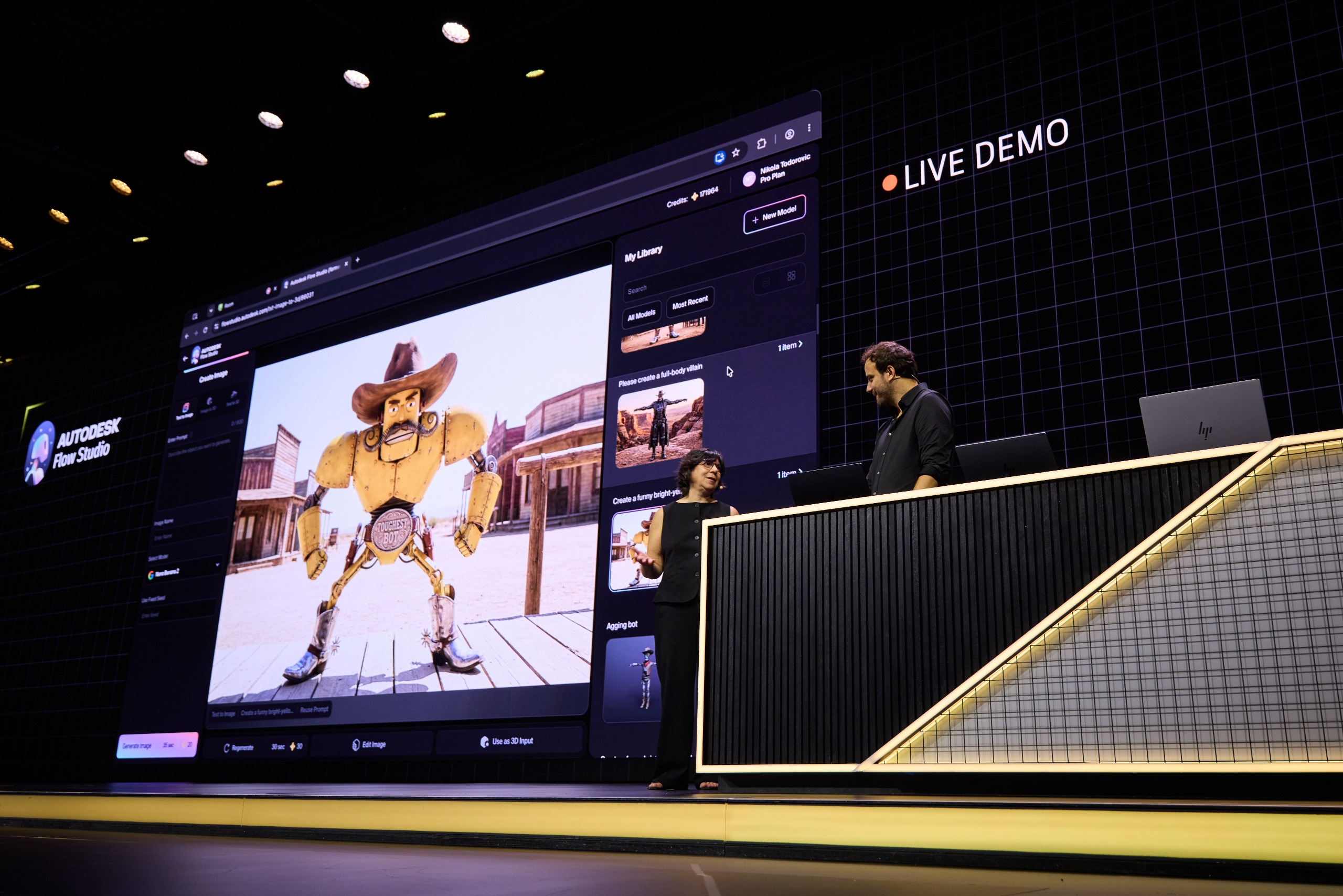
“We tried to prompt the problem away, and we couldn’t,” Patel confessed during an interview at the post-keynote calm of AU26. The decision to leave the error in the film, he explained, was a pragmatic one. “Starting again would have cost more than a demo warranted.” This candid revelation underscores Autodesk’s overarching message at AU26: that Artificial Intelligence should serve as a powerful augmentative tool for artists, not a wholesale replacement. The company’s flagship AI filmmaking tool, Flow Studio, and integrated Maya tools like MotionMaker, are testaments to this philosophy, aiming to empower creatives rather than diminish their roles.
The Serendipitous Nature of AI: Strengths and Limitations
Patel eloquently articulated the inherent dichotomy of AI in content creation: "AI is great at serendipitous content and is terrible at directed content." He categorizes AI’s current capabilities into distinct areas: tasks, shots, and worlds. MotionMaker, for instance, exemplifies AI excelling at specific tasks, currently focusing on locomotion for various species, with more additions planned. Generative video, as seen in "Robots of the Wild West," falls into the "shots" category, demonstrating AI’s nascent ability to produce visual sequences. The ultimate aspiration, however, remains the creation of persistent, physics-aware "worlds" – a goal Patel deems "the holy grail" and still significantly distant. The notion of simply prompting an entire movie into existence, he asserts, is largely a myth.
The continuity error in "Robots of the Wild West" is a manifestation of the challenges inherent in generating "shots" at scale. Patel elaborated on the unpredictable nature of AI models: running the same prompt twice can yield slightly different results, and even minor adjustments can inadvertently alter elements that were previously satisfactory. Furthermore, AI models can become "stuck," persistently generating the same output regardless of prompt variations. In such scenarios, the only recourse is to revert to the initial stages of creation, a process that can be both time-consuming and costly.

Orchestrating the Future: A Hybrid Approach to Filmmaking
Autodesk’s strategic approach, therefore, is not about striving for perfection in a single AI pass, but rather about creating a workflow that allows for iterative refinement and the ability to return to any stage of the creative process. This involves leveraging AI for initial 2D image generation, subsequently translating that into 3D scenes, and then feeding these into video clips, with the option to revisit and adjust at any point. Flow Studio’s innovative 3D Editor + Canvas embodies this principle, enabling artists to strategically position cameras, characters, and performances in a 3D environment before the AI generates the final visual output.
“We fundamentally believe that the future of AI is orchestration,” Patel stated. “We don’t believe there’s going to be one model to rule them all, even though that’s what they might be trying to do.” This sentiment subtly critiques the ambitions of some AI platforms that aim for singular dominance. Patel envisions a future where real footage, computer-generated imagery (CGI), and AI-generated content are seamlessly blended. This hybrid approach isn’t solely about artistic vision; it’s also driven by practicality and efficiency. “Sometimes it’s just quicker to shoot a fire and use that,” he chuckled, illustrating the pragmatic advantages of integrating diverse content creation methods.
Embracing Imperfection: The Artistic Merit of AI’s Flaws
The evolving quality of AI-generated short films is rapidly blurring the lines between artificial and authentic visuals. Patel drew a poignant parallel to the early days of visual effects: "We sometimes forget people used to do bad visual effects." This observation highlights how AI, much like nascent VFX technologies, often exhibits flaws, particularly over longer durations, suggesting that even seemingly polished AI creations may originate from imperfect beginnings.
However, Patel also pointed out that the perceived quality of an AI project is not always the primary objective. He cited the Coca-Cola Christmas AI ad as an example, which, despite being “full of flaws” creatively, garnered significant attention and commercial success precisely because of its AI origin. He recounted another instance of a credit card advertisement where the AI erroneously rendered the logo and produced illegible text – a clear indicator of errors that would have been immediately rejected by a traditional VFX vendor. In these cases, the narrative surrounding the AI creation held more sway than its technical polish.

Yet, AI also unlocks possibilities that were previously unattainable. Patel referenced "Dreams of Violets," a film by Ash Koosha, as a compelling example of AI enabling a filmmaker to tell a story that would have been impossible to shoot in Iran due to political restrictions. While acknowledging the reported low production cost of the film, Patel expressed skepticism, suspecting that the cost was offset by free compute resources from Koosha’s own company, given that prompts for feature-length projects can incur substantial expenses. “It’s a very real cost to this,” Patel admitted. He differentiated between intentionally flawed outputs, which can be generated quickly and cheaply as “AI slop,” and the genuine creative and computational investment required for more sophisticated projects.
The Economic Imperative: AI as a Catalyst for Innovation
Beyond the creative realm, Patel expressed concern about the escalating costs within the industry. He noted that game development budgets have ballooned from millions to hundreds of millions of dollars, leading studios to gravitate towards safer, established franchises like sequels and reboots, thereby stifling innovation and risk-taking. He pointed to the success of low-budget horror films from A24 and Blumhouse, such as "The Backrooms" and "Talk to Me," as evidence of audience appetite for novel content. Patel hopes that AI’s potential to lower production costs will foster greater creative diversity and encourage studios to explore more original narratives. This aligns with the views of Diana Colella, who previously suggested to Creative Bloq that AI could democratize content creation, enabling a broader spectrum of creators to engage with the industry.
The Enduring Role of the Artist: Vision and Imagination
Reflecting on his own career trajectory, Patel recalled his early days in digital compositing training when computers were a nascent technology. He observed that just as rotoscope artists and optical compositors had to adapt, current professionals are navigating a similar paradigm shift with AI. When asked about AI’s impact on jobs, he offered a nuanced perspective: "It’s replacing jobs. It’s changing jobs. It’s allowing people to enter who would never have been able to enter before." He drew a parallel to the digital effects revolution, which transformed a niche industry into a global employment powerhouse.
Patel’s assertion, rooted in practical experience, is that "you still need artists who have a vision, who drive this AI, because the AI itself is actually terrible.” He clarifies that this critique is not of AI’s potential but of its current limitations in directed execution. The AI, he explained, lacks the inherent understanding and creative intent that human artists possess. This brings him back to the core issue highlighted by the "Robots of the Wild West" demo: the critical need for human guidance.
The animator’s role, Patel emphasized, transcends technical proficiency with tools like animation curves. “The art of an animator is understanding how to make the performance shine.” He argued that even a model trained on vast datasets of animal behavior, like a million rabbits, could never independently replicate the distinct character and comedic timing of Bugs Bunny. This unique creative spark, he posits, is a distinctly human attribute that AI cannot replicate. Therefore, he does not foresee AI-driven animation becoming fully autonomous in the near future.
A Love-Hate Relationship with the Future
When asked about his personal feelings towards the rapid advancements in AI, Patel confessed to a “love-hate thing.” He acknowledges the initial discomfort of transitioning from a seasoned expert in one domain to a novice in another. “It’s scary, but it’s also kind of fun,” he concluded, hinting at the thrilling yet daunting prospect of navigating this uncharted territory. The journey of AI in filmmaking, much like the "Robots of the Wild West" demo, is still very much a work in progress, marked by both unexpected errors and immense potential.