The Architecture of Memory: How ‘Mind Diver’ Redefines the Investigative Thriller
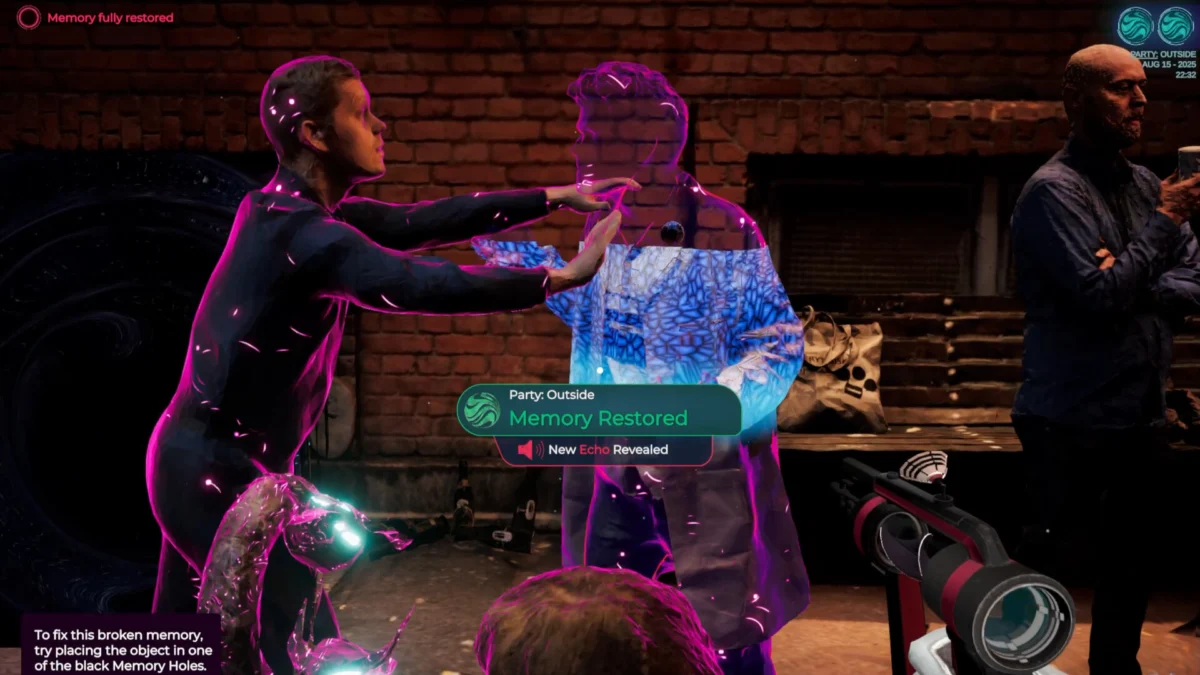
The detective genre in video games has long been defined by the pursuit of external truth. From the meticulously rendered crime scenes of L.A. Noire to the deductive logic puzzles of Sherlock Holmes, players are traditionally tasked with gathering physical evidence, cross-referencing alibis, and extracting confessions through interrogation. However, a new contender in the indie space, Mind Diver, is challenging this paradigm by suggesting that the most vital clues aren’t found in a manila folder or under a magnifying glass—they are buried within the fractured, unreliable architecture of the human psyche.
Developed as a surrealist take on the "whodunit," Mind Diver eschews the traditional police procedural in favor of a "neuro-investigative" approach. It is a game that recognizes that facts are objective, but memories are profoundly subjective. By allowing players to literally step inside the mind of a witness, the game transforms the act of investigation into a haunting journey through trauma, bias, and the ethereal nature of the past.
Main Facts: A New Methodology for Digital Sleuthing
At its core, Mind Diver is a single-player investigative game that tasks the player with solving a complex missing persons case. However, the "crime scene" is not a physical location in the traditional sense. Instead, the player assumes the role of a specialized investigator—a Mind Diver—equipped with the technology to enter the consciousness of others.
The primary subject of this investigation is a woman named Lina. Her mind is presented not as a linear timeline, but as a series of "memory capsules"—fragmented vignettes of her life that have become distorted by time, emotion, and perhaps something more sinister. The game is currently available on Steam, offering a departure from the high-octane action of mainstream titles in favor of a slow-burn, atmospheric experience that prioritizes environmental storytelling and lateral thinking.
The central mystery revolves around a disappearance, but as players delve deeper into Lina’s thoughts, the objective shifts. It becomes less about finding a person and more about finding the truth behind a relationship. The game forces players to confront the reality that what we remember is often a curated version of the truth, shaped by our needs, fears, and the "importance" we assign to specific moments.
Chronology: The Process of a Mental Descent
The narrative progression of Mind Diver follows a structured yet increasingly surreal path. The journey begins with the player entering the outermost layers of Lina’s consciousness, where memories are relatively stable, albeit incomplete.

- The Initial Breach: Upon entering Lina’s mind, the player finds a void filled with isolated "memory bubbles." These represent specific moments in her life, such as a visit to a police station or a quiet evening with her partner. Initially, these scenes are static and lack crucial context.
- The Recognition of Dissonance: As the Mind Diver, the player quickly realizes that these memories are "broken." Objects are out of place, conversations are muted or garbled, and certain emotional triggers are missing. The investigation begins here, as the player identifies the discrepancies between what should be in a room and what Lina remembers being there.
- The Reconstruction Phase: The meat of the gameplay involves active intervention. Players must traverse between different memory capsules, "grabbing" objects from one memory and placing them into another where they logically belong. This act of restoration triggers a "re-syncing" of the mind, unlocking new dialogue and deeper layers of the subconscious.
- The Deep Dive: As the player successfully reconstructs earlier memories, the game’s world becomes more volatile. The deeper the Mind Diver goes, the more "twisted" the memories become. The logic of the real world begins to fray, reflecting Lina’s internal struggle and the potential trauma associated with the missing persons case.
- The Synthesis of Truth: The final stages of the game involve lining up reconstructed conversations and environmental cues to form a cohesive narrative. The player must synthesize these fragments to understand the true nature of Lina’s relationship with her partner and the events leading up to the central disappearance.
Supporting Data: The Mechanics of Subjective Reality
Mind Diver distinguishes itself through its unique mechanical approach to puzzle-solving. Unlike traditional adventure games where "pixel hunting" is the norm, Mind Diver utilizes a system based on "logical emotionalism."
Memory Capsules and Spatial Puzzles
The game utilizes the concept of "capsules"—contained environments that represent a specific snapshot in time. To progress, players must often find an object that is "wrongly" remembered. For instance, if Lina remembers a heated argument in a kitchen but the kitchen is missing a knife that was present in a previous, calmer memory, the player must bridge that gap. This spatial puzzle-solving requires the player to pay close attention to the minutiae of the environment, as even a small trinket on a shelf can hold the key to unlocking a suppressed thought.
The Auditory Layer
Conversations play a pivotal role. The game allows players to "listen in" on the echoes of the past. However, these aren’t just audio logs to be collected. Players must often align fragments of dialogue like pieces of a jigsaw puzzle. By placing the right words in the right context, the player "restores" the memory, often revealing a completely different emotional tone than what was initially presented.
The Invasive Nature of the Job
A recurring theme in the gameplay is the inherent invasiveness of the Mind Diver’s role. The game’s interface and narrative cues often remind the player that they are trespassing in a private sanctuary. This creates a sense of voyeuristic tension. You are not just a detective; you are a psychic burglar, sifting through the most intimate and vulnerable parts of a human being’s history.
Official Responses and Development Context
The game first garnered significant attention during its showcase at the BIG Conference (Bilbao Games Conference), an event renowned for highlighting innovative indie titles. Early hands-on previews from the conference emphasized the game’s "captivating uniqueness."
Journalists and playtesters noted that while many games attempt to simulate "detective work," Mind Diver is one of the few that successfully simulates the process of realization. The developers have expressed that their goal was to move away from the "binary" nature of evidence—where an item is either a clue or it isn’t—and toward a more nuanced system where the context of the item is what matters.

Feedback from the BIG Conference highlighted the game’s "thoroughness." Developers have reportedly spent significant time ensuring that every object in the game’s environments serves a narrative purpose. There is no "clutter" in Lina’s mind; every distorted chair or misplaced photograph is a deliberate choice intended to reflect her mental state.
Implications: The Future of the "Mind-Query" Subgenre
The release of Mind Diver signals a growing interest in what could be called the "Mind-Query" subgenre—games that focus on internal rather than external exploration. It follows in the footsteps of titles like Psychonauts (which handled the concept with whimsy) and The Forgotten City (which focused on philosophical inquiry), but it strips away the platforming and combat to focus entirely on the psychological reconstructive process.
The Ethics of Investigation
One of the most profound implications of Mind Diver is its exploration of the ethics of technology. If we had the power to enter someone’s mind to solve a crime, would we have the right to do so? The game subtly asks whether a "truth" obtained through such invasive means is valid, especially when the process involves "fixing" or "changing" someone’s memories to make them fit a logical narrative.
Narrative Dissonance as a Tool
By making the player responsible for "correcting" memories, the game places the player in a position of immense power. There is a risk of narrative dissonance: is the player finding the truth, or are they simply imposing their own logic on Lina’s broken mind? This ambiguity is one of the game’s strongest assets, elevating it from a simple puzzle game to a sophisticated psychological thriller.
Impact on Indie Game Design
For the indie development community, Mind Diver serves as a masterclass in scope management. By focusing on a limited number of environments (the memory capsules) and diving deep into their detail and interactivity, the developers have created a rich, expansive experience without the need for a massive open world. This "depth-over-breadth" approach is likely to influence future investigative titles, proving that a single room can contain an entire universe of mystery if the writing and mechanics are sufficiently layered.
In conclusion, Mind Diver is more than a detective game; it is a meditation on the fragility of the human experience. It challenges players to look past the surface of things and consider how our emotions color our reality. For those looking for a mystery that requires both a keen eye and an empathetic heart, Mind Diver offers a journey into the subconscious that is as unsettling as it is essential.