Avatar Aang: The Last Airbender Trailer Unveils a Mature Era for Beloved Heroes, Setting the Stage for a Complex "Se-Prequel"
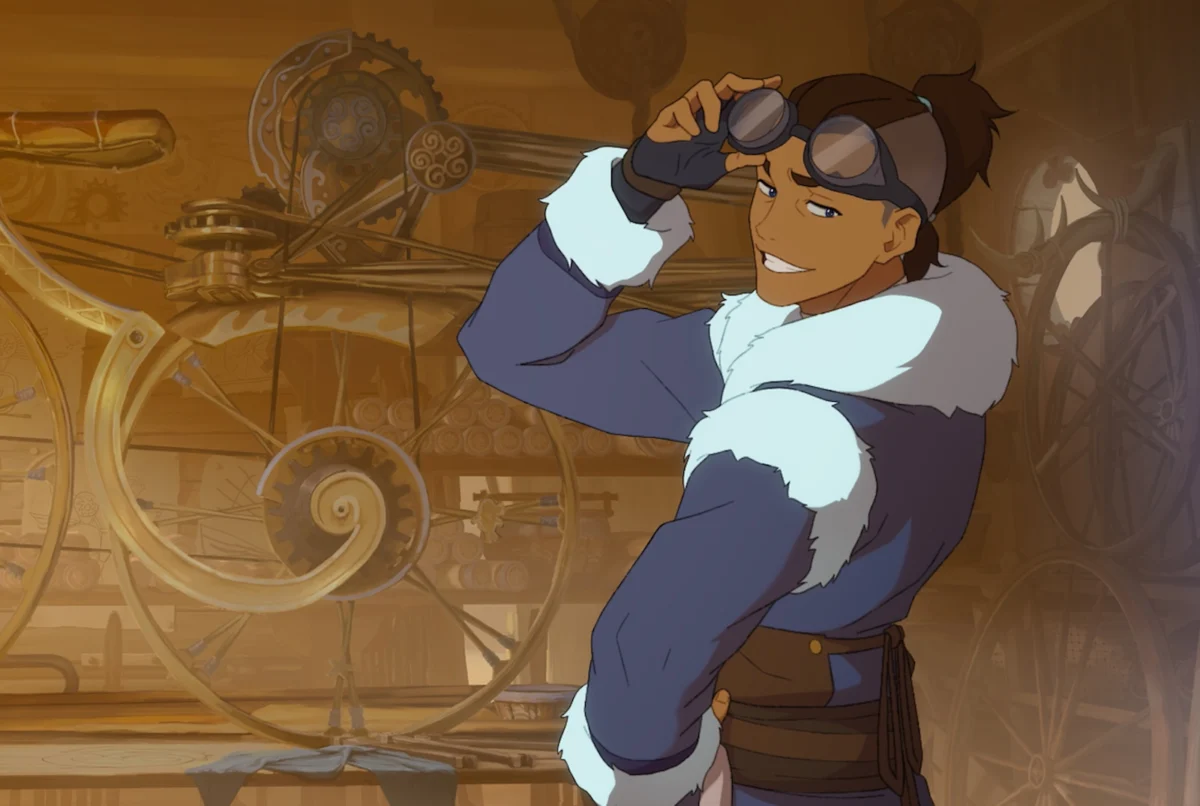
The highly anticipated trailer for the animated feature film Avatar Aang: The Last Airbender has ignited a fervent buzz across the global fanbase, offering a tantalizing glimpse into the lives of beloved characters from Michael Dante DiMartino and Bryan Konietzko’s seminal series, Avatar: The Last Airbender. More than just a continuation, this cinematic endeavor promises a nuanced exploration of growth, responsibility, and the enduring challenges of maintaining balance in a world forever changed by war. Set a decade after the original series’ triumphant finale, the film positions its iconic protagonist, Aang, at a pivotal crossroads, navigating the complexities of young adulthood while confronting new threats to his revitalized world.
The revelation of the film’s premise — featuring an older, more seasoned Team Avatar — marks a significant moment for the franchise, which has seen renewed interest through various comic series, novels, and the recent live-action adaptation. Slated for release on Paramount+ on July 25, 2026, Avatar Aang: The Last Airbender is poised to become a cornerstone of the expanding Avatar universe, bridging the narrative gap between the original saga and its acclaimed successor, The Legend of Korra.
Main Facts: A New Chapter Ten Years On
The animated feature Avatar Aang: The Last Airbender has officially unveiled its first trailer, confirming that fans will reunite with Aang, Katara, Sokka, Zuko, and Toph approximately ten years after the events of the original series finale. This significant time jump finds Aang, now roughly 25 years old, grappling with the evolving demands of his role as the Avatar. The film is set to explore his personal and spiritual development as he transitions from a prodigious child hero to a young adult burdened with immense global responsibilities.
The creative visionaries behind the franchise, Michael Dante DiMartino and Bryan Konietzko, are at the helm, ensuring a continuity of storytelling and character integrity that has long defined the Avatar universe. Bryan Konietzko, co-creator, shared insights with Entertainment Weekly, describing Aang’s current state: "He’s hot, he’s tall and ripped, broad shouldered, and he looks great, but he’s not quite the adult Avatar that he needs to be yet. So this film is really trying to dive into that.” This statement hints at a narrative rich with internal conflict and the pressures of fulfilling a destiny that began far too early.
The film boasts an impressive voice cast, featuring both fresh talent and returning veterans. Eric Nam takes on the voice of the titular Aang, while Jessica Matten lends her voice to Katara, Román Zaragoza to Sokka, Steven Yeun to Zuko, and Dionne Quan to Toph. The ensemble is further enriched by the additions of Freida Pinto, Ke Huy Quan, Taika Waititi, Geraldine Viswanathan, Ronny Chieng, Ken Jeong, and Dave Bautista, whose role as "Tagah" is described as "another Avatar with good bone structure." Notably, Dee Bradley Baker returns to voice the beloved animal companions, Momo and Appa, a welcome continuity for long-time fans.
A central plot element hinted at in the trailer involves Aang’s quest to save his culture from extinction by seeking an "ancient power." This suggests a high-stakes adventure that will delve into the spiritual and historical depths of the Avatar world, particularly concerning the Air Nomads, whose heritage Aang uniquely embodies. The film’s premiere on Paramount+ on July 25, 2026, positions it as a tentpole event for the streaming service, promising a visually stunning and emotionally resonant addition to the beloved franchise.
Chronology: Bridging the Gap Between Eras
Avatar Aang: The Last Airbender occupies a unique chronological position within the Avatar universe, acting as both a direct sequel to Avatar: The Last Airbender and a foundational prequel to The Legend of Korra. This "se-prequel" nature, as coined by its creators, presents both exciting narrative opportunities and considerable creative challenges.
The film picks up approximately a decade after Fire Lord Ozai’s defeat and the conclusion of the Hundred Year War. In the original series, Aang, a mere 12-year-old (biologically), was tasked with bringing balance to a world ravaged by conflict. His journey culminated in restoring peace, but the aftermath of such a cataclysmic war leaves deep scars and complex geopolitical landscapes. The intervening ten years would have seen immense change: the dismantling of the Fire Nation’s imperial ambitions, the rebuilding of the Earth Kingdom, and the nascent stages of what would eventually become Republic City – a melting pot of all four nations, founded by Avatar Aang and Fire Lord Zuko.
This period is not entirely uncharted territory for the Avatar franchise. Numerous canonical comics and novels, such as The Promise, The Search, and The Rift, have explored the immediate aftermath of the war, detailing Zuko’s struggles as Fire Lord, the formation of the Harmony Restoration Movement, and the early conflicts that led to the establishment of Republic City. While DiMartino clarified that the film isn’t "looking to adapt any of those stories exactly," he noted that "we had ideas of how the world had developed." This suggests the film will honor the established progression of the universe while crafting an original narrative that fits seamlessly into the broader timeline.
The decision to feature an adult Team Avatar allows the creators to explore themes of legacy, sustained peace, and the maturation of characters who were essentially children when they saved the world. It provides a crucial look at how the experiences of war and reconciliation have shaped them, setting the stage for the socio-political climate and the next Avatar, Korra, who emerges roughly 70 years after Aang’s era. The film is therefore not just a standalone story but a vital connective tissue, enriching the lore and providing context for the future developments witnessed in The Legend of Korra.
Supporting Data: Deep Dive into Character and World Building
The decision to place Aang at "a precipice between adolescence and adulthood" at 25 years old is a rich narrative vein to tap. During the original series, Aang was often characterized by his playful nature, his reluctance to embrace the full weight of his Avatar duties, and his deep connection to his Air Nomad heritage. Ten years later, while he may be "tall and ripped," the internal struggle hinted at by Konietzko — "not quite the adult Avatar that he needs to be yet" — suggests a protagonist still grappling with the immense, unending demands of his role. This could manifest as a struggle with political complexities, spiritual doubts, or the personal sacrifices required to maintain global balance. The themes of leadership, the burden of immense power, and the isolation of being the last of his kind are likely to be explored with greater depth and maturity.
The creative team’s acknowledgment of the unique challenge of crafting a "se-prequel" underscores the intricate balance they must strike. "It’s always a challenge to write a sequel. A prequel is an even bigger challenge," Konietzko remarked, adding that this "other third type is maybe the most challenging." The difficulty lies in delivering a satisfying continuation of ATLA‘s definitive ending while simultaneously laying groundwork for The Legend of Korra without contradicting established canon or spoiling future developments. This requires careful navigation of character arcs, world events, and thematic consistency. The creators must showcase Aang’s triumphs and ongoing struggles without undermining Korra’s future challenges or diminishing her unique journey as the subsequent Avatar.
The trailer’s hints at the plot offer intriguing avenues for exploration. The introduction of "Tagah," voiced by Dave Bautista, described as "another Avatar with good bone structure," immediately raises questions. Is Tagah a past Avatar appearing through a spiritual vision or a new character whose connection to the Avatar cycle is yet to be revealed? The phrase "another Avatar" is particularly ambiguous. If a past Avatar, what wisdom or warning does he bring to Aang? If a new character, what does his presence signify for the spiritual and political landscape? Bautista’s powerful voice suggests a formidable presence, whether as an ally, a mentor, or even an antagonist challenging Aang’s understanding of the Avatar’s role.
Furthermore, the central conflict revolving around Aang seeking an "ancient power" to save his culture from extinction is deeply resonant. The Air Nomads were largely wiped out during the Hundred Year War, leaving Aang as the sole survivor. The concept of saving his culture implies more than just preserving memories or artifacts; it could mean finding a way to revitalize Air Nomad traditions, spirituality, or even bring about a resurgence of airbending, perhaps through the new Air Acolytes established post-war, or even hinting at the emergence of new airbenders as seen in The Legend of Korra. The "ancient power" could be a spiritual entity, a lost technique, or a forgotten piece of Air Nomad history critical to their future. This plot point ties directly into Aang’s personal journey and his deep-seated desire to honor and perpetuate his people’s legacy, a burden he has carried since childhood.
The impressive voice cast, featuring acclaimed actors like Steven Yeun and Ke Huy Quan alongside the original voice of Momo and Appa, Dee Bradley Baker, signals a high level of production quality and a commitment to delivering a compelling cinematic experience. The blend of seasoned talent with fresh voices for the core characters suggests a deliberate effort to evolve the auditory landscape of the franchise while retaining its beloved elements.
Official Responses: The Creators’ Vision and Challenges
Michael Dante DiMartino and Bryan Konietzko, the architects of the Avatar universe, have consistently expressed a deep reverence for the world and characters they created. Their direct quotes regarding Avatar Aang: The Last Airbender highlight both their creative drive and the careful consideration informing their decisions.
Konietzko’s description of Aang at 25 as being "at this precipice between adolescence and adulthood" and "not quite the adult Avatar that he needs to be yet" reveals a deliberate choice to explore a more vulnerable and developing side of the protagonist. This isn’t just about showing Aang as physically mature, but psychologically and spiritually evolving. It acknowledges that even the Avatar’s journey of self-discovery and mastery continues long after defeating the primary antagonist. This perspective promises a character-driven narrative that delves into the internal pressures and growth pains of a young man holding the weight of the world on his shoulders.
The discussion around the "se-prequel" format is particularly illuminating. Konietzko’s candid admission that it might be "the most challenging" type of story to tell underscores the intricate balancing act required. A typical sequel might only need to advance the story, and a prequel only to set it up. But a "se-prequel" must do both simultaneously, honoring what came before while subtly laying foundations for what is to come. This means carefully crafting character motivations and world developments that feel organic within the ATLA timeline but also logically lead to the conditions seen in The Legend of Korra.
DiMartino further elaborated on their approach, stating, "The story we told in the series had a very decisive ending. We didn’t wanna retread stuff." This commitment to avoiding repetitive narratives is crucial for maintaining fan engagement and creative integrity. The original series concluded with a clear victory and the promise of a new era of peace. To simply revisit old conflicts or character dynamics would risk undermining that resolution. Instead, by acknowledging the definitive ending, the creators are compelled to explore fresh challenges that naturally arise from a world in transition, allowing for new narrative arcs and character developments that feel earned and necessary.
His comment that "we weren’t really looking to adapt any of those stories exactly, but we had ideas of how the world had developed" provides insight into their creative process concerning the existing canonical comics and novels. While these supplementary materials have detailed much of the interim period, the film appears to be charting its own course, drawing inspiration from the established world-building rather than a direct adaptation. This approach grants them creative freedom to tell a compelling story optimized for the feature film format while ensuring consistency with the broader Avatar lore. It suggests a focus on original conflicts and personal stakes for Aang and his friends that resonate with the themes of their growth and the world’s evolution.
Implications: The Future of the Avatar Universe
The release of Avatar Aang: The Last Airbender carries significant implications for the future of the entire Avatar franchise, particularly under the newly formed Avatar Studios. This film is the first major animated project spearheaded by DiMartino and Konietzko since regaining creative control, following their departure from the live-action Netflix adaptation. Its success will undoubtedly influence the trajectory of future animated films and series planned for the universe.
For fans, this film represents a highly anticipated return to the original animated style and storytelling that captured their hearts. The opportunity to see Aang, Katara, Sokka, Zuko, and Toph as adults, navigating more mature challenges, is a powerful draw. It promises to deepen their understanding of these beloved characters and the world they helped shape. However, with such high expectations comes the pressure to deliver. Fans will be scrutinizing the film’s ability to maintain the thematic integrity, emotional depth, and intricate world-building that defined the original series, while also seamlessly connecting to The Legend of Korra. The balance between nostalgia and innovation will be key to its reception.
Strategically, the film’s exclusive premiere on Paramount+ underscores the platform’s commitment to leveraging high-value intellectual property to attract and retain subscribers. A successful launch could cement Avatar as a flagship franchise for Paramount+, potentially leading to more direct-to-streaming animated features and series that expand the universe further. This model allows the creators to explore different eras and Avatars without the constraints of traditional network television schedules or theatrical release windows.
Thematically, Avatar Aang: The Last Airbender has the potential to explore profound concepts relevant to both its fictional world and contemporary audiences. The idea of "saving his culture from extinction" for Aang, the last Airbender, speaks to themes of cultural preservation, identity, and the weight of legacy. In a world increasingly concerned with climate change and the loss of indigenous cultures, these narratives can resonate deeply. Furthermore, Aang’s journey from a child tasked with saving the world to a young adult still figuring out how to be the "adult Avatar" offers a compelling look at continuous growth, the never-ending nature of responsibility, and the evolution of heroism. It suggests that even after achieving a monumental victory, the path to true balance and wisdom is a lifelong endeavor.
Should this film resonate with audiences, it could pave the way for a new era of Avatar storytelling, allowing Avatar Studios to delve into the lives of other past Avatars, explore different periods of the world, or even introduce entirely new characters and bending forms. It signifies a confident step forward for the franchise, reaffirming its place as a cornerstone of animated storytelling and a rich, evolving universe with endless narrative possibilities. The anticipation is palpable, and the film’s performance will be a critical indicator of the Avatar universe’s robust future.