The Prehistoric Frontier: Luke Sparke on the Expanding Universe of ‘Primitive War’ and the Future of Independent Genre Cinema
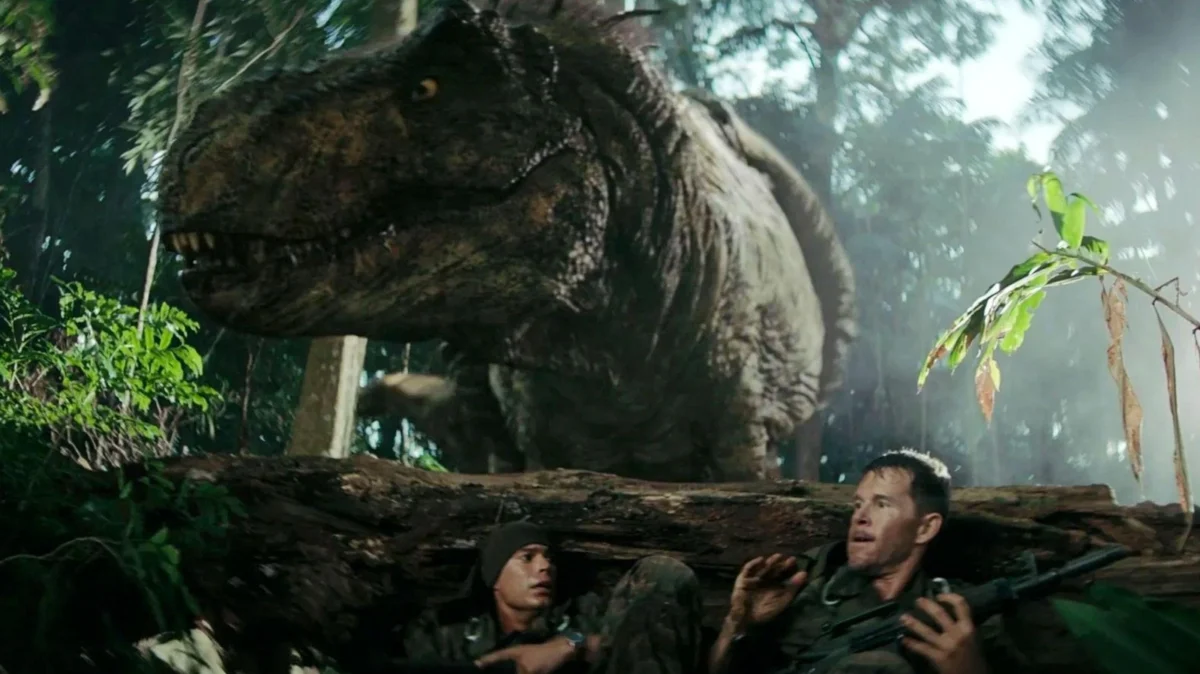
The cinematic landscape of 2025 was marked by an unexpected disruptor. While major studios continued to lean on established intellectual properties and nine-figure budgets, an independent production titled Primitive War carved out a significant niche, capturing the imagination of genre fans and critics alike. Directed by Luke Sparke and produced by Sparke Films, the movie offered a visceral, high-stakes collision of historical warfare and prehistoric terror.
In an era where "dinosaur movies" are often synonymous with the Jurassic World franchise, Sparke proved that there was an appetite for a grittier, R-rated approach to the genre. Now, in an exclusive deep dive following the launch of his latest project, Dinosaurs of the Wild West, Sparke reveals that Primitive War was merely the opening salvo in what is becoming a sprawling, multi-film universe.
Main Facts: A Roadmap for Prehistoric Mayhem
The primary revelation from director Luke Sparke is the confirmation that Primitive War 2 is no longer just a standalone sequel in development. Instead, Sparke Films has mapped out a comprehensive franchise trajectory involving multiple scripts and various narrative timelines. Unlike traditional sequels that follow a strictly linear path, the Primitive War sequels are being designed as a modular cinematic world.
Key takeaways from the current development phase include:
- Multiple Scripts Ready: Sparke has confirmed that several scripts are already "on the bench," featuring different cast members and intersecting storylines.
- Non-Linear Storytelling: The franchise will experiment with its chronology, with some films acting as direct sequels, while others may function as mid-quels or parallel narratives occurring simultaneously with the events of the first film.
- A Distinct New Project: Dinosaurs of the Wild West has been unveiled not as a sequel to Primitive War, but as a separate entity within Sparke’s creative portfolio, currently seeking funding via a high-profile Kickstarter campaign.
- Budgetary Efficiency: Despite the "blockbuster" visual quality, the franchise continues to operate within the independent sphere, maintaining a level of creative control often lost in major studio productions.
Chronology: From Novel to Viral Sensation
The journey of Primitive War began with the literary works of Ethan Pettus. His novel series provided a rich, detailed foundation for Sparke to build upon, blending the harrowing psychological trauma of the Vietnam War with the survival-horror elements of a creature feature.
When the first film was released in 2025, it was hailed as a "Jurassic Park meets Platoon" experience. It followed a military recon unit, the Vulture Squad, as they searched for a lost platoon in an isolated valley, only to discover that the jungle was inhabited by apex predators that should have been extinct for 65 million years.
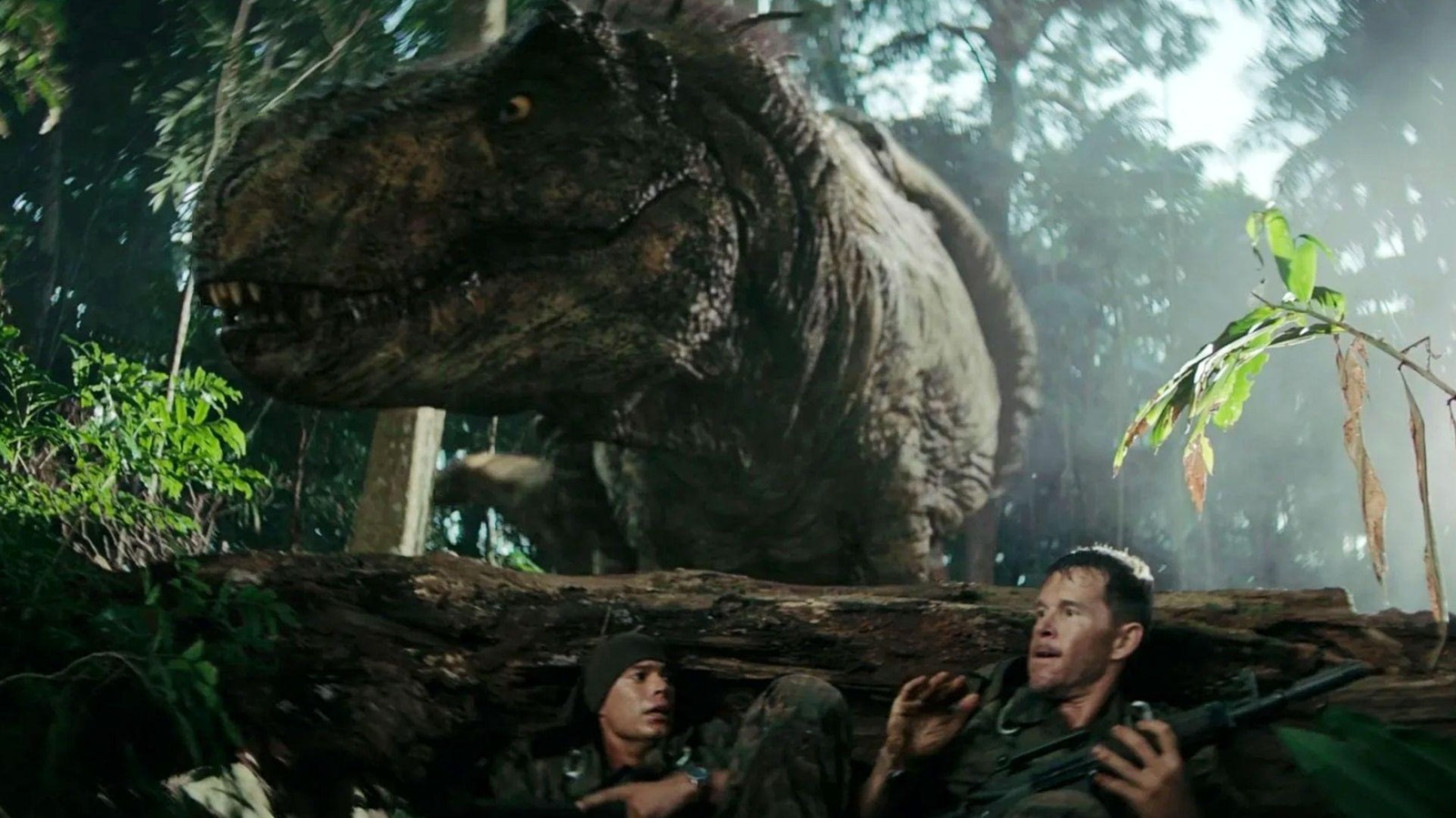
The timeline of the franchise’s expansion has moved rapidly:
- Early 2025: Primitive War releases to viral success, proving that independent VFX can compete with mid-tier studio offerings.
- Mid-2025: Sparke Films announces that a sequel is in the works, sparked by high demand and strong performance on digital platforms.
- Late 2025/Early 2026: Instead of rushing into production, Sparke chooses to "pump the brakes." This period is used to map out the broader universe, ensuring that the story has longevity rather than being a one-off cash grab.
- Present Day: The launch of the Dinosaurs of the Wild West trailer and Kickstarter marks a dual-track strategy for Sparke, balancing the established Primitive War brand with new, experimental genre-mashing concepts.
Supporting Data: The Economics of the $10 Million Blockbuster
One of the most staggering aspects of Sparke’s work is the financial efficiency of his productions. In an industry where a standard Marvel or Jurassic World entry costs upwards of $200 million, Sparke produced Primitive War for less than $10 million.
This budgetary data point is crucial for understanding why Sparke is currently "mapping out" multiple sequels rather than just one. By keeping costs low, the "break-even" point for these films is significantly lower, allowing for more creative risks. Sparke’s ability to deliver high-fidelity CGI dinosaurs—often the most expensive part of any production—on a "catering budget" has made him a person of interest for industry analysts.
The success of the first film was bolstered by:
- VFX Integration: Utilizing Sparke Films’ in-house capabilities to bypass the expensive overhead of major third-party VFX houses.
- Niche Targeting: Tapping into the "Dino-Horror" subgenre, which has been largely underserved by mainstream Hollywood since the original Jurassic Park (1993) transitioned into family-friendly adventure.
- Source Material Loyalty: By sticking closely to Ethan Pettus’s gritty tone, Sparke secured a built-in fanbase of readers who had long advocated for a faithful adaptation.
Official Responses: Luke Sparke on Avoiding the "Sequel Trap"
In an exclusive conversation, Luke Sparke provided insight into his philosophy regarding franchise building. His primary concern is avoiding the "bigger equals better" mentality that has historically plagued action and horror sequels.
"I’d hate just to go back and go ‘bigger is better’ sequel," Sparke explained. "And then suddenly you burn out on that, which is what happens a lot with franchises. It suddenly just goes, next one has to be bigger. Then, by the time it gets to the third one, you’re like, this is just ridiculous."
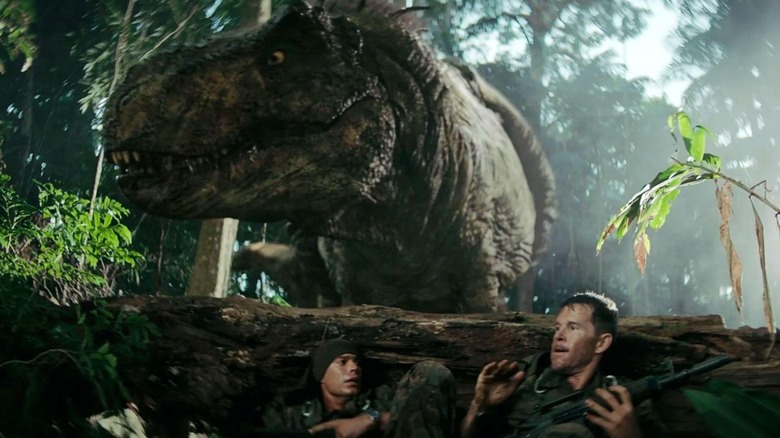
Instead, Sparke is focusing on narrative depth and structural variety. He describes the current slate of scripts as a puzzle: "There’s definitely a little bit of non-linear. There’s a couple that could shift. There’s a couple that are definitely like, this must happen after X film, but there’s still through lines of each one. Each one might have a cameo from someone from the first one. It all kind of comes back to the first one, but it might be different timelines."
Addressing the delay of Primitive War 2, Sparke noted that the decision was based on quality control. "There was a time this year that we were about to go on Primitive War 2 on one of the scripts and then we were like, ‘Are we just doing it to do it? Are all the pieces right? Should we wait for the right moment?’ So, again, there’s all those conversations that happen every day."
The director’s current projection for the first sequel’s release is late 2027 or early 2028, ensuring that the production values and script meet the high bar set by the original.
Implications: A New Era for Independent Genre Filmmaking
The expansion of the Primitive War universe has broader implications for the film industry at large. Sparke’s success suggests a shift in how "blockbuster" content is consumed and produced.
1. The Rise of the "Indie-Buster"
Sparke is proving that the gap between independent film and the blockbuster is narrowing. As digital tools for visual effects become more accessible, the "barrier to entry" for high-concept sci-fi and action is lowering. If an independent director can create a convincing T-Rex for a fraction of the cost of a studio, it puts pressure on major studios to justify their massive overheads.
2. The Return of the R-Rated Creature Feature
For decades, dinosaurs were seen as "kids’ stuff" due to the marketing of the Jurassic franchise. Primitive War has re-established the dinosaur as a source of horror. This shift allows for more mature storytelling, dealing with themes like PTSD, the ethics of warfare, and the fragility of human civilization when confronted with nature’s ultimate predators.
3. The Kickstarter Model for Genre Content
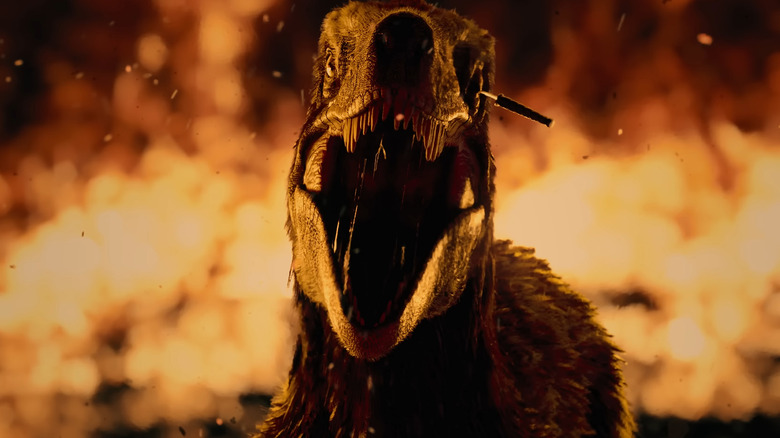
By launching Dinosaurs of the Wild West on Kickstarter, Sparke is bypassing the traditional "gatekeepers" of Hollywood. This direct-to-consumer approach ensures that the filmmaker is accountable to the fans rather than studio executives who might want to "sanitize" the violence or tone. If Dinosaurs of the Wild West succeeds, it provides a blueprint for how the Primitive War sequels might be financed or marketed in the future.
4. Cross-Media Synergy
The collaboration between Sparke and author Ethan Pettus serves as a model for how novelists and filmmakers can work together to build a brand. By mapping out multiple films at once, they are creating a "cinematic universe" feel that encourages repeat viewership and deep engagement with the lore.
Conclusion: Patience for the Prehistoric
While fans may have to wait until 2027 to see the Vulture Squad return to the screen in a direct sequel, the news of multiple scripts and a non-linear approach suggests that the Primitive War franchise is being built to last. Luke Sparke is not merely making a sequel; he is constructing an ecosystem.
By refusing to rush into production and resisting the urge to simply "make everything bigger," Sparke is positioning Primitive War as a sophisticated alternative to the mainstream. In the meantime, Dinosaurs of the Wild West promises to satisfy the audience’s craving for prehistoric action, proving that in Sparke’s world, the age of the dinosaurs is far from over.