Award-Winning Author Phenderson Djèlí Clark Explores Mortality, Godhood, and the Human Condition in "Learning the Loom"
FOR IMMEDIATE RELEASE
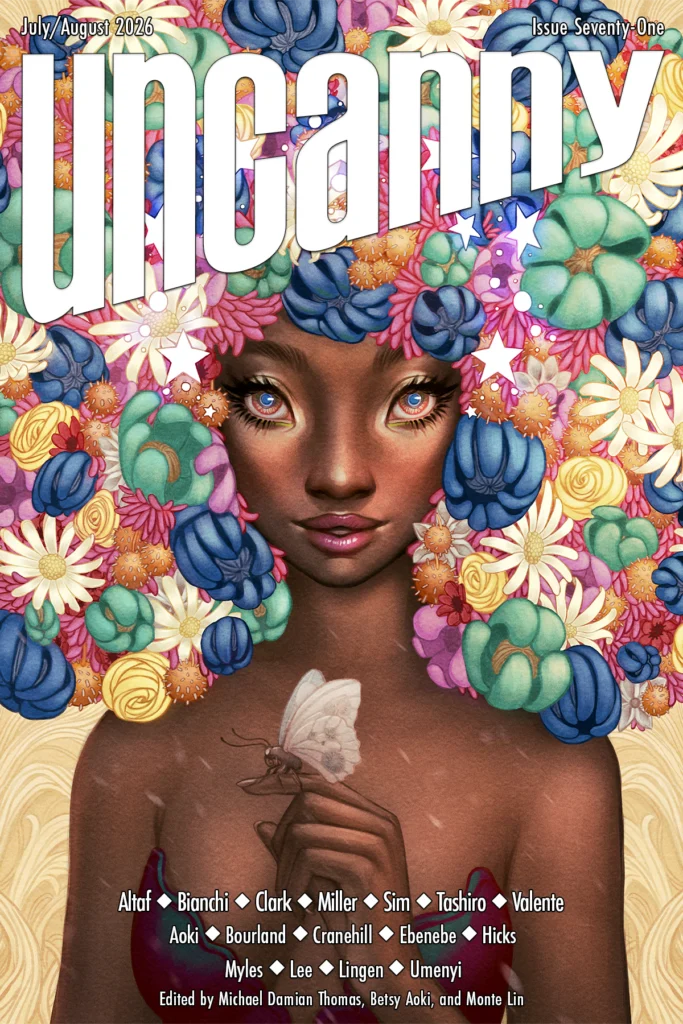
[City, State] – [Date] – Phenderson Djèlí Clark, the critically acclaimed and multi-award-nominated author whose works consistently push the boundaries of speculative fiction, delves into profound philosophical questions in his latest short story, "Learning the Loom." Published in Uncanny Magazine, this poignant narrative explores themes of godhood, mortality, and the essence of human existence through a unique lens, marking Clark’s fifth compelling appearance in the prestigious online venue.
"Learning the Loom" distinguishes itself by seamlessly weaving together the cosmic scale of warring deities with the intimate intricacies of mundane village life. At its heart is a protagonist navigating these disparate realms, gaining invaluable experience that challenges perceptions of identity and purpose. Clark, celebrated for his historical fantasy infused with rich cultural mythologies, continues to captivate readers and critics alike with his imaginative storytelling and thoughtful explorations of complex human — and indeed, post-human — dilemmas.
A Career Woven in Acclaim: The Ascendance of Djèlí Clark
Phenderson Djèlí Clark’s journey through the literary landscape has been marked by a rapid ascent and a consistent stream of accolades, cementing his status as one of contemporary speculative fiction’s most vital voices. His bibliography is a testament to his versatility and commitment to exploring diverse narratives, often rooted in reimagined historical settings and infused with elements of African diasporic folklore and myth.
From Novellas to Masterworks:
Clark first garnered widespread attention with his compelling novellas, which quickly became critical darlings. Titles like The Dead Cat Tail Assassins, Ring Shout, The Black God’s Drums, and The Haunting of Tram Car 015 showcased his ability to craft intricate worlds and compelling characters within a concise format. Ring Shout, in particular, earned significant recognition, winning the Nebula Award for Best Novella and the Locus Award, further solidifying his reputation. These works often blend historical contexts with supernatural elements, challenging conventional narratives and offering fresh perspectives.
His transition to longer forms proved equally successful. The Abeni’s Song series, geared towards a younger audience but enjoyed by readers of all ages, demonstrates his capacity for crafting engaging serial narratives. However, it was the novel A Master of Djinn that truly propelled him into the literary stratosphere. A vibrant historical fantasy set in an alternate Cairo, the novel received widespread critical acclaim and earned him a Hugo Award, a Nebula Award, a Locus Award, and a World Fantasy Award nomination, among others. This monumental achievement underscored his prowess in worldbuilding, character development, and intricate plot construction on a grand scale.
Clark’s short fiction has also found homes in prestigious online platforms such as Tor.com and in print anthologies including Hidden Youth, Black Boy Joy, and Amazon Stories. These shorter pieces often serve as fertile ground for experimenting with new ideas and exploring themes that later resonate in his longer works. His consistent presence in Uncanny Magazine, with "Learning the Loom" marking his fifth contribution, speaks volumes about the quality and originality of his work, and the magazine’s commitment to showcasing groundbreaking talent. Looking ahead, fans eagerly anticipate the release of his forthcoming book, Abeni and the People Who Could Fly, slated for September 2027, promising another captivating addition to his growing legacy.
Unraveling "Learning the Loom": Inspiration, Challenges, and Thematic Depth
In an exclusive interview with Uncanny Magazine, Djèlí Clark offered profound insights into the creative process behind "Learning the Loom," shedding light on its unique genesis and the intricate challenges of bringing its themes to life. The discussion revealed a story deeply rooted in philosophical inquiry, exploring what it truly means to inhabit a mortal coil.
The Spark of Sentience:
The initial inspiration for "Learning the Loom" stemmed from Clark’s long-standing fascination with sentient weapons and objects imbued with immense power. He cites iconic examples like J.R.R. Tolkien’s One Ring and legendary magic swords, which often possess a will or sentience beyond their wielders. Clark pondered a pivotal question: "What if such a weapon was not just gifted sentience but made human? How would such a being think, behave, act in their newfound mortality? How would they find purpose, now made independent from their maker or wielder?" This fundamental inquiry became the bedrock of "Learning the Loom," providing a fertile ground for exploring identity, agency, and the transition from object to subject. The narrative cleverly uses this fantastical premise to dissect universally human experiences, inviting readers to consider their own existence through a fresh, unburdened perspective.
The Art of Humanization: A Writer’s Challenge:
Clark candidly shared that the most challenging aspect of writing "Learning the Loom" was truly inhabiting the main character’s perspective. For a being newly introduced to mortality, the myriad facets of human existence—hunger, taste, sleep, social codes, and etiquette—would be entirely alien. "I had to force myself to not make assumptions and find ways to portray the most mundane things as new, confusing, frustrating, or exciting," Clark explained. This meticulous attention to detail required a delicate balance, portraying the familiar with an air of profound novelty. It speaks to Clark’s skill as a writer that he could render such common experiences with a sense of wonder and bewilderment, allowing readers to rediscover the intricacies of being human alongside his protagonist.
Conversely, Clark admitted that the easiest part of the writing process was the worldbuilding. With an enthusiastic "because I heart sign worldbuilding!", he underscored his passion for crafting rich, immersive environments. This natural inclination for creating intricate settings allows him to focus his energy on the more nuanced aspects of character development and thematic exploration, confident in the solidity of the world his characters inhabit. His ability to effortlessly construct a vibrant backdrop, whether it’s a bustling historical city or a remote, myth-laden village, is a hallmark of his storytelling.
The Dynamics of Mortality: Okono and Akili:
Central to the story’s emotional core is the evolving relationship between Okono and Akili. Clark emphasized its critical role: "the relationship between Okono and Akili is essential for this story—because one is quite literally teaching the other how to be human. It’s a whole crash course on mortality." This dynamic becomes the primary vehicle for the protagonist’s integration into human society, where Akili serves as both guide and mirror. The narrative is further enriched by the fact that both are young women, navigating the complex "tangled coming of age social mores" alongside the extraordinary circumstances of godhood and mortality.
Clark revealed that the trajectory of their bond was not entirely pre-planned. While he knew the relationship would be close, he didn’t initially foresee the tension and eventual "rupture" that would emerge. "But the story took me there," he noted, highlighting the organic, often unpredictable nature of character development. This willingness to let his characters lead the narrative often results in more authentic and emotionally resonant stories, where relationships evolve in ways that feel earned and impactful. The shifting dynamics between Okono and Akili underscore the complexities of human connection, particularly when one party is learning the very fundamentals of existence from the other.
The Ultimate Choice: The Weight of Godhood
One of the most intriguing revelations from the interview concerned the story’s ending and a profound philosophical dilemma at its core: the offer of godhood. When asked if he personally would accept such an offer, Clark playfully evaded a direct answer, noting with a smile, "Notice I never answered the question." However, he did disclose a fascinating detail about the creative process: "this story actually had TWO endings. One where godhood offered is accepted, and one where it’s not."
This decision point speaks volumes about the story’s thematic depth and Clark’s dedication to his characters’ authenticity. He confessed to deliberating "long and hard" and going "back and forth often" on which ending to choose. Ultimately, his selection was driven by what he believed was "right for the character," rather than his personal inclination. This illustrates a crucial aspect of Clark’s writing philosophy: the narrative’s integrity and the character’s journey take precedence over a writer’s personal biases or preferences. The choice to accept or reject godhood becomes a powerful statement on the protagonist’s newfound understanding of humanity, mortality, and purpose. It forces readers to ponder the true value of human experience, imperfections and all, against the allure of divine power.
Literary Constellations: Influences and Future Horizons
Djèlí Clark’s work, while distinctly his own, is built upon a rich tapestry of literary influences that continue to feed his boundless imagination. He cited a constellation of contemporary authors whose works he turns to when seeking inspiration and intellectual nourishment: N.K. Jemisin, Victor LaValle, Ken Liu, Cassandra Khaw, Rebecca Roanhorse, and Fonda Lee. This diverse group of writers, each a master in their own right, reflects Clark’s eclectic tastes and his engagement with the cutting edge of speculative fiction. Their common thread often lies in their ability to blend genre conventions with profound social commentary, rich worldbuilding, and unforgettable characters—qualities that are equally evident in Clark’s own bibliography. He also shared his current reading pleasure, Martha Wells’ Rising World series, indicating a continued appreciation for intricate, character-driven narratives within fantastical frameworks.
Looking ahead, Clark provided an exciting glimpse into his upcoming projects, demonstrating his continuous drive to innovate and explore new narrative territories. He is currently "wrapping up the final book in this middle grade trilogy," a project that undoubtedly contributes to his versatility as an author capable of captivating different age groups. Following this, he plans to return to a highly anticipated "dieselpunk superhero(ine) story." His description of this project—"Think Raiders of the Lost Ark meets Captain America"—conjures images of thrilling adventure, pulpy aesthetics, and powerful protagonists. This fusion of historical action, speculative technology, and heroic archetypes promises another genre-bending narrative that will surely delight his dedicated readership and attract new fans.
Implications: Djèlí Clark’s Enduring Impact on Speculative Fiction
Phenderson Djèlí Clark’s "Learning the Loom" is more than just another compelling story; it is a testament to his consistent ability to imbue fantastical narratives with deep philosophical weight. His exploration of godhood, mortality, and the human condition resonates profoundly in a world grappling with identity and purpose. By taking a seemingly simple premise—a sentient weapon made human—and dissecting its implications with such nuance, Clark challenges readers to reconsider their own understanding of what it means to live, feel, and find meaning.
His work, particularly in its consistent engagement with diverse mythologies and historical backdrops, enriches the speculative fiction landscape by offering perspectives that are both fresh and deeply rooted. Clark doesn’t merely tell stories; he constructs elaborate thought experiments that invite empathy and critical reflection. His impressive array of awards and nominations are not just accolades; they are indicators of his significant cultural and literary impact, highlighting how his narratives resonate with a broad audience and contribute meaningfully to contemporary discourse.
"Learning the Loom," like much of Clark’s oeuvre, serves as a powerful reminder of the enduring capacity of speculative fiction to explore the most fundamental questions of existence. Through its poignant narrative, Uncanny Magazine continues its tradition of showcasing stories that are not only entertaining but also intellectually stimulating and emotionally resonant. As Djèlí Clark continues to weave his intricate tales, whether of djinn in alternate Cairene streets, supernatural beings fighting the KKK, or newly human entities discovering the world, his influence on the genre and his ability to provoke thought remain undeniable. His forthcoming projects promise to further solidify his legacy as a master storyteller unafraid to tackle the grandest questions with the most intimate of human touches.
© 2026 Uncanny Magazine