Azuki TCG: A New Challenger Rises in the Crowded Arena of Trading Card Games
In an era where the trading card game (TCG) market seems perpetually saturated, with titans like Magic: The Gathering dominating and new contenders like Cyberpunk TCG breaking crowdfunding records, it might seem audacious for another player to enter the fray. Yet, a new force is quietly but confidently building momentum, poised to challenge the established order. The Azuki Trading Card Game, far from relying on traditional crowdfunding platforms, has demonstrated remarkable financial prowess through private sales, signaling a formidable entry into the competitive landscape.
Having already garnered significant attention with a successful Alpha Deck launch that pulled in an impressive $570,000, followed by a subsequent Pre-Sale reaching $1.12 million, Azuki TCG is not merely testing the waters. It’s making waves. This audacious approach, circumventing the public Kickstarter model, underscores a strategic confidence in its product and community. The anticipation culminates with the release of its new set, Gates Awakened, set to hit stores this June.
Main Facts: A Bold New Vision for Tabletop Gaming
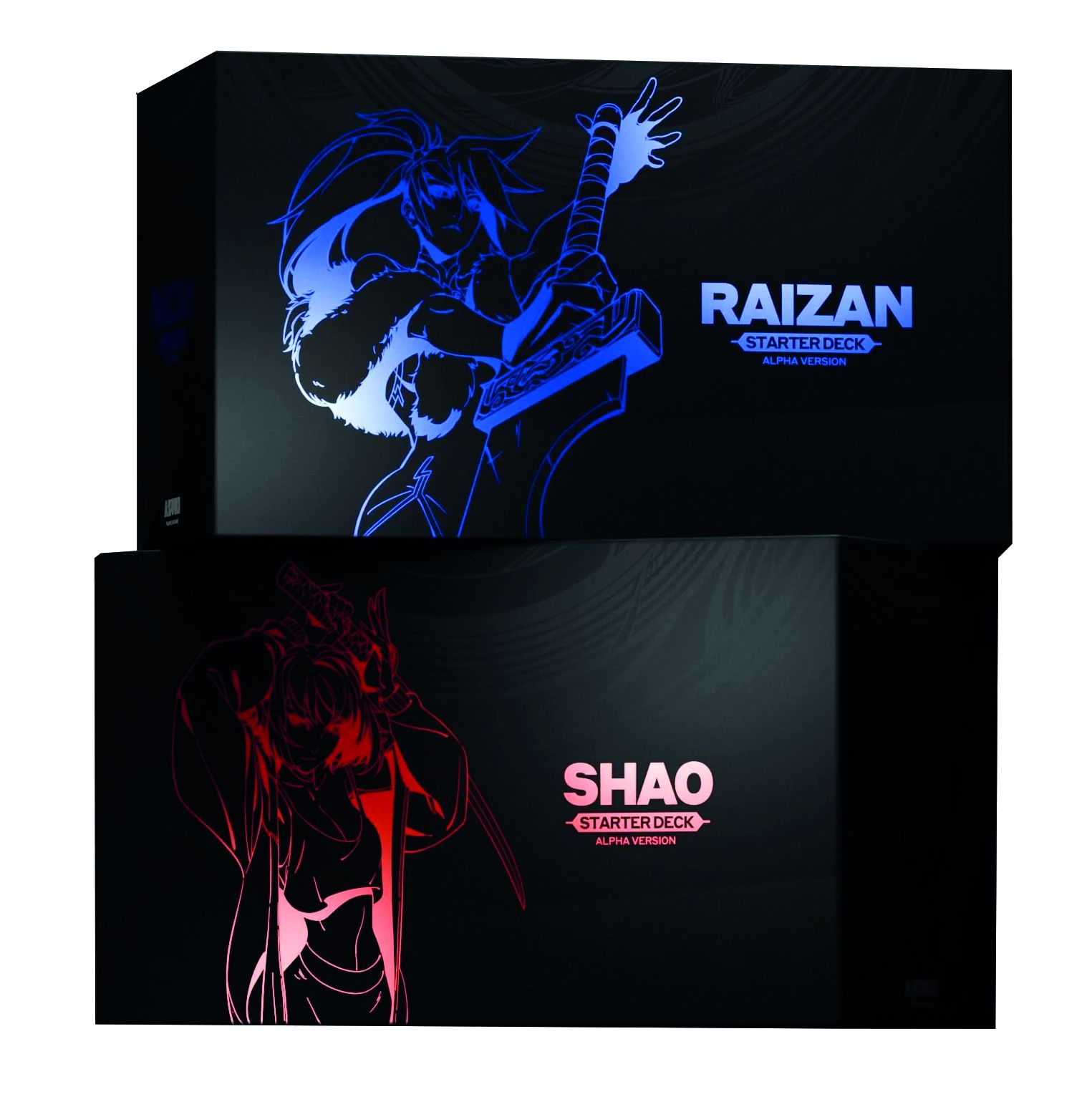
The Azuki Trading Card Game emerges as a striking blend of artistic excellence, compelling lore, and innovative gameplay mechanics. What immediately sets Azuki TCG apart is its commitment to premium production values. Reviewers have lauded the "stunning" presentation of the Alpha Decks, from their vibrant, shiny boxes to the meticulously silvered cards themselves. Every single card boasts hand-drawn artwork, a testament to the dedication poured into its visual identity. This level of craftsmanship, often seen as stretch goals in high-tier crowdfunding campaigns, is a baseline for Azuki TCG, delivered directly through private sales.
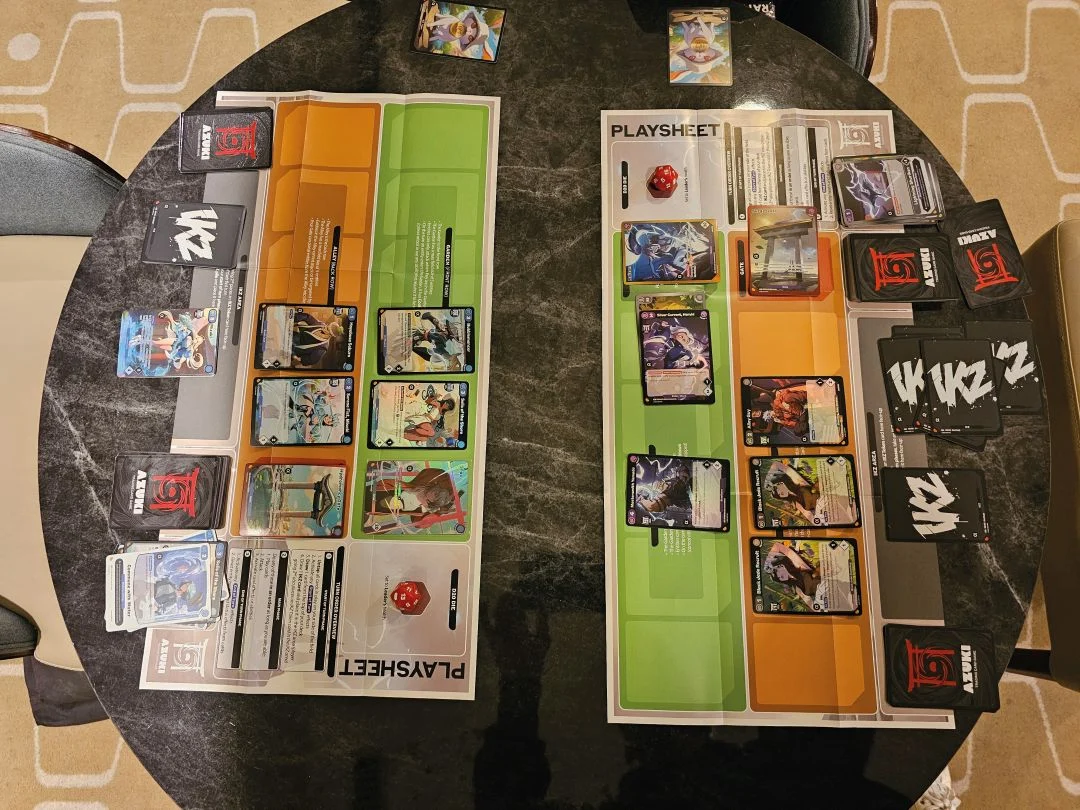
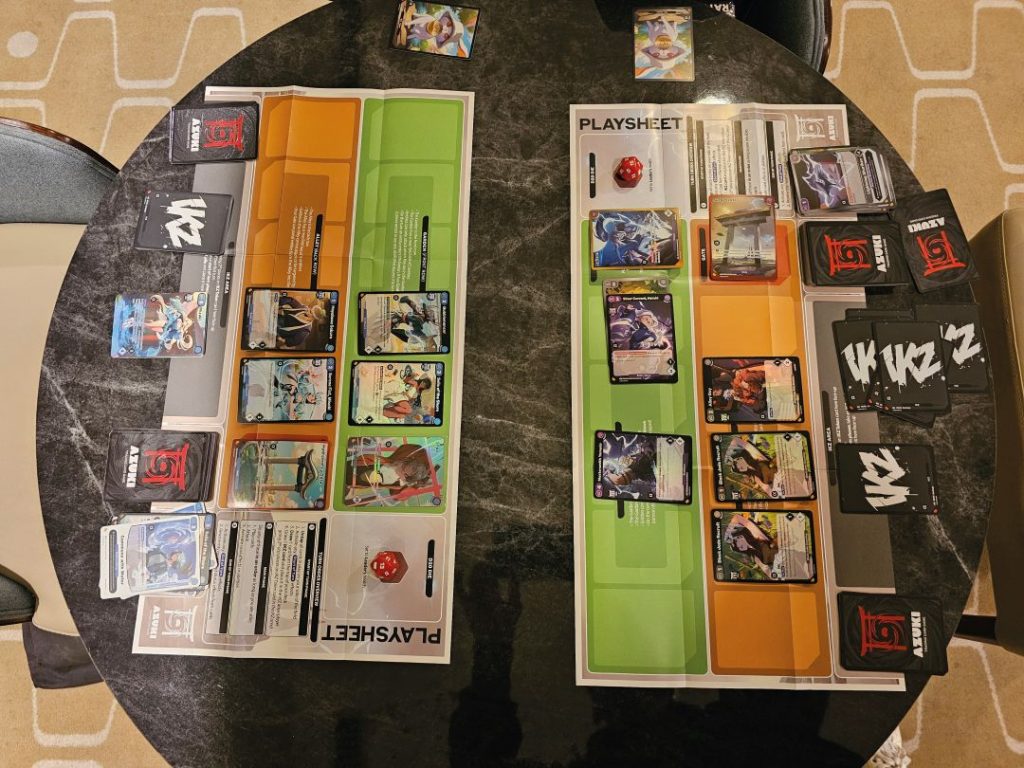
At its core, Azuki TCG is a two-player strategy game, where each participant wields a 50-card deck. The objective is clear: defeat the opponent’s Leader using a diverse array of Entities and tactical card effects. The game introduces a unique battlefield structure, bifurcated into the "Garden" (front row), where direct combat unfolds, and the "Alley" (back row), a sanctuary where cards are protected before being strategically advanced. Each row can accommodate up to five Entities, adding a crucial layer of positional strategy.
The game’s rich artistic and narrative foundation is drawn from the expansive Azuki Manga universe, the brainchild of Arnold Tsang. Tsang, a name synonymous with high-caliber design, is widely recognized for his pivotal role as a lead character designer on the globally acclaimed video game, Overwatch. This lineage is evident in the cards’ aesthetics, which often resemble high-quality anime stills. This visual synergy is no coincidence; Studio Azuki, the creative force behind the TCG, has ambitious plans to produce high-end anime, including a three-part series titled Enter the Garden, designed to seamlessly integrate with and expand upon the Azuki TCG lore.
A Journey Through the Garden: The Azuki Chronicle
The emergence of Azuki TCG can be traced through a series of strategic and financially successful steps, carefully orchestrated to build anticipation and establish a solid foundation before its broader market release.
Genesis and Early Success
The story of Azuki TCG truly began with its Alpha Deck launch. Unlike many nascent TCGs that rely on public crowdfunding platforms like Kickstarter to gauge interest and secure initial funding, Azuki TCG opted for a private sale model. This unconventional approach proved remarkably fruitful, with the Alpha Deck raising a substantial $570,000. This early success was not merely a financial triumph; it was a clear indicator of a significant, engaged audience eager for a premium TCG experience. It demonstrated a strong belief in the product’s quality and the vision of its creators, Chiru Labs.
Following this initial triumph, the momentum continued to build with a subsequent Pre-Sale event. This phase further solidified the game’s market viability, attracting even greater investment, culminating in an impressive $1.12 million. These figures, achieved through private channels, speak volumes about the game’s inherent appeal and the confidence investors and early adopters placed in its potential. In a market where record-breaking crowdfunding campaigns, such as the Cyberpunk TCG‘s recent success, often dominate headlines, Azuki TCG‘s quiet yet powerful financial performance stands out as a unique and noteworthy achievement. It suggests a direct-to-consumer strategy that bypasses the noise and uncertainty of public platforms, focusing instead on cultivating a dedicated community.
Anticipation for Gates Awakened
The culmination of these early successes leads directly to the highly anticipated release of the Gates Awakened set. Scheduled for a June launch, this new expansion is poised to introduce Azuki TCG to a much wider audience, transitioning from exclusive private sales to broader retail availability. This marks a pivotal moment for the game, as it enters the competitive retail space, seeking to carve out its niche among established giants and other emerging titles. The prior financial successes and the buzz generated by the Alpha Decks lay a strong groundwork for Gates Awakened to make a significant impact upon its arrival.
Supporting Data: Art, Lore, Mechanics, and Market Position
The success of Azuki TCG is not merely anecdotal; it is underpinned by concrete data points, design philosophies, and strategic market positioning that collectively paint a picture of a well-conceived and meticulously executed product.
The Art and Lore: A Universe Unfolding
The visual appeal of Azuki TCG is a cornerstone of its identity. Every card is a canvas for hand-drawn art, elevating the aesthetic experience beyond typical mass-produced TCGs. This artistic direction is deeply rooted in the Azuki Manga universe, a creation of Arnold Tsang. Tsang’s pedigree, particularly his role as a character designer for Overwatch, imbues the Azuki universe with a distinctive blend of dynamic action, intricate character design, and a style reminiscent of high-quality Japanese animation. The cards themselves, with their silvered finishes and vibrant hues, feel like collectible pieces of art, mirroring the lavish production values one might expect from top-tier crowdfunded projects.
This visual fidelity is not just for show; it’s part of a grander multimedia strategy. Studio Azuki, recognizing the inherent cinematic quality of Tsang’s designs, is actively pursuing the production of high-end anime. The upcoming three-part series, Enter the Garden, is explicitly designed to expand upon the lore and characters featured in the TCG, creating a symbiotic relationship between the tabletop game and its animated counterpart. This cross-media strategy aims to immerse players deeper into the Azuki universe, potentially attracting fans of anime and manga who may be new to TCGs, thereby broadening its appeal significantly. The prospect of seeing beloved card characters animated on screen adds a powerful layer of engagement and long-term viability to the franchise.
Innovative Gameplay Mechanics
Beyond its stunning aesthetics, Azuki TCG offers a deeply strategic and engaging gameplay experience. Designed for two players, each commanding a 50-card deck, the game focuses on a core objective: outmaneuvering the opponent to defeat their Leader.
- Leader and Gate System: Central to each deck’s strategy is a unique Leader and a powerful Gate. These two components synergize, offering distinct tactical advantages and shaping the playstyle of each faction. For instance, Raizan’s Gate combo excels at quickly moving Entities to the frontline, arming them, and thrusting them into immediate combat. In contrast, Shao’s Gate allows for strategic mana untapping to reduce an opponent’s attack as a Response, highlighting defensive and reactive play. This Leader/Gate dynamic ensures a diverse meta-game, encouraging players to explore different strategic archetypes.
- The Battlefield: Garden and Alley: The two-row battlefield design—the "Garden" for combat and the "Alley" for protection—adds a crucial spatial dimension to strategy. Players must not only consider what cards to play but also where to position them and when to advance them from the safety of the Alley into the Garden’s perilous front lines. This positional play, coupled with the five-Entity limit per row, introduces a layer of tactical depth reminiscent of chess, demanding careful planning and foresight.
- Turn Structure and Combat: A typical turn involves readying cards, drawing, playing Entities, Spells, or Weapons, and strategically moving cards. The "Charge" ability allows certain newly played Entities to bypass the usual summoning sickness, immediately entering combat. Combat itself is a dynamic exchange, with Entities in the Garden clashing directly with opposing Entities or striking at the enemy Leader. Players can influence battles through a variety of card effects and abilities, making timing and resource management paramount. Matches are designed to be concise, typically lasting around 20 minutes, though early learning games may extend beyond this, a common phenomenon for new TCGs.
The IKZ Mana System: A Solution to "Mana-Screw"
One of Azuki TCG‘s most celebrated innovations is its "IKZ" mana system, which directly addresses a perennial frustration for many TCG players, particularly veterans of Magic: The Gathering: the dreaded "mana-screw." In Azuki, players consistently add a new IKZ card to their mana pool each turn, ensuring a steady and predictable ramp-up of resources. This eliminates the randomness of drawing land cards (or the lack thereof) that can prematurely decide a game in other TCGs.
Furthermore, the game introduces a clever balancing mechanism for the player going second: a one-use IKZ token. This token allows the second player to potentially play a two-cost card immediately, mitigating the inherent disadvantage of starting behind. This thoughtful design choice promotes more balanced gameplay from the outset, focusing skill and strategy over luck of the draw. This predictable mana curve allows players to execute their strategies more consistently, leading to more satisfying and competitive matches.
Production Quality and Minor Critiques
The Alpha package, comprising two 50-card decks, 20 IKZ tokens, alternate art Leader cards, booster packs, d20 dice, playsheets, and quickstart guides, exemplifies the premium experience. The cards are designed for intuitive play, allowing players to grasp the rules quickly, a significant advantage for a new TCG. However, a minor critique concerns the readability of some card text, which can be tiny and, when combined with the cards’ inherent shininess, occasionally challenging to decipher. Additionally, the inclusion of standard d20 dice instead of more convenient spindown dice for life totals is a small but notable oversight, impacting ease of play during intense matches. These minor points, however, do not detract significantly from the overall high quality and engaging experience.
Official Responses: Chiru Labs’ Statement of Intent
While the original article is a review rather than a direct interview, the choices made by Chiru Labs, the publisher, and the design philosophy articulated through the product itself, serve as their official "response" to the market and a clear statement of their intent.
A Premium Experience as a Core Philosophy
Chiru Labs’ decision to invest heavily in "stunning" production values—from shiny, colored boxes to silvered, hand-drawn cards—is a direct and unequivocal statement about their commitment to quality. In a market often saturated with variable production standards, Azuki TCG aims for the top tier from day one. This isn’t merely about aesthetics; it’s about signaling to players that this is a product built with care and a long-term vision. This approach contrasts sharply with some TCGs that might cut corners on initial production to keep costs down, hoping to improve later. Chiru Labs is clearly positioning Azuki as a luxury item within the TCG space, designed to appeal to players who appreciate craftsmanship and visual artistry.

The Private Sale Model: Trust and Exclusivity
The choice to bypass Kickstarter and rely on private sales for its initial funding is a bold "official response" to the crowdfunding model itself. It suggests several things:
- Confidence in the Product: Chiru Labs likely had high confidence that the game’s quality and the strength of the Azuki IP (driven by Arnold Tsang’s reputation) would attract significant private investment without needing public validation.
- Strategic Control: Private sales offer greater control over distribution, pricing, and community building in the early stages, allowing the company to cultivate a dedicated, high-value player base before a wider release.
- Building Exclusivity: The initial private sales create a sense of exclusivity and prestige around the Alpha Decks, rewarding early adopters and generating organic hype through scarcity. This strategy subtly communicates that Azuki TCG is not just another game; it’s an experience to be sought after.
Addressing Player Pain Points: The IKZ System
The innovative IKZ mana system is a direct "official response" to a long-standing complaint in the TCG community. By eliminating the "mana-screw" and providing a balanced starting advantage, Chiru Labs demonstrates an understanding of player frustrations and a willingness to challenge established mechanics for a better gameplay experience. This shows a player-centric design philosophy, aiming to reduce frustrating randomness and emphasize strategic decision-making. It’s a clear signal that they are not content to simply replicate existing TCG formulas but are striving to refine and improve upon them.
Multimedia Expansion: A Vision for a Universe
The plans for high-end anime, particularly the Enter the Garden series, represent Chiru Labs’ long-term vision for the Azuki IP. This isn’t just a TCG; it’s the foundation of a multimedia franchise. This forward-looking strategy is an "official response" to the evolving entertainment landscape, where successful IPs often span multiple formats. It shows an ambition to create a deep, immersive universe that transcends the tabletop, fostering a more profound connection with the brand for its audience.
In essence, Chiru Labs’ actions and the product’s design speak louder than any direct quote. They articulate a vision of a premium, player-focused, and strategically ambitious TCG franchise poised for significant impact.
Implications: Forging a Legacy in the TCG Landscape
The emergence of Azuki Trading Card Game carries significant implications for the broader TCG market, its competitors, and the future of tabletop gaming. Its unique approach and robust offerings suggest a potential shift in how new games establish themselves and build a community.
Redefining Market Entry and Success Metrics
Azuki TCG‘s success through private sales, rather than public crowdfunding, challenges conventional wisdom about market entry for new TCGs. While Kickstarter and similar platforms offer visibility and direct fan engagement, Azuki‘s strategy demonstrates that a strong IP, premium product quality, and targeted private investment can yield substantial results. This could inspire other developers with established IPs or strong investor backing to explore alternative launch models, potentially leading to more curated and high-quality initial releases. It also suggests that financial success isn’t solely tied to public virality but can be cultivated through more exclusive, strategic outreach.

Raising the Bar for Production Values
The consistently high production values of Azuki TCG, presented as standard rather than stretch goals, could exert pressure on competitors to elevate their own offerings. In a market increasingly driven by aesthetics and collector appeal, Azuki‘s commitment to hand-drawn art, premium card finishes, and luxurious packaging sets a new benchmark. This could lead to a positive ripple effect, encouraging more TCGs to invest in the tactile and visual experience, benefiting players across the board. The focus on making every card a piece of art could particularly appeal to collectors and art enthusiasts, expanding the traditional TCG demographic.
The Hybrid Media Model: TCG as a Universe Foundation
The ambitious plans for an accompanying anime series, Enter the Garden, highlights a growing trend of TCGs evolving into multimedia franchises. This hybrid media model has profound implications for audience engagement and brand longevity. By intertwining the game’s lore with an animated series, Azuki TCG can create a richer, more immersive universe that captivates players beyond the tabletop. This strategy can attract new audiences from the anime community, who might then transition into TCG players, and vice-versa. It positions the TCG not just as a standalone game but as the central pillar of an expanding entertainment ecosystem, akin to how Pokémon or Yu-Gi-Oh! have leveraged multiple media forms.
Competitive Landscape and Niche Appeal
Azuki TCG enters a fiercely competitive landscape, directly challenging established players and other rising stars. Its innovative mana system, which eliminates "mana-screw," could be a significant draw for players frustrated by the randomness in games like Magic: The Gathering. By focusing on consistent resource generation, Azuki emphasizes strategic depth and player skill over luck, potentially appealing to a segment of the TCG community seeking a more predictable and competitive experience.
Its anime-inspired art style and lore, spearheaded by Arnold Tsang, positions it favorably against other visually similar TCGs like Shadowverse: Evolve. The connection to a renowned designer and an existing manga universe provides instant credibility and a built-in fan base, offering a distinct advantage in attracting players who appreciate high-quality visual storytelling. The game’s 20-minute typical play time also positions it as an accessible, yet strategic, option for both casual and competitive players, fitting into various gaming sessions.
Long-Term Viability and Community Building
The long-term success of Azuki TCG will depend on its ability to sustain its premium quality, consistently deliver engaging new content, and foster a vibrant, active community. The initial private sale model has already established a dedicated core group. The wider release of Gates Awakened will be crucial for scaling this community. Continued support for organized play, compelling lore expansions, and the successful execution of its anime projects will be key to solidifying its position and ensuring its longevity in the dynamic TCG market. If Azuki TCG can maintain its initial momentum and uphold its commitment to innovation and quality, it has the potential to become a significant and enduring force in the world of tabletop gaming.
Play it?
A confident opening for the Azuki Trading Card Game, which promises further goodies this summer. The game is a strong contender, offering a refreshing blend of art, lore, and thoughtful mechanics.
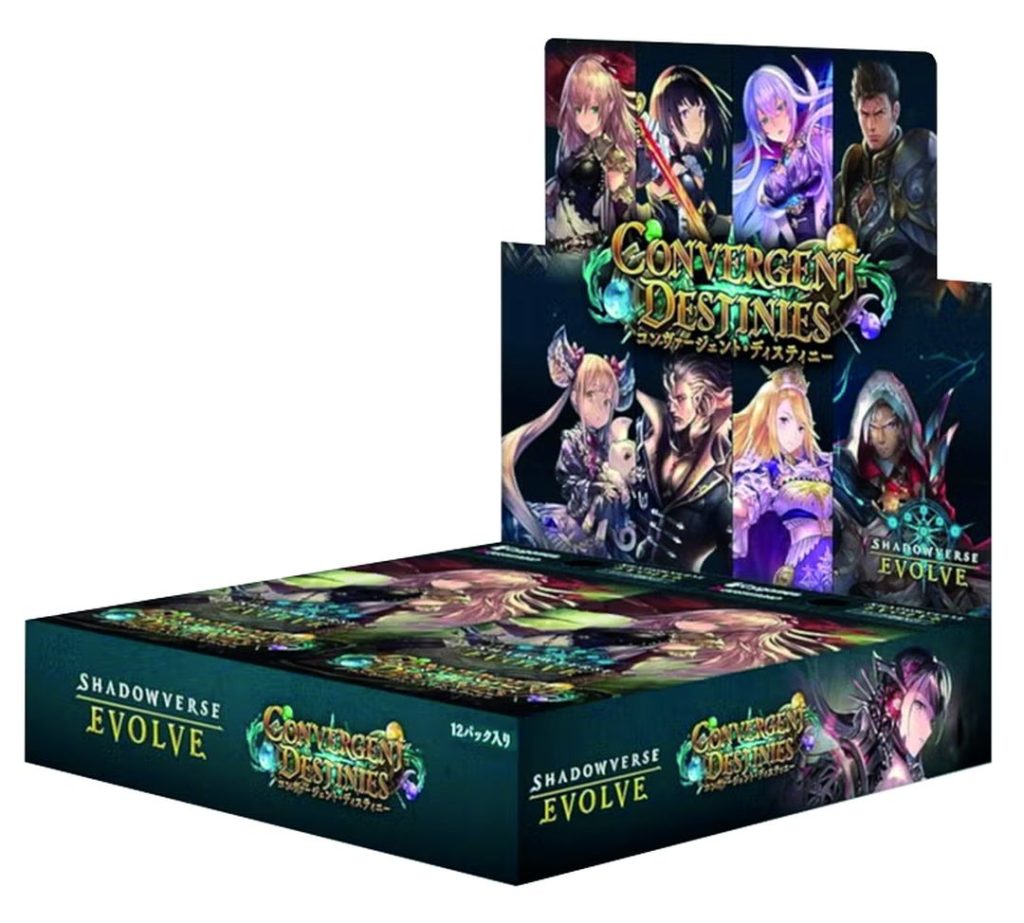
Try This if you Liked
SHADOWVERSE: EVOLVE
A similar strategic TCG with an anime style, based on the popular digital game, offering a comparable aesthetic and tactical depth.
About the Azuki Trading Card Game
Category: Card Games
Designers: Arnold Tsang, Jon Chao, Tim Guo
Publisher: Chiru Labs
Time to Play: 20m
Players: 2 Players
Age: 13+
RRP: £70 (for the Alpha Deck package)
What’s in the Box?
- 2 50-card decks
- 20 IKZ tokens
- 2 Alternate art Leader cards
- 16 Alpha booster packs
- 2 d20 dice
- 2 Playsheets
- 2 Quickstart guides
Review by Matt Chapman