Baldur’s Gate 4: A "Great Challenge" for Owlcat Games Amidst Ambitious Projects and Industry Shifts
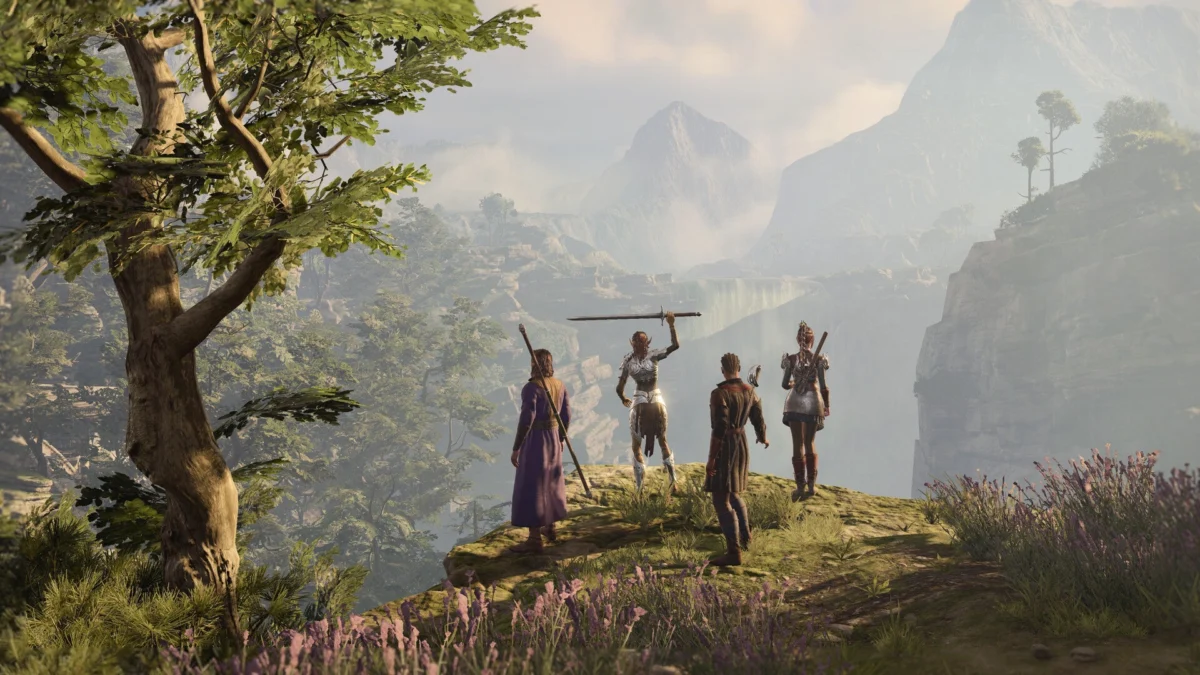
The hallowed halls of the Forgotten Realms, immortalized by Larian Studios’ critically acclaimed Baldur’s Gate 3, remain a beacon for RPG developers. While Larian has seemingly moved on to new horizons, the question of who might next shoulder the immense legacy of the Baldur’s Gate series looms large. In a recent interview, Alexander Mishulin, co-founder of Owlcat Games, expressed that the studio would consider taking on the mantle of Baldur’s Gate 4 a "great honour" and a "great challenge," a sentiment that resonates with their self-proclaimed "masochistic" tendency towards ambitious projects.
This intriguing possibility arises as Owlcat Entertainment, known for its successful CRPG endeavors like Pathfinder: Kingmaker, Pathfinder: Wrath of the Righteous, and the recently released Warhammer 40,000: Rogue Trader, navigates a period of significant expansion and diversification. The studio, now reportedly boasting a workforce of around 600 individuals, is actively developing two major titles: the sci-fi RPG The Expanse: Osiris Reborn, based on the popular television series, and Warhammer 40,000: Dark Heresy.
The Allure of the Forgotten Realms: A Coveted Legacy
The Baldur’s Gate series holds a hallowed place in the pantheon of computer role-playing games. The original titles, developed by BioWare, set a benchmark for narrative depth, player choice, and immersive world-building. Larian Studios’ Baldur’s Gate 3 not only met but exceeded these expectations, achieving widespread critical acclaim and commercial success, further cementing the franchise’s legendary status. The prospect of developing a successor to such a revered series is, understandably, a prospect that ignites the passion of many a CRPG developer.
Owlcat Games, through its consistent delivery of complex, player-driven RPGs, has cultivated a dedicated fanbase and garnered respect within the genre. Their approach often involves intricate systems, deep lore, and a commitment to player agency, all hallmarks that would seem to align with the expectations for a Baldur’s Gate title. When asked about the potential of helming Baldur’s Gate 4, Mishulin’s response, as reported by IGN, was a blend of humility and daring: "First of all, I would like to thank all the players, all your audience that consider us to be able to do that. It’s a really great honour. You already said that we are a little bit masochistic. So yeah, we will consider it a great challenge!"
This statement hints at a developer willing to embrace daunting tasks. The term "masochistic," while perhaps a playful exaggeration, underscores a perceived inclination within Owlcat to tackle projects that demand significant dedication and resilience, qualities undoubtedly required to follow in Larian’s colossal footsteps.
A Shifting Landscape: Archetype’s Near Miss and Owlcat’s Current Commitments
The path to developing a Baldur’s Gate successor is not a straightforward one, and the challenges are multi-faceted. It’s not merely about technical prowess or creative vision; it’s also about timing, resources, and the strategic decisions of rights holders like Hasbro.
Evidence suggests that the opportunity to develop a Baldur’s Gate game has been presented to other studios. James Ohlen, former studio head at Archetype Entertainment, revealed that his studio was indeed offered the chance to create a Baldur’s Gate game. Archetype, the developers behind the upcoming sci-fi RPG Exodus, ultimately declined the offer. Ohlen elaborated on the reasons for this decision, suggesting that the daunting nature of following up Larian’s ambitious undertaking, coupled with the desire to forge their own distinct identity, played a significant role. The implication here is that any studio considering Baldur’s Gate 4 must be prepared for an immense undertaking, one that could potentially overshadow their existing projects.
This context is crucial when considering Owlcat’s current situation. With approximately 600 employees, the studio is operating at a scale previously unseen for them. The development of two major titles, The Expanse: Osiris Reborn and Warhammer 40,000: Dark Heresy, represents a substantial commitment of their human and financial resources. The Expanse: Osiris Reborn is a highly anticipated foray into the sci-fi RPG genre, aiming to capture the intricate political and interpersonal dynamics of its source material. Meanwhile, Dark Heresy plunges them into the grimdark universe of Warhammer 40,000, a franchise known for its vast lore and complex factions.
Chronology of a Potential Succession: From Humble Beginnings to Global Presence
Owlcat Games’ journey began in Russia, but like many Russian-founded studios, they have since relocated their operations. The company established bases in Cyprus and Armenia, a move that has become increasingly common for Russian tech companies seeking to navigate geopolitical complexities and maintain international business relationships.
This relocation is part of a broader narrative for studios emerging from Russia. While their creative output has often been highly regarded, they have also faced scrutiny regarding their stances and alleged business ties concerning Russia’s ongoing war in Ukraine. In the case of Owlcat, specific accusations have surfaced, including allegations of staff members posting racial slurs about Ukrainians and engaging in recruitment activities within the occupied territory of Crimea. These are serious allegations that have drawn attention and necessitated responses from the studio. Edwin’s previous reporting on The Expanse: Osiris Reborn provided an avenue for Owlcat to address these claims, offering their perspective on the sensitive issues.
Despite these challenges, Owlcat’s commitment to the CRPG genre remains unwavering. Mishulin’s statements to PCGamesN clearly articulate this dedication: "We will continue to make CRPGs because we love them. We do not want to become stagnant. We will be trying different approaches for our RPG games, trying to find the best possible fit for the idea of the game." This indicates a forward-looking strategy that prioritizes innovation within their core genre, even as they explore new thematic territories with titles like The Expanse.
Supporting Data: The Scale of Owlcat’s Ambitions
The sheer scale of Owlcat’s current development pipeline offers a tangible metric for understanding the scope of their ambition. A workforce of 600 employees is a significant operational size, allowing for parallel development streams and the undertaking of highly complex projects.
-
The Expanse: Osiris Reborn: This title represents a departure from Owlcat’s established fantasy CRPG roots into the realm of science fiction. Adapting a beloved television series into an RPG requires meticulous attention to detail, character fidelity, and the translation of complex world-building into interactive gameplay. Early impressions of The Expanse: Osiris Reborn suggest a game that is ambitious, aiming to capture the nuanced narrative and character interactions that made the show so popular. However, some early analyses have pointed to a potential struggle in balancing the depth of the source material with the demands of the RPG format, indicating the inherent challenges in such an adaptation.
-
Warhammer 40,000: Dark Heresy: This project delves into the grimdark future of Warhammer 40,000, a universe renowned for its brutal conflicts, intricate lore, and often bleak atmosphere. Developing within such a well-established and beloved IP requires a deep understanding of its established canon and a careful balancing act between fan expectations and creative interpretation. The success of Warhammer 40,000: Rogue Trader suggests that Owlcat has a strong grasp of how to translate tabletop miniatures games into compelling digital RPG experiences.
The simultaneous development of these two substantial titles suggests that Owlcat is operating at peak capacity. This operational intensity is a key factor when evaluating their potential to undertake another project of the magnitude of Baldur’s Gate 4.
Official Responses and Developer Sentiment
Alexander Mishulin’s direct quotes offer the most insightful glimpse into Owlcat’s perspective:
-
On the possibility of developing Baldur’s Gate 4: "First of all, I would like to thank all the players, all your audience that consider us to be able to do that. It’s a really great honour. You already said that we are a little bit masochistic. So yeah, we will consider it a great challenge!"
- Analysis: This response highlights gratitude towards their player base and industry recognition. The "masochistic" comment, while potentially lighthearted, signifies a willingness to embrace difficult, demanding projects. The acknowledgment of it being a "great challenge" is a realistic assessment of the undertaking.
-
On their continued commitment to CRPGs: "We will continue to make CRPGs because we love them. We do not want to become stagnant. We will be trying different approaches for our RPG games, trying to find the best possible fit for the idea of the game."
- Analysis: This statement reassures fans that despite venturing into new genres, Owlcat’s heart remains with CRPGs. It also signals a desire for evolution and experimentation within the genre, suggesting that any future CRPG, including a potential Baldur’s Gate title, would likely strive for innovation.
Implications for the Future of Baldur’s Gate and Owlcat Games
The prospect of Owlcat Games taking on Baldur’s Gate 4, while intriguing, is currently overshadowed by their existing development commitments. As Mishulin himself implied, the sheer bandwidth required for such a project, especially one that aims to follow up the monumental success of Baldur’s Gate 3, would be immense. James Ohlen’s experience with Archetype underscores this point: the pressure to create something that stands independently while honoring the legacy is a significant hurdle.
Furthermore, the gaming industry is currently experiencing shifts in how large franchises are managed. Hasbro, the owner of the Baldur’s Gate IP, has recently undergone a period of scaling back its in-house development efforts, reportedly taking a substantial financial hit after cancelling several upcoming games. This strategic recalibration could impact the timeline and the approach to future Baldur’s Gate titles. If Hasbro decides to outsource development more extensively, studios like Owlcat, with their proven track record in the CRPG space, would undoubtedly remain strong contenders.
However, the immediate future for Owlcat is clearly focused on delivering The Expanse: Osiris Reborn and Warhammer 40,000: Dark Heresy. Unless one of these projects is significantly scaled back or canceled, it is difficult to envision them having the necessary resources and development capacity to embark on a project as demanding as Baldur’s Gate 4 in the near term. The shadow cast by Baldur’s Gate 3 is not just a matter of critical acclaim; it’s a benchmark for scope, polish, and player engagement that any successor must contend with.
In conclusion, while Alexander Mishulin’s remarks suggest a willingness and an honorific consideration for developing Baldur’s Gate 4, the practical realities of Owlcat’s current development slate make it a distant, albeit exciting, possibility. The studio’s demonstrated passion for CRPGs, their growing scale, and their willingness to tackle complex challenges position them as potential future custodians of the Forgotten Realms. However, for now, their focus remains on navigating the ambitious frontiers of The Expanse and the grim darkness of Warhammer 40,000. The fate of Baldur’s Gate 4 remains an open question, a testament to the enduring power of the franchise and the constant evolution of the RPG landscape.