Transatlantic Legal Dragnet: Andrew and Tristan Tate Apprehended in Miami Amid Escalating UK Sex Trafficking Charges
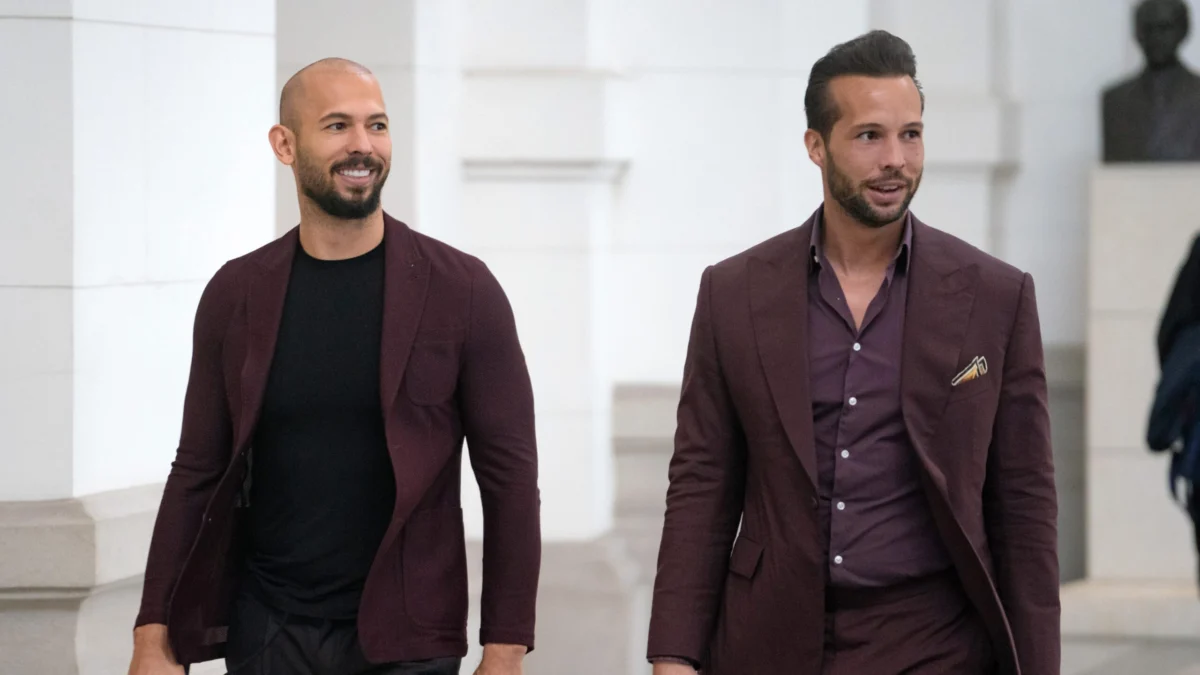
MIAMI, FL — In a dramatic escalation of a multi-year international legal battle, controversial social media figures Andrew and Tristan Tate were taken into custody by United States authorities in Miami on Saturday. The arrest, executed under a sealed warrant by the U.S. Marshals Service, marks a pivotal moment in the British government’s efforts to extradite the brothers to face a litany of serious charges, including rape, human trafficking, and organized sexual exploitation.
The apprehension follows years of global scrutiny regarding the Tates’ business practices and their "loverboy" method of recruitment, which authorities allege was used to coerce and exploit vulnerable women. As the Crown Prosecution Service (CPS) in the United Kingdom prepares for a high-stakes extradition hearing, the legal walls appear to be closing in on the influencers who once claimed to be beyond the reach of "The Matrix."
I. Main Facts: The Miami Takedown and the Scope of the Charges
The arrest of Andrew Tate, 38, and his brother Tristan, 36, occurred in the early hours of Saturday morning in Miami, Florida. According to U.S. Marshals Service spokesperson Brady McCarron, the operation was conducted with precision following the issuance of a sealed warrant. While the specific details of the warrant remained under wraps during the initial hours of the arrest, it was later confirmed that the action was taken in response to a formal extradition request from the United Kingdom.
The legal landscape for the Tates has shifted significantly with this latest development. The Crown Prosecution Service (CPS) revealed on Saturday that the scope of the investigation has expanded. In addition to the original 21 charges filed against the brothers in May 2025, prosecutors have decided to bring further charges related to four additional victims.
The Charge Sheet Breakdown
The allegations against the brothers are both numerous and severe. According to documents provided by the CPS and the BBC:
- Andrew Tate faces a total of 10 charges involving three alleged victims. These include rape, actual bodily harm (ABH), human trafficking, and controlling prostitution for gain.
- Tristan Tate faces 11 charges involving one alleged victim. His charges similarly include rape, actual bodily harm, and human trafficking.
British authorities have signaled their intent to prosecute the brothers not only for the original 21 charges but also for the newly surfaced allegations involving the four additional victims. This brings the total number of individuals seeking justice through the UK court system to eight, a figure that does not include the separate ongoing proceedings in Romania.
II. Chronology: From Reality TV to International Fugitives
The path to the Miami arrest has been a decade in the making, characterized by a meteoric rise in digital fame and a corresponding trail of legal controversies.
2016: The British "Big Brother" Incident
Andrew Tate first entered the public consciousness in the United Kingdom as a contestant on the reality show Big Brother. His stint was short-lived; he was removed from the house after only six days. The catalyst was the emergence of a video appearing to show Tate attacking a woman with a belt. While Tate claimed the act was consensual, the incident set the tone for his future public persona—one built on provocative displays of dominance and extreme misogyny.
2017–2021: The Rise of the "Top G"
Following his removal from mainstream media, Tate pivoted to social media, specifically targeting young men with a brand of "hyper-masculinity." He founded "Hustler’s University" (later rebranded as The Real World), a subscription-based platform that promised to teach students how to amass wealth and "escape the Matrix." During this period, the brothers relocated to Romania, a move Andrew Tate famously suggested was motivated by a perceived laxity in sexual assault laws in Eastern Europe.
December 2022: The Romanian Crackdown
The Tates were arrested in Bucharest in late 2022 on charges of human trafficking, rape, and forming an organized crime group. Romanian prosecutors alleged the brothers lured women to their villa under the guise of romantic relationships (the "loverboy" method) before forcing them to produce pornographic content for financial gain. They spent several months in jail and under house arrest before being released pending trial.
May 2025: The UK Charges
While fighting the Romanian case, the brothers were hit with a new legal front in the United Kingdom. In May 2025, British authorities officially charged them with 21 crimes. Despite the gravity of these charges, the brothers continued to travel, eventually arriving in the United States, where they remained until their Saturday arrest in Miami.
III. Supporting Data: The Mechanics of the Investigation
The extradition request and the subsequent Miami arrest are the results of a complex, multi-jurisdictional investigation involving the UK’s National Crime Agency (NCA), the Crown Prosecution Service, the FBI, and the U.S. Marshals Service.
The "Loverboy" Method Under Scrutiny
Central to the prosecution’s case is the "loverboy" method. Data collected from digital forensics and victim testimony suggests a pattern where the brothers would establish emotional dependency with women before moving them to secure locations. Once isolated, these women were allegedly subjected to physical violence and psychological coercion to perform in front of webcams.
Financial Trails and Controlling Prostitution
One of the most significant charges—"controlling prostitution for gain"—is supported by financial records. Investigators have reportedly traced significant sums of money flowing from adult content platforms into accounts controlled by the Tates and their associates. The UK prosecution argues that this constitutes a sophisticated criminal enterprise designed to monetize the exploitation of women.
Digital Footprints
The prosecution’s case is also bolstered by years of the Tates’ own content. Andrew Tate’s videos, in which he discusses "owning" women and using violence to maintain control, are expected to be used as evidence of intent and character. While the defense argues these were "satirical personas," the CPS maintains they reflect a genuine criminal methodology.
IV. Official Responses: The Battle of Statements
As news of the arrest broke, official bodies and legal representatives began a war of words that highlights the stark divide in this case.
The Crown Prosecution Service (CPS)
In a statement released via X (formerly Twitter), the CPS emphasized the expansion of the case:
“Following their arrest in the U.S., the CPS will be seeking their extradition in relation to the original 21 charges they face, as well as the further charges which we have decided to prosecute in relation to four additional victims.”
The U.S. Marshals Service
Spokesperson Brady McCarron confirmed the brothers were in custody but remained tight-lipped regarding the specifics of the sealed warrant. The U.S. Marshals’ involvement indicates that the federal government is treating the UK’s extradition request with the highest level of priority.
The Tates’ Legal Defense
While a formal statement from their Miami-based counsel is pending, the brothers have historically denied all allegations. In previous statements regarding the Romanian and UK cases, Andrew Tate has characterized the legal actions as a coordinated "political hit job" orchestrated by "The Matrix"—a catch-all term he uses for established media and government institutions—to silence his influence.
V. Implications: Legal Precedents and Cultural Fallout
The arrest of Andrew and Tristan Tate in Miami has profound implications that extend beyond the courtroom.
1. International Legal Cooperation
This case serves as a high-profile test of extradition treaties between the UK and the US. The speed and coordination of the Miami arrest suggest a robust level of cooperation. If the extradition is successful, it will reinforce the message that social media influence and wealth do not provide immunity from international law.
2. The Future of the "Manosphere"
Andrew Tate is the de facto leader of the "manosphere," an online subculture centered on traditional masculinity, often veering into misogyny. His incarceration could lead to a power vacuum within this digital space or, conversely, turn him into a martyr for his followers. The outcome of the trial will likely dictate whether his "brand" survives or becomes a cautionary tale of digital-age criminality.
3. Victim Empowerment and Protection
The emergence of four additional victims years after the initial allegations highlights the difficulties victims face in coming forward against powerful figures. A successful prosecution could encourage more survivors of trafficking and sexual exploitation to seek legal recourse, knowing that international boundaries will not stop an investigation.
4. Regulatory Scrutiny of Social Platforms
The Tates’ ability to amass wealth and influence through platforms like X, Rumble, and TikTok—even while under investigation—has sparked renewed calls for stricter regulation of content that promotes violence against women. The Miami arrest puts additional pressure on these platforms to justify their hosting of the Tates’ content.
Conclusion
The arrest of Andrew and Tristan Tate in Miami marks the end of their period of relative freedom and the beginning of what is likely to be a grueling legal odyssey. With 21 charges already on the books and more on the horizon, the brothers face the very real prospect of spending decades behind bars. As the extradition process begins, the world watches to see if the "Top G" persona can withstand the weight of the British justice system. For the alleged victims, however, the Miami arrest is not about digital personas—it is a long-awaited step toward accountability.