Meta’s Strategic Pivot: CTO Andrew Bosworth Teases New Mixed Reality Hardware Amid Industry ‘Winter’

MENLO PARK, CA — As the technology sector prepares for the annual Meta Connect conference, the landscape of extended reality (XR) is facing a critical crossroads. Following a period of relative silence and internal restructuring, Meta’s Chief Technology Officer, Andrew "Boz" Bosworth, has officially signaled that the company is prepared to unveil new hardware developments. While the announcement has sparked a wave of optimism among enthusiasts, industry analysts remain cautious, questioning whether Meta’s new direction can thaw the current "VR Winter" or if the industry is merely entering a new era of high-priced, niche devices.
Main Facts: The "Phoenix" Rising
The catalyst for the recent surge in industry speculation stems from a recent Ask Me Anything (AMA) session conducted by Andrew Bosworth on Instagram. Responding to mounting concerns that Meta might be scaling back its commitment to virtual reality (VR) in favor of artificial intelligence (AI), Bosworth reaffirmed the company’s long-term roadmap.
Key takeaways from the disclosure include:
- Continued Hardware Investment: Meta is actively developing multiple new headsets simultaneously.
- The "Phoenix" Prototype: Rumors and leaked renders point toward a lightweight mixed reality (MR) device, codenamed "Phoenix" (also referred to in various stages as "Puffin" or "Loma").
- Architectural Shift: Unlike the standalone Quest series, the "Phoenix" is expected to utilize an external computational unit, allowing the headset itself to achieve a "ski-goggle" form factor.
- Economic Sustainability: Meta is shifting away from its historical model of heavily subsidizing hardware, moving toward a "sustainable" economic model that prioritizes profit margins over aggressive, loss-leading market penetration.
Chronology: From the Quest 2 Boom to the Current Stagnation
To understand the weight of the upcoming Connect announcements, one must examine the trajectory of Meta’s Reality Labs division over the last five years.
2020–2021: The Golden Era
The launch of the Oculus Quest 2 marked a paradigm shift. Priced at $299, the device brought VR into the mainstream, bolstered by pandemic-era lockdowns that drove demand for home entertainment. During this period, Meta’s strategy was "growth at all costs," subsidized by the company’s massive advertising revenue.

2022–2023: The Pivot to Mixed Reality
With the release of the Quest Pro and subsequently the Quest 3, Meta began transitioning from pure Virtual Reality to Mixed Reality (MR). However, the Quest Pro’s high price point ($1,499 at launch) and the Quest 3’s $499 entry price signaled the end of the "budget VR" era. Simultaneously, the broader tech industry began to cool, leading to significant layoffs within Meta’s XR departments.
2024: The "Winter" and Apple’s Entrance
The arrival of the Apple Vision Pro in early 2024 validated the high-end MR category but also highlighted the limitations of the current market. Despite the technical prowess of Apple’s "spatial computer," its $3,499 price tag relegated it to developers and "prosumers." Meta, sensing a shift in investor sentiment, began emphasizing "economic sustainability," leading to the current state of anticipation for the Phoenix/Puffin reveal at Connect.
Supporting Data: The Technical and Financial Reality
The rumors surrounding the "Phoenix" headset suggest a device that is more of a response to the Apple Vision Pro than a successor to the gaming-centric Quest 3.
Technical Specifications and Design
Leaked renders from industry insiders, such as the analyst known as Luna, suggest the Phoenix will be a radical departure from the "shoebox-on-the-face" design. By offloading the battery and processor to a tethered puck or a connected computational unit, Meta can utilize MicroOLED displays and pancake lenses in a frame that is significantly lighter and thinner than the Quest 3.
Furthermore, the integration of eye-tracking and "gaze + pinch" interactions—features already appearing in recent Quest software updates—suggests that Meta is moving toward a productivity-first interface similar to Apple’s visionOS.

The Pricing Dilemma
The most significant hurdle for mass adoption remains the Bill of Materials (BOM). Analysts estimate that a device featuring MicroOLEDs, eye-tracking sensors, and the latest Qualcomm Snapdragon Elite chipsets cannot be manufactured for less than $1,000.
Current market benchmarks support this:
- XREAL Beam Pro/Aura: Aiming for a sub-$1,500 price point with a 70° Field of View (FOV).
- Snap Spectacles (5th Gen): Available only via a developer subscription totaling $2,200 over two years.
- Pico "Swan": Rumored to be positioned in the $2,000 range to compete with the high-end enterprise market.
If Meta adheres to its new "economic sustainability" mandate, the Phoenix is unlikely to retail for less than $1,000–$1,500. This places it well outside the impulse-buy range that fueled the Quest 2’s success.
Official Responses and Corporate Strategy
In his public statements, Bosworth has been careful to manage expectations while maintaining a sense of momentum. "We’re still working on various headsets," Bosworth stated during his AMA. "We’ll share more about all of this at Connect."
This rhetoric reflects a broader internal shift. Sources close to Meta indicate that the company is no longer interested in "buying" the market through massive hardware subsidies. The focus has shifted toward building a robust ecosystem where hardware can at least break even. This is a direct response to shareholder pressure to reign in the multi-billion dollar quarterly losses reported by Reality Labs.

However, this strategy has come at a cost. The "VR Winter" has seen talented engineers and developers depart from Meta. Reports from the US, Germany, and China suggest a cooling of excitement among third-party developers, who are currently seeing higher returns in the AI and robotics sectors. Without a "killer app" or a massive subsidy, developers are hesitant to commit resources to another high-end, low-install-base headset.
Implications: Can Phoenix Thaw the Industry?
The upcoming Meta Connect represents more than just a product launch; it is a referendum on the future of Mixed Reality.
The Prosumer Trap
If Meta releases a $1,500 Phoenix headset, it risks falling into the "Prosumer Trap." Like the Apple Vision Pro, such a device may be technically impressive but lack the "killer use case" necessary to convince ordinary consumers to spend more than they would on a high-end smartphone. While Meta executives may argue that the price is comparable to a top-tier iPhone, the utility of a headset remains specialized compared to the ubiquitous necessity of a mobile phone.
The Enterprise Opportunity
One area where the Phoenix may thrive is the B2B sector. A lightweight, high-resolution MR headset is ideal for remote collaboration, industrial training, and architectural visualization. We may see Meta "re-ignite" its enterprise program for a fourth time, positioning the Phoenix as a tool for the future of work rather than a toy for gamers.
The Survival Strategy for the Ecosystem
For XR professionals, the implications are clear: the "mass market" is further away than previously hoped. Experts suggest that the industry may not see a true mainstream uptake until 2028. In the interim, survival hinges on diversification.

Two key trends are emerging as lifelines for the sector:
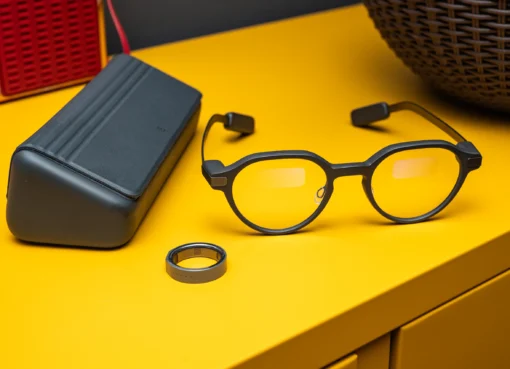
- Smart Glasses: Devices like the Ray-Ban Meta glasses are seeing high engagement because of their fashion-first, low-friction utility. This "lite AR" path may provide the bridge to full AR.
- Technological Hybridization: Professionals are increasingly combining XR knowledge with AI and robotics. The spatial computing skills required for VR are identical to those needed for training humanoid robots and autonomous systems.
Final Outlook
Meta Connect will undoubtedly showcase the "future of the future." The Phoenix/Puffin prototype will likely be a marvel of engineering—a testament to how far optics and miniaturization have come. However, as long as the entry price remains high and the "killer app" remains elusive, the industry must prepare for a long, cold winter. The keyword for the next 24 months is not "expansion," but "survival."
While the long-term future of spatial computing remains bright, the immediate path forward is a narrow one, paved with expensive hardware and niche applications. Whether Meta’s "Phoenix" can truly rise from the ashes of the current market downturn depends less on its weight in grams and more on its value in the eyes of a skeptical public.