Beyond the Black Void: How Infinidream.ai is Redefining the Digital Canvas
In the modern workspace, the computer monitor is the undisputed centerpiece. For eight to twelve hours a day, it is a window into productivity, communication, and global information. Yet, the moment a user steps away, that window slams shut. The vibrant interface vanishes, replaced by a "dead screen"—a cold, black rectangle of glass or a utilitarian clock ticking away in a void. This transition from high-utility tool to aesthetic vacuum is what digital pioneer Scott Draves calls the "dead screen problem."
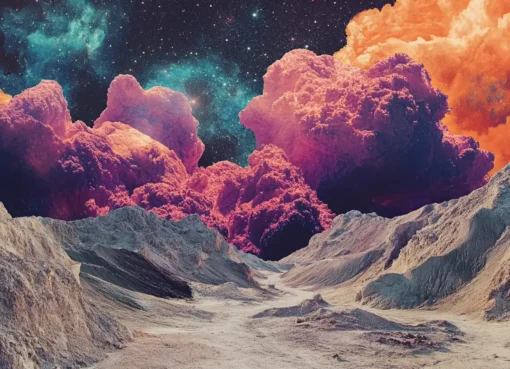
Enter Infinidream.ai, a newly launched application for Mac and Windows designed to ensure your screen never truly goes dark. By leveraging cutting-edge generative artificial intelligence, Infinidream.ai transforms idle displays into "living paintings"—ambient, ever-evolving works of art that breathe and shift in real-time. Unlike traditional screensavers that rely on static images or repetitive video loops, Infinidream.ai utilizes the power of AI to create a continuous, non-repeating visual experience that functions more like a kinetic sculpture than a digital file.
Main Facts: The Architecture of Ambient Intelligence
Infinidream.ai is not merely a gallery of AI-generated images; it is a sophisticated engine for ambient digital decor. At its core, the software serves as a bridge between the high-performance capabilities of modern personal computers and the burgeoning field of AI-assisted artistry.
Key Features and Functionality
- Generative Fluidity: The primary differentiator of Infinidream.ai is its "living" nature. The art does not simply sit on the screen; it morphs. Using latent space interpolation and generative algorithms, the software transitions between states so subtly that the movement is often imperceptible in the short term, yet transformative over the course of an hour.
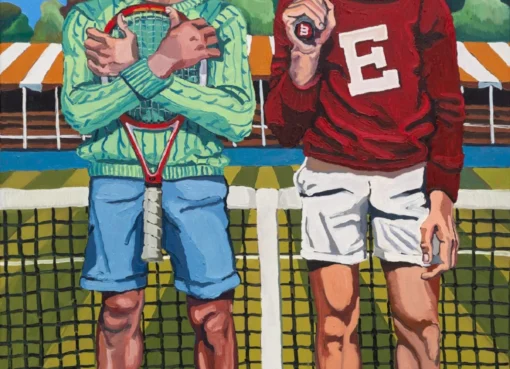
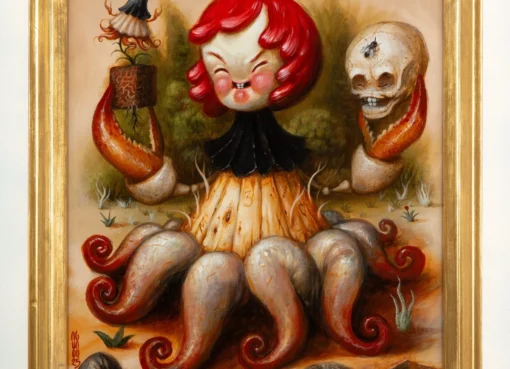
- Curated Artist Ecosystem: Rather than relying on a single algorithm, the platform features contributions from dozens of AI artists. This provides a diverse range of styles, from moody, atmospheric abstractions to surrealist landscapes and hypnotic geometric patterns.
- User-Defined Atmosphere: Users have granular control over the "vibe" of their space. The interface allows for adjustments in "tempo"—ranging from a glacial, meditative crawl to a more energetic, fiery pulse—allowing the screen to match the social or professional energy of the room.
- Cross-Platform Accessibility: Recognizing that the "dead screen problem" is universal, Draves and his team have optimized the application for both macOS and Windows, ensuring low CPU overhead so the art can run in the background without hindering system performance.
Chronology: From Distributed Fractals to Generative Dreams
To understand the significance of Infinidream.ai, one must look back at the career of its creator, Scott Draves. A New York-based artist and software engineer, Draves has spent over three decades at the intersection of code and aesthetics.
1999: The Birth of Electric Sheep
Long before "AI" became a household term, Draves launched Electric Sheep. Named after Philip K. Dick’s Do Androids Dream of Electric Sheep?, the project was a landmark in distributed computing and algorithmic art. It functioned as a collective intelligence: when a user’s computer went to sleep, it joined a global network of hundreds of thousands of machines to render complex fractal animations known as "sheep."
Users could vote on their favorite sheep, and the "genetic" code of the most popular animations would be used to "breed" the next generation. This experiment in digital Darwinism ran for over twenty years and was eventually recognized by the world’s most prestigious art institutions, including the Museum of Modern Art (MoMA) and the Los Angeles County Museum of Art (LACMA).
The 2010s: The Rise of the Neural Network
As GPU technology advanced, the potential for generative art shifted from pure mathematics (fractals) to neural networks. Draves watched as the tools he helped pioneer evolved into the Large Language Models and Image Generators of the 2020s. While the technology changed, the fundamental goal remained: creating art that feels "alive."
2024: The Launch of Infinidream.ai
Infinidream.ai represents the culmination of this journey. It takes the "evolutionary" spirit of Electric Sheep and marries it with the high-fidelity capabilities of modern AI diffusion models. Launched in mid-2024, the app is the next chapter in Draves’ mission to turn every screen on the planet into a portal for high-end, generative fine art.
Supporting Data: The Science of Ambient Environments
The push for "living screens" is backed by more than just aesthetic preference; it aligns with emerging research in environmental psychology and human-computer interaction (HCI).
The Psychology of "Soft Fascination"
According to Attention Restoration Theory (ART), urban and digital environments often demand "directed attention," which leads to cognitive fatigue. Conversely, "soft fascination"—the kind of attention held by clouds moving across the sky or water flowing in a stream—allows the brain to recover. Infinidream.ai’s slow-morphing visuals are designed to trigger this state of soft fascination. By providing a visual anchor that is interesting but not demanding, the app can reduce the stress associated with a sterile office environment.
Technical Performance and Efficiency
A common concern with AI applications is their heavy resource consumption. However, Infinidream.ai is engineered for "ambient efficiency."

- Rendering: Unlike real-time 3D gaming, Infinidream.ai uses optimized playback of generative sequences, ensuring that even on laptops, the battery impact is minimized.
- Network Usage: The app utilizes a "cloud-to-local" hybrid model, where high-quality generative data is streamed or cached, preventing the "stuttering" often seen in high-resolution video streams.
Official Responses: A New Paradigm for Digital Artists
The launch of Infinidream.ai has sparked a conversation among both the tech community and the traditional art world.
In a statement regarding the app’s philosophy, Scott Draves noted: "There’s a moment every few hours when your computer just sits there. Screen dark, or worse: showing the time in giant white numerals against a black void. That moment is wasted. Infinidream is about reclaiming that space for something beautiful, something that breathes with the room."
The Artist’s Perspective
For the dozens of AI artists whose work is featured on the platform, Infinidream.ai offers a new "canvas" that traditional galleries cannot provide. One featured artist, speaking on the condition of anonymity to focus on the collective work, stated: "In a gallery, someone looks at your work for thirty seconds. With Infinidream, my art becomes part of the atmosphere of someone’s home for hours. It’s not a photograph; it’s a presence."
Critics have noted that this represents a shift in how we "consume" AI art. Rather than generating a single image for a social media post, artists are now designing "visual ecosystems" that must hold up under hours of observation.
Implications: The Future of Interior Design and Digital Ownership
The emergence of platforms like Infinidream.ai suggests a broader shift in how we perceive our living and working spaces. As screens become larger, thinner, and more ubiquitous, they are increasingly being treated as furniture rather than just appliances.
The "Screen-as-Furniture" Trend
We are seeing a convergence of technology and interior design. Companies like Samsung (with "The Frame" TV) have paved the way for the idea that a screen should contribute to a room’s decor when not in use. Infinidream.ai democratizes this concept, bringing high-end, curated digital art to the standard desktop monitor and laptop.
Redefining Digital Decor
The implications for the "Smart Home" are significant. In the future, we may see "ambient synchronization," where the colors and tempos of an Infinidream.ai display automatically adjust based on the time of day, the weather outside, or even the heart rate of the user.
Economic Shift for Creators
Infinidream.ai also hints at a new economic model for digital artists. By curating work into a subscription or "freemium" service, the platform provides a sustainable way for AI artists to monetize their work beyond the volatile world of NFTs or one-off commissions. It creates a "streaming service for the eyes," where the value lies in the duration and quality of the ambient experience.
Conclusion: A Living Legacy
Infinidream.ai is more than just a software update for the humble screensaver; it is a manifestation of the idea that technology should enhance our environment, even when we aren’t actively using it. By solving the "dead screen problem," Scott Draves is once again proving that the space between "man" and "machine" is fertile ground for beauty.
As the app becomes available for Mac and Windows users worldwide, the message is clear: your screen is on anyway. It might as well be dreaming. Whether it is used as a tool for meditation, a background for a dinner party, or a way to soften the edges of a high-stress workday, Infinidream.ai represents the next step in the evolution of the digital canvas—a world where art doesn’t just hang on the wall, but lives within the very tools we use to build our world.