The Elusive Pursuit of Purpose: A Professor’s Encounter with Existential Questions in a Coffee Shop
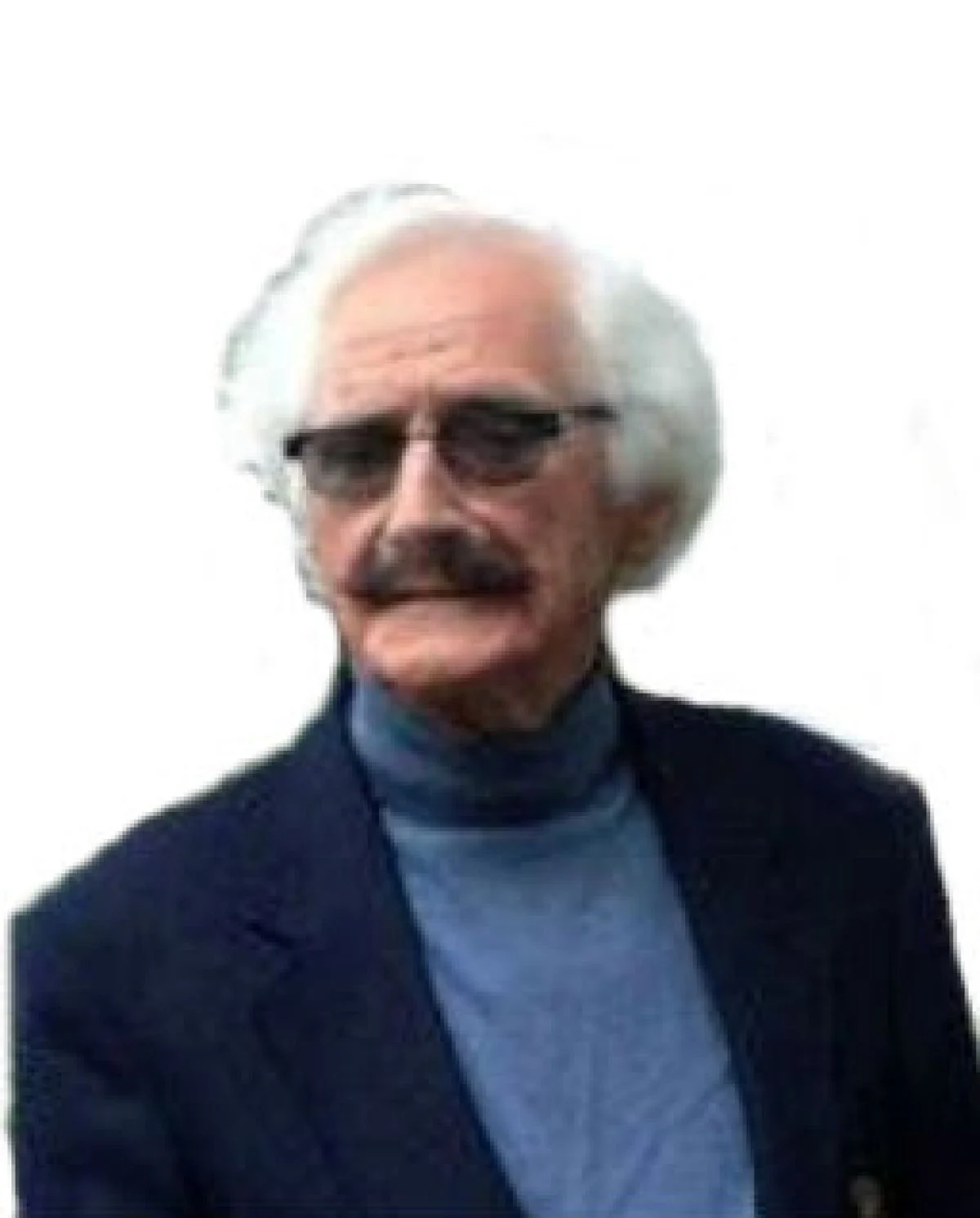
By [Your Name/Pseudonym]
Introduction: The Unexpected Classroom
The mundane ritual of a car service often leads to a familiar sanctuary: the local coffee shop. For a retired professor of philosophy and psychology, these brief respites from the automotive world have, with remarkable consistency, transformed into impromptu philosophical seminars. During a recent visit, a chance encounter with two university students ignited a discussion that delved into the profound and often perplexing questions of human purpose, altruism, and the very nature of consciousness. This article explores the insights gleaned from that conversation, examining the historical and philosophical underpinnings of these concepts and their enduring relevance in our modern world.
The Quest for Purpose: A Historical and Contemporary Perspective
The initial spark of conversation, as often happens when students learn of a retired philosophy professor’s background, revolved around the concept of "purpose." The professor, drawing on a lifetime of study, acknowledged the inherent difficulty in defining purpose, both for individuals and for collective entities like nations. The history of human civilization, he noted, is replete with conflict and suffering, underscoring the persistent challenges in fostering benevolent and spiritually tolerant attitudes.
Historical Context: A Legacy of Conflict and the Seeds of Compassion
Throughout history, humanity has grappled with the inherent tension between self-interest and collective well-being. Wars, ideological clashes, and societal inequalities have often stemmed from a perceived lack of shared purpose or a conflicting understanding of what constitutes a meaningful existence. From the ancient philosophical inquiries into the nature of the good life to the modern-day debates surrounding global justice, the search for purpose has been a driving force, albeit one often overshadowed by the immediate realities of survival and power.
However, even amidst this historical backdrop of strife, the professor pointed to a counter-narrative: the enduring presence of compassion and altruism. He highlighted the rise of charitable organizations as a testament to the human capacity for empathy and the desire to alleviate suffering.
The Modern Manifestation of Altruism: Doctors Without Borders
A poignant example of this altruistic drive, the professor emphasized, is the organization Doctors Without Borders (Médecins Sans Frontières – MSF). This humanitarian medical aid group, comprised of dedicated nurses and doctors, operates in some of the world’s most perilous and underserved regions. Their work, often at the risk of their own lives and careers, exemplifies a profound commitment to serving humanity.
"These are men and women risking their lives, driven by compassion and the altruistic need to act," the professor stated, his voice resoniting with conviction. "These doctors and nurses go far afield, putting their own lives and careers on the line, traveling to distant and dangerous locations to serve the greatest of all moral persuasions, that internal force known as the human spirit."
The dedication of MSF personnel serves as a powerful counterpoint to the darker aspects of human history, illustrating a collective purpose rooted in the alleviation of suffering and the inherent value of human life, irrespective of geographical or political boundaries. Their actions underscore the profound impact that a shared humanitarian purpose can have on a global scale, transcending individual self-interest.
Deconstructing Metaphysics: Beyond the Senses
The conversation then pivoted to a more abstract, yet fundamental, concept: the word "metaphysical." The professor observed that, regrettably, only one of the two students possessed a grasp of its significance. He explained that "metaphysical" denotes a level of awareness in human consciousness that extends beyond the tangible world perceived through our five senses. It delves into the realm of the abstract, the intangible, and the fundamental nature of reality.
The Meaning of Metaphysics: Aristotle’s Legacy
The professor traced the etymology of the term, attributing its coinage to the renowned Greek scientist and philosopher Aristotle. He elaborated that "meta" signifies "beyond" or "after," thus introducing the concept of the mind as a distinct entity, operating at a level of awareness that transcends the purely physical. This encompasses thoughts, ideas, feelings, hunches, and ruminations – all manifestations of an intuitive range of consciousness.
Aristotle, in his seminal work "Metaphysics," sought to understand the fundamental principles and causes of existence, going beyond the observable phenomena of the physical world. His exploration laid the groundwork for centuries of philosophical inquiry into the nature of being, reality, and knowledge, all of which fall under the umbrella of metaphysical exploration.
The Realm of the Spirit and Imagination
The professor further posited that this metaphysical awareness is a form of "silent dialogue," a continuous questioning driven by our innate human imagination. It is a quest to understand the "how" and "why" of our psychological complexity, fueled by an intrinsic force that has long been described as "spirit" or the "human spirit." This internal drive, he suggested, is deeply intertwined with our spiritual inclinations and our capacity for introspection.
The concept of "spirit" in this context transcends religious dogma, referring instead to an inner vitality, a driving force that motivates our actions and shapes our understanding of ourselves and the world. It is the wellspring of our aspirations, our creativity, and our capacity for profound connection.
The Dual Nature of Human Consciousness: Rationality and Intuition
The discussion then explored the duality inherent in human consciousness, a concept that has been a cornerstone of philosophical and psychological thought for millennia. The professor articulated that human consciousness can be understood as comprising two primary modes of awareness:
The Outwardly Directed Brain: Rationality and Sensory Input
On one hand, we possess the "outwardly directed rational and sensory brain." This is the part of our cognitive apparatus that processes information from our environment through our senses – sight, sound, touch, taste, and smell. It is the seat of logical reasoning, problem-solving, and empirical observation. This is the brain that allows us to navigate the physical world, to understand cause and effect, and to engage with the objective realities of our existence.
The Inwardly Directed Brain: Intuition and Spirituality
On the other hand, there is the "inwardly directed intuitive and spiritual brain." This aspect of consciousness operates on a different plane, processing information through intuition, gut feelings, hunches, and a more subjective understanding of reality. It is the realm of creativity, imagination, empathy, and the search for meaning. This is the part of us that grapples with abstract concepts, that experiences profound emotions, and that seeks connection on a deeper, more spiritual level.
Together, these two facets of human awareness – the rational and the intuitive, the sensory and the spiritual – form a crucial partnership that constitutes the complex phenomenon we refer to as "mind." This integrated functioning allows us to both interact with the external world and explore our inner landscape, creating a rich and multifaceted experience of existence.
The Unexplored Depths of Self-Awareness
The professor then posed a question that, in retrospect, highlighted a significant gap in the students’ current intellectual exploration: "Do you ever ponder the unique nature of your own personalities?" The response, he noted with a touch of melancholy, was a pair of blank looks.
This observation underscores a common challenge in modern education and societal discourse. While students are often encouraged to excel in analytical and empirical pursuits, the exploration of one’s inner world – the unique tapestry of thoughts, emotions, and intuitions that define an individual personality – can be overlooked. The professor’s experience suggests a need to foster a greater appreciation for introspection and the philosophical inquiry into the self.
The Metaphysical Nature of Mind: A Neuroscientist’s Perspective
As the coffee cups emptied and the philosophical exchange drew to a close, the professor sought to leave the students with a profound thought from a leading figure in neuroscience. He invoked the words of the late Wilder Penfield, a preeminent Canadian neuroscientist and brain surgeon.
Penfield, in his extensive research into the brain and consciousness, grappled with the fundamental nature of the mind. He famously described mind as a "non-temporal, non-spatial entity." This description, the professor explained, directly aligns with the concept of the metaphysical – something that exists beyond the constraints of time and physical space. Penfield’s perspective, rooted in rigorous scientific inquiry, lent credence to the idea that the mind, and its operations, extend beyond the purely material and observable aspects of the brain.
This powerful concluding remark served as a bridge between the abstract philosophical concepts and the tangible realm of scientific exploration, suggesting that the pursuit of understanding purpose, consciousness, and the human spirit is a journey that spans both the humanities and the sciences.
Conclusion: The Enduring Relevance of Existential Inquiry
The coffee shop encounter, though brief, served as a potent reminder of the enduring human need to grapple with profound questions of existence. The professor’s dialogue with the students illuminated the complexities of purpose, the power of altruism, and the multifaceted nature of human consciousness. While the students’ initial lack of familiarity with terms like "metaphysical" might seem concerning, it also highlights an opportunity. By fostering an environment that encourages philosophical inquiry and introspection, we can equip future generations with the tools to explore these essential questions, leading to a richer understanding of themselves and their place in the world. The pursuit of purpose, the embrace of compassion, and the exploration of the mind remain, as ever, central to the human experience.