
Beyond the Headlines: A Deep Dive into Sci-Fi Legacies, Artistic Visions, and Cosmic Frontiers
This week in science fiction and related news, we delve into the intricate world of literary awards, the architectural marvel of a narrative art museum, the passionate resurgence of film collecting, and the enduring legacy of a hard science fiction master. We also explore the innovative intersection of gaming and fitness, the challenges faced by private space ventures, and the breathtaking expansion of our cosmic understanding through exoplanet discoveries.
The Hugo Awards: Upholding Eligibility and the Legacy of "Best Related Work"
Main Facts & Immediate Impact
The prestigious Hugo Awards, a cornerstone of science fiction and fantasy recognition, maintain rigorous eligibility standards for their various categories. This commitment to defining what truly constitutes "science fiction, fantasy, or fandom" was recently brought to light through an analysis by Nicholas White at From the Heart of Europe. White’s article, "Best Related Work eligibility for the Hugo Awards," sheds light on instances where works have been disqualified, underscoring the importance of these rules in preserving the integrity of the awards.
A Deeper Look: Chronology & Context
The "Best Related Work" category is designed to honor non-fiction or non-narrative works that contribute significantly to the understanding or appreciation of science fiction, fantasy, or fandom itself. Its criteria, though sometimes subject to interpretation, are crucial for distinguishing between genre-specific contributions and broader cultural works.
One notable instance of disqualification occurred during the 2020 Retro Hugos, which honored works from 1945. Aleister Crowley’s The Book of Thoth, a work on occultism and Tarot, received six nominating votes but was ultimately deemed ineligible. The core reason for its exclusion was that it was "not sufficiently related to the field of science fiction, fantasy, or fandom." This decision, while perhaps surprising to some, highlights the committee’s dedication to the category’s stated purpose.
Supporting Data & Analysis
White’s commentary reveals that The Book of Thoth was at the very bottom of the EPH (Eligible-for-Placement-on-ballot) count, indicating a relatively low level of support even among the works that initially garnered nominations. Its removal had a direct and significant impact: it allowed Leigh Brackett’s The Science Fiction Field to move onto the final ballot. Intriguingly, Brackett’s work, a foundational essay exploring the nascent science fiction genre, went on to win the award. This outcome underscores the value of maintaining strict eligibility, as it ensured that a truly relevant and impactful piece of genre commentary received the recognition it deserved.
While White notes that similar cases in the "regular Hugos" are rare, he draws a parallel to the 2002 disqualification of Writers of the Future XVII, which also found itself at the bottom of the EPH count. These instances, though infrequent, serve as vital reminders that the Hugo Awards are not merely a popularity contest but a celebration of works that align with specific genre and fan-related contributions.
Voices and Reactions
Decisions regarding eligibility are made by the Hugo Awards administrators, often following established guidelines and precedents. While no direct "official response" beyond the act of disqualification itself is typically issued for individual cases, the consistent application of these rules speaks to the organizing body’s commitment. The community, through discussions and analyses like White’s, engages with these decisions, reinforcing the transparent and deliberative nature of the awards process. The fact that a work directly related to the history and evolution of the science fiction field, like Brackett’s, benefited from this rigorous process, speaks volumes about the intent behind the rules.
Future Implications & Broader Significance
The careful scrutiny of eligibility for categories like "Best Related Work" ensures that the Hugo Awards remain a relevant and respected institution within speculative fiction. It reinforces the idea that an award isn’t just about popularity, but about a work’s genuine contribution to its designated field. This practice not only honors the specific works that win but also helps define and solidify the boundaries and identity of science fiction, fantasy, and fandom itself, providing clarity for future creators and readers alike.
The Lucas Museum of Narrative Art: A Billion-Dollar Vision Unveiled
Main Facts & Immediate Impact
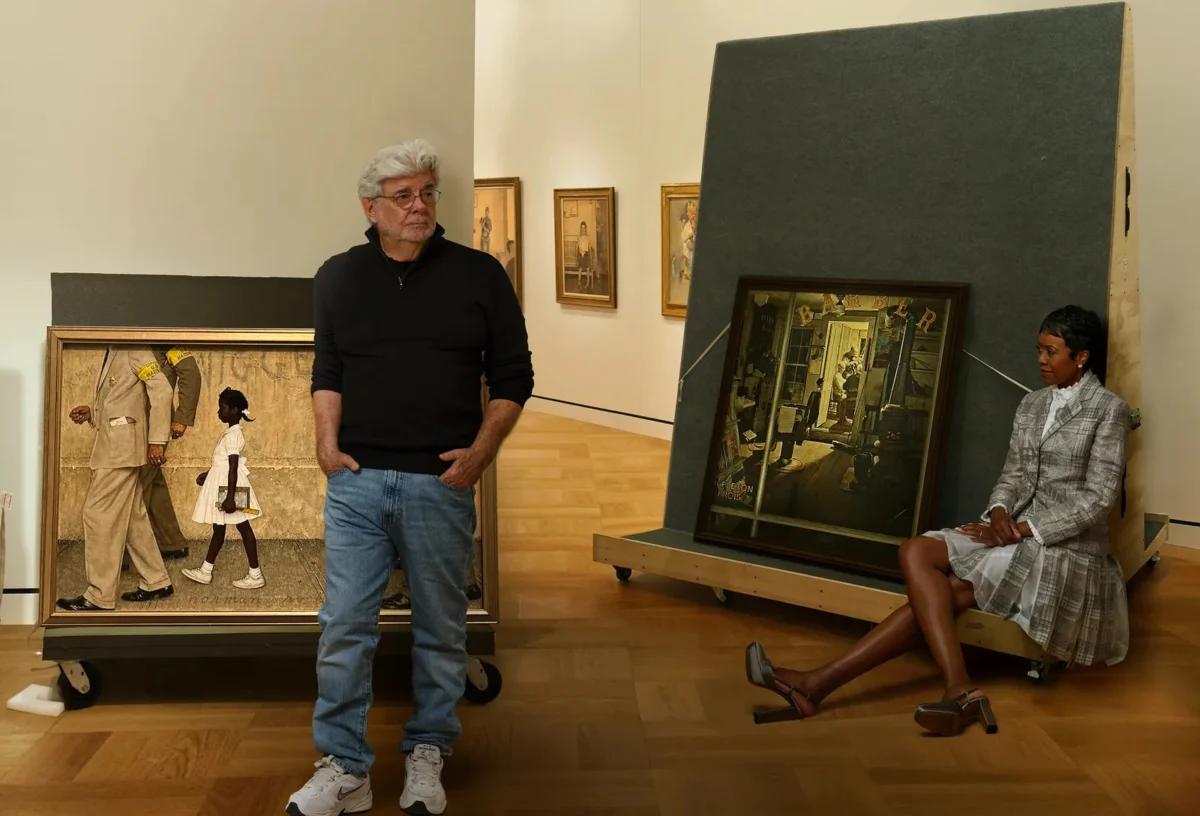
Los Angeles is poised to welcome a monumental new cultural institution: the Lucas Museum of Narrative Art. A recent preview by Vogue, featuring stunning photography by Annie Leibovitz, offered an exclusive glimpse into this ambitious project. Conceived and funded by filmmaker George Lucas and his wife Mellody Hobson, the museum is a testament to the power of storytelling through visual art, housed within an architectural marvel that defies conventional design.
A Deeper Look: Chronology & Context
The journey to establish the Lucas Museum has been a long and winding one, marked by several proposed locations and significant community engagement. After initial plans for Chicago and then San Francisco fell through, Los Angeles was ultimately chosen as the home for this ambitious vision. The museum’s construction represents not just a financial commitment of approximately a billion dollars, entirely funded by Lucas and Hobson, but also years of dedication to creating a space that celebrates the art of storytelling across diverse mediums.
The design itself is a radical departure from traditional museum architecture. As Vogue describes, the structure is "towering with rich wood paneling and almost entirely devoid of right angles." Its aesthetic features sweeping ceilings, grand twisting staircases, and central elevators encased in glass tubes, creating an immersive and fluid experience for visitors.
Supporting Data & Analysis
The museum’s striking façade, described as a "carapace," was engineered using parametric modeling, a sophisticated process that allows for complex, organic shapes to be designed and realized with unprecedented precision. This enabled the creation of a building that appears molded "like Play-Doh," assembled from 1,500 school-bus-sized fiberglass panels. Michael Siegel, a principal at Stantec architecture and a project leader, noted its contemporary nature: "It’s a piece of modern architecture so of its time that you couldn’t have built it 15 years ago." Yet, its blend of "tech futurism and organicity" evokes a "classically Californian" sensibility, reminiscent of Apple’s iconic designs, balancing openness with compactness, and coolness with warmth. Sir Lewis Hamilton, the Formula 1 driver and close friend of Lucas, vividly describes the experience of navigating its elegant, irregular interior as "like walking through George’s brain."
The museum’s collection is as unique as its architecture, focusing on "narrative art." Lucas himself curated 1,200 pieces from a pool of 40,000, emphasizing illustration. This includes celebrated oil works by Maxfield Parrish and Norman Rockwell, alongside comic strips, manga, movie art, and fantasy scenes. Lucas’s passion for collecting began in college when he discovered he could afford original comic strip drawings for modest sums, a practice he describes as "an underground thing" before auction houses took interest.
Crucially, while George Lucas is synonymous with Star Wars, the museum is "emphatically not a Star Wars museum." However, it adopts a pragmatic approach, acknowledging the franchise’s drawing power. An exhibition will feature vehicles and models from the movies, offering an entry point for visitors who might then discover other artists like Maxfield Parrish. The gift shop, designed to be irresistible, will reflect this balance, selling both collection-related items and Star Wars merchandise. Lucas, drawing on his extensive experience in licensing and merchandising, aims for a profitable gift shop, a rarity in the museum world, and insists on selling only "good" toys.
Voices and Reactions
The financial outlay by Lucas and Hobson is seen by their friends as the least of their commitments. Designer Stella McCartney, who has known the couple for years, states, "I wouldn’t even call it a project, because that’s just not big enough a word. It’s like another limb for them." Lucas himself likens the museum’s creation to film production: "It’s like making a movie—exactly the same thing."

Mellody Hobson’s influence is particularly evident in the museum’s educational mission and its emphasis on accessibility. Raised by a struggling single mother as one of six children, Hobson, now a prominent figure in finance, prioritizes making the museum appealing and enriching for children from all backgrounds. The gift shop, for instance, is designed to offer something for kids from every walk of life.
Future Implications & Broader Significance
The Lucas Museum of Narrative Art is poised to become a significant cultural landmark in Los Angeles, redefining how art and storytelling are presented. By focusing on illustration and narrative art, it elevates forms often overlooked by traditional art institutions. Its design pushes architectural boundaries, creating an immersive experience that mirrors the fantastical worlds Lucas has brought to life on screen. Beyond its artistic contributions, the museum’s commitment to accessibility and education, championed by Hobson, promises to make it a vibrant hub for diverse audiences, inspiring new generations to appreciate the power and artistry of visual storytelling. It represents a profound personal legacy for George Lucas and Mellody Hobson, a gift to the city, and a bold new chapter in the art world.
The Resurgence of Film Collecting: From Underground to Mainstream
Main Facts & Immediate Impact
The world of film collecting is experiencing a vibrant renaissance, marked by the 50th anniversary of the British Film Collectors Convention (BFCC). This annual event, set to take place in Oxted, Surrey, on Saturday, celebrates a hobby that was once shrouded in legal ambiguity and forced underground. Now, as collectors gather to trade, sell, and view films ranging from 35mm to Super 8 gauges, there’s a palpable sense of renewed enthusiasm and legitimacy.
A Deeper Look: Chronology & Context
The first BFCC was held in 1976, marking the beginning of a community for enthusiasts of physical film media. However, as Mark Stuckey from the charitable trust Film is Fabulous explains, the path for film collectors has been fraught with challenges. Just a few decades ago, owning a 35mm print, particularly by a private individual, could lead to severe legal repercussions. "If he had acquired it, he had technically stolen it and therefore a lot of collectors for many years went underground," Stuckey told the BBC. This precarious legal status meant that many valuable prints of early silent films, integral to social history, were lost forever, as collectors feared prosecution or simply couldn’t openly preserve their finds.
The COVID-19 pandemic dealt a severe blow to the convention, with organizer John Clancy admitting it "looked like the convention was killed." However, a successful revival event in 2023 sparked a new hope. Clancy observed that "film was fashionable once more," indicating a shift in public perception and a renewed interest in physical media. This resurgence paved the way for the establishment of Film is Fabulous, a charitable trust dedicated to recovering and preserving lost films.
Supporting Data & Analysis
The legal issues surrounding film ownership stemmed from the studios’ proprietary control over their prints. A 35mm print, the industry standard for theatrical exhibition, was considered a licensed asset, not an item to be sold to the public. Any unauthorized possession was deemed theft or copyright infringement, forcing collectors to operate in a gray area, often at significant personal risk. This underground activity, while preserving some films, also meant that many collections, especially after the death of a collector, were simply discarded by families unaware of their historical or monetary value. Clancy highlights this tragic reality: "collectors had heard about families of elderly collectors who had died ‘quite often just putting the collections into skips,’ and this set ‘alarm bells ringing.’"
The BFCC serves as a vital hub for this community, offering a legal and social platform for trading films across various formats, from the professional 35mm to the amateur-friendly Super 8. It’s not just about commerce; it’s about shared passion and the collective effort to preserve a tangible piece of cinematic history. The establishment of Film is Fabulous, following the 2023 revival, underscores a proactive approach to film preservation, actively seeking out and recovering films believed to be lost. This collective action directly addresses the historical losses caused by the previous legal environment and the lack of awareness regarding the value of these collections.
Voices and Reactions
Mark Stuckey’s assertion that "Our hobby was outlawed, now it’s making a comeback" encapsulates the journey of film collectors. His account of collectors going underground due to the threat of imprisonment highlights the drastic shift in the legal and social landscape. John Clancy’s resilience in bringing the BFCC back from the brink of cancellation post-pandemic demonstrates the enduring commitment of the community. Their shared concern over the loss of historical film through discarded collections is a powerful call to action, emphasizing the importance of organizations like Film is Fabulous in educating the public and facilitating preservation efforts.
Future Implications & Broader Significance
The revival of film collecting and the success of events like the BFCC signify more than just a nostalgic hobby; they represent a crucial effort in cultural preservation. In an increasingly digital world, the tangible nature of film reels offers a unique connection to cinematic history, providing a direct link to the original medium. This movement also encourages a broader discussion about copyright, ownership, and the role of private collectors in safeguarding cultural heritage. The work of Film is Fabulous and similar organizations is vital in preventing further loss of invaluable historical footage, ensuring that future generations can access and appreciate the rich tapestry of moving images that have shaped our past. The resurgence proves that the allure of physical film, with its unique aesthetic and historical weight, remains potent and necessary.
Hal Clement: The Architect of Hard Science Fiction
Main Facts & Immediate Impact
On May 30, we commemorate the birthday of Hal Clement (born 1922, died 2003), a titan of hard science fiction. As acclaimed author Paul Weimer observes, Clement was unparalleled in his ability to make "hard science and physics… characters" within his narratives. His work stands as a testament to the power of scientific rigor in crafting truly alien and believable worlds, captivating readers with intricate puzzles rooted in astrophysical and biological realities.
A Deeper Look: Chronology & Context
Harry Clement Stubbs, writing under the pen name Hal Clement, began his career during the Golden Age of science fiction. His work consistently prioritized scientific accuracy and logical deduction, influencing countless writers who sought to ground their speculative tales in plausible scientific principles. Unlike many contemporaries who focused on adventure or social commentary, Clement carved out a niche as the master of the "puzzle story," where the environment itself presented the primary challenge and antagonist.
Supporting Data & Analysis
Clement’s magnum opus, Mission of Gravity, published in 1953, remains the quintessential example of his style. The novel transports readers to Mesklin, a planet characterized by extreme, crushing gravity at its poles (up to 700 Gs) and vastly lower gravity at its equator due resulting from its rapid rotation and oblateness. Weimer accurately points out that while the individual characters might not be deeply explored, the true protagonist is Mesklin itself—its physics, its unique environment, and the challenges it poses. The story revolves around the alien inhabitants’ efforts to navigate their incredibly hostile world and assist stranded humans, with every solution derived from a meticulous understanding of Mesklin’s physical laws. This approach made the world-building an intellectual exercise, demanding the reader to engage with the scientific underpinnings of the narrative.
Another notable, though less widely recognized, work is The Nitrogen Fix. In this novel, Clement presents a post-apocalyptic Earth where the atmosphere has been radically altered, becoming a toxic blend of nitrogen oxides, carbon dioxide, and water. The mystery of this transformation—and its eventual ironic solution—is the core of the story, once again demonstrating Clement’s mastery of scientific puzzle-solving. The narrative explores how life adapts to such extreme conditions and how scientific inquiry can unravel seemingly insurmountable environmental disasters.
Clement also contributed significantly to the "shared world" phenomenon popular in the 1980s. He participated in the Medea project, a collaborative effort by numerous science fiction writers to construct a realistic planet and solar system. Clement not only provided an essay detailing the astrophysics of Medea, showcasing his world-building expertise, but also contributed a story to the anthology. This involvement highlights his reputation as a go-to authority for credible scientific speculation, demonstrating his influence beyond his solo works.
Voices and Reactions
Paul Weimer’s analysis succinctly captures the essence of Clement’s appeal: "If hard science and physics could be considered ‘characters’ in science fiction, Hal Clement is certainly the person who was able to make them so." This perspective underscores how Clement transcended typical character-driven narratives, making the laws of the universe the driving force of his tales. His focus on scientific accuracy over character development wasn’t a flaw but a deliberate choice that defined his unique contribution to the genre.

Future Implications & Broader Significance
Hal Clement’s legacy continues to shape hard science fiction, inspiring generations of writers to explore the universe with scientific integrity. His commitment to making science integral to storytelling demonstrated that intellectual rigor could be as compelling as any dramatic plot. In an era where scientific literacy is increasingly valued, Clement’s work serves as a reminder of the power of speculative fiction to educate, challenge, and expand our understanding of what is possible, all while adhering to the fundamental laws of the cosmos. His influence ensures that "hard science as a character" remains a vital and respected subgenre within speculative literature.
Running with the Undead: How Gamification Fuels Marathon Dreams
Main Facts & Immediate Impact
Dominik Diamond, at 56, is embarking on his first marathon, a testament to personal resilience and the unexpected power of gamified fitness. His secret weapon? Zombies, Run!, an interactive smartphone game that transforms mundane runs into thrilling escapes from the undead. As reported by The Guardian, Diamond’s journey highlights how narrative and immersion can provide the crucial motivation needed to achieve ambitious fitness goals, particularly for those facing the unique challenges of middle age.
A Deeper Look: Chronology & Context
Diamond’s decision to tackle a marathon was born out of a period of depression, a common challenge in mid-life. Feeling a lack of achievement, he sought a significant physical and mental challenge. Initially, he attempted to motivate himself with audiobooks, but found their narrative passive and less engaging for sustained effort. It was then he rediscovered Zombies, Run!, an app released years prior, which offered a more dynamic and immersive experience.
Supporting Data & Analysis
Zombies, Run! is a unique blend of fitness tracker and audio drama. Users are cast as "Runner 5," a crucial supply collector for one of humanity’s last outposts in a zombie apocalypse. The app weaves a compelling story through audio logs, mission briefings, and character interactions, all set against the backdrop of the user’s real-world run. The key interactive element, and Diamond’s primary motivator, are the "zombie chases." During these segments, the narrator warns of approaching hordes, prompting the runner to increase their pace for a set duration to "outrun" the zombies and avoid losing collected supplies.
For Diamond, these sudden demands for speed, which he describes as "sprinting is on that list of things you just can’t or won’t do in your mid-50s," proved incredibly effective. The narrative stakes—the survival of his virtual community and his own character—overrode the physical discomfort and natural inclination to maintain a steady pace. This gamified approach leverages the psychological power of extrinsic motivation (avoiding virtual harm, collecting virtual resources) and narrative immersion to push physical boundaries that might otherwise be untouched. The app’s success lies in its ability to distract from the drudgery of exercise by engaging the mind in a thrilling, unfolding story.
Voices and Reactions
Diamond’s candid reflection, "If you want to run your first marathon in your 50s, it helps to be chased by zombies," perfectly encapsulates the transformative experience. His personal journey from battling depression to training for a marathon underscores the mental health benefits of exercise, amplified by the engaging format of Zombies, Run!. The app provided not just physical training but a psychological escape and a renewed sense of purpose. His humorous observation about the reluctance to sprint in one’s mid-50s highlights the particular hurdle that gamification can help overcome for an older demographic seeking to reclaim their fitness.
Future Implications & Broader Significance
Dominik Diamond’s experience with Zombies, Run! illustrates the growing potential of combining technology, storytelling, and fitness. Gamified exercise apps offer a powerful solution for motivating individuals across all age groups, especially those who find traditional workouts uninspiring or struggle with self-motivation. Beyond physical health, these tools can contribute to mental well-being by providing a sense of achievement and purpose. As technology continues to evolve, the integration of immersive narratives and interactive challenges holds immense promise for redefining our relationship with exercise and making healthy lifestyles more accessible and engaging for everyone. It demonstrates that sometimes, escaping fictional peril is the best way to conquer real-world challenges.
Blue Origin’s Setback: The Perils and Promise of Private Spaceflight
Main Facts & Immediate Impact
Blue Origin, Jeff Bezos’s ambitious space venture, experienced a significant setback when its New Glenn rocket exploded during a critical engine-firing test. The incident occurred on the launchpad at Cape Canaveral Space Force Station, just a week before a planned satellite launch. Fortunately, there were no injuries, but the explosion marks a considerable delay and a fresh challenge for the company’s aspirations in the competitive private space industry.
A Deeper Look: Chronology & Context
The explosion on the launchpad is not the first challenge for the New Glenn rocket. Just months prior, in April, the massive launch vehicle was grounded after an engine failure during a previous flight test. That incident resulted in a satellite being deployed into an incorrect orbit, highlighting the complexities and risks inherent in advanced rocketry. This recent explosion occurred during a routine but essential engine-firing test, designed to verify the rocket’s readiness before flight.
The New Glenn is Blue Origin’s answer to the heavy-lift market, designed to compete with industry giants like SpaceX’s Falcon Heavy and Starship. It is intended to be a reusable, two-stage orbital launch vehicle capable of deploying satellites, interplanetary probes, and, critically, lunar landers for NASA’s Artemis program. The stakes are particularly high for Blue Origin, as the company recently secured a lucrative NASA contract worth hundreds of millions of dollars to launch a pair of moon buggies in the coming years and is also developing the lunar landers that will carry astronauts to the lunar surface.
Supporting Data & Analysis
Engine-firing tests, often called "static fire" tests, are a standard procedure in rocket development and pre-launch checks. They involve igniting the rocket’s engines for a brief period while the vehicle remains securely bolted to the launchpad. This allows engineers to gather critical performance data, verify systems, and identify any anomalies before committing to a full launch. An explosion during such a test, while damaging, is arguably preferable to an in-flight failure, as it minimizes risk to human life and allows for immediate investigation on site.
The New Glenn rocket’s development has been closely watched, particularly given Blue Origin’s broader ambitions in space tourism (with its New Shepard suborbital vehicle) and lunar exploration. The consistent challenges with its main orbital launcher underscore the immense technical hurdles involved in developing reliable, powerful, and reusable spaceflight systems. The previous engine failure and this latest explosion point to potential issues within the propulsion system or related support infrastructure, necessitating a thorough and costly investigation.
Voices and Reactions
Jeff Bezos, Blue Origin’s founder, quickly responded to the incident via X (formerly Twitter), acknowledging the severity of the situation. "Very rough day, but we’ll rebuild whatever needs rebuilding and get back to flying. It’s worth it," Bezos stated. His words convey both the immediate disappointment and a determined commitment to overcoming the setback, reflecting the high-stakes, long-term vision characteristic of private space exploration. While no further official statements detailing the root cause have been released, an extensive investigation by Blue Origin and potentially regulatory bodies is undoubtedly underway.
Future Implications & Broader Significance
This explosion represents a significant setback for Blue Origin, both in terms of financial cost and schedule delays. It will undoubtedly push back the New Glenn’s maiden orbital flight and subsequent missions, potentially impacting the timelines for its satellite launch customers and its crucial role in NASA’s Artemis program. Delays in the development of lunar landers could have ripple effects on NASA’s ambitious timeline for returning humans to the Moon.
However, the private space industry is characterized by its resilience and iterative approach to development, where failures are often seen as learning opportunities. Blue Origin’s determination to "rebuild" and continue its mission highlights the long-term strategic importance of its projects. While the incident underscores the inherent dangers and complexities of space exploration, it also serves as a reminder of the relentless pursuit of innovation and the significant




Leave a Comment