
Breaking the Silicon Barrier: OpenXR OSX and the Quest to Bring PCVR to the Mac Ecosystem
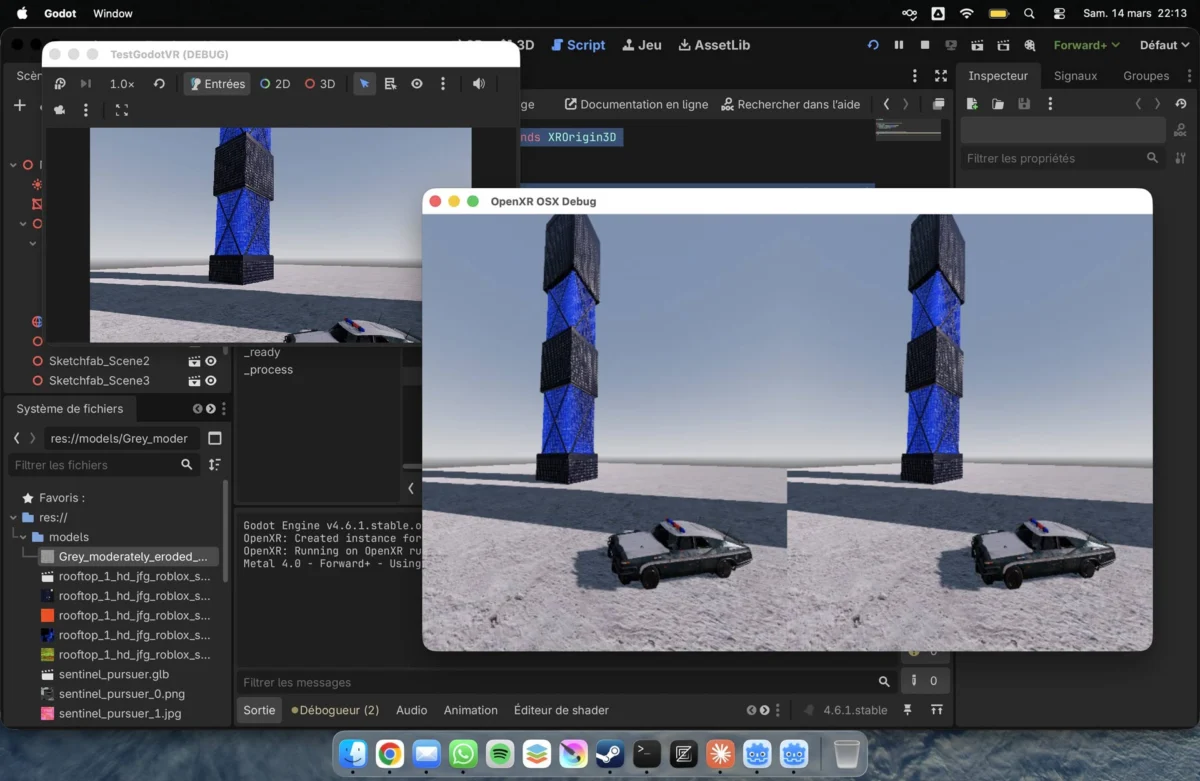
The history of Virtual Reality (VR) on the Mac platform has long been characterized by a cycle of brief flirtations followed by long periods of abandonment. Despite Apple’s recent foray into the "spatial computing" market with the Vision Pro, the broader world of PC-based Virtual Reality (PCVR) has remained almost exclusively the domain of Windows and, to a lesser extent, Linux. However, a transformative new project titled OpenXR OSX is poised to bridge this historical divide, offering a sophisticated software solution to run high-end VR applications natively on macOS.
Developed by veteran VR developer Yannick Comte, OpenXR OSX represents a potential turning point for Mac users who have been excluded from the vast library of OpenXR-compatible games and professional tools. By creating a custom runtime and streaming architecture, Comte aims to unlock the untapped potential of Apple’s M-series silicon, providing a bridge between the Mac’s processing power and the industry-standard OpenXR framework.
Main Facts: The Architecture of OpenXR OSX
At its core, OpenXR OSX is a comprehensive software suite designed to circumvent the lack of native VR support within the macOS environment. Because Apple has famously declined to join the OpenXR consortium—favoring its proprietary "Metal" graphics API and "ARKit" frameworks—the vast majority of VR software developed for Windows simply cannot communicate with Mac hardware.
OpenXR OSX solves this through a three-tiered architecture:
- The Mac Runtime: This is the "brain" of the operation. It is an OpenXR-compliant runtime that resides on the Mac, allowing the computer to recognize and execute VR applications as if it were a native VR-ready workstation.
- The Quest Thin Client: To bridge the gap between the computer and the user’s eyes, a lightweight client application is installed on a standalone headset (currently focusing on Meta Quest devices).
- The Streaming Protocol: The system utilizes a specialized streaming layer that transmits the rendered VR frames from the Mac to the headset over a local network.
Key Features and Capabilities
Unlike previous, more rudimentary attempts at Mac VR, OpenXR OSX is built with modern standards in mind. It currently supports:
- Native OpenXR Integration: Allowing applications built in engines like Godot, Unity, and native C++ to run on macOS.
- Input Parity: The system supports both standard VR controllers and advanced hand tracking, ensuring that modern interaction paradigms are preserved.
- Zero-Configuration Discovery: The Quest client is designed to automatically detect the OpenXR runtime on the local network, removing the friction often associated with third-party VR streaming solutions.
Chronology: A Troubled History of VR on macOS
To understand the significance of OpenXR OSX, one must look at the decade-long struggle of Mac-based VR.
- 2013–2015: The Early Oculus Era: In the nascent days of the VR rebirth, Oculus (pre-Facebook acquisition) provided support for macOS. Early developers used MacBooks to build some of the first "Rift" demos. However, as hardware requirements climbed, Oculus discontinued Mac support to focus exclusively on Windows, citing the lack of powerful GPUs in Apple’s lineup at the time.
- 2017: The High Sierra and Vive "Renaissance": At WWDC 2017, Apple made a major push for VR. They partnered with Valve to bring SteamVR to Mac and showcased a high-end HTC Vive demo using an External GPU (eGPU) connected to a MacBook Pro. For a brief window, it appeared the Mac was becoming a viable VR platform.
- 2019–2021: The Great Retreat: As Apple shifted toward its own silicon (M-series) and deprecated the OpenGL graphics standard in favor of Metal, the fragile bridge to PCVR collapsed. Valve officially ended SteamVR support for Mac in 2020, leaving users with powerful M1 and M2 chips but no way to connect them to standard VR headsets.
- 2023–2024: The Vision Pro and the OpenXR OSX Development: While Apple launched the Vision Pro, it remains a closed ecosystem focused on its own VisionOS. Simultaneously, Yannick Comte began developing OpenXR OSX as a grassroots effort to provide a "bottom-up" solution for the community, leveraging the sheer power of M-series chips to handle rendering tasks that were previously impossible.
- March 2026: Comte officially demonstrates native PCVR running on macOS via his runtime, signaling that the project is nearing a public release.
Supporting Data: Performance Benchmarks and Technical Hurdles
One of the most persistent myths regarding Mac VR is that the hardware is incapable of the high-frame-rate rendering required for a comfortable VR experience. OpenXR OSX is systematically debunking this through empirical testing.
Silicon Performance
Yannick Comte’s testing has primarily utilized the higher-end M-series chipsets (including tests on M5-equivalent hardware). According to Comte, the Mac handled "heavy VR scenes" with fluid rendering and stable frame rates. This is attributed to the Unified Memory Architecture (UMA) of Apple Silicon, which allows the GPU to access large pools of high-speed memory—a significant advantage for high-resolution VR textures.
The Vulkan/MoltenVK Challenge
The primary technical hurdle for OpenXR OSX is the translation of graphics instructions. Most OpenXR applications use Vulkan, a cross-platform graphics API. macOS, however, only supports Metal.
- OpenXR OSX utilizes MoltenVK, a software library that maps Vulkan commands to Apple’s Metal framework.
- While this translation layer introduces some overhead, the efficiency of the M-series chips has proven more than capable of absorbing this cost without sacrificing the 72Hz or 90Hz targets required for VR.
Current Technical Limitations
As a project currently managed by a solo developer, OpenXR OSX faces several "Version 1.0" challenges:

- Single Application Focus: The runtime currently supports running only one OpenXR application at a time.
- Audio/Microphone Integration: Implementing low-latency bi-directional audio between the Mac and the headset remains a work in progress.
- Advanced Features: Eye tracking and specialized haptics are not yet implemented, though they are on the long-term roadmap.
Official Responses and Developer Outlook
Yannick Comte has been transparent about the project’s status via social media platforms like X (formerly Twitter) and LinkedIn. His stance is one of cautious optimism, framed by a commitment to the open-source philosophy.
"This is it, native PCVR on MacOS!" Comte shared during a recent demonstration. He noted that because the OpenXR SDK can be compiled on macOS, the primary task was implementing the runtime and the streaming logic. By using the Godot engine for initial testing, he proved that the integration is engine-agnostic.
Regarding the release date, Comte has adopted a "soon" timeline, with indications that the project will be released as open-source in May. This move is strategic; by making the code public, Comte hopes to attract a community of developers to solve the remaining audio and Vulkan-compatibility bugs. He has actively invited other developers and companies interested in Mac-based XR to reach out for collaboration, signaling that this is intended to be a community-driven standard rather than a proprietary product.
Implications: A New Era for the OpenXR Vision
The emergence of OpenXR OSX has profound implications for the VR industry, the developer community, and the future of the Mac as a gaming platform.
Completing the OpenXR Vision
The fundamental promise of OpenXR was "cross-platform compatibility." Until now, that promise had a glaring hole where the Mac should be. With OpenXR OSX, the industry moves closer to a reality where a single VR application can run across:
- Windows: Via SteamVR or Oculus Link.
- Linux: Via the Monado runtime.
- macOS: Via OpenXR OSX.
This ubiquity reduces the risk for developers, who no longer have to ignore the millions of high-end Mac users when designing their software.
The "Pro" Mac User and VR
Beyond gaming, there is a significant market of "Pro" Mac users—architects, medical researchers, and industrial designers—who use Macs for their primary workflow but have had to maintain a secondary Windows PC specifically for VR visualization. OpenXR OSX could allow these professionals to stay within the macOS ecosystem, using their existing M-series workstations to drive VR reviews and design sessions.
Challenging the Walled Garden
Finally, OpenXR OSX represents a philosophical challenge to Apple’s closed-ecosystem approach. While Apple seeks to define "spatial computing" on its own terms with the Vision Pro, OpenXR OSX brings the "open" world of PCVR to the Mac. It empowers the user to choose their hardware (such as a Quest 3 or potentially other standalone headsets) and their software (SteamVR titles or open-source projects) without being tethered to the App Store.
As the project moves toward its open-source debut, the eyes of the VR community will be on Yannick Comte and the contributors who join him. If successful, OpenXR OSX won’t just be a "cool project"—it will be the key that finally unlocks the door to a truly universal VR landscape.



Leave a Comment