Qualcomm Unveils Snapdragon Reality Elite: A New Era for Spatial Computing and Generative AI
LOS ANGELES — In a move that signals a seismic shift in the architecture of standalone extended reality (XR) devices, Qualcomm Technologies, Inc. has officially announced the Snapdragon Reality Elite. Representing the company’s most powerful XR-dedicated silicon to date, the chipset is set to redefine the performance ceiling for virtual, augmented, and mixed reality headsets.
The Snapdragon Reality Elite is not merely an incremental update; it is a fundamental rebranding and a technological leap. While previous iterations followed the "XR2" nomenclature, the "Elite" branding aligns the XR line with Qualcomm’s flagship mobile processors, such as the Snapdragon 8 Elite. The chipset is slated to make its commercial debut this fall, powering the compute puck of the newly announced Xreal Aura Android XR device.
Main Facts: The New Standard for High-Performance XR
The Snapdragon Reality Elite arrives at a critical juncture for the XR industry. As the market transitions from simple gaming peripherals to sophisticated spatial computers capable of replacing traditional workstations, the demand for raw processing power, thermal efficiency, and specialized AI acceleration has reached an all-time high.
Key Specifications and Performance Targets
Qualcomm’s latest offering is essentially the "Snapdragon XR2 Gen 3" in all but name. It is designed to support a wide array of form factors, from all-in-one headsets to distributed systems where the processing is offloaded to a tethered "compute puck."
According to internal benchmarks provided by Qualcomm, the Reality Elite offers several generational leaps over its predecessor, the Snapdragon XR2+ Gen 2 (currently found in high-end devices from Samsung, Play For Dream, and Sony):
- NPU Performance: A staggering 160% increase in Neural Processing Unit (NPU) capability, specifically tuned for Generative AI.
- Thermal Management: The chip runs up to 12°C cooler under sustained peak loads compared to the previous generation.
- Energy Efficiency: Achieving 20% longer battery life under identical workloads, a crucial metric for mobile XR.
- AI Speed: Capable of running a 3-billion parameter Large Language Model (LLM) at 45 tokens per second on-device.
Versatility in Display Systems
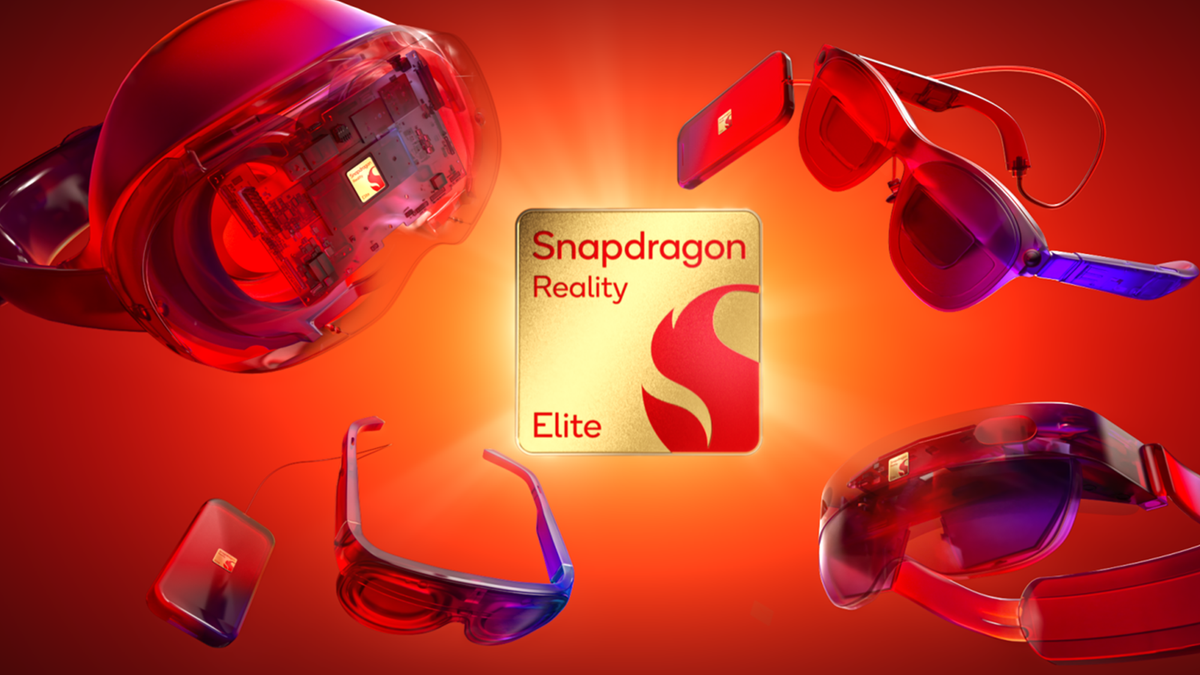
A core feature of the Reality Elite is its "agnostic" design regarding display technology. Qualcomm has optimized the silicon to function seamlessly with both passthrough systems (where cameras feed a video stream of the real world to internal screens, like the Meta Quest 3) and see-through systems (where digital images are projected onto transparent glass, like Xreal’s AR glasses).
Chronology: From XR2 to Reality Elite
The journey to the Snapdragon Reality Elite reflects the rapid maturation of the XR industry. To understand the significance of this launch, one must look at the timeline of Qualcomm’s dominance in the sector.
- The XR2 Foundation (2020-2022): The original Snapdragon XR2 powered the Meta Quest 2, becoming the industry standard. It proved that standalone VR was viable but was limited by thermal constraints and modest AI capabilities.
- The Gen 2 Evolution (2023): With the release of the XR2 Gen 2 (Meta Quest 3) and the XR2+ Gen 2 (Samsung/Google partnership), Qualcomm introduced 4K-per-eye support and significantly improved GPU performance.
- The Branding Pivot (Late 2023 – Early 2024): Qualcomm began transitioning its flagship mobile chips to the "Elite" branding. This move was intended to signify a "best-in-class" tier that stands apart from mid-range offerings.
- The Reality Elite Announcement (June 2024): At the Augmented World Expo (AWE), Qualcomm officially retired the numerical "Gen 3" suffix for its flagship XR line in favor of "Snapdragon Reality Elite."
- Market Launch (Fall 2024): The Xreal Aura will be the first device to ship with the silicon, followed closely by a new flagship device from Play For Dream.
Supporting Data: Powering the Generative AI Revolution
The most significant takeaway from the Snapdragon Reality Elite announcement is Qualcomm’s aggressive pivot toward on-device Generative AI. While previous chips used AI primarily for tracking (SLAM) and hand recognition, the Reality Elite is built to host complex, creative AI agents.
The NPU and LLM Performance
The 160% boost in NPU performance is not just for marketing; it enables "entirely new GenAI experiences." Qualcomm demonstrated that the chip could handle a 512×512 Large Vision Model (LVM) with a latency of approximately 1.7 seconds. For users, this means a headset could "see" a room and instantly generate a 3D mesh or identify objects without needing to send data to the cloud.
The ability to run a 3B parameter LLM at 45 tokens per second is equally transformative. This allows for real-time, voice-activated AI assistants that can interact with the user’s environment in a way that feels instantaneous.
Graphics and Spatial Mapping
The Reality Elite includes an expanded EVA (Engine for Visual Analytics) block. This specialized hardware component is dedicated to computer vision tasks. Qualcomm suggests that this expanded block could enable real-time continuous scene meshing on headsets even if they lack a dedicated depth sensor (LiDAR). By using standard camera feeds and the EVA block, the chip can calculate the geometry of a room with high precision, allowing digital objects to hide behind physical furniture (occlusion) with minimal latency.
Thermal and Battery Efficiency
In the world of wearables, heat is the ultimate enemy. A device that gets too hot is uncomfortable to wear and will eventually throttle its performance. Qualcomm’s claim of a 12°C reduction in temperature under load is perhaps the most impressive engineering feat of the Reality Elite. By utilizing a more advanced fabrication process (likely 3nm), the chip achieves higher clock speeds while drawing less power, resulting in the 20% battery life improvement.

Official Responses: Addressing the "Puck" Problem
During the unveiling, a significant point of discussion involved the Xreal Aura, which utilizes a "compute puck"—a small device connected to the glasses via a cable that houses the processor and battery. This design removes weight from the head but introduces a new thermal challenge: the user’s pocket.
Qualcomm on Thermal Responsibility
When questioned by UploadVR regarding whether the Snapdragon Reality Elite would suffer from performance throttling when tucked away in a pocket—where there is no active airflow—Qualcomm representatives provided a measured response.
The company declined to provide specific performance degradation figures for "in-pocket" scenarios. Instead, Qualcomm emphasized that the Reality Elite is designed to be form-factor flexible. A spokesperson stated that while the chip is engineered to be significantly cooler, the ultimate thermal solution—whether it be active fans, heat pipes, or passive cooling—remains the responsibility of the Original Equipment Manufacturers (OEMs).
"The chip provides the headroom and the efficiency," the company noted, "but how a device maker integrates that into their specific industrial design—whether it’s a headset or a tethered puck—is where their engineering expertise comes into play."
Implications: What This Means for the Future of XR
The launch of the Snapdragon Reality Elite carries profound implications for the competitive landscape of spatial computing, particularly as Qualcomm seeks to maintain its lead against Apple’s M-series and R-series silicon.
1. The Death of the "Mobile-Phone-on-the-Face"
For years, XR chips were essentially modified mobile phone processors. The Reality Elite marks a definitive break from that heritage. With its massive NPU and specialized visual analytics engine, this is a "Spatial-First" processor. It prioritizes the low-latency requirements of motion tracking and the high-bandwidth needs of high-resolution passthrough over traditional mobile tasks.
2. Democratizing Photorealistic Avatars
One of the most hardware-intensive tasks in XR is the rendering of photorealistic avatars (similar to Meta’s "Codec Avatars"). By providing 1.6x the AI processing power, Qualcomm is giving developers the tools to move away from "cartoonish" avatars toward lifelike digital representations that can mimic subtle facial expressions in real-time.
3. The Rise of Distributed Computing
The Xreal Aura’s use of a compute puck may be a harbinger of things to come. By optimizing the Reality Elite for tethered use, Qualcomm is acknowledging that the "all-in-one" headset may not be the only path forward. For lightweight AR glasses to succeed, the "brains" must live elsewhere—either in a puck, a smartphone, or a neckband. The Reality Elite is the first flagship chip built explicitly to thrive in these "split" architectures.
4. A Challenge to Apple
While the Apple Vision Pro uses a dual-chip setup (M2 for compute, R1 for sensor processing), Qualcomm is betting on a highly integrated single-chip solution. The Snapdragon Reality Elite aims to offer comparable spatial computing power with better thermal efficiency, potentially allowing manufacturers to create thinner, lighter devices that don’t require the Vision Pro’s external battery "brick" or its heavy internal cooling systems.
Conclusion
The Snapdragon Reality Elite represents a bold bet on the future of spatial AI. By rebranding its flagship XR silicon and delivering massive gains in NPU performance and thermal efficiency, Qualcomm is providing the foundation for the next generation of "Pro" and "Elite" headsets.
As the Xreal Aura hits the market this fall, the industry will get its first real-world look at whether this new silicon can truly deliver on the promise of photorealistic, AI-driven mixed reality. For now, Qualcomm has sent a clear message: the era of the "XR2" is over, and the era of the "Reality Elite" has begun.