
Brewing with the Beyond: An In-Depth Look at ‘My Little Cafe Nightmare’
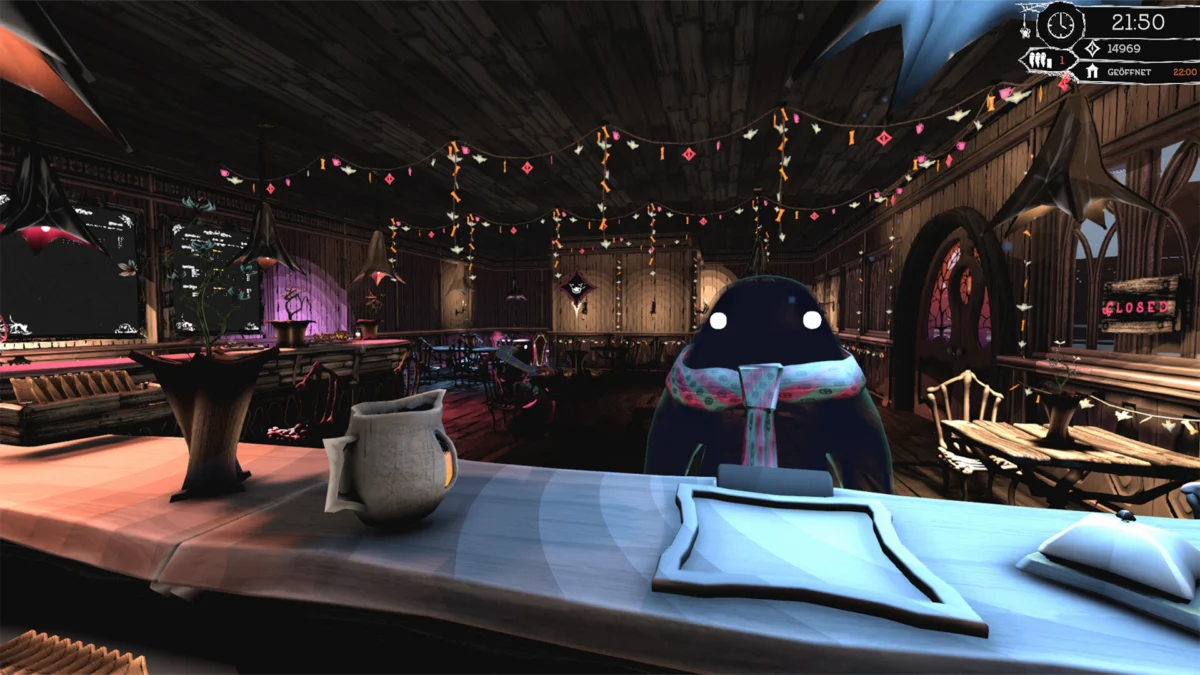
The indie gaming landscape has long been a fertile ground for genre-bending experiments, and the latest title to capture the attention of simulation enthusiasts is My Little Cafe Nightmare. Blending the meticulous management of a barista simulator with the eerie, unsettling atmosphere of a gothic horror story, the game offers a unique "spooky-cozy" experience. Currently available in Steam Early Access, the title challenges players to manage a crumbling establishment where the patrons are more interested in the afterlife than the morning rush.
Main Facts: A New Frontier in Spooky-Cozy Simulation
My Little Cafe Nightmare places players in the role of a newly hired barista at a coffee shop that serves the deceased. Unlike traditional management simulators that focus on high-speed efficiency and customer satisfaction in a bright, bustling environment, this game leans into a decaying, haunted aesthetic. The primary objective is to serve ghosts, ghouls, and other supernatural entities while slowly restoring a dilapidated cafe to its former—albeit still haunted—glory.
The game is played from a first-person perspective, heightening the immersion as players navigate the narrow, cobweb-strewn corridors of their workplace. A central figure in the narrative and gameplay loop is a shrunken head suspended from a chandelier, which acts as both a guide and a source of constant, unsettling commentary.
Key features of the game include:
- Physics-Based Interaction: Players must manually handle equipment, ingredients, and furniture.
- Restoration Mechanics: The cafe begins in a state of "rot," which can be repaired using "bone tokens."
- Resource Management: Beyond brewing, players must order supplies and maintain equipment.
- Open Customization: Unlike games with restricted "build modes," players can move and rotate furniture at any time during gameplay.
Chronology: From Dilapidation to Supernatural Success
The progression of My Little Cafe Nightmare is designed to mirror the journey of a new employee at a failing business, with the added complication of the supernatural.
The Onboarding Phase
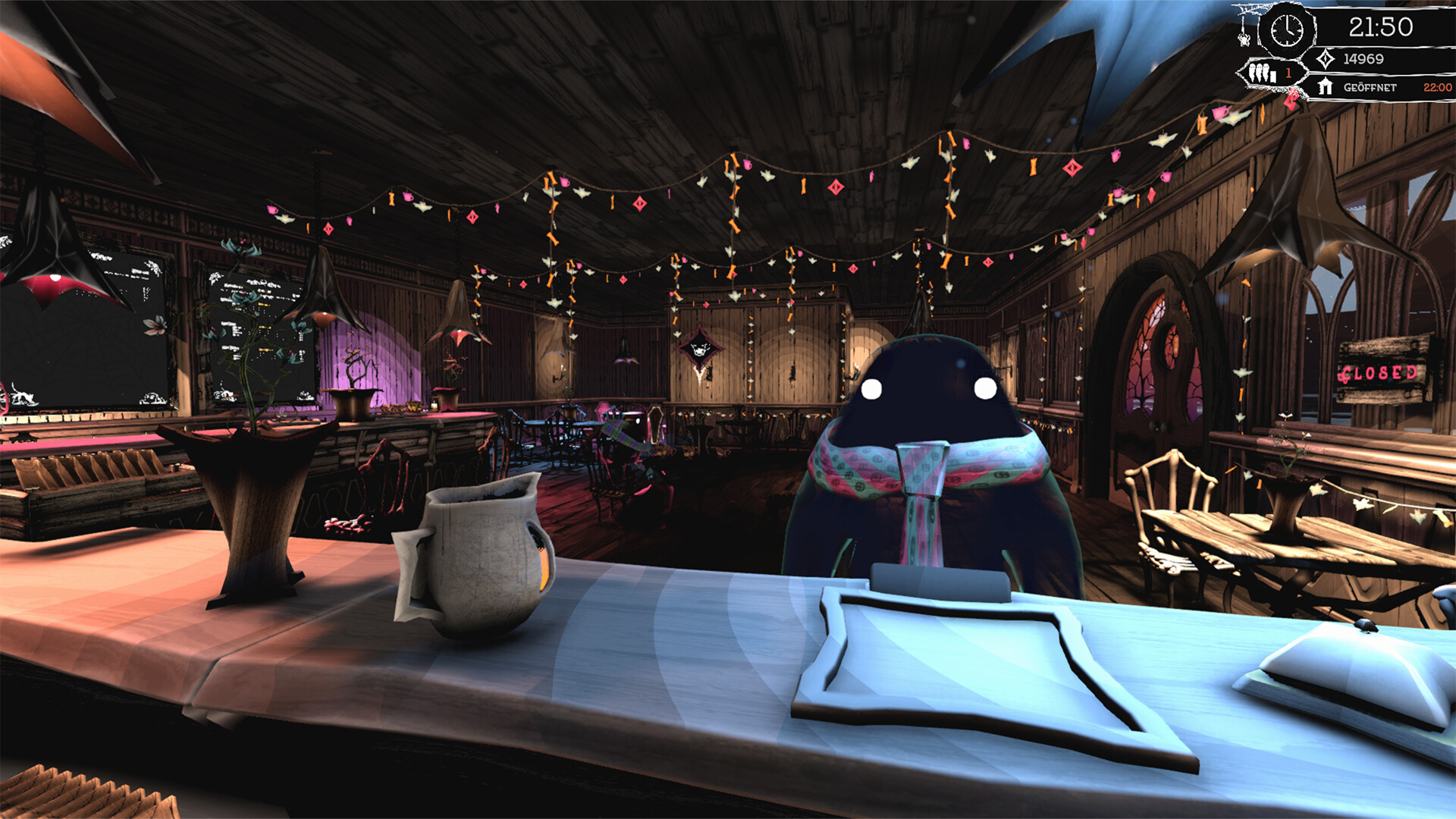
Upon starting the game, players are introduced to a cafe that is barely functional. The walls are crumbling, the furniture consists of chairs made of bone, and the equipment is prone to failure. The initial phase focuses on the "First-Person Management" aspect. Players learn to brew basic drinks for the early ghostly arrivals. In a world where spirits lack physical form, the player character is explicitly noted as "the only person with arms," a narrative justification for why they are doing all the heavy lifting.
The Renovation Arc
As players successfully serve drinks, they earn "bone tokens," the primary currency of the afterlife. These tokens are essential for the mid-game loop: renovation. The cafe is filled with "rot"—dark, necrotic patches that can be cleaned or repaired. As the player invests their earnings back into the shop, the atmosphere shifts from a terrifying ruin to a "warm" space for the creatures passing through. This transition is a hallmark of the "cozy" genre, providing a sense of satisfaction as a chaotic environment is brought under control.
The Early Access Journey
The game’s release on Steam Early Access marks the beginning of its public life. The developers have signaled that this period will be used to refine the physics engine and expand the variety of customers and recipes. Current players are essentially the "pioneer baristas" of this haunted world, providing feedback on the game’s unique control scheme and environmental interactions.
Supporting Data: The Mechanics of a Haunted Business
To understand the appeal of My Little Cafe Nightmare, one must look at the data-driven mechanics that underpin the spooky exterior.
The Economy of the Dead
The "bone token" system serves as more than just a thematic skin for gold. It dictates the pace of the game. High-tier decorations and essential equipment upgrades require significant token investments, forcing players to balance their desire for a beautiful cafe with the practical needs of supply chain management. Players must order coffee beans, milk (or its supernatural equivalent), and other consumables, ensuring that the "out of stock" sign never haunts the counter.
The Physics and UI Challenge
One of the most discussed aspects of the game is its physics-based decorating system. Unlike The Sims or Animal Crossing, which utilize a grid-based or paused build mode, My Little Cafe Nightmare allows for real-time manipulation of the environment.
- Freedom vs. Friction: Players can grab a countertop or a table at any moment. While this offers unparalleled freedom, it introduces significant technical challenges.
- The Glitch Factor: Reports from early players suggest that the lack of a "locked" build mode can lead to frustration. If a player accidentally grabs a piece of furniture that holds their kettle or espresso machine, the physics engine may cause the items to clip through walls or rotate into unplayable positions. This "jank" is a common hurdle in Early Access titles but represents a significant hurdle for the user experience (UX) in its current state.
Cleaning and Maintenance
Despite the setting being a haven for spiders and dust, cleaning remains a core mechanic. This creates a humorous juxtaposition: the player must scrub floors and wipe counters in a building that is intentionally decaying. This ritualistic cleaning is a staple of the "PowerWash Simulator" school of design, where repetitive tasks provide a meditative, relaxing experience for the player.
Official Responses and Developer Vision
While the developer (a small indie team) has kept a low profile during the initial launch, the game’s design choices speak volumes about their vision for the "Wholesome Horror" subgenre.
The inclusion of the shrunken head advisor suggests a desire to blend humor with horror, a "dark comedy" approach that prevents the game from becoming too oppressive. By framing the player as the only "limbed" worker, the developers have leaned into a "labor-sim" fantasy. The ghosts are depicted not as threats, but as customers with "tastes and preferences," humanizing the supernatural and aligning the game with the "cozy" movement’s focus on community and kindness.
Regarding the physics-based issues reported by the community, the developer has acknowledged the steep learning curve. The "Early Access" tag serves as an official disclaimer that the game is a work in progress, with the team likely focusing on "collision detection" and "item snapping" in upcoming patches to prevent the aforementioned "kettle-in-the-wall" glitches.
Implications: The Rise of "Wholesome Horror"
The emergence of My Little Cafe Nightmare is a symptom of a larger shift in the gaming industry. The "cozy" genre, once defined strictly by farming sims and bright colors, is expanding to include darker themes.
1. The Diversification of Cozy Games
The success of titles like Dredge (cosmic horror fishing) and Graveyard Keeper (macabre cemetery management) has proven that there is a massive audience for games that pair stressful or dark themes with relaxing, repetitive gameplay loops. My Little Cafe Nightmare is the latest entry in this "Wholesome Horror" category, suggesting that players find comfort in managing the macabre.
2. The First-Person Sim Trend
By choosing a first-person perspective over a top-down "god view," the game prioritizes atmosphere over pure efficiency. This mirrors the trend seen in games like Gas Station Simulator or Voices of the Void, where the player’s physical presence in the world is the primary source of both immersion and tension.
3. The Challenges of Physics-Based Design
The game serves as a case study for the risks of "unrestricted" physics in management sims. While the industry is moving away from rigid grids to allow for more creative player expression, My Little Cafe Nightmare demonstrates that without robust "locking" mechanics, freedom can quickly turn into frustration. How the developers address the "glitchy" nature of the renovation system will likely determine the game’s long-term success.
4. Community-Driven Development
As a Steam Early Access title, the game’s future is tethered to its community. The "bone tokens" and "shrunken head" lore provide a strong foundation for world-building, but the longevity of the game will depend on the addition of more "haunted" content—perhaps different types of spirits, seasonal events (like a "Living Day" where humans accidentally wander in), and more complex brewing recipes.
Conclusion
My Little Cafe Nightmare is more than just a coffee shop simulator; it is a tonal experiment that asks if we can find peace in a nightmare. While it currently suffers from the mechanical growing pains typical of Early Access—specifically regarding its ambitious physics-based decoration system—its core concept is undeniably charming. For those who prefer their lattes with a side of ectoplasm and don’t mind a bit of "haunted jank," this cafe is officially open for business.
My Little Cafe Nightmare is currently available for PC via Steam Early Access.

Leave a Comment