Captivating the Ancient and Modern: Reppion and Holden Unveil "Fascinating Folklore," A Landmark Compendium of Myth and Legend
London, UK – In an ambitious and beautifully realized endeavor, two titans of the comic book world, writer John Reppion and artist PJ Holden, have unleashed "Fascinating Folklore" – an extraordinary compendium poised to redefine how audiences engage with the rich tapestry of global myth and legend. What began as a creative pact, sparked by the popular social media phenomenon #FolkloreThursday, has blossomed into a lavishly illustrated volume that marries scholarly insight with breathtaking visual narrative, offering an unparalleled journey into the heart of humanity’s shared stories.
Published by Liminal 11, "Fascinating Folklore" is more than just a collection; it’s an immersive experience designed to leave readers spellbound. Through a dynamic interplay of rich, informative essays and stunning comic sequences, the book illuminates ancient wisdom, explores haunting tales, and introduces compelling deities from across the globe. From the legendary figures of Boudicca and Beowulf to the esoteric whispers of plantlore embodied by Mandrake, Willow, and Yedua, and from the chilling Japanese ghost of Okiku to the mysterious Wandjing spirits of Western Australia, alongside the resolute Greek deity Anteros, guardian of slighted love, Reppion and Holden expertly navigate a vast and diverse mythological landscape.
The Genesis of a Mythic Endeavor: From Hashtag to Hardcover
A Creative Pact Ignited by Social Media
The inception of "Fascinating Folklore" is a testament to the power of community and shared passion in the digital age. The project took root from a simple, yet profoundly impactful, online movement: #FolkloreThursday. This hashtag, which has cultivated a vibrant global community of enthusiasts, academics, and storytellers, serves as a daily prompt for individuals to share tales, research, and insights into folklore from around the world. It provides a constant stream of inspiration and a platform for discovery, making the ancient relevant in a modern context.
It was within this fertile digital ground that the seed for Reppion and Holden’s collaboration was planted. Their shared interest in the esoteric, the mythological, and the narrative power of visual art found common ground, leading them to embark on a project that would transcend the ephemeral nature of social media posts and crystallize the magic of folklore into a permanent, tangible form. The transition from a series of online inspirations to a meticulously researched and illustrated book speaks volumes about their dedication to the subject matter and their commitment to presenting it with both scholarly rigor and artistic flair.
The Masterminds Behind the Mythos
The synergy between John Reppion and PJ Holden is central to the book’s unique appeal. Both are highly respected figures within the comic book industry, bringing distinct yet complementary talents to "Fascinating Folklore."
John Reppion is a celebrated writer known for his masterful command of narrative, particularly within the realms of horror, occult fiction, and historical fantasy. His previous works often delve into the darker, more mysterious corners of human experience, making him an ideal guide through the shadowy pathways of folklore. Reppion’s academic approach to research, coupled with his innate ability to craft compelling stories, ensures that the essays in "Fascinating Folklore" are not only informative but also deeply engaging, offering readers a solid foundation in the origins and interpretations of each tale. His dedication to historical accuracy and cultural sensitivity grounds the fantastical elements, providing context that enriches understanding.
PJ Holden, on the other hand, is an artist whose dynamic and expressive style has graced the pages of numerous acclaimed comic books, including extensive work for 2000 AD on titles such as Judge Dredd. Holden’s ability to convey complex emotions, intricate action, and evocative atmosphere through his artwork is unparalleled. In "Fascinating Folklore," his illustrations don’t merely accompany the text; they elevate it, translating the often ethereal and abstract concepts of myth into vivid, unforgettable imagery. His visual interpretations bring an immediacy and accessibility to tales that might otherwise feel distant, making them resonate powerfully with contemporary readers. The blend of Reppion’s textual depth and Holden’s artistic interpretation creates a cohesive and immersive experience, proving that the graphic novel format is an exceptionally potent medium for the exploration of cultural heritage.
Unearthing Universal Narratives: Key Excerpts and Their Enduring Resonance
"Fascinating Folklore" is a treasure trove of stories, each meticulously researched and beautifully illustrated. The excerpts provided offer a tantalizing glimpse into the breadth and depth of the compendium, showcasing both ancient terrors and forgotten deities.
The Deceptive Island: A Primal Fear of the Unknown (Aspidochelone/Zaratan)
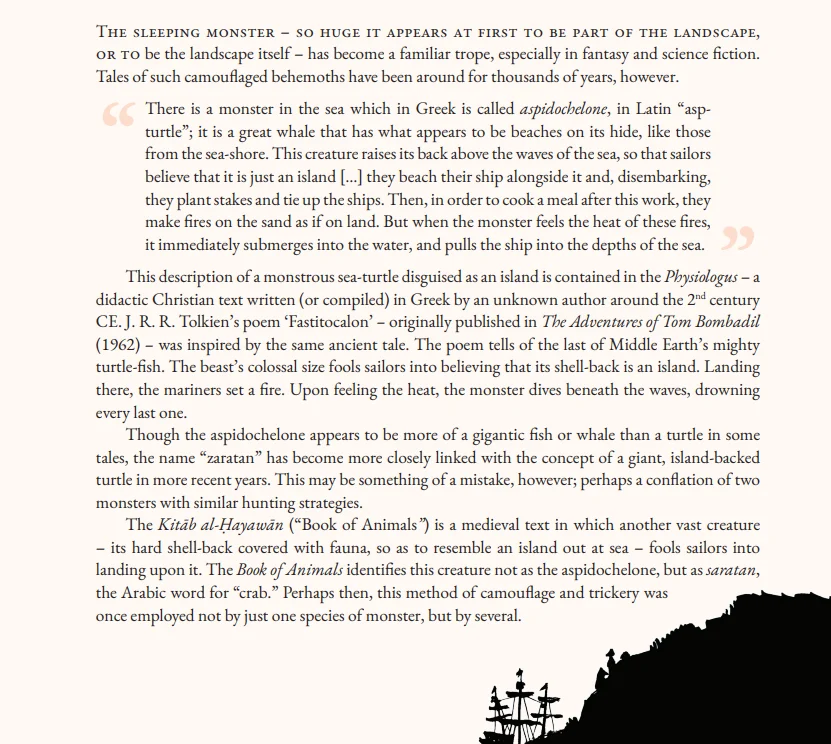
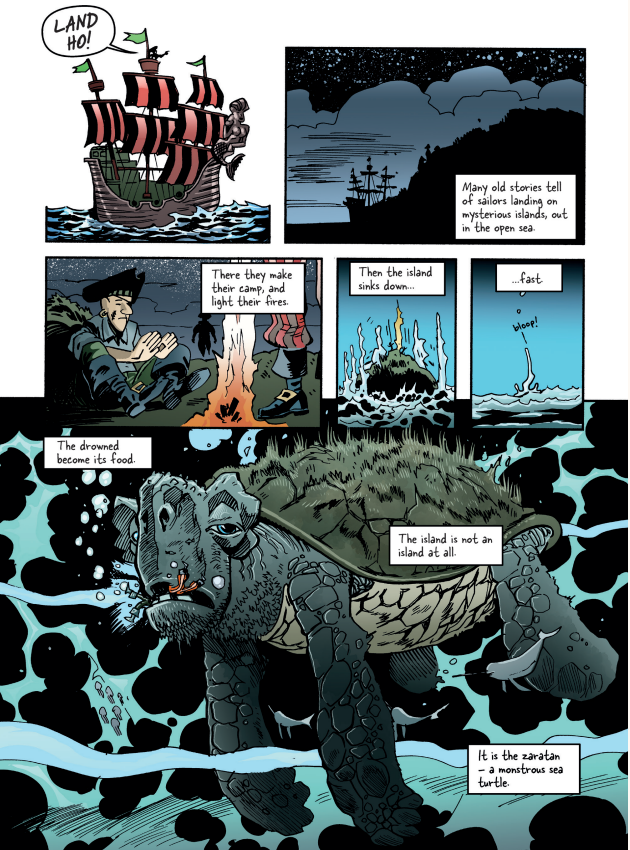
The tale of the deceptive island, known in Greek as the aspidochelone (or "asp-turtle" in Latin), taps into a primal human fear: the danger lurking beneath a seemingly benign surface. This monstrous whale or colossal turtle, so immense it appears to be a landmass, lures unsuspecting sailors to their doom. Believing its barnacle-encrusted back to be solid ground, mariners disembark, plant stakes for their ships, and light fires to cook a meal. The monster’s awakening, signaled by the heat of these fires, culminates in its sudden submergence, dragging ships and crew alike into the abyssal depths.
This narrative is not merely a cautionary tale but a profound exploration of human hubris and the treacherous nature of the unknown sea. Its origins can be traced to the Physiologus, a didactic Christian text compiled by an unknown author around the 2nd century CE. The Physiologus was a foundational work, interpreting various animals and natural phenomena through allegorical Christian lenses, influencing medieval bestiaries and moral treatises across Europe. The aspidochelone, in this context, often symbolized the devil, tempting souls with false promises of safety before dragging them to perdition.
The enduring power of this myth is evident in its reappearance throughout literary history. J.R.R. Tolkien, a master myth-maker himself, drew direct inspiration from this ancient tale for his poem "Fastitocalon," published in The Adventures of Tom Bombadil (1962). Tolkien’s version vividly portrays the last of Middle-earth’s mighty turtle-fish, whose colossal size fools sailors into believing its shell-back is an island, leading to their tragic demise. This connection highlights how deeply ingrained such archetypal fears and narratives are in the collective human consciousness, transcending cultural and temporal boundaries.
The excerpt also delves into the intriguing enigma of the "zaratan." While often linked to the giant, island-backed turtle, the text points out a potential conflation. The Kitāb al-Ḥayawān ("Book of Animals"), a medieval Arabic text, describes a similar creature whose hard shell, covered with fauna, resembles an island. However, this creature is identified not as the aspidochelone but as saratan, the Arabic word for "crab." This linguistic distinction suggests that the method of camouflage and trickery—the "sleeping monster" trope—might not have been exclusive to one species but rather employed by several monstrous entities across different mythologies, from giant whales and turtles to colossal crabs, underscoring a universal fascination with deceptive natural dangers. The tale continues to resonate, feeding into modern fantasy and science fiction with its powerful imagery of false security and sudden, overwhelming danger.
Anteros: The Unsung Avenger of Reciprocal Love
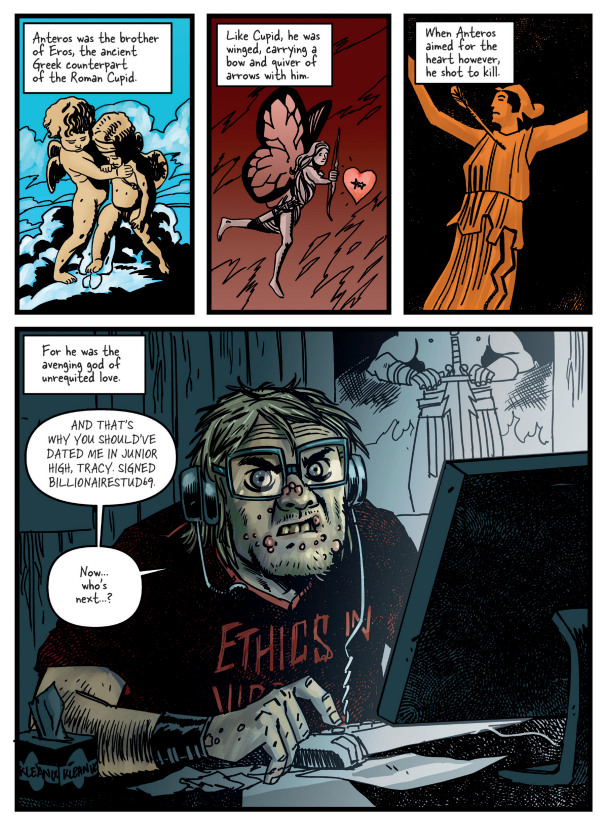
While Eros, the winged god of desire and the precursor to the familiar Valentine’s Day Cupid, enjoys widespread recognition, his brother, Anteros, remains significantly less known. "Fascinating Folklore" brings this compelling deity into the spotlight, revealing his crucial role in the ancient Greek pantheon. Anteros’s name itself, meaning "love returned," encapsulates his primary function: to personify and ensure the reciprocity of affection. He was specifically charged with punishing those who failed to return the love of another, acting as a divine enforcer of emotional balance.
Anteros is one of the Erotes, a group of winged love deities, children of Aphrodite (goddess of love, beauty, and pleasure) and Ares (god of war). While Eros presided over the general concept of love and sexual desire, his brothers held more specialized roles: Hedylogos embodied sweet talk, Pothos represented longing, Hymenaeus oversaw weddings, and Hermaphroditus symbolized fertility and androgyny. Anteros’s unique position as the "Deus ultor" or avenger god for slighted love adds a layer of moral complexity to the understanding of ancient Greek relationships, where the balance of emotion was often intertwined with honor and social standing.
Nineteenth-century classical scholarship, as exemplified by Thomas Swinburne Carr’s A Manual of Classical Mythology (1846), further elucidates Anteros’s significance. Carr describes Anteros as contending with Eros, a rivalry that was also interpreted as the dynamic between two lovers. Intriguingly, a fable recounted that Cupid’s strength and wings enlarged only when his brother was near, suggesting that the power of love is amplified by its reciprocation. When Anteros was absent, Cupid would revert to his "ancient shape," diminished and less potent. This allegory highlights the ancient Greek appreciation for mutual affection as a force that empowers and completes love. Anteros was often depicted armed with arrows made of lead—symbolizing the dull, heavy pain of unrequited love—or a club of solid gold, representing the valuable but punishing weight of his justice.

Perhaps the most compelling modern testament to Anteros’s often-misunderstood identity is the famous statue atop the Shaftesbury Memorial Fountain in Piccadilly Circus, London. For decades, this iconic aluminum sculpture, cast in 1892, has been popularly misidentified as Eros. However, the figure is, in fact, Anteros. It was chosen to symbolize "love given blindly, or without expectation of return," serving as a poignant metaphor for the philanthropy of Lord Shaftesbury, to whom the fountain is dedicated. This correction not only rectifies a long-standing public misconception but also underscores the profound philosophical depth embedded in ancient Greek mythology, where even lesser-known deities carry significant ethical weight.
Okiku: The Haunting Cry of Injustice (Japan’s Vengeful Spirit)
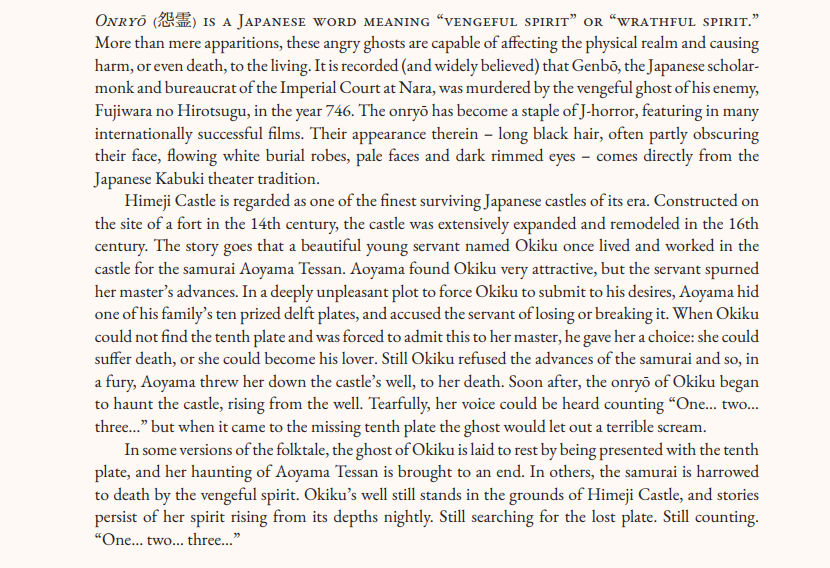
The story of Okiku is a quintessential example of the onryō (怨霊), a "vengeful spirit" or "wrathful spirit" in Japanese folklore. Unlike mere apparitions, onryō are formidable entities capable of directly affecting the physical world, bringing misfortune, illness, or even death to the living. Their enduring presence in Japanese culture, from ancient chronicles to modern media, underscores a deep-seated belief in the powerful consequences of injustice and unfulfilled vengeance. Historical accounts, such as the widely believed murder of the Japanese scholar-monk Genbō by the vengeful ghost of Fujiwara no Hirotsugu in 746 CE, attest to the ancient roots of this belief.
Okiku’s tragic tale, known as Banchō Sarayashiki (The Dish Mansion at Banchō), is set against the historical backdrop of Himeji Castle, one of Japan’s finest surviving feudal castles. The narrative recounts the fate of Okiku, a beautiful young servant who caught the eye of the samurai Aoyama Tessan. When Okiku rebuffed his advances, Aoyama orchestrated a cruel plot to force her submission. He hid one of his family’s ten prized delft plates and accused Okiku of its loss or breakage—a grave offense that could lead to severe punishment. Faced with the impossible task of finding the tenth plate, Okiku was presented with a terrible choice: become Aoyama’s lover or face death. Her unwavering refusal sealed her fate, and in a fit of rage, Aoyama threw her down the castle well, ending her life.
Soon after, the onryō of Okiku began to haunt Himeji Castle, rising from the depths of the well. Her tearful voice could be heard counting, "One… two… three…" but her lament would invariably culminate in a bloodcurdling scream upon reaching the missing tenth plate. This agonizing, repetitive count symbolizes her endless search for justice and the perpetual torment of her unresolved death. Okiku’s well, a tangible link to the legend, still stands within the castle grounds, fueling centuries of local lore and the chilling belief that her spirit continues its nightly vigil.
The onryō archetype, with Okiku as a prime example, has profoundly influenced Japanese popular culture. Their iconic appearance—long, disheveled black hair often obscuring the face, flowing white burial robes, pale complexion, and dark-rimmed eyes—is a direct inheritance from the stylized portrayal of vengeful ghosts in traditional Japanese Kabuki theater. This visual language has been terrifyingly reinterpreted in modern J-horror, making onryō a staple of internationally successful films such as Ringu (The Ring) and Ju-on (The Grudge). These contemporary adaptations demonstrate the enduring power of Okiku’s story, which explores universal themes of patriarchal abuse, the fragility of life, and the relentless pursuit of vengeance from beyond the grave. Variations in the tale suggest different resolutions—some say her spirit was eventually laid to rest by the presentation of the missing plate, while others maintain that Aoyama Tessan was relentlessly tormented to his death by her haunting, emphasizing the profound and lasting impact of her suffering.
Bridging Academia and Art: The Craft of "Fascinating Folklore"
The true brilliance of "Fascinating Folklore" lies in its innovative structural approach. By seamlessly blending scholarly, informative essays with dynamic, vivid comic art, Reppion and Holden have created a compendium that transcends traditional boundaries of non-fiction. This hybrid format offers multiple pathways into the enchanting realm of folklore, catering to diverse learning styles and ensuring maximum engagement.
The essays provide a solid academic foundation, meticulously detailing the origins, variations, and cultural significance of each myth. Reppion’s prose is accessible yet authoritative, inviting readers to delve into the historical and anthropological contexts of these stories without being overwhelmed by dense academic jargon. This intellectual rigor ensures that the book is not merely entertaining but also genuinely educational, making it a valuable resource for both casual enthusiasts and serious students of folklore.
Holden’s accompanying comic sequences are where these ancient tales truly come alive. His art is not just illustrative; it’s interpretive, breathing visual life into the descriptions and concepts discussed in the essays. The sequential art format allows for dramatic pacing, evocative character portrayal, and the visceral depiction of fantastical elements, making the narratives immediate and impactful. For readers who might find traditional historical texts daunting, the comics serve as an inviting gateway, drawing them into the story before the essays provide deeper context. Conversely, those drawn to the scholarly aspects will find their understanding enhanced by the powerful visual interpretations. This dual approach ensures that "Fascinating Folklore" appeals to a broad audience, from comic book aficionados to history buffs and mythology enthusiasts, proving that visual storytelling is an exceptionally potent tool for preserving and reinterpreting cultural heritage.
Implications and the Future of Folklore
"Fascinating Folklore" arrives at a time when there is a renewed global interest in mythology, cultural heritage, and the stories that define human identity. The book’s comprehensive scope and innovative format highlight several crucial implications for the ongoing relevance of folklore in contemporary society.
Firstly, the compendium serves as a powerful instrument for cultural preservation. In an increasingly globalized and homogenized world, the unique narratives of different cultures risk being forgotten. By meticulously documenting and visually interpreting these tales, Reppion and Holden contribute significantly to safeguarding humanity’s diverse storytelling traditions, ensuring that the wisdom, fears, and aspirations of past generations continue to inform and inspire future ones.
Secondly, folklore remains an inexhaustible wellspring of inspiration for modern storytelling. From the epic battles of Beowulf that inform modern fantasy sagas to the chilling injustice of Okiku that shapes contemporary horror, ancient myths provide archetypes, narrative structures, and thematic depth that resonate universally. "Fascinating Folklore" implicitly encourages creators across various media—literature, film, gaming, and art—to delve into these rich traditions for fresh ideas and deeper meanings.
Thirdly, the study of folklore offers invaluable insights into human psychology and universal themes. Tales of deceptive monsters, avenging deities, and vengeful spirits reflect fundamental human experiences: fear of the unknown, the desire for justice, the complexities of love, and the confrontation with mortality. By engaging with these stories, readers gain a deeper understanding not only of ancient cultures but also of the enduring facets of the human condition.
Finally, the success of platforms like #FolkloreThursday, and now "Fascinating Folklore," underscores the enduring appeal of shared narratives and the vital role of community in keeping these traditions alive. In an age of digital disconnection, collective engagement with shared cultural heritage offers a powerful means of fostering connection, understanding, and empathy across different communities. "Fascinating Folklore" stands as a model for future explorations of cultural heritage, demonstrating how a creative, interdisciplinary approach can make ancient wisdom accessible and exciting for a new generation. It reaffirms that far from being relics of the past, myths and legends continue to shape our world, offering profound lessons and endless wonder.
In conclusion, "Fascinating Folklore" is more than just a book; it is a meticulously crafted portal to worlds unseen and stories untold. John Reppion and PJ Holden have not merely compiled folklore; they have breathed new life into it, creating an essential volume that is both a scholarly resource and a breathtaking work of art. For anyone seeking to understand the enduring power of human imagination and the timeless narratives that bind us, this compendium is an indispensable journey into the magic that might just leave you spellbound.
You can embark on this extraordinary adventure and order your copy today.