The Genesis of a Civilization: Unraveling Egypt’s Early Dynastic Period
Cairo, Egypt – Spanning from approximately 3150 to 2613 BCE, the Early Dynastic Period marks a pivotal epoch in ancient Egyptian history. It was during this foundational era that the disparate regions of Upper (southern) and Lower (northern) Egypt coalesced into a unified nation under a centralized government, giving birth to the concept of divine kingship and laying the bedrock for a recognizable Egyptian culture. This period witnessed the burgeoning of writing, the refinement of arts, and significant advancements in sciences, collectively forging the identity of one of the ancient world’s most enduring civilizations.
Crucially, the iconic title "pharaoh" was not in use during these formative centuries. Rulers were simply referred to as "kings" and addressed with reverence as "your majesty." The term "pharaoh," derived from the Egyptian word pero (or per-a-a), meaning "Great House" in reference to the royal residence, would only emerge much later, during the splendors of the New Kingdom (circa 1570 to 1069 BCE).
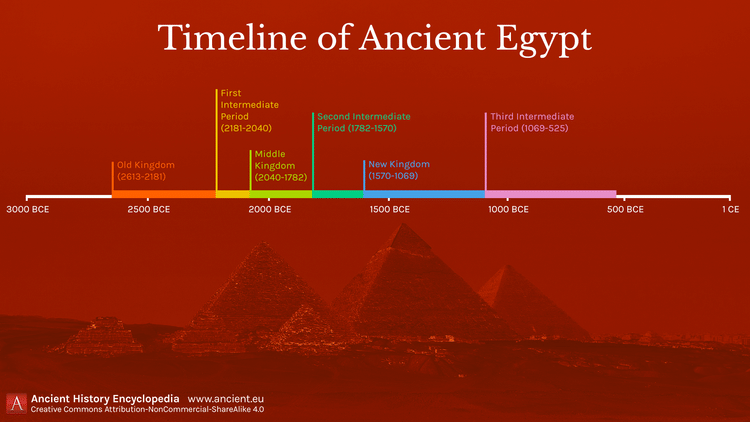
This transformative era succeeded the Predynastic Period (circa 6000 to 3150 BCE), a time of burgeoning settlements and regional power centers, and set the stage for the monumental achievements of the Old Kingdom (circa 2613 – 2181 BCE). While these chronological markers provide a crucial framework for understanding Egypt’s vast history, modern scholarship emphasizes that they are not rigid demarcations. Instead, they serve as heuristic tools to delineate phases of cohesive cultural and political development, acknowledging the often blurred transitions between historical periods, especially in the distant past. The ancient Egyptians themselves did not categorize their history in such terms; these divisions are contemporary constructs designed to aid our comprehension of their intricate past.
The Unification of Egypt: Myth, Monarchy, and Military Might
The unification of Upper and Lower Egypt stands as the defining event of the Early Dynastic Period, yet its exact circumstances remain a subject of vigorous academic debate. According to the chronology compiled by the 3rd-century BCE historian Manetho, the first king of a unified Egypt was Menes, an Upper Egyptian ruler, possibly from Thinis or Hierakonpolis, who systematically conquered neighboring city-states before subjugating Lower Egypt. However, Manetho’s account, while invaluable, is largely based on later written records and lacks extensive corroboration from contemporary archaeological evidence.
Supporting Data: The Narmer Palette and Scholarly Interpretations
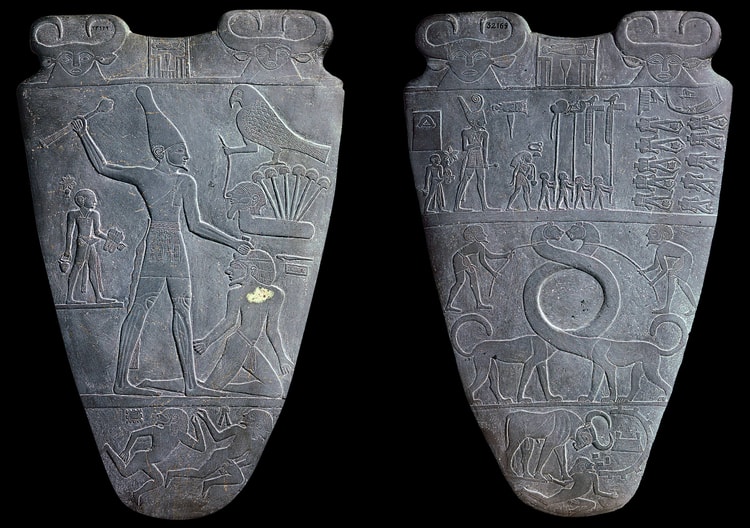
Contemporary scholars now lean towards identifying the first unifier as King Narmer, whose name has emerged prominently in archaeological findings. The iconic Narmer Palette, an exquisitely carved ceremonial siltstone slab dating to circa 3100 BCE, offers compelling, albeit debated, visual evidence. This artifact depicts a king, unequivocally identified as Narmer, as a triumphant military figure subduing a region clearly representing Lower Egypt.
Historian Marc Van de Mieroop observes that "That Egypt was created through military means is a basic concept expressed in the art of the period. A sizeable set of stone objects, including ceremonial mace-heads and palettes, contain scenes of war and fighting between men, between animals, and between men and animals." (33). However, Van de Mieroop also highlights a significant shift in Egyptological interpretation: "Whereas in the past, Egyptologists read the scenes of war literally as records of actual events, today they prefer to see them as stereotypical statements of kingship and the king’s legitimacy." (33).
This modern interpretive approach, while valuable in recognizing the symbolic nature of ancient art, introduces its own set of challenges. Critics question why inscriptions from later periods, such as those detailing Ramesses II’s exploits at the Battle of Kadesh, are typically accepted as historical records, while earlier depictions of conflict are re-interpreted as purely symbolic. As Van de Mieroop himself acknowledges, "This new approach makes it impossible to date the unification of Egypt or attribute it to a specific individual on the basis of these representations" (33-34), though he concedes that "the art of the period shows that the Egyptians linked unification with conflict" (34).
Official Responses and Contemporary Interpretations
The debate over Menes and Narmer underscores the complexities of reconstructing ancient history. Scholar Douglas J. Brewer offers a compelling synthesis, suggesting that "Menes" might not have been a personal name but rather a title meaning "He who endures." In this scenario, Narmer, the enduring unifier, could indeed be the "Menes" of later tradition. Brewer and others argue that the Narmer Palette and similar artifacts might not be literal depictions of a single, decisive battle, but rather "a monument commemorating an achieved state of unity rather than depicting the process of unification itself" (141).
This perspective posits that unification was likely a protracted process, "most likely a slow process stimulated by economic growth" (142). Upper Egypt, seemingly more prosperous, may have gradually assimilated Lower Egyptian territories driven by a growing need for resources and expanded trade networks. Thus, whether through a swift military conquest by a figure like Narmer or a more gradual economic and political absorption, a single king laid the foundational stones for what would become one of the ancient world’s most enduring and influential civilizations.
Chronology: The First Dynasty – Laying the Foundations of State
The First Dynasty of Egypt (circa 3150 to 2890 BCE) was initiated by the unifier, whether Menes or Narmer. Egyptologist Flinders Petrie (1853-1942) was a prominent proponent of identifying Narmer as the first king, asserting that Menes and Narmer were one and the same. Petrie and his followers argued that even if unification occurred peacefully, maintaining such a vast new kingdom would undoubtedly necessitate military strength, thus accounting for Narmer’s depiction as a conquering figure.
Narmer: Consolidator and Urban Pioneer
Hailing most likely from Thinis, King Narmer’s reign saw significant advancements. He strategically cemented alliances, notably through his marriage to Princess Neithhotep of Naqada, linking two powerful city-states. His military campaigns extended beyond Lower Egypt, quelling rebellions and expanding Egyptian influence into regions like Canaan and Nubia. Under his rule, large-scale building projects were initiated, catalyzing a notable increase in urbanization. While Egyptian cities never reached the sprawling scale of their Mesopotamian counterparts, perhaps due to a conscious awareness of the environmental pitfalls (resource depletion, pollution) that plagued some Mesopotamian urban centers, Narmer’s early efforts provided a sustainable model for urban development that allowed cities like Xois to thrive for millennia.
The Enigma of Queen Neithhotep
Intriguingly, there is speculation that Neithhotep might have ruled independently after Narmer’s death. Her tomb, unearthed in the 19th century, was unusually grand, comparable to that of a king, suggesting a status far exceeding a typical monarch’s consort. Further evidence supporting her potential reign comes from her name being inscribed within a serekh, a rectangular enclosure typically reserved exclusively for royal names. While her independent rule remains debated, her prominent position hints at the early, albeit limited, influence of women in the highest echelons of power.
Hor-Aha: Architect of the Afterlife
Narmer is widely believed to have been succeeded by his son, Hor-Aha (circa 3100 BCE), though some theories propose they were the same individual. Hor-Aha continued his father’s policies of military expansion and actively fostered trade networks. His reign, however, is particularly notable for his profound interest in religion and the concept of the afterlife. It was under Hor-Aha that the mastaba tomb, a flat-roofed, rectangular structure designed as a "house for the deceased," saw significant development, marking a crucial step in the evolution of Egyptian funerary architecture and beliefs.
Djer and Djet: Continuity and a Queen’s Ascent
Hor-Aha’s son, Djer (circa 3050 BCE), maintained the stability and policies of his predecessors. He was followed by Djet (circa 3000 BCE), who married Princess Merneith. Upon Djet’s death, Merneith is widely believed to have assumed control of the country. Whether she ruled as regent for her young son Den or as a fully empowered queen, her reign is historically significant as the first attested instance of a woman holding such supreme authority in ancient Egypt, preceding the more famous female pharaohs by millennia.
Den: The Zenith of the First Dynasty
Merneith’s son, Den (circa 2990 BCE), is celebrated as the greatest king of the First Dynasty, reigning for an impressive 50 years. His long and stable rule allowed for substantial improvements to the country’s economy, successful military conquests, and an era of artistic flourishing, evidenced by lavish building projects and intricate artworks. Den holds the distinction of being the first ruler depicted wearing the Double Crown, a potent symbol uniting the crowns of Upper and Lower Egypt, definitively proclaiming a single, unified nation under his authority.
The First Dynasty concluded with the reigns of Anedjib and Semerkhet, both of whom faced significant internal insurrections. The final king, Qa’a, saw his death plunge the kingdom into a succession crisis, which was eventually resolved by Hotepsekhmenwy, who founded the Second Dynasty.
Challenges and Transformation: The Second Dynasty
The Second Dynasty of Egypt (circa 2890 to 2670 BCE) is characterized by internal strife, a degree of political fragmentation, and considerable scholarly uncertainty regarding its rulers and exact chronology. Verifiable dates for many kings are elusive, and a degree of confusion exists regarding repeated names or titles.
Hotepsekhmenwy: A Fragile Peace
Hotepsekhmenwy, whose name translates to "the two powerful ones are at peace," is traditionally credited with restoring order after the succession struggles following Qa’a. His name inscribed on the entranceway to Qa’a’s tomb suggests he was responsible for his predecessor’s burial, implying he was already in power. While his name suggests a period of reconciliation, historical evidence indicates his reign was still marked by unrest and rebellion.
Raneb (Nebra): Forging the Divine Connection
Hotepsekhmenwy was succeeded by Raneb (also known as Nebra). Raneb holds immense significance as the first king to explicitly link his name with that of the gods, thereby establishing and reinforcing the crucial relationship between the monarch and the divine realm. This act solidified the theological foundation of divine kingship that would define Egyptian rule for millennia.
Nynetjer and Senedji: Navigating Internal Strife
Raneb’s successors, Nynetjer and Senedji, continued to grapple with the nation’s civil problems, and detailed information about their reigns remains scarce. The internal conflicts and lack of cohesive records reflect a period of instability within the nascent unified state.
Peribsen: The Horus-Set Controversy
Senedji was followed by Peribsen (also known as Seth-Peribsen), a figure of considerable scholarly debate. Peribsen stands out as the first king to consciously distance himself from the traditional Horus cult, instead aligning himself with the god Set. This was a radical departure, as Horus, son of Osiris, was the embodiment of cosmic order who defeated Set, the god associated with chaos, to bring harmony (ma’at) to the world.
The reasons behind Peribsen’s choice are hotly contested. Early theories suggested he might have been an early monotheist, proclaiming Set as the sole god, but this has been disproven by evidence of polytheistic worship during his reign. Another theory posited a political motive: aligning with Set, whose cult was strong in Upper Egypt (especially Ombos), to differentiate himself from the Horus cult primarily associated with Lower Egypt, suggesting a period of renewed regionalism.
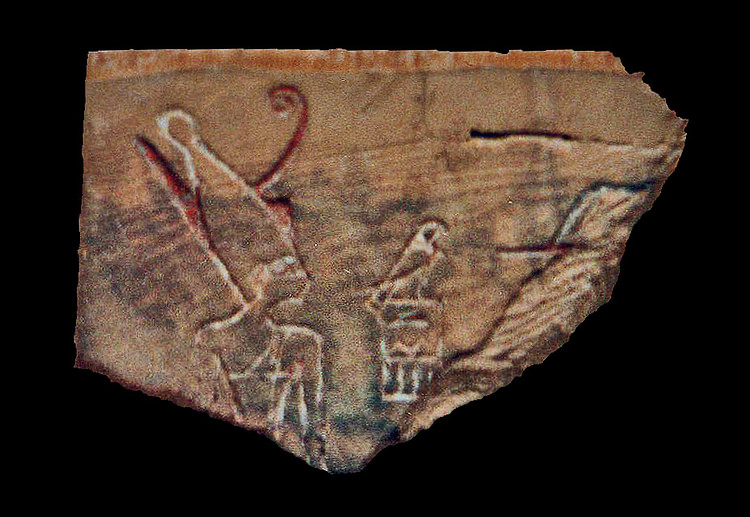
However, the discovery of the first complete sentence in ancient Egypt, found in Peribsen’s tomb, complicates this interpretation. It reads: "The golden one, he of Ombos, hath unified and handed over the two realms to his son, the king of Lower and Upper Egypt, Peribsen." This inscription explicitly states that Set (he of Ombos) blessed Peribsen’s rule and, crucially, affirms that Egypt was unified under his reign, making the "political distancing" theory less tenable. Regardless of his theological choice, Peribsen’s reign is generally regarded as successful, with flourishing trade, a robust economy, vibrant religious practices, and advancements in the arts.
Khasekhemwy: Re-Consolidation and the Path to the Old Kingdom
Peribsen was succeeded by Khasekhemwy, possibly his son, who is credited with strengthening the unification of Egypt and bringing the two regions under a more stable central rule. His name means "The Two Powers are Risen," perhaps a reference to the reconciliation of the Horus and Set factions or the re-establishment of unified rule after a period of division. He is renowned for his significant building projects at Hierakonpolis and Abydos and is historically significant as the father of King Djoser, whose reign would mark a new era.
Architectural Grandeur and Transition: The Third Dynasty
Traditionally, the Third Dynasty of Egypt (circa 2670 to 2613 BCE) was linked with the Fourth Dynasty, marking the beginning of the Old Kingdom due to its association with the earliest pyramids. However, recent scholarship now places the Third Dynasty at the close of the Early Dynastic Period. This reclassification stems from greater similarities in cultural practices and technological advancements with the preceding dynasties than with the truly monumental scale of the subsequent Old Kingdom.
Djoser and the Step Pyramid: A Revolution in Stone
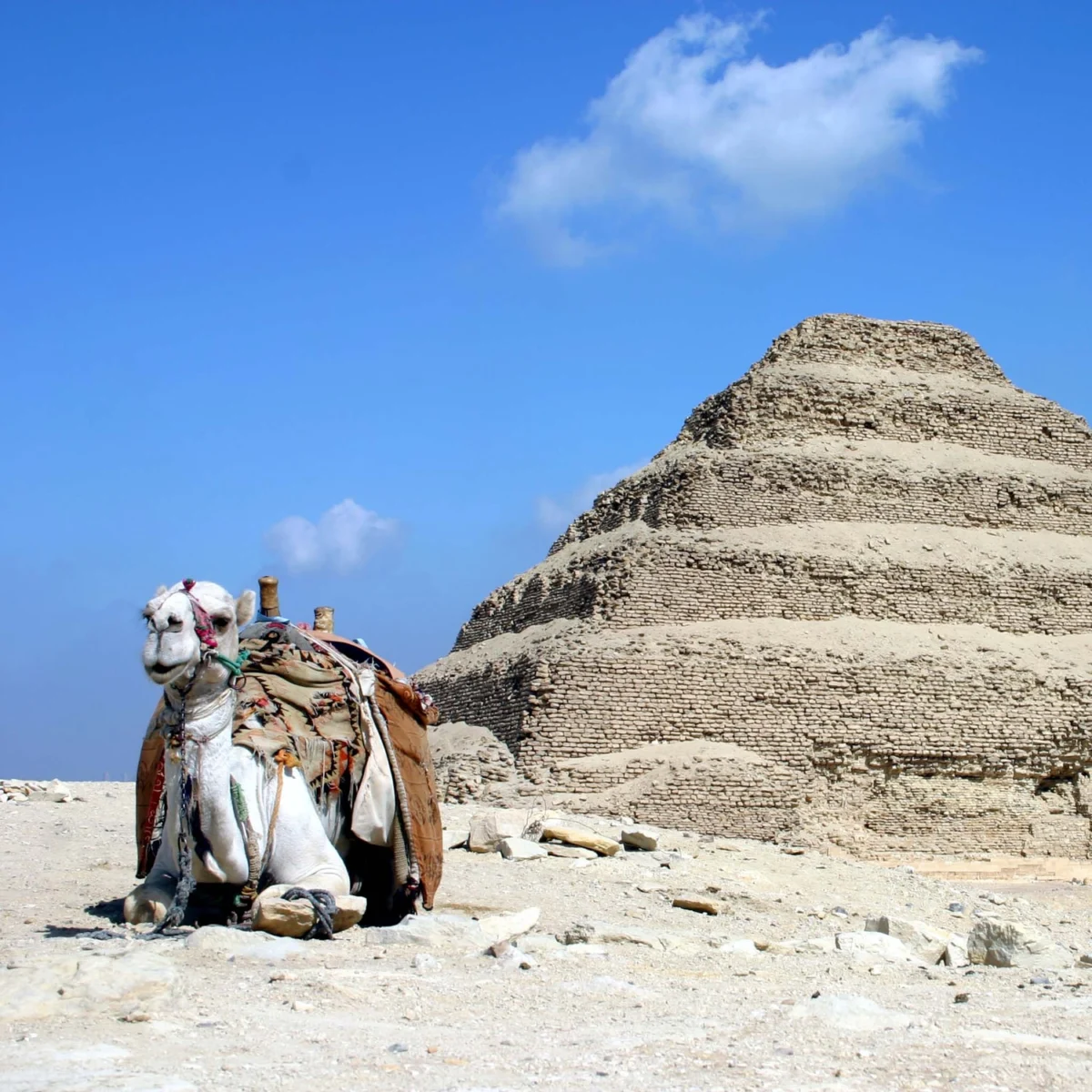
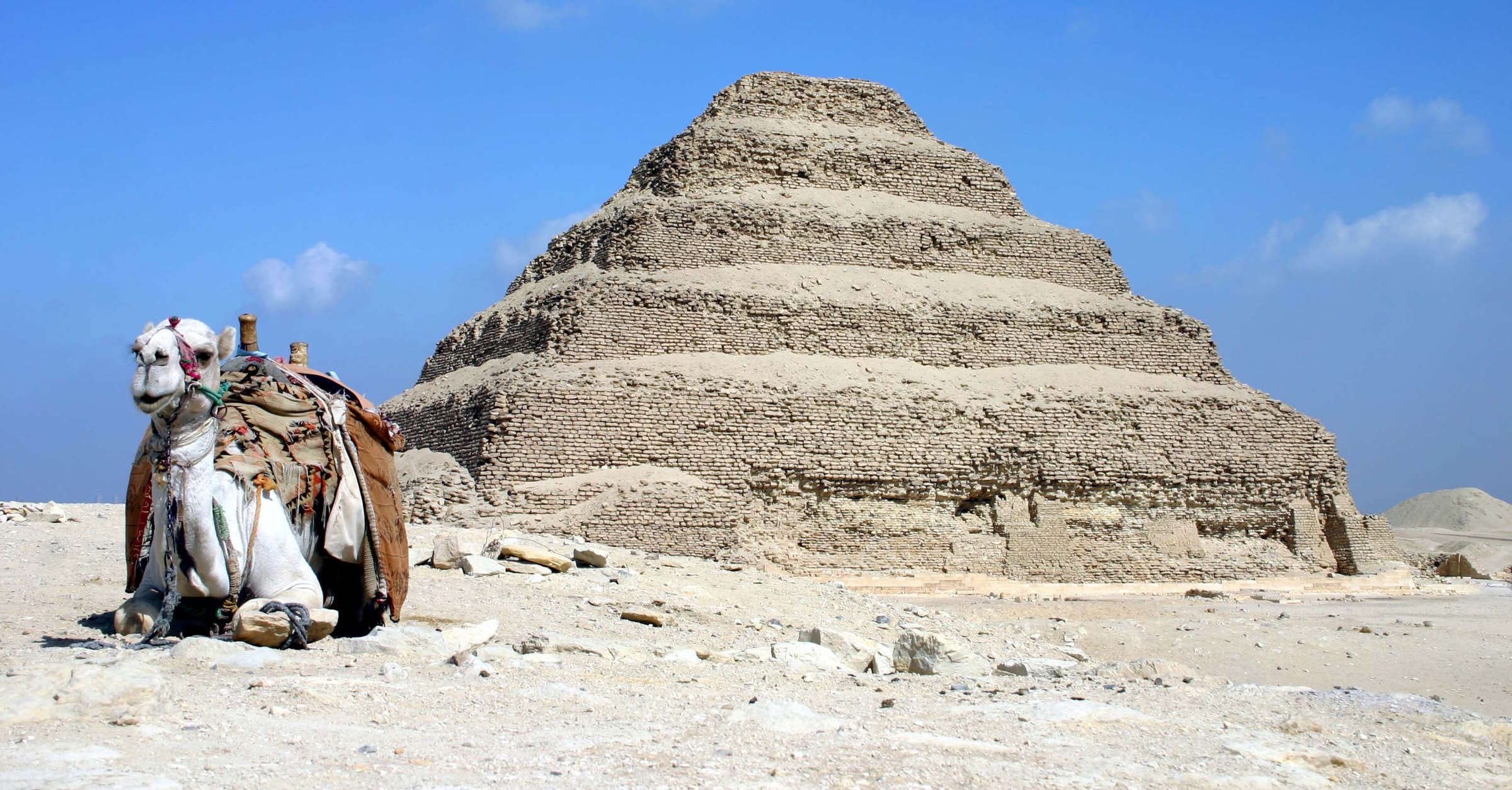
The reign of King Djoser (circa 2670 BCE) stands as a monumental achievement, primarily due to the construction of the Step Pyramid at Saqqara – the first known pyramid in Egypt. This architectural marvel was not a true geometric pyramid like those at Giza, but rather an elaborate, "stacked" mastaba. Nevertheless, it represented a revolutionary leap in construction technology.
Designed by the legendary vizier Imhotep, Djoser’s Step Pyramid complex was conceived as the king’s eternal home, a grand funerary monument that would profoundly influence all subsequent pyramid construction. Imhotep’s genius transformed the traditional mud-brick mastaba into a magnificent edifice of cut stone, demonstrating an unprecedented mastery of engineering and material. Djoser’s reign brought the political stability necessary for such colossal building projects and fostered the continued development of the arts and sciences. While scholars initially estimated his reign at 30 years due to the sheer number of monuments attributed to him, current consensus suggests a rule closer to 20 years. He maintained the cohesion of Egypt through military campaigns into Sinai, securing vital resources and trade routes.
Successors and the Dynasty’s End
Djoser was succeeded by Sekhemket, who in turn was followed by Khaba. Both kings continued the tradition of pyramid building with structures like the Buried Pyramid and the Layer Pyramid, along with other significant monuments. The Third Dynasty concluded with the reign of Huni (circa 2630-2613 BCE), about whom relatively little is known. Upon his death, he was succeeded by Snefru, who would found the Fourth Dynasty and usher in the golden age of pyramid building, officially commencing the Old Kingdom of Egypt.

Enduring Legacy: The Implications of a Formative Era
The Early Dynastic Period in Egypt was a crucible of revolutionary advancements that forged the very essence of Egyptian civilization. It was during these centuries that fundamental innovations took root: the creation of a sophisticated calendar, the development of hieroglyphic writing, and significant strides in scientific understanding, artistic expression, and agricultural techniques. The technology required to conceptualize and construct monuments like the Step Pyramid alone speaks volumes about the intellectual and organizational capabilities that blossomed during this time.
Just as critically, this period witnessed the profound development of Egyptian religious sensibility, a value system that would indelibly shape the subsequent three millennia of Egyptian history. The concept of ma’at – cosmic harmony, justice, and truth – became deeply ingrained, guiding both individual conduct and royal governance. Coupled with this was the nascent understanding that life on Earth was but a transient phase in an eternal journey. This belief system, nurtured within a stable, unified society where individuals were largely secure in their personal safety and livelihood, allowed for profound speculation on the nature of existence and the afterlife.
As scholar Margaret Bunson eloquently notes, "This led to an emerging sense of the ‘other’ in the world, to the concept of eternity and spiritual values. Egyptians were taught that they were truly one with the divine and with the cosmos." (78). This profound belief in eternity and the perpetual life of all beings became the defining characteristic of Egyptian culture. It infused every monument, temple, and structure they created, most notably the iconic pyramids, which stand today as timeless testaments to the enduring vision born in the Early Dynastic Period. The foundations laid during these formative centuries were robust enough to support a civilization that would inspire awe and wonder for millennia, leaving an indelible mark on human history.