Unlocking the Everyday Magic: Why Consciously Engaging with Folklore Can Enrich Modern Life
London, UK – For many, the word "folklore" conjures images of distant, archaic practices: the antler-bedecked Morris dancers of Abbotts Bromley, the curious art of wart charming, or perhaps a quaint story designed to soothe a child or embellish a fantasy novel. It’s often dismissed as mere "flim-flam," a relic of a less sophisticated past, or a niche interest for dedicated enthusiasts. Yet, beneath the surface of our hyper-modern lives, folklore persists, subtly shaping our customs, guiding our rituals, and influencing the very fabric of our daily existence – from the way we brew our morning tea to the unspoken rules of social etiquette.
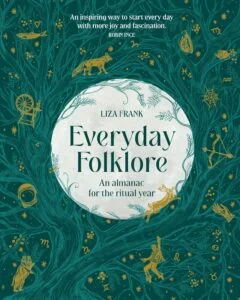
This pervasive yet often-unseen influence is at the heart of a compelling new perspective offered by author Liza Frank. Following a year-long immersion into the ritual calendar, Frank argues that far from being an anachronism, consciously integrating folklore into one’s life offers profound and tangible benefits for mental well-being, cultural connection, and a deeper appreciation of the world around us. Her experiences have culminated in "Everyday Folklore: An Almanac for the Ritual Year," a practical guide designed to help individuals engage with these traditions throughout the year.
"Folklore is all around us; the rituals, traditions and customs that remind us how to live our lives," Frank explains, challenging the notion that it’s solely the domain of "other people." For those with even a passing interest, Frank extends an invitation, a "call to action," to move beyond passive observation and actively embrace these ancient threads. She posits that everyone stands to gain from consciously weaving a little bit of folklore into their routine, urging readers to "feel the folklore fear and do it anyway."
Challenging Perceptions: Folklore Beyond the Fringes
The prevailing view of folklore as something exotic or historical often obscures its contemporary relevance. We might engage in a myriad of unwritten rules and practices without ever labeling them as "folklore." Consider the unspoken custom of offering a specific type of hot beverage to a guest, the sequence of spreading jam before cream on a scone (or vice versa), or the automatic adoption of certain phrases and gestures within a family or community. These are all micro-expressions of folklore, demonstrating its dynamic and ever-evolving nature.
Academic discourse, as highlighted by scholars like G. E. Warshaver, acknowledges the concept of "postmodern folklore," where traditional forms adapt to contemporary contexts, manifesting in urban legends, internet memes, and even corporate rituals. This perspective reinforces Frank’s assertion that folklore is not static but a living, breathing aspect of human culture, constantly being created, reinterpreted, and passed on. It is in this context that Frank’s work finds its vital niche, moving from academic observation to practical application, demonstrating how these often-unnoticed elements can be intentionally harnessed for personal enrichment.
The Genesis of "Everyday Folklore": A Year of Immersion
The foundation for Frank’s work is her "Everyday Lore Project," a dedicated year-long endeavour that saw her actively practice ritual year folklore every day between St Distaff’s Day in 2020 and Twelfth Night in 2021. This immersive "year of living folklorishly" was not merely an academic exercise but a deeply personal exploration of how ancient traditions intersect with modern existence.
Frank’s methodology involved researching and engaging with various customs, rituals, and beliefs tied to specific dates, months, or seasons within the ritual calendar. This practical engagement, documented meticulously, provided the experiential bedrock for "Everyday Folklore." The book, therefore, isn’t a theoretical treatise but a pragmatic guide, born from lived experience, offering readers a tangible pathway to integrate these practices into their own lives. Her journey demonstrates that folklore is not just something to be studied, but something to be done, offering a unique lens through which to perceive and interact with the world.
Five Pathways to a Richer Life: The Benefits of Conscious Folklore Engagement
Frank outlines five compelling reasons why individuals should consciously incorporate folklore into their daily lives, presenting them not as esoteric pursuits but as practical tools for enhancing well-being and connection in the modern era.
1. Reclaiming Time and Presence: The Rhythmic Pulse of the Ritual Year
In an age of relentless digital acceleration, where days blur into weeks and months vanish in a haze of deadlines and notifications, the ritual year offers a profound counter-narrative. While folklore cannot literally halt the march of time, Frank argues that observing its cycles can dramatically enhance one’s sense of presence and connection to the unfolding year.
By engaging with practices intrinsically linked to specific dates, seasons, or natural phenomena, individuals are encouraged to pause, observe, and reflect. Wassailing in January, for instance, is more than a quaint tradition; it’s an active investment in the future apple harvest, fostering a tangible link to agricultural cycles. Counting fogs in August to predict winter snowfalls transforms a simple weather observation into an engaging, playful ritual, deepening one’s connection to local ecology. Beyond specific rituals, this engagement encourages a heightened awareness of the natural world: observing the subtle shift from barren winter hedgerows to budding spring growth, then to summer’s fecundity, and finally back to autumn’s sparse beauty. This conscious observation slows down the internal pace, fostering mindfulness and opening the individual to a greater sense of wonder and possibility in the everyday. It’s a deliberate act of anchoring oneself in the present moment, appreciating the cyclical rhythm of life that often gets lost in linear, clock-driven routines.
2. An Abundance of Celebration: Infusing Joy into Daily Life
Beyond the familiar calendar of birthdays, anniversaries, and major holidays, the ritual year offers an almost endless array of opportunities for celebration. Frank points out that there are days dedicated to virtually everything imaginable, transforming mundane periods into moments of joy and communal connection.
Want to celebrate trees? There are multiple Arbor Days and traditional tree-planting ceremonies across cultures. Fascinated by anatomy? Entire festivals are dedicated to "innies and outies." From raising a glass on World Gin Day (the second Saturday of June) to indulging in cinematic nostalgia on Back to the Future Day, the ritual calendar provides countless excuses for levity and festivity. Even the absence of an event can be a cause for celebration, as with St. Swithin’s Day, where a lack of rain is traditionally seen as a positive omen. Personal accomplishments, such as successfully counting seven stars on seven consecutive nights to secure a wish, become private victories within this framework. This constant stream of celebratory potential acts as an antidote to monotony, injecting regular doses of anticipation, mirth, and shared experience into life, fostering a more optimistic outlook and strengthening community bonds through shared observance.
3. Banishing Boredom: Folklore as a Wellspring of Activity
Modern life, despite its endless distractions, can often lead to feelings of boredom or ennui. Frank suggests that folklore offers a vibrant, hands-on antidote, providing a rich tapestry of activities that range from the culinary to the comically daring.
Got leftover Christmas cake? Instead of letting it languish, one could emulate the spirited citizens of Manitou Springs, Colorado, by staging a "Great Fruitcake Toss" in January, transforming a domestic leftover into a community spectacle. The ritual year is also ripe with unique recipes to challenge the adventurous cook, from "Heg Peg Dumps" to "Harvest shot" or "knotting-sowins." Even baking a batch of scones for National Cream Tea Day becomes a conscious engagement with tradition. For those with a flair for the dramatic, dressing up as "King for a weekend" at the Porthcawl Elvis Festival in September or embodying a badger for St. Piran’s Day in March offers a chance for playful escapism and communal participation. And for the true daredevils, events like the Cooper’s Hill Cheese-Rolling in May or the Dorking Wife Carrying Race in March provide exhilarating, if eccentric, tests of mettle and endurance. As Frank discovered during her "year of living folklorishly," there is always something to do, even if it’s as unexpected as "conducting an exorcism at midnight by spitting black beans and walking backwards," underscoring the boundless, often bizarre, creativity embedded within folkloric practices.
4. The Unexpected Wisdom: Enriching Your Knowledge Base
Beyond the practical and celebratory aspects, delving into folklore is a fascinating journey into a repository of unexpected knowledge and curious facts. Frank highlights how this engagement can sharpen one’s wit and expand one’s understanding of the world in delightful, often interdisciplinary, ways.
Did you know that spiders, according to some studies, prefer classical music to techno? Research by Frings and Frings in 1966 explored the reactions of orb-weaving spiders to airborne sounds, offering a curious intersection of folklore (spiders as omens) and scientific observation. This nugget of information, perhaps useful for managing an "uptick of spiders" in March (which, folklorically, augurs rain), exemplifies the unexpected insights one can gain. Or consider the peculiar pre-mission ritual of Baikonur cosmonauts, who since the early 1970s, have traditionally watched "The White Sun of the Desert," a 1970 Russian Civil War comedy, for luck. This cultural idiosyncrasy, documented by authors like Richard Hollingham, reveals the enduring power of superstition and ritual even in the most technologically advanced human endeavours. Furthermore, Frank reminds us that bats, often maligned as "the Devil’s messenger," are vital pollinators of agave plants, a fact supported by ecological research (Menchaca et al., 2020). Without these winged wonders, our Margaritas might well be Manhattans. This blend of ancient belief, scientific discovery, and cultural impact demonstrates how folklore serves as a unique lens through which to explore history, biology, sociology, and even mixology.
5. Weaving Your Own Narratives: The Art of Storytelling
Perhaps one of the most enduring benefits of engaging with folklore is the acquisition of personal narratives – unique, often quirky, tales that enrich one’s own life story and entertain others. Frank acknowledges the "bonkers" nature of some folkloric beliefs, emphasizing that this doesn’t invalidate their cultural significance but rather adds to their charm and storytelling potential.
Imagine recounting the time you believed you caught a whiff of "demonic sulphur" while nutting in the woods in September, or confidently asserting how a boil on your neck miraculously decreased after the application of a cabbage leaf. These personal encounters with the mystical or the unusual become compelling anecdotes. Frank humorously recalls her own St. Luke’s Eve divination, where a sprig of rosemary and a crooked sixpence under her pillow supposedly revealed her true love – a vision of Mark Hamill, who, she notes, "hasn’t rung though." Such experiences, whether genuinely believed or playfully explored, become part of one’s personal mythology. While some anecdotes, like the failure to detect "vampire activity" in gardening implements (a reference to Vukanovic’s 1958 study on vampires), might be best reserved for later dates, the ability to generate these distinctive stories fosters a sense of individuality and provides endless material for connection and conversation.
Broader Implications: Why Folklore Matters Today
The individual benefits outlined by Frank extend into broader societal implications, underscoring why a renewed engagement with folklore is crucial in the 21st century.
Cultural Preservation: In a globalized world, local traditions and unique cultural expressions face constant pressure. By actively participating in and adapting folkloric practices, individuals contribute directly to the preservation of intangible cultural heritage, ensuring that the wisdom, creativity, and identity embedded in these traditions continue to thrive.
Community Building: Shared rituals and celebrations are powerful engines for community cohesion. Whether it’s a local harvest festival, a quirky town event, or simply a neighbourhood tradition, these shared experiences foster a sense of belonging, strengthen social bonds, and create collective memories that reinforce identity.
Mental Well-being: The mindfulness inherent in observing seasonal changes, the joy derived from frequent celebrations, and the sense of purpose found in creative activities all contribute to improved mental well-being. Folklore offers a counter-narrative to the isolating tendencies of modern life, providing anchors of meaning and connection.
Re-enchantment of the World: In an increasingly rationalized and disenchanted world, folklore reintroduces an element of wonder, mystery, and playful belief. It encourages us to look beyond the purely utilitarian, to appreciate the poetic and symbolic dimensions of existence, and to find magic in the mundane.
A Call to Action: Embrace Your Inner Folklorist
Liza Frank’s "Everyday Folklore: An Almanac for the Ritual Year" is more than just a book; it’s an invitation to embark on a journey of discovery and personal enrichment. Her work urges us to move past preconceived notions of folklore as something dusty and remote, and instead recognize it as a vibrant, living force that can infuse our lives with deeper meaning, greater joy, and a stronger connection to both our cultural heritage and the natural world.
As the year progresses, Frank encourages readers to make a conscious resolution to integrate a bit of folklore into their lives. Be curious, try new things, challenge yourself, and perhaps even create new traditions. And for those who fear the inevitable New Year’s resolution slump (statistically, January 19th is often cited as the day resolutions falter), Frank offers reassurance: "Given the ritual year has a multitude of New Year’s Days throughout, I shouldn’t worry too much as there’ll be plenty of opportunities for a do over should you need one."
In essence, Frank’s message is clear: the magic of folklore isn’t confined to ancient texts or distant lands. It resides within us, waiting to be rediscovered and re-enacted. "Everyday Folklore: An Almanac for the Ritual Year" is out now, ready to guide you on this transformative journey.
Footnotes:
[1] Warshaver, G. E. (1991) On Postmodern Folklore. Western Folklore, 50(3), 219–229. https://doi.org/10.2307/1499876
[2] Frank, L. (2021) The Everyday Lore Project. https://liza-frank.com/the-everyday-lore-project/
[3] Frings, H. and Frings, M. (1966) Reactions of Orb-Weaving Spiders (Argiopidae) to Airborne Sounds. Ecology, 47, 578-588. https://doi.org/10.2307/1933935
[4] Hollingham, R. (2014) The strangest space launch rituals. https://www.bbc.com/future/article/20140610-the-strange-rituals-of-cosmonauts
[5] Menchaca, A., Arteaga, M.C., Medellin, R.A., Jones, G. (2020) Conservation units and historical matrilineal structure in the tequila bat (Leptonycteris yerbabuenae). Global Ecology and Conservation, Volume 23. https://doi.org/10.1016/j.gecco.2020.e01164
[6] Vukanovic, T. P. (1958) The Vampire. Journal of the Gypsy Lore Society, 37(1), 21-31. https://www.proquest.com/scholarly-journals/vampire/docview/1299021299/se-2